- Category
- Vegetables
- State
- Fresh
- Usual unit
- teaspoon
What it is
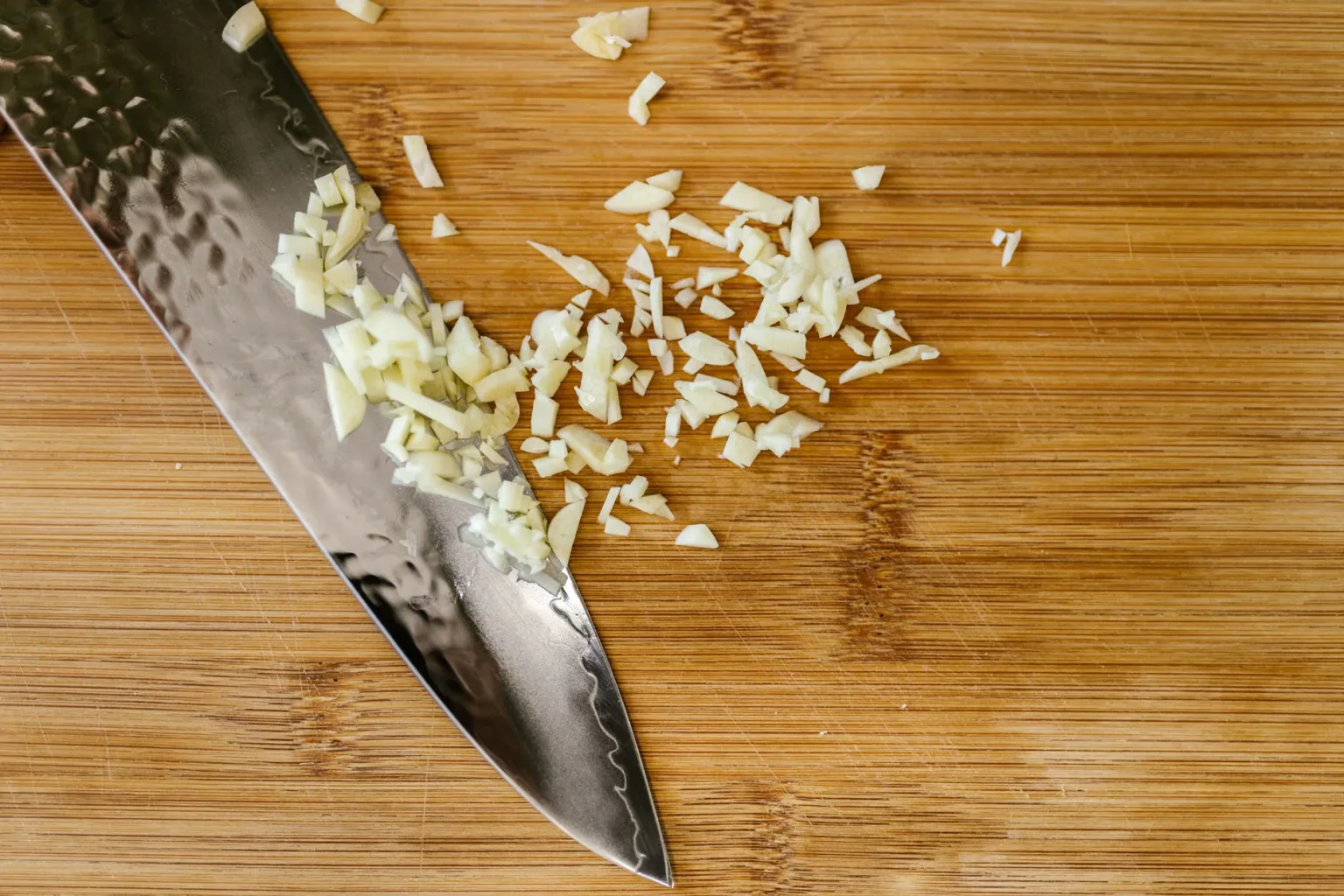
Chopped garlic is the edible bulb of garlic, Allium sativum, cut finely with a knife or crushed. It is not a separate variety: the name describes the cut, and it is commonly prepared from peeled fresh cloves. The pieces may range from small dice to an almost paste-like texture, which affects how quickly the garlic blends into a dish. Garlic belongs to the vegetable group and is related to onions, chives, and leeks. In cooking it acts as an aromatic and seasoning, whether used raw or cooked. Its assertive flavor can add depth, but the amount should suit your taste and the prominence of the other ingredients.
When to use it
Use chopped garlic when you want garlic flavor distributed throughout a preparation rather than contained in a whole clove or large slice. Raw, it can bring a pronounced note to dressings, sauces, and toast; cooked, it works as an aromatic base for sautés, pasta, potatoes, and stews. In long-cooked dishes its strong flavor softens, making it a useful option for dishes such as legumes or braises. For a more delicate result, use less and avoid browning it too deeply: over-browned garlic can taste bitter. Because finely cut garlic cooks quickly, watch it closely when sautéing.
How to use it
Peel a fresh garlic clove and finely chop it with a knife, or crush it if you want it to blend more evenly. Add it raw to a dressing or sauce when you want to retain its pronounced character, or add it to a cooked preparation to perfume the oil and the other ingredients. When sautéing, avoid high heat and keep an eye on it: garlic browns quickly and can taste bitter if it gets too dark. You can also add it to stews and long-cooked dishes, where its intensity tends to soften. Match the cut to the recipe: small pieces distribute easily, while crushed garlic gives a more uniform texture. To store chopped garlic, wrap it tightly and freeze it; do not leave raw garlic in oil at room temperature.
Flavour and texture
Fresh chopped garlic has a pungent aroma and assertive flavor, especially when used raw. Cooking softens its strong character, and in longer preparations it can become less dominant. Finely chopped pieces distribute easily through sauces and stews, while crushed garlic blends into a more uniform texture. If fried or browned too much, it can taste bitter.
How to choose it
If buying a whole head to chop at home, choose garlic that feels firm and has dry skin, with no visible spots, green sprouts, soft areas, or mold. Garlic types vary in size and character, so choose according to the flavor you prefer and the dish. If buying pre-chopped garlic, check the label and follow the package storage directions; do not assume every product has the same ingredients or shelf life.
Storage
Keep whole garlic heads in a cool, well-ventilated place and handle them gently, since bruising speeds deterioration. To keep chopped garlic, wrap it tightly and freeze it; its strong aroma can transfer to other freezer foods if it is exposed. Do not store raw garlic in oil at room temperature: official guidance warns of botulism toxin risk if it is stored improperly. Follow the product directions for commercially prepared garlic.
Substitutions
Garlic powder can stand in for fresh chopped garlic when texture is not essential, but it is different: it is dry and more concentrated by volume, so add it gradually and taste. Crushed or puréed garlic can replace chopped garlic when you want a more even distribution. Adjust the amount to the recipe and the flavor profile you want.
Common mistakes
Do not chop garlic too far ahead if you want its freshest aroma, or cook it over high heat without watching it: it browns quickly and can turn bitter. Avoid adding a large amount without tasting, since its flavor can dominate a dish. Do not mistake a culinary suggestion to keep garlic in oil for a safe room-temperature preservation method.
Safety and allergens
Do not store raw garlic in oil at room temperature. Oregon State University Extension warns that garlic is a low-acid vegetable and that improperly stored garlic in oil can allow Clostridium botulinum to grow and produce potentially fatal toxins. For safe options, follow official instructions for refrigeration, freezing, or acidification; do not improvise a preservation method.
Culinary uses
- Aromático para aportar sabor a sofritos, salsas y guisos
- Condimento para aliños, panes y platos de carne o pescado
Recommended techniques
- Picar finamente o triturar, según la textura deseada
- Usar crudo en aliños o cocinar suavemente para liberar el aroma
- Añadir a cocciones largas, donde su sabor se vuelve menos intenso
Pairs well with
- Cebolla y tomate
- Perejil y pan
- Aceite de oliva
- Carne y bacalao
Frequently asked questions
Can I use chopped garlic raw?
Yes. Add it raw to dressings, sauces, or toast. Its flavor is pronounced, so adjust the amount to taste.
How can I keep chopped garlic from tasting bitter?
Avoid high heat and watch it while cooking. Garlic that browns too much can taste bitter.
Can I keep chopped garlic in oil outside the refrigerator?
No. Do not store raw garlic in oil at room temperature; follow official preservation methods to avoid serious risks.
Estimated nutrition
- Fat
- 20 g
- Saturates
- 10 g
- Carbohydrate
- 60 g
- Sugars
- 0 g
- Fibre
- 0 g
- Protein
- 20 g
- Salt
- 0.25 g
Sources and review
Automatically researched, cross-checked and validated content. Sources consulted:
- Client Challenge doi.org
- The Essential Glossary of Cooking Terms for the Culinary Arts - Escoffier escoffier.edu
- Ajo, tipos, beneficios y uso en la cocina - Mercado de Chamartín mercadodechamartin.es
- Ajo, el ingrediente milenario que transforma el sabor en la cocina chefyerika.com
- Todo sobre el ajo: qué es, cómo se cultiva, cómo utilizarlo en cocina y qué propiedades tiene directoalpaladar.com
- The Case of Pablo Neruda's Odas elementales and Food digitalcommons.sacredheart.edu
- educational content to support healthful lifestyle practices sjsu.edu
- UCCE efforts improve quality of and demand for fresh ... ucanr.edu
- Usos culinarios del ajo | Consumer consumer.es
- Preserving garlic | OSU Extension Service extension.oregonstate.edu
- Beet Hummus s3.wp.wsu.edu