- Category
- Fish and seafood
- State
- Fresh
- Usual unit
- g
What it is
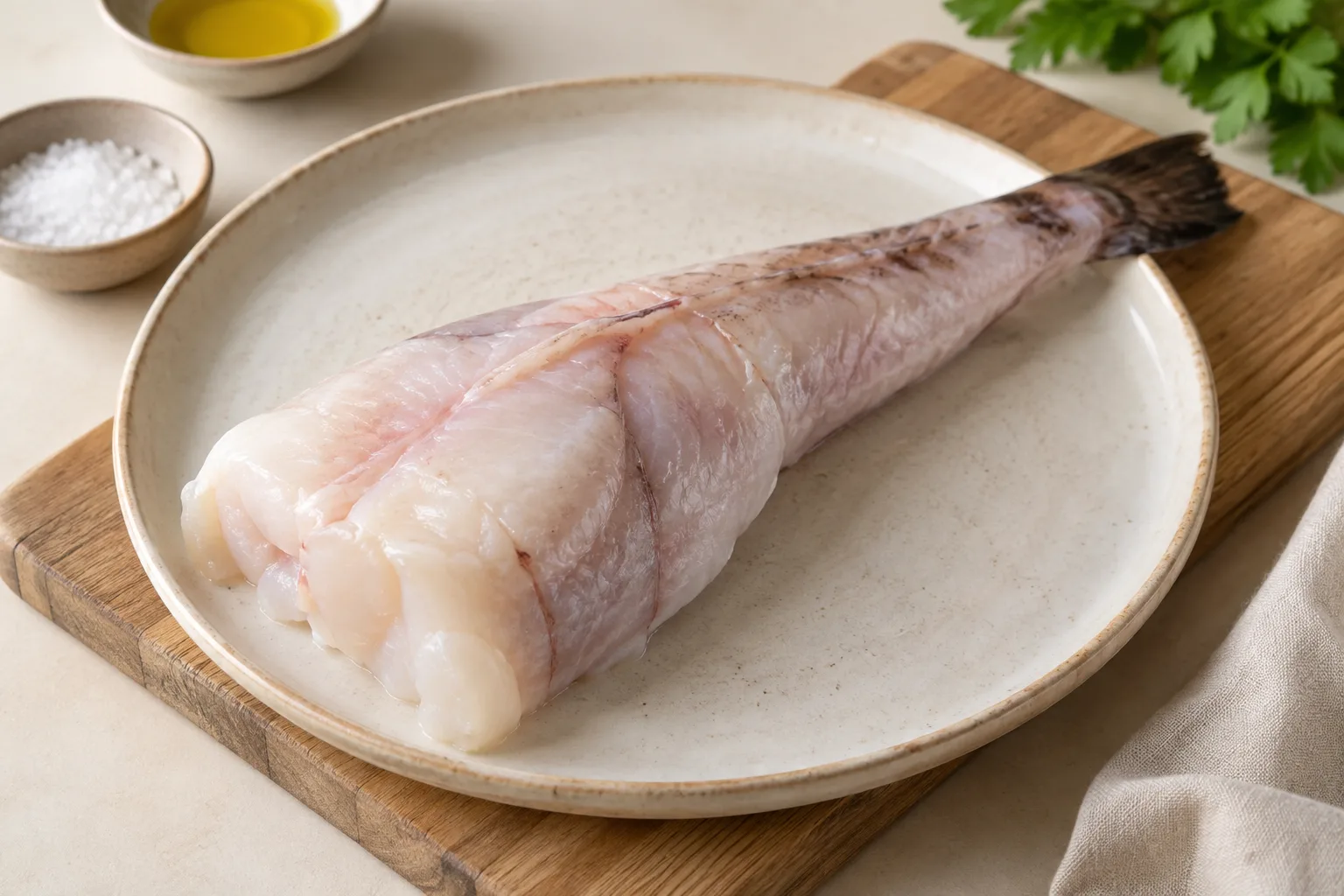
Cleaned monkfish is monkfish prepared for sale or cooking, with parts not intended for culinary use removed according to the seller’s preparation. The common name monkfish can refer to several species in the genus Lophius, so a market name does not necessarily identify one exact species. In cooking, it is used in portions or larger pieces for main dishes, stews and fish soups. Culinary sources describe pan-cooking, oven-cooking, steaming and simmering it with ingredients such as potatoes, onion, garlic, tomato or herbs. “Cleaned” does not necessarily mean boneless or ready to eat raw: ask the fishmonger what has been removed and follow the product’s storage and preparation directions.
When to use it
Choose monkfish when you want a fish to serve as a main dish or include in a broth-based preparation with potatoes and other ingredients. It is used in stews and soups and can also be cooked in a pan, in the oven or by steaming. Culinary sources feature it with onion, garlic, tomato, herbs, prawns and legumes. Whether to buy portions or a larger piece depends on the recipe and on how the seller has prepared it. The evidence available here does not establish seasonal months or support a claim that monkfish is always available at the same quality.
How to use it
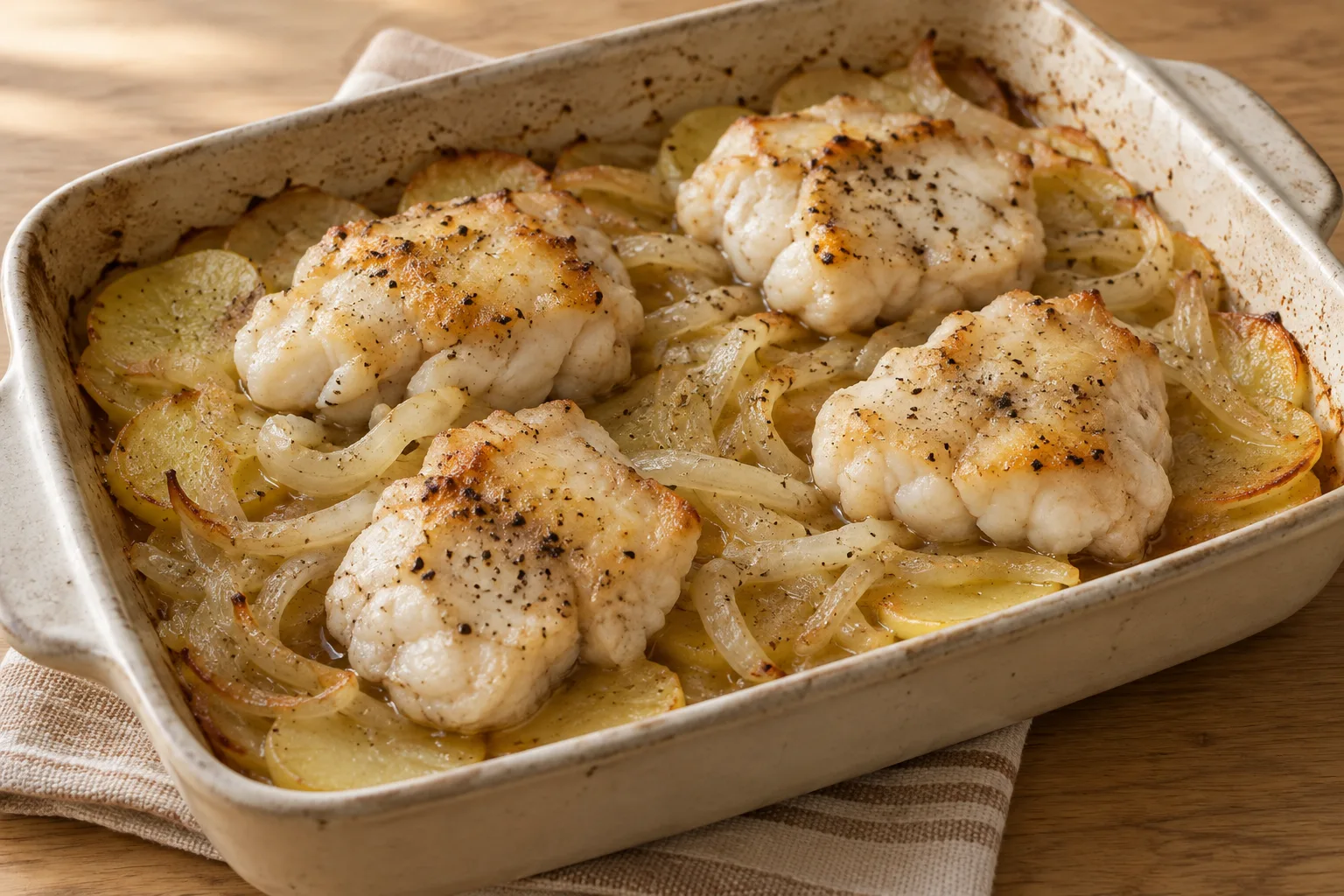
Before cooking, check with the seller what “cleaned” means for that piece and whether any bones or parts still need removing. Cook monkfish in a pan, in the oven or by steaming, or add it to a stew or soup. For a simple meal, serve it with potatoes and onion; documented preparations also use garlic, tomato, herbs or prawns. It can be included in dishes with legumes when the recipe calls for them. Follow your recipe for the cut and when to add the fish: the available sources do not support a universal cooking time or temperature. Handle fresh fish hygienically, keep it separate from ready-to-eat food and refrigerate it promptly.
Flavour and texture
The culinary information available describes monkfish as a fish with a pronounced flavor and a texture that is easy to eat. It is also used in stews and soups, but the sources do not provide a detailed sensory description that applies to every piece. The result can vary with the cut, freshness and cooking method; do not assume every cleaned piece will have exactly the same flavor or firmness.
How to choose it
Buy monkfish from a seller who can explain what has been removed and whether the piece contains bones. Check that the product identification and storage directions are clear, especially if it is packaged. For fresh fish, check the date and the seller’s instructions, and transport it so it does not come into contact with other foods. The available sources do not provide monkfish-specific appearance or smell tests, so avoid relying on invented criteria.
Storage
Fresh monkfish is perishable: take it home and refrigerate it promptly, following the package or seller’s directions. Keep raw fish separate from ready-to-eat foods and prevent its juices from dripping onto other products. Follow the use-by date and any product-specific storage instructions on the label. The evidence provided does not establish a monkfish-specific home storage period.
Substitutions
Culinary sources say monkfish can be used in place of other fish in a range of dishes. Conversely, another fish may replace monkfish if the recipe and cooking method allow the change. The result depends on the chosen fish and preparation; the evidence does not identify one species as a universal substitute.
Common mistakes
Do not assume “cleaned” means boneless or safe to eat raw: confirm how the fish was prepared. Avoid leaving fresh fish at room temperature longer than necessary, and do not let its juices touch ready-to-eat food. Do not rely on one universal cooking time without considering the cut and recipe; the available evidence does not specify monkfish cooking times or temperatures.
Safety and allergens
Fish is an allergen that must be clearly identified in food information. Keep fresh monkfish refrigerated, follow its use-by date and storage instructions, and separate raw fish from ready-to-eat foods. The supplied evidence does not specify a monkfish-specific storage temperature or duration.
Culinary uses
- Pescado para platos principales
- Ingrediente para guisos y sopas de pescado
Recommended techniques
- A la plancha
- Al horno
- Al vapor
- En guisos
Pairs well with
- Patatas y cebolla
- Ajo, tomate y hierbas aromáticas
- Gambas
- Legumbres
Frequently asked questions
What does “cleaned monkfish” mean?
It means the fish has been prepared for cooking, but the extent of cleaning can vary. Ask whether bones or other parts still need removing.
How can monkfish be cooked?
Culinary sources describe cooking it in a pan, in the oven, by steaming, and in stews or soups.
What ingredients go well with monkfish?
Documented dishes include potatoes, onion, garlic, tomato, herbs, prawns and legumes.
How should fresh monkfish be stored?
Refrigerate it promptly, follow the package or seller’s directions, and keep raw fish separate from ready-to-eat foods.
Sources and review
Automatically researched, cross-checked and validated content. Sources consulted:
- En el etiquetado alimentario hay algunas menciones que son obligatorias eletiquetadocuentamucho.aesan.gob.es
- Food Selection & Storage | Home & Garden Information Center hgic.clemson.edu
- Cold Storage Chart & Reference Guide rvpadmin.cce.cornell.edu
- Storing White Rice | USU extension.usu.edu
- How to Cook Pork Tenderloin on the Grill • southernwv.edu staging.southernwv.edu
- mak Tgiqs congelado co vitaminas, minerales amé aturada que ayuda a prel ir mapa.gob.es
- Michigan Fresh: Using, Storing, and Preserving Garlic (HNI116) - Michigan Fresh canr.msu.edu
- How Culinary School Can Teach Food Safety - Escoffier escoffier.edu
- Rape Seeds as a Source of Feed and Food Proteins academia.edu
- El rape en el mundo: Usos culinarios y tradiciones culturales | Easyfish easyfish.net
- El rape, un voraz y sabroso rey del mar indispensable en fumet y cazuelas: cómo prepararlo y en qué recetas darle salida directoalpaladar.com
- ¿Qué tipo de pescado es el rape? - Chao Pescao chaopescaoseafood.com
- Qué es y para qué sirve el Rapé edabea.com
- Artes culinarias/Ingredientes/Rape - Wikilibros es.wikibooks.org
- Rapé tabaco: qué es, efectos y cómo se usa (Guía 2026) growbarato.net
- Rape | Curiosidades y cómo prepararlo | Pescados y mariscos | EROSKI CONSUMER pescadosymariscos.consumer.es