- Category
- Vegetables
- State
- Other
- Usual unit
- g
What it is
Cooked beetroot is the edible root of table beet that has already been cooked and is ready to use. Table beet usually has firm, fleshy flesh and a deep red or purple colour, although other colours are also available. Cooking makes the root tender and brings its natural sweetness to the fore. It is sold prepared, while beetroot is also available raw or preserved, so check the product’s form and label instructions rather than assuming every pack is the same. Table beet should not be confused with sugar beet, which is grown for a different purpose. In the kitchen, cooked beetroot is a convenient way to add the root to a dish without cooking it from raw first; use it in slices, cubes or purée.
When to use it
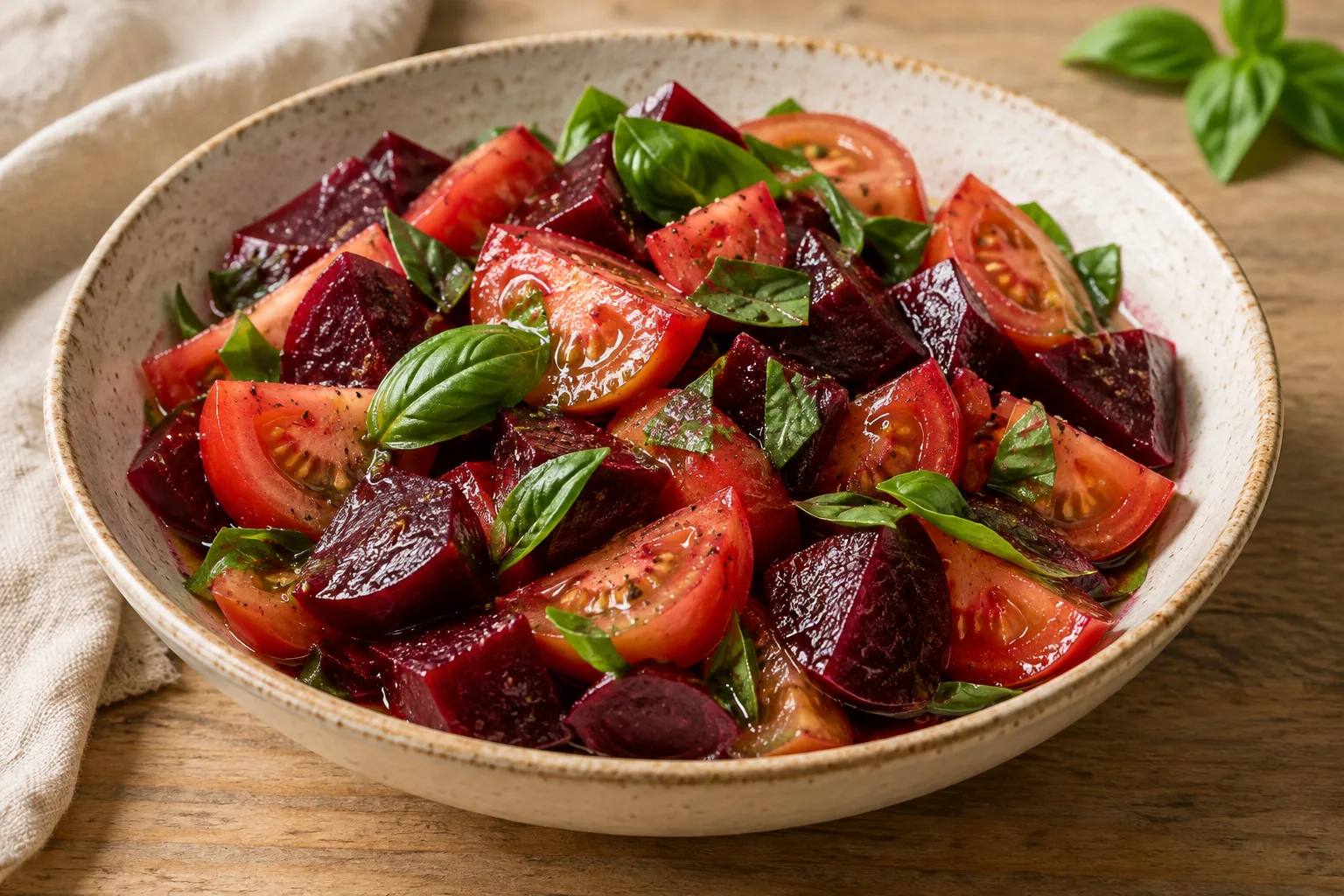
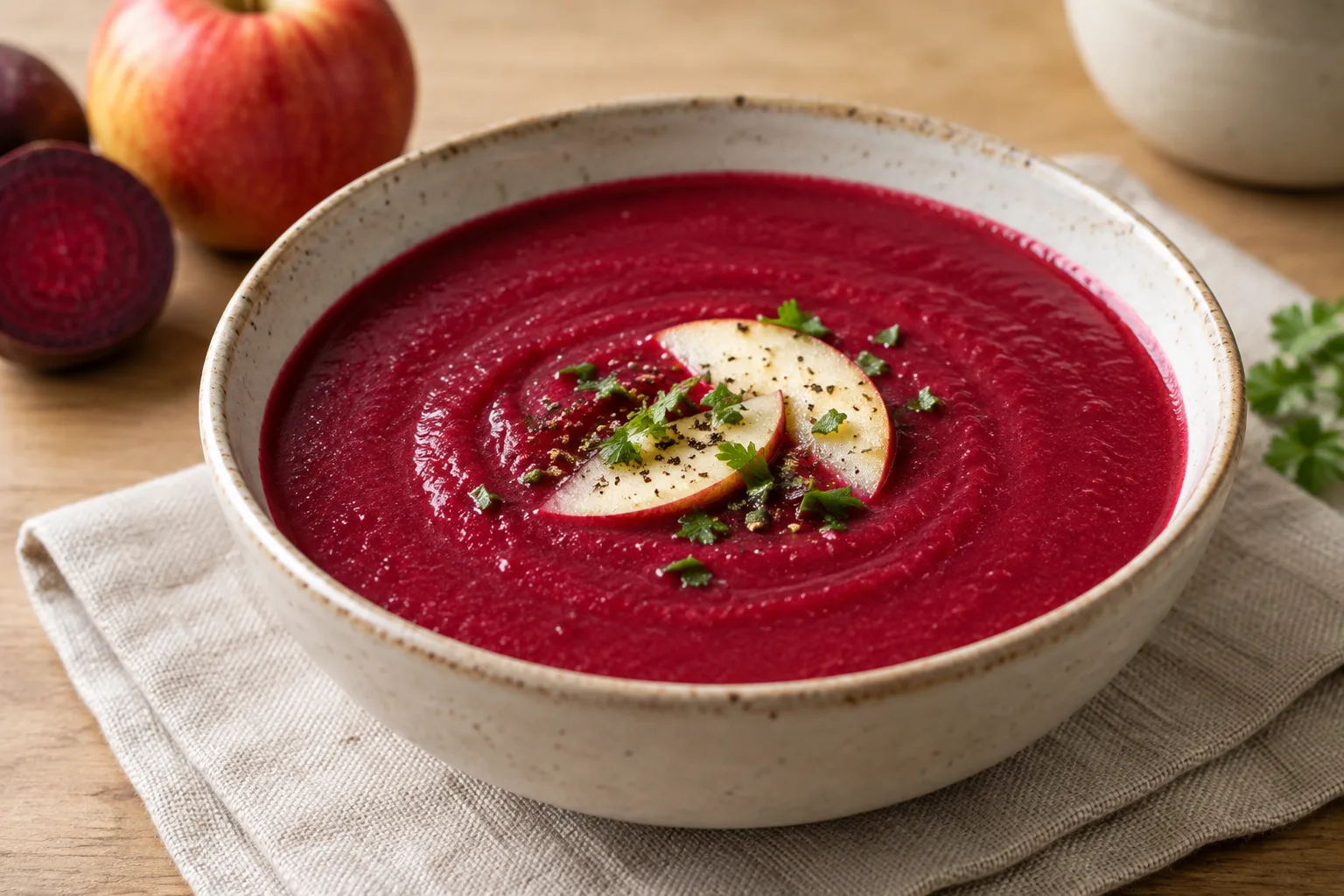
Choose it when you want colour, gentle sweetness and a tender texture without starting with raw root vegetables. It works in salads, dressed as a side, in soups and creams, or blended into spreads and other mixtures. It can also be served in cold dishes with kefir or cheese, or alongside vegetables such as carrot and potato. Since it is already cooked, it is useful for quick meals: slice it shortly before serving or add it near the end of a hot preparation if you want the pieces to remain distinct. Match the product form to the recipe and follow the storage and use guidance on its label.
How to use it
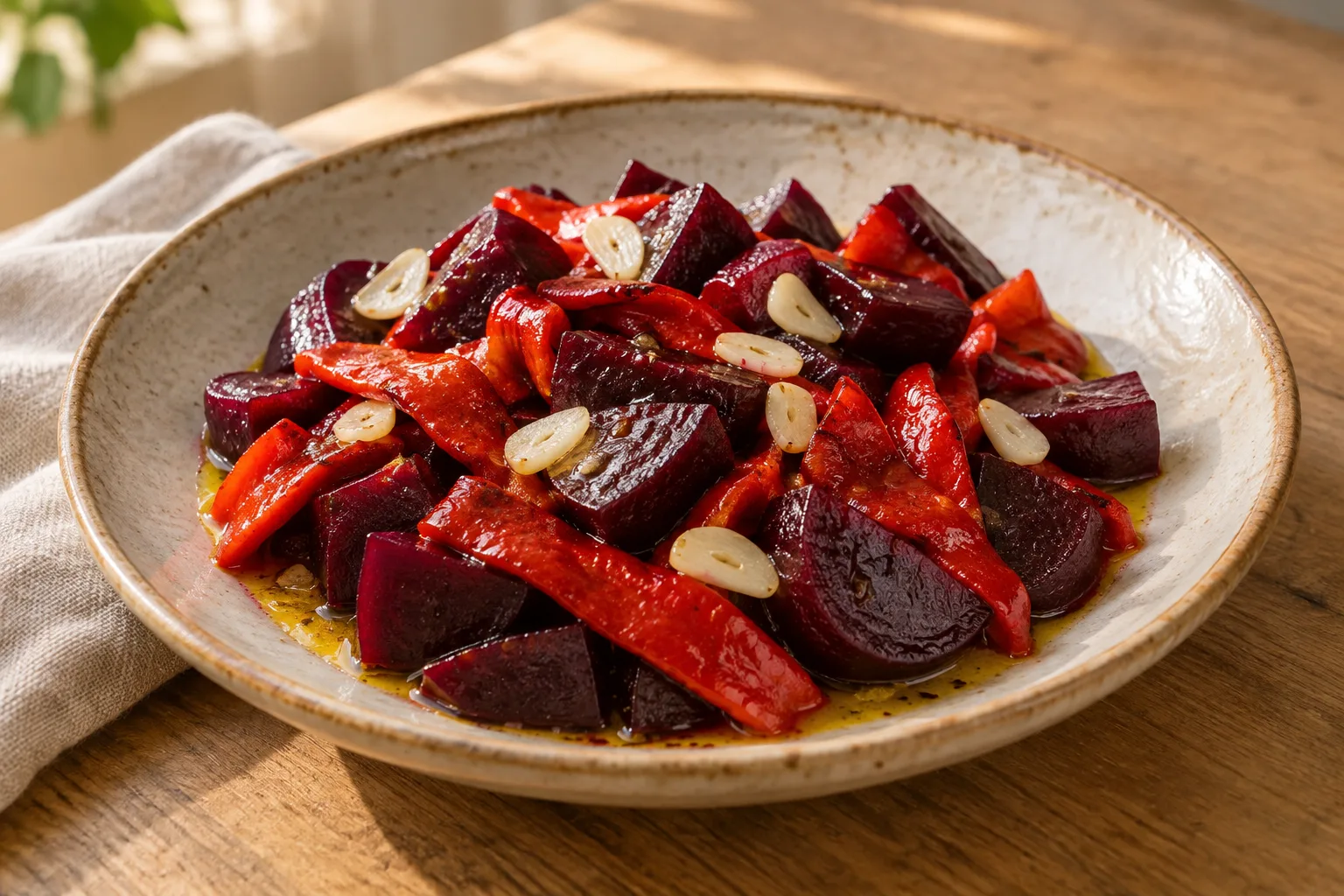
Check the product form and its storage instructions first. If it is ready to eat, slice, dice or cut the beetroot into chunks for salads and side dishes; oil and vinegar are a documented simple dressing for beetroot. For a smoother result, blend or purée it for cold creams, soups or spreads. It can also be combined with vegetables or served with cheese, kefir or pine nuts, pairings featured in beetroot dishes. When adding it to a hot recipe, fold it in gently so it does not break down more than you want. Its pigment can stain hands and work surfaces, so handle it thoughtfully and clean the area after cutting. Follow the package directions rather than assuming all prepared beetroot has the same handling requirements.
Flavour and texture
Cooked beetroot has a natural sweetness balanced by a distinctive earthy note. Its texture is tender and juicy: cutting it keeps recognisable pieces, while blending produces a smoother consistency and a vivid colour. Colour varies by variety; the familiar table beet is red or purple, but golden and striped beets are also available. Its pigment can colour other ingredients and surfaces during preparation, so bear this in mind when mixing it with pale foods or using it in a dish where colour contrast matters.
How to choose it
For ready-cooked beetroot, check the product description and read the label for its name, ingredients and storage or use instructions. Beetroot is also sold raw, preserved, canned or in jars; these forms do not automatically give the same texture or work in exactly the same way in a recipe. Choose a pack that suits the amount you plan to use and check the producer’s information. For unpackaged beetroot or food prepared at a shop, ask for the relevant product information, since information requirements can depend on how the food is sold.
Storage
Follow the storage and use directions on the product label; they can differ with the form of the food and how it is sold. Keep the package closed until you are ready to use it, and after opening follow the producer’s directions rather than assuming a universal storage period. If you buy unpackaged or shop-prepared beetroot, ask how it should be stored. Raw beetroot and cooked beetroot are different products, so storage advice for one should not automatically be applied to the other.
Substitutions
In a recipe that can accommodate a firmer texture, grated raw beetroot can stand in for cooked beetroot, but the result and preparation will differ. Canned or jarred beetroot is another option; check its form and adjust the cut and seasoning to suit the product. These choices are not exact equivalents: the selling format and cooking state affect texture and how the beetroot blends into a dish.
Common mistakes
Do not assume that every beetroot product has the same form, or that raw, cooked and preserved beetroot can be used identically. Consider its strong colour before mixing it into other ingredients, since it can stain them. Do not overlook the product’s storage and use directions, which may vary by product and packaging. Finally, do not confuse table beet with sugar beet.
Safety and allergens
Follow the use-by or best-before information and storage directions on the product label. Spain’s food safety agency AESAN lists beetroot among foods in which botulinum toxin has been detected; if a preserved product seems doubtful, do not eat it and seek official guidance.
Culinary uses
- salad ingredient
- soup and cream ingredient
- spread or dip ingredient
- colourful side dish
Recommended techniques
- slice or dice
- purée or blend
- serve chilled
- fold into a cooked dish
Pairs well with
- cheese
- kefir
- pine nuts
- carrot
- potato
- vinegar and oil
Frequently asked questions
What can I make with cooked beetroot?
Slice it for salads or side dishes, blend it into soups, creams or spreads, or add it to other vegetable dishes. Beetroot is also used with cheese, kefir and pine nuts.
Is cooked beetroot the same as preserved beetroot?
Not necessarily. Prepared cooked beetroot and preserved products in cans or jars may be different forms. Check the label and adapt the recipe to the product.
What should I check when buying prepared beetroot?
Read the product name and the producer’s storage and use instructions. Guidance can vary depending on the product form and how it is sold.
Sources and review
Automatically researched, cross-checked and validated content. Sources consulted:
- En el etiquetado alimentario hay algunas menciones que son obligatorias eletiquetadocuentamucho.aesan.gob.es
- Aesan - Agencia Española de Seguridad Alimentaria y Nutrición aesan.gob.es
- Client Challenge doi.org
- Mejores recetas con remolacha: cocina fácil, casera y tradicional y sus propiedades directoalpaladar.com
- Remolacha: Propiedades, usos y curiosidades | Huercasa huercasa.com
- Remolacha: Propiedades, beneficios y usos en la cocina mercadosantamariadelacabeza.es
- Sabrosas recetas con remolacha cocida (más allá de las ensaladas) hola.com
- Remolacha: Historia, Usos, Nutrición Y Cultura - Restaurante Romero restaurante-romero.es
- La remolacha ¿Qué es y cómo cocinarla? Beneficios, usos en la cocina y recetas abc.es
- Remolacha: Propiedades, Contraindicaciones y Cruda o Cocida frutamerca.com
- Artes culinarias/Ingredientes/Remolacha - Wikilibros es.wikibooks.org
- Remolacha: propiedades y usos en la cocina - Cocina y Come cocinaycome.com
- Gastronomía de Costa Rica - Wikipedia, la enciclopedia libre es.wikipedia.org
- Cómo cocer remolacha - PequeRecetas pequerecetas.com
- 10 recetas con remolachas cocidas que querrán saborear hasta los niños elmueble.com
- Cómo cocer remolacha: tiempos y trucos okdiario.com