- Category
- Meat
- State
- Fresh
- Usual unit
- g
What it is
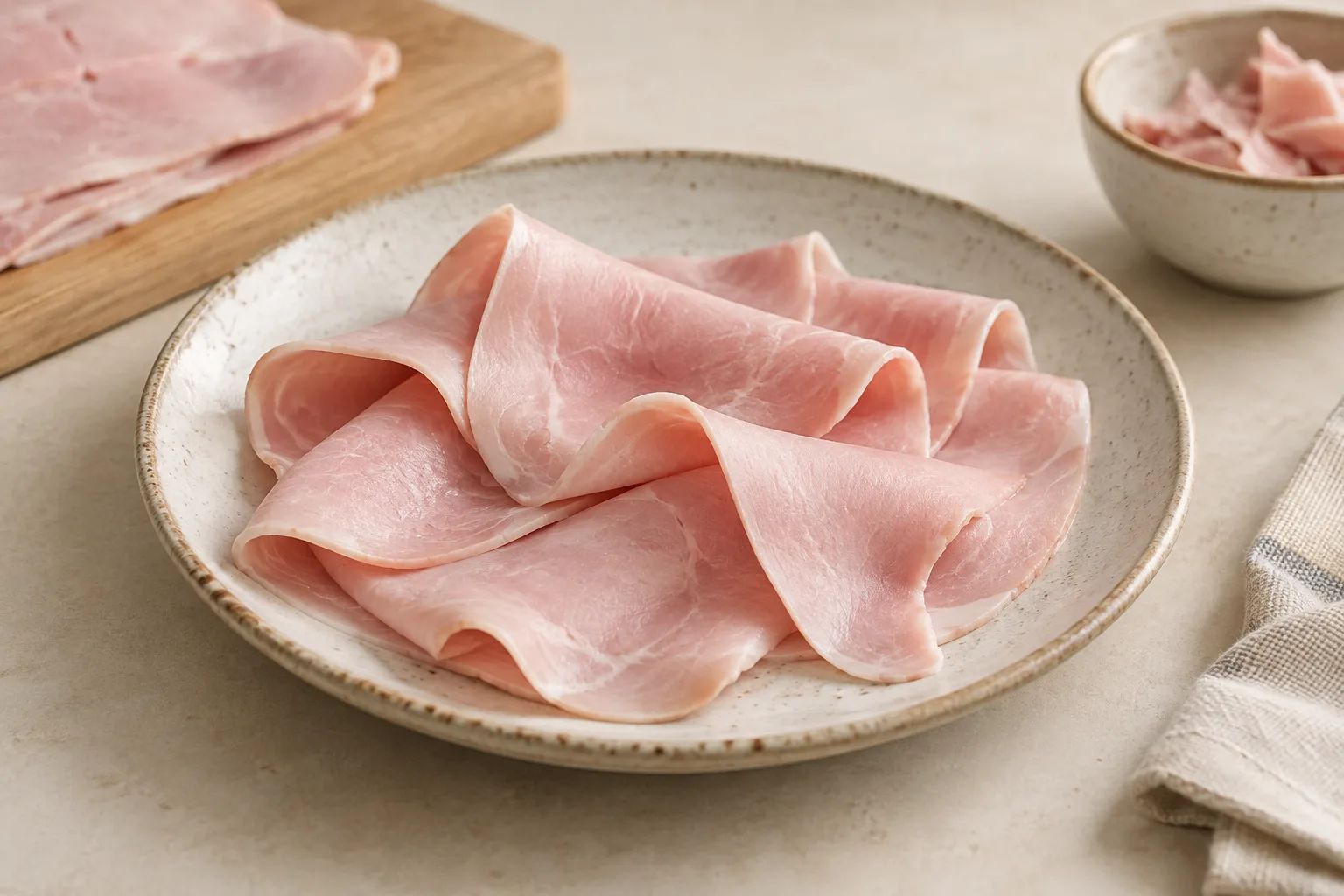
Cooked ham is a pork product that is cooked during processing. It may be sold as a piece or block, or already sliced, and its characteristics depend on how the particular product was made. It should not automatically be treated as interchangeable with every product sold under a general deli-meat name: the product description and ingredient list help clarify what you are buying. Some varieties include ingredients in addition to meat, so there is no single composition that applies to every brand. Its generally mild flavor and ready-to-serve format make it a convenient addition to everyday meals.
When to use it
Use cooked ham when you want a ready-to-eat cooked-meat ingredient with a fairly mild flavor that is easy to portion. Slices work well in sandwiches and rolls; strips or cubes can be added to salads, fillings, and dishes with eggs or potatoes. It can also be used in croquettes, pastry fillings, or baked dishes. Salt and other ingredients vary by product, so taste the dish before adding extra seasoning and read the label if you have specific dietary requirements.
How to use it
Serve slices directly in a sandwich or roll, for example with bread and cheese. For a salad, cut the ham into strips or cubes and combine it with the other ingredients close to serving. You can also chop it into fillings, croquettes or egg dishes, or combine it with cheese in a pastry or oven-baked dish. If serving it hot, warm it as part of the dish rather than assuming every product responds identically to heat. Check the package for the specific ingredients and instructions, and taste before adding salt.
Flavour and texture
Its flavor is usually mild and savory, though the intensity depends on the manufacturer's recipe. Texture can range from tender and slightly fibrous to more uniform; slice thickness and firmness vary by product. There is no single texture that describes every variety, so check the product in hand and choose a cut that suits the use: slices for sandwiches, or strips and cubes for mixtures and fillings.
How to choose it
Read the product description and ingredient list: deli products do not all have the same composition as cooked ham. If buying it sliced or from a deli counter, choose a thickness and texture suited to the intended use, whether a sandwich, filling or salad. Check allergen information and the package's storage instructions too. If you want a specific feature, such as a lower-salt recipe, verify that it is stated for that product instead of assuming it applies.
Storage
Follow the storage instructions and date on the package, since they may differ by product and presentation. After opening, check the label for how to store it and for any stated time limit. If it is sold from a deli counter or packaged at your request, ask the retailer for the applicable storage information. Do not infer its shelf life or storage requirements from appearance alone.
Substitutions
For a similar role in sandwiches or fillings, use slices of cooked turkey or chicken; the flavor and texture will differ. To keep a pork profile, another variety of cooked ham or cooked pork shoulder may work, but check the product name and ingredients because these products are not necessarily equivalent. Adjust the cut and amount to the dish, and check the label if you need to avoid a particular ingredient.
Common mistakes
Do not assume that every deli product has the same composition as cooked ham. Avoid adding salt or seasoning before tasting, since the product may already taste salty. Another common mistake is assuming all packages have identical storage instructions or are free of allergens: check the information for the specific product.
Safety and allergens
Check the date, allergen information, and storage and use instructions on the label. Product composition varies, and some products may contain milk; if you have an allergy or intolerance, verify the manufacturer's or retailer's information before eating it.
Culinary uses
- Filling for sandwiches and rolls
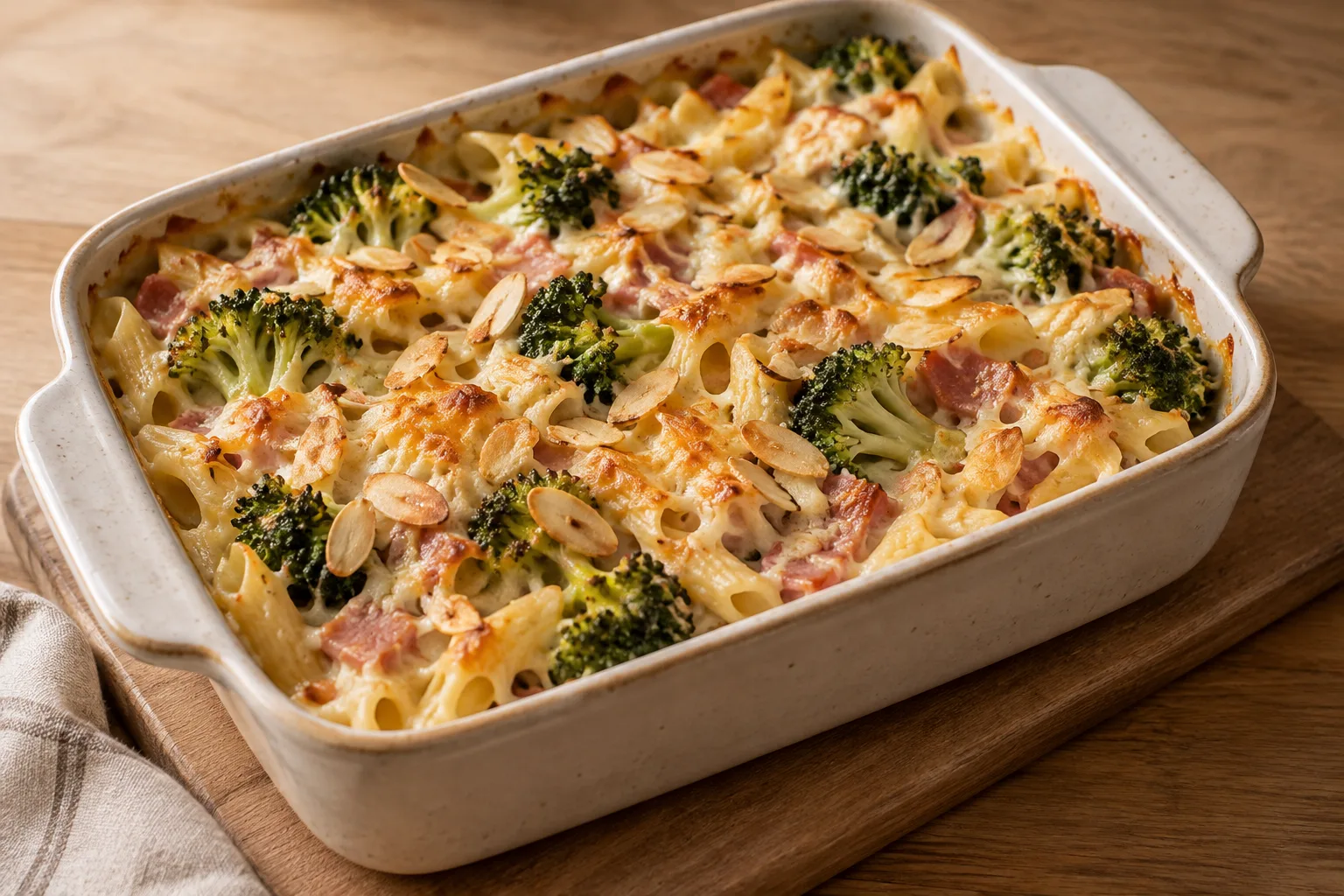
- Ingredient in salads, croquettes, baked dishes and appetizers
Recommended techniques
- Slice or dice for serving and mixing into dishes
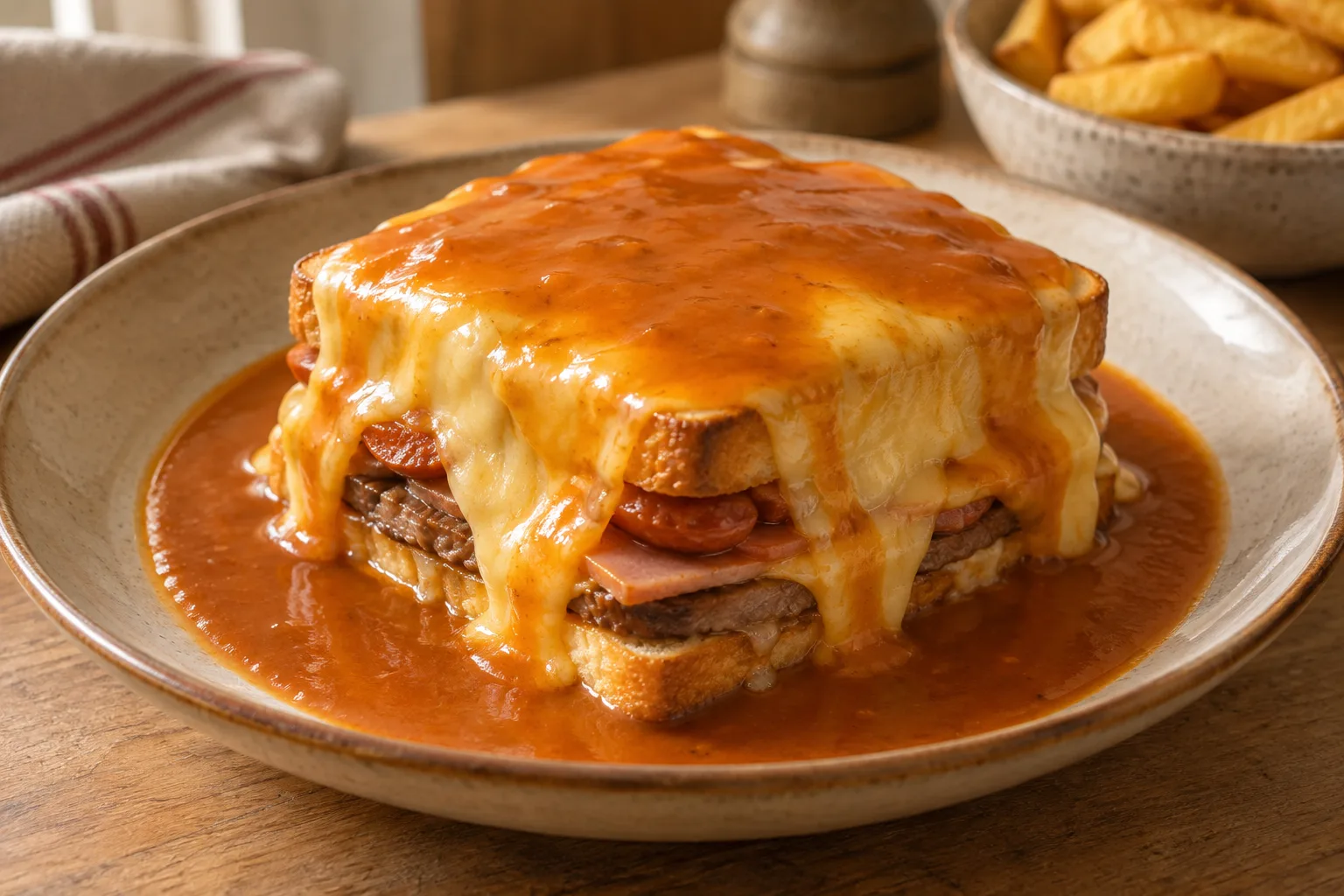
- Warm gently in a pan, oven dish or toasted sandwich
Pairs well with
- Cheese and bread
- Eggs, potatoes and salad vegetables
Frequently asked questions
Is cooked ham always made from one whole piece?
Not necessarily. It may be sold as a piece, a block or slices, and composition varies by product. Read its description and ingredient list.
Does cooked ham need to be cooked before eating?
It is a cooked product and is commonly served as is, but follow the instructions on the specific package or from the retailer.
Can cooked ham contain milk?
Some products may contain milk proteins. Always check the allergen information, especially if you have an allergy or intolerance.
Estimated nutrition
- Fat
- 3.57 g
- Saturates
- 0 g
- Carbohydrate
- 3.57 g
- Sugars
- 3.57 g
- Fibre
- 0 g
- Protein
- 17.9 g
- Salt
- 2.5 g
Sources and review
Automatically researched, cross-checked and validated content. Sources consulted:
- En el etiquetado alimentario hay algunas menciones que son obligatorias eletiquetadocuentamucho.aesan.gob.es
- The Essential Glossary of Cooking Terms for the Culinary Arts - Escoffier escoffier.edu
- Sabores de nuestras tierras/recetas - 2024 | Agricultura y Recursos Naturales ucanr.edu
- Estudio de mercado Estudio de mercado Observatorio del Consumo mapa.gob.es
- Determinación de compuestos bioquímicos para el control de calidad en la elaboración de jamón cocido y jamón curado doi.org
- Spain’s Prized Ham: Jamón Ibérico | Institute of Culinary Education ice.edu
- Calidad del jamon cocido: influencia de la materia prima: estudio de productos comerciales | Documentos - Universidad de Navarra portalcientifico.unav.edu
- (PDF) Microbiota de jamones de cerdo cocidos asociada al deterioro por abombamiento del empaque Microbial of cooked pork hams associated of blown pack spoilage academia.edu
- Jamón cocido - Wikipedia, la enciclopedia libre es.wikipedia.org
- Todo sobre el Jamón Cocido | La Boulette laboulette.com
- Jamón cocido – PULEVA lechepuleva.es
- Recetas con jamón cocido | Recetas.com recetas.com
- Redescubriendo el jamón cocido - Distribución Cárnica interempresas.net
- Todo lo que debes saber sobre el Jamón Cocido :: Frío Carnes C.A. :: friocarnes.com
- Descubre las propiedades del jamón cocido - ElPozo BienStar bienstar.elpozo.com