- Category
- Pulses
- State
- Other
- Usual unit
- g
What it is
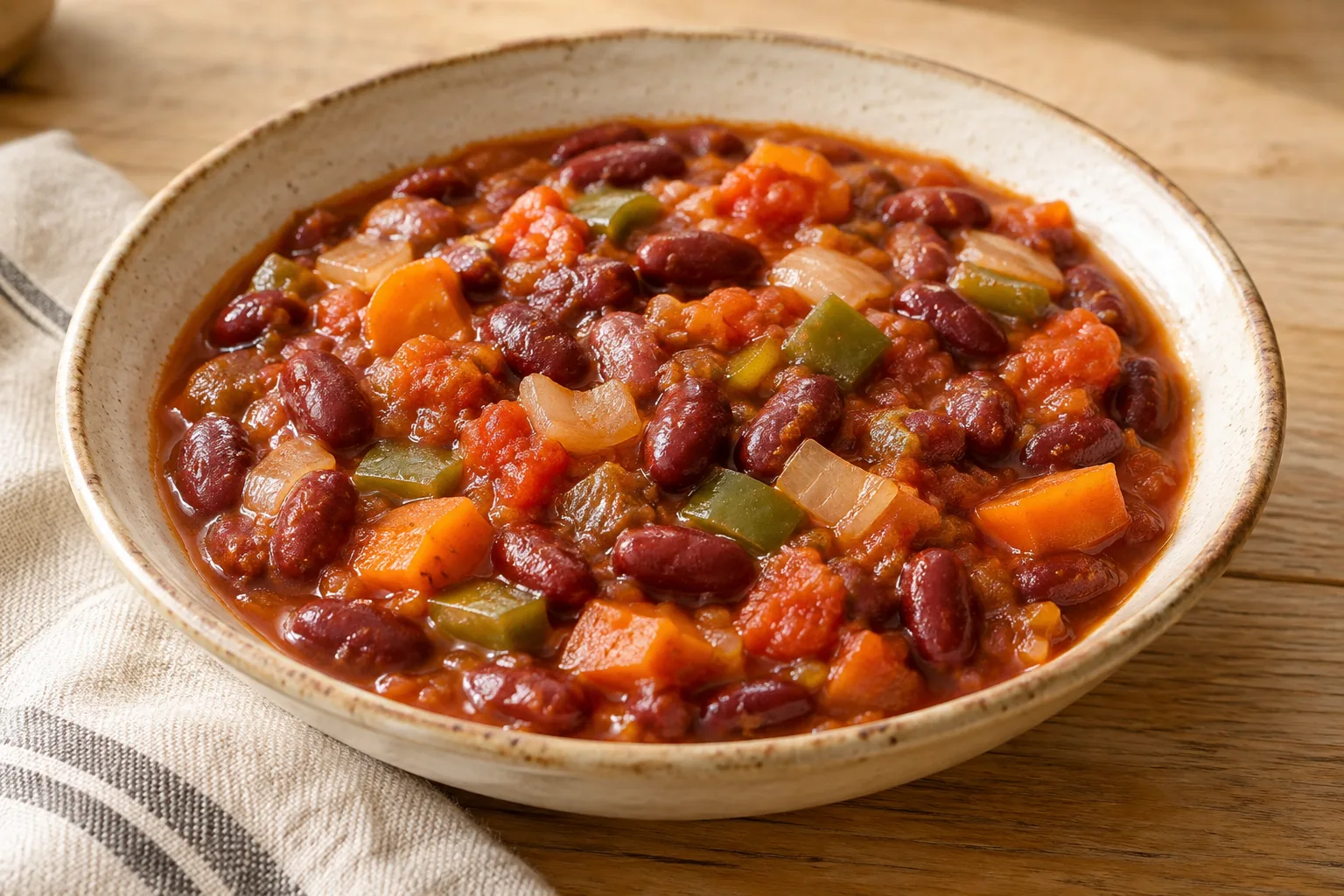
Cooked red beans are legume seeds that have already been cooked and are sold or prepared for use according to the directions for that product. The name can cover red beans that differ in size and shade. In cooking, they are used in dishes including chili, rajma-style preparations and red beans with rice. This profile is about cooked beans, not dried beans or green beans. The name alone does not tell you whether the beans are canned, packaged in another way or cooked at home, so check the product presentation and ingredient list before deciding how to use them. Their readiness for use and any further handling instructions depend on the specific product.
When to use it
Use cooked red beans when you want to add an already-cooked legume to a meal without starting with dried beans, such as chili, soup, stew or red beans served with rice. They can also be mashed into a bean paste. The result depends on the variety, firmness and accompanying liquid; check the package and adjust the liquid and seasoning to suit the dish. They are a practical choice when a recipe calls for cooked red beans, but they are not an automatic replacement for every other bean if color or texture matters.
How to use it
Before cooking, read the label: packaging, ingredients and directions can differ from one product to another. If the product directions allow it, add the beans to soup, chili or stew so they combine with the other ingredients, or serve them with rice. For a smoother texture, mash or blend them into a bean paste; test a small portion first to judge its consistency. Since these beans are already cooked, do not treat them as dried beans; follow the instructions for the specific product and adjust liquid and seasoning for the result you want. Do not assume that every form of cooked beans is used or stored in the same way.
Flavour and texture
Red beans are described in culinary sources as full-bodied and suitable for stews; some red varieties can tint their cooking liquid. The texture of a cooked product is not always identical: it can vary with the bean variety and preparation, from beans that hold their shape to softer ones. Check their firmness before stirring vigorously or blending them, especially if you want whole beans to remain visible in the dish.
How to choose it
Choose a product clearly identified as cooked red beans and check its ingredient list, quantity and package directions. The name does not guarantee one variety, texture or form of packaging, so compare the product details with what your recipe needs. If you need to avoid a particular ingredient, do not rely on the name alone: review the allergen information and the full label.
Storage
There is no single storage period established here for all cooked red beans: it depends on how they are sold and on the product directions. Read and follow the package instructions for storage and use, including any guidance that applies after opening. For beans cooked at home, do not assume that directions for an unopened canned product apply; use preservation guidance suited to that preparation.
Substitutions
In soups, stews and rice dishes, other cooked beans can replace red beans when the recipe can accommodate differences in color, size and texture. Pinto or black beans may work in some preparations, but they will not necessarily reproduce the original dish’s appearance or flavor. Check that the substitute is cooked and follow its own use directions; do not swap in dried beans without adapting the recipe.
Common mistakes
Do not assume that all cooked red beans have the same firmness, variety or packaging. Another common mistake is substituting without considering how the bean will change the dish’s color and texture, or assuming cooked beans keep in the same way as an unopened can. Read the label and adjust liquid and seasoning to the product you have.
Safety and allergens
Check the ingredient list and allergen information, and follow the storage and use directions on the package. The available evidence does not establish one universal storage period or a specific reheating recommendation for every product format.
Culinary uses
- Base sustanciosa para chili y guisos
- Ingrediente para sopas y platos de alubias con arroz
Recommended techniques
- Añadir a sopas o guisos ya casi terminados para integrarlas en el plato
- Triturar o machacar para preparar una pasta de alubias
Pairs well with
- Arroz
- Chili y guisos
- Tomate o salsa de tomate
Frequently asked questions
Can cooked red beans go straight into a stew?
Check the product directions first. If the label allows that use, add them to a stew or soup and adjust the liquid and seasoning to suit the dish.
What dishes go well with cooked red beans?
They are used in chili, soups and stews, and are also served with rice. The bean variety and texture can affect the result.
Can I substitute pinto or black beans?
In some stews or rice dishes, yes, if the recipe can accommodate a change in color and texture. Use a cooked substitute and follow its directions as well.
Sources and review
Automatically researched, cross-checked and validated content. Sources consulted:
- En el etiquetado alimentario hay algunas menciones que son obligatorias eletiquetadocuentamucho.aesan.gob.es
- Client Challenge doi.org
- Las alubias o habichuelas: origen, variedades, beneficios y recetas para cocinar la legumbre más extendida del mundo directoalpaladar.com
- Pág. 1 MINISTERIO DE AGRICULTURA, PESCA Y ALIMENTACIÓN DIRECCIÓN GENERAL DE mapa.gob.es
- Storing White Rice | USU extension.usu.edu
- Judías verdes (judías verdes) - Spend Smart Eat Smart spendsmart.extension.iastate.edu
- Cultivo de frijoles en huertos familiares | Extensión de la UMN es.extension.umn.edu
- Variedades y recetas de alubias hola.com
- FACULTAD DE FARMACIA Y NUTRICIÓN ORGANIZA: unav.edu
- Cocinar de 5 Maneras | University of Maryland Extension extension.umd.edu
- Recetario Resumen cs.upc.edu
- How to Cook Pork Tenderloin on the Grill • southernwv.edu staging.southernwv.edu
- Preserving dry beans | OSU Extension Service extension.oregonstate.edu
- Selecting, Storing, and Serving Ohio Beans | Ohioline ohioline.osu.edu
- Alubia roja - Wikipedia, la enciclopedia libre es.wikipedia.org
- ¿Cuántos tipos de alubias hay? | Fine Dining Lovers finedininglovers.es