- Category
- Pulses
- State
- Other
- Usual unit
- g
What it is
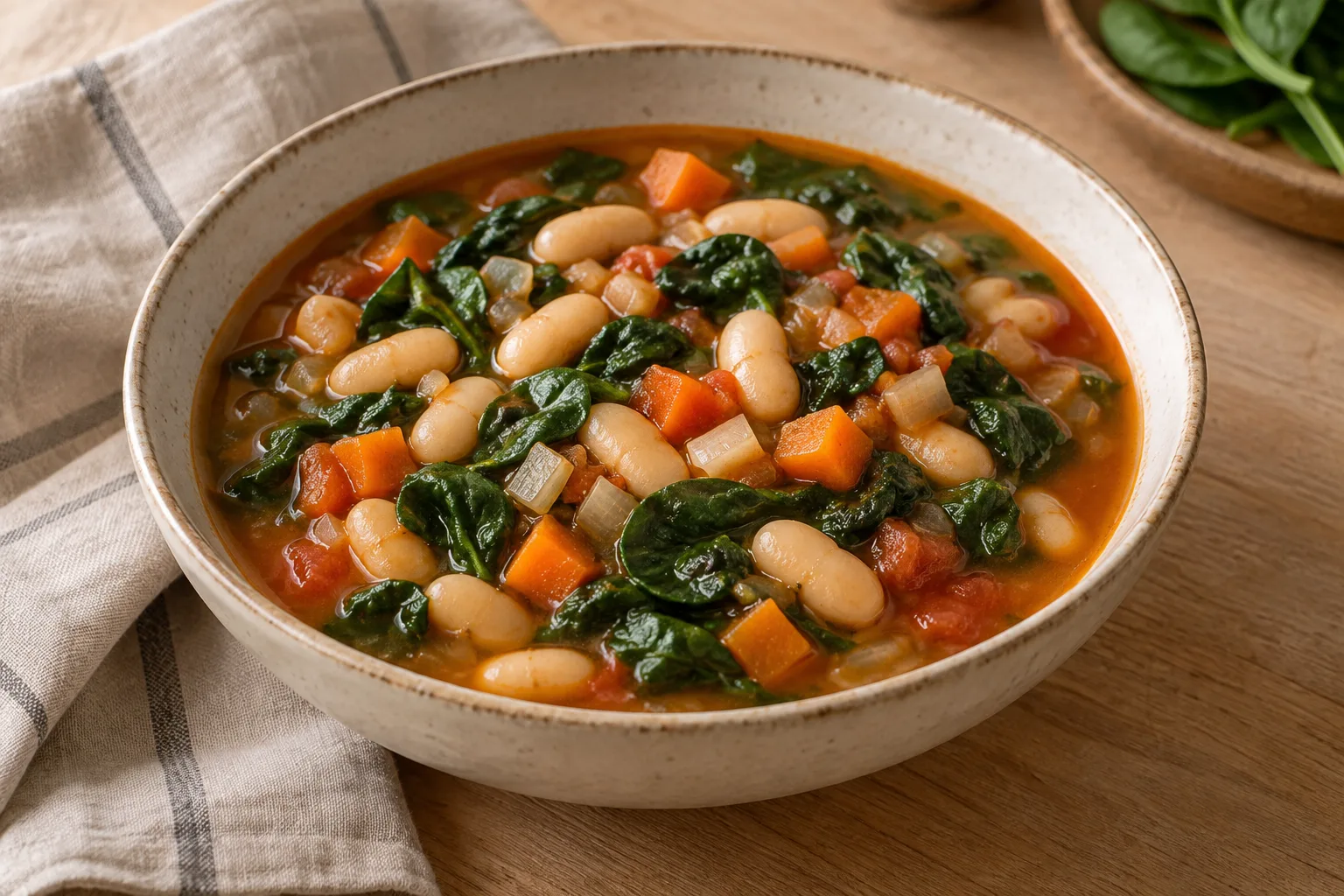
Cooked white beans are bean seeds that have already been cooked. The name can describe beans prepared at home or a packaged product, so it does not identify one specific variety or cooking method. White beans come in different sizes and shapes; some varieties are described as large and buttery, while others are small. Once cooked, they can be a main ingredient or an addition to soups, stews, salads and side dishes. This profile is about cooked beans, not fresh green beans or dry beans that still need cooking.
When to use it
Use them when you want to add a cooked legume to a meal without starting with dry beans. They suit soups, stews and other one-pot dishes, and can also go into salads or be served as a side. Their mild flavor works with vegetables, seafood or more strongly flavored ingredients. In hot dishes, add them gently so they retain their shape; for salads, drain them and toss with dressing and the other ingredients. The bean variety and size can affect the final texture.
How to use it
First check the product format and any directions on its package. If the beans are packed in liquid, drain and rinse them if you wish, then add them to a cold salad or a hot preparation. For soups and stews, fold them in toward the end and stir gently to help keep them whole. You can also mash or blend them into a creamy soup or purée, or crush them to thicken a dish. Pair them with vegetables or seafood; recipes also combine them with pork products. Season according to the other ingredients and avoid cooking them longer than your recipe requires.
Flavour and texture
Cooked white beans generally have a mild flavor that takes well to varied accompaniments. Texture depends on the variety and cooking: some are tender and buttery, while others hold their shape more firmly. Large cooked beans can be delicate, so mix them gently. The cooking liquid in some preparations can be thick and flavorful, although the result depends on the product and recipe.
How to choose it
Choose a format that suits your recipe and check the product name, ingredient list, and any storage or use directions on the package. If buying loose or unpackaged, confirm that the product is cooked white beans and ask what product information is available. Do not infer a specific variety from the general name: white beans come in different sizes and shapes. Check that packaging is intact and consult its date and label.
Storage
The available evidence does not establish one storage period for all cooked white beans. Follow the storage and use directions on the package, which can depend on the product and its format. For beans sold unpackaged, ask the retailer about handling and storage. Do not apply storage guidance for dry beans to cooked beans: they are different products.
Substitutions
In salads, soups and stews, replace cooked white beans with other cooked beans, such as pinto or red beans, or with cooked chickpeas. These are culinary alternatives, not exact matches: size, shape and texture can change the result, and colored beans may alter the appearance of the dish. Make sure the substitute is cooked and adjust the seasoning to its flavor and consistency.
Common mistakes
Do not confuse cooked white beans with dry beans or green beans; they call for different uses. Avoid vigorous stirring in a stew, as cooked beans can break apart. Do not assume all white-bean varieties have the same size or texture. Also, do not apply a general storage period without checking the specific product and its directions.
Safety and allergens
No specific safety warning for this cooked ingredient is supplied. Follow the package’s storage and use directions and check the ingredient and allergen information for the particular product. Information requirements can differ between packaged and unpackaged foods.
Culinary uses
- Main ingredient in soups and stews
- Salad ingredient or side dish
- Plant-based alternative to meat in hearty dishes
Recommended techniques
- Fold gently into a simmering dish near the end of cooking
- Mash or blend into a creamy soup or purée
- Rinse and drain if packed in liquid, then add to cold or warm dishes
Pairs well with
- Vegetables and leafy greens
- Tomato, onion, garlic and olive oil
- Seafood, including clams or prawns
- Pork products such as chorizo, where desired
Frequently asked questions
Do cooked white beans need to be cooked again?
They do not need the initial cooking required for dry beans. Add them directly to a salad or heat them in a soup or stew, following the product’s directions.
Can I use cooked white beans in salads?
Yes. Cooked beans are used in salads and as a side dish. Drain them if they are packed in liquid and mix gently with the other ingredients.
What can I use instead of cooked white beans?
Try other cooked beans or cooked chickpeas. Their size, texture and color may change the appearance and consistency of the dish.
Sources and review
Automatically researched, cross-checked and validated content. Sources consulted:
- En el etiquetado alimentario hay algunas menciones que son obligatorias eletiquetadocuentamucho.aesan.gob.es
- Aesan - Agencia Española de Seguridad Alimentaria y Nutrición aesan.gob.es
- Client Challenge doi.org
- Cooking Food Storage | USU extension.usu.edu
- Las alubias o habichuelas: origen, variedades, beneficios y recetas para cocinar la legumbre más extendida del mundo directoalpaladar.com
- How to Cook Porterhouse Steak for Beginners • southernwv.edu staging.southernwv.edu
- Judías verdes (judías verdes) - Spend Smart Eat Smart spendsmart.extension.iastate.edu
- Cultivo de frijoles en huertos familiares | Extensión de la UMN es.extension.umn.edu
- Variedades y recetas de alubias hola.com
- r°' ^' //,^/ i /í ^ %^ % % % '%/ % % % %% /,///% • % ^ '^ i i ?. ^ , % ^ mapa.gob.es
- FACULTAD DE FARMACIA Y NUTRICIÓN ORGANIZA: unav.edu
- Publication 348-585S www.ext.vt.edu ext.vt.edu
- Los alimentos como medicina: la dieta antiinflamatoria | Children's Hospital of Philadelphia chop.edu
- Cocinar de 5 Maneras | University of Maryland Extension extension.umd.edu
- Recetario Resumen cs.upc.edu
- Cooking Dry Beans | Colorado State University Extension extension.colostate.edu
- 20 recetas de alubias blancas y todas sus variedades para triunfar - Gurmé abc.es
- Tipos de alubia y sus usos en la cocina - facilisimo.com cocina.facilisimo.com