- Category
- Oils and fats
- State
- Liquid
- Usual unit
- cup
What it is
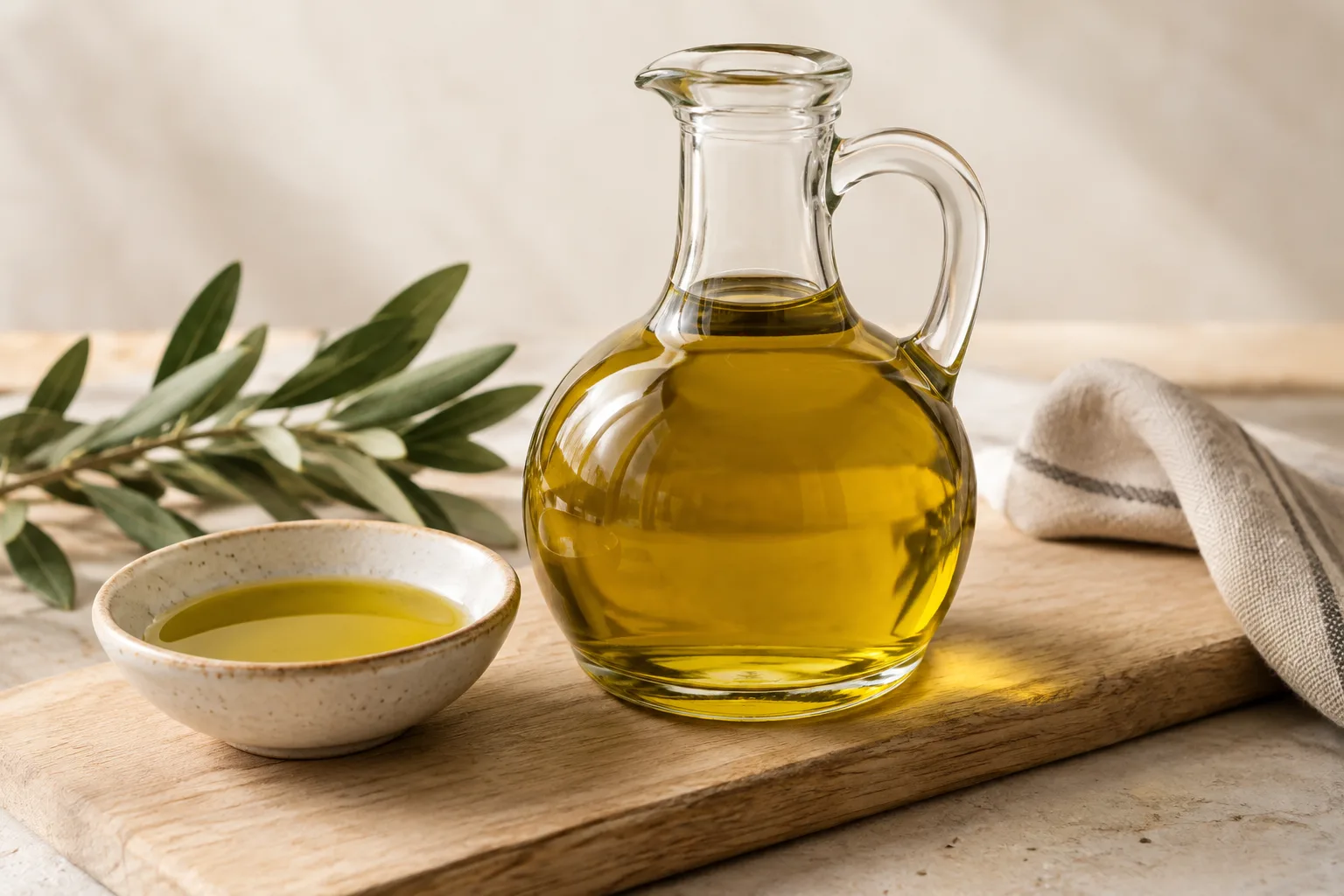
Cooking oil is a broad name for edible oils, usually plant-based and less commonly animal-derived. The category includes very different products, such as olive, canola, corn, peanut, sesame and walnut oils, as well as blends. There is therefore no single flavor or cooking behavior shared by all cooking oils: the variety and its processing affect both flavor and response to heat. In the kitchen, oil can serve as a cooking fat, an ingredient in dressings, or part of some sauces and emulsions. This profile describes the general category rather than one specific oil. Check the product name and package information to identify the oil you have and determine how it is intended to be used.
When to use it
Choose an oil according to the result you want and the cooking method. An oil suited to sautéing, stir-frying or roasting may not be the same one you would choose for drizzling over a finished dish or mixing into a dressing. Some oils are described as sturdy choices for sautéing, stir-frying and roasting, while more delicate varieties are better used in dressings or added at the end. If the oil’s flavor matters, select a variety that fits the dish. Do not assume all oils behave alike when heated: identify the variety and follow the product and recipe directions.
How to use it
For cooking, use the amount the recipe calls for and select a variety suited to the technique; some varieties are used for sautéing, stir-frying or roasting. For a dressing, incorporate the oil into the mixture and combine it with the other recipe ingredients. You can also drizzle a little over a finished dish when you want the oil’s flavor to stand out. Some delicate varieties are best used this way, cold or added at the end, while others are considered sturdier for cooking. Follow the recipe and package directions, avoid assuming one oil works equally well for every technique, and do not heat the product beyond what its label recommends.
Flavour and texture
Flavor and mouthfeel depend on the variety and processing: an oil may be mild or have a more pronounced character. Some oils are chosen for their flavor in dressings or as a finishing touch, while others are more neutral. Heat stability also varies, so this broad category has no single culinary profile. Identify the variety before deciding how to use it.
How to choose it
Check the variety name and package information before buying: “cooking oil” can mean different oils or a blend. First consider whether you will use it for cooking, dressing or finishing a dish, then choose a product suited to that purpose. If flavor matters, the variety makes a difference; if you plan to cook with more heat, check whether the product is suitable for that method. Do not infer these qualities from appearance alone.
Storage
The available evidence does not establish universal storage conditions for all cooking oils, and different varieties may vary. Follow the storage instructions on the package and keep the product in its identified container. If those directions are unavailable, check with the manufacturer rather than assuming that every oil has the same storage method or shelf life.
Substitutions
You can replace one variety with another only when both suit the intended use and the flavor change works in the recipe. For heated cooking, choose another variety considered suitable for that method; for a dressing or finishing use, consider the oil’s flavor and delicacy. There is no universal substitute that works the same way in every recipe.
Common mistakes
A common mistake is treating all oils as if they had the same flavor and heat stability. This category includes different products, so do not assume an oil intended for dressing will behave like one recommended for sautéing or roasting. Check the variety and package directions before use.
Safety and allergens
Follow the product’s use and storage directions and pay attention to its package information. This profile does not identify a specific safety warning that applies to every cooking oil; characteristics and directions may depend on the individual product.
Culinary uses
- Cooking fat
- Dressing and finishing ingredient
- Base for sauces and emulsions
Recommended techniques
- Sautéing or stir-frying with a suitable oil
- Roasting with a suitable oil
- Drizzling or mixing into a dressing
Pairs well with
- Salads and dressings
- Cooked vegetables and other savory dishes
- Sauces and emulsions
Frequently asked questions
Can any cooking oil be used for sautéing?
Not necessarily. Heat stability varies by variety; choose one considered suitable for sautéing and follow the package information.
Can I use cooking oil in a dressing?
Yes. Oils are used in dressings, and some delicate varieties are better suited to cold preparations or to being added at the end.
Do all cooking oils taste the same?
No. Flavor depends on the variety and processing. Check the product name and choose according to the flavor you want in the dish.
Sources and review
Automatically researched, cross-checked and validated content. Sources consulted:
- The Essential Glossary of Cooking Terms for the Culinary Arts - Escoffier escoffier.edu
- Usos culinarios apropiados de las variedades de plátano verde barraganete, dominico y maqueño, en la gastronomía ecuatoriana. | Revista de Gastronomía y Cocina doi.org
- Creaciones de Cocina | New Mexico State University | BE BOLD. Shape the Future. kitchencreations.nmsu.edu
- MF3659S Spanish: Cooking for One or Two, Fact Sheet bookstore.ksre.ksu.edu
- Expand your healthy cooking oil choices - Harvard Health health.harvard.edu
- - YouTube youtube.com
- Diferencias entre diferentes aceites que se usan en cocina | masymas supermercados supermasymas.com
- Cocina Fácil, de la Despensa a la Mesa Enlaces de Nutrición - Número #10 extension.psu.edu
- Aceite de cocina - Wikipedia, la enciclopedia libre es.wikipedia.org
- GAPS 2 Spanish General Food Resource Guide 2019 sph.umn.edu
- Áreas de Seguridad Alimentaria aesan.gob.es