- Category
- Baking
- State
- Powdered
- Usual unit
- teaspoon
What it is
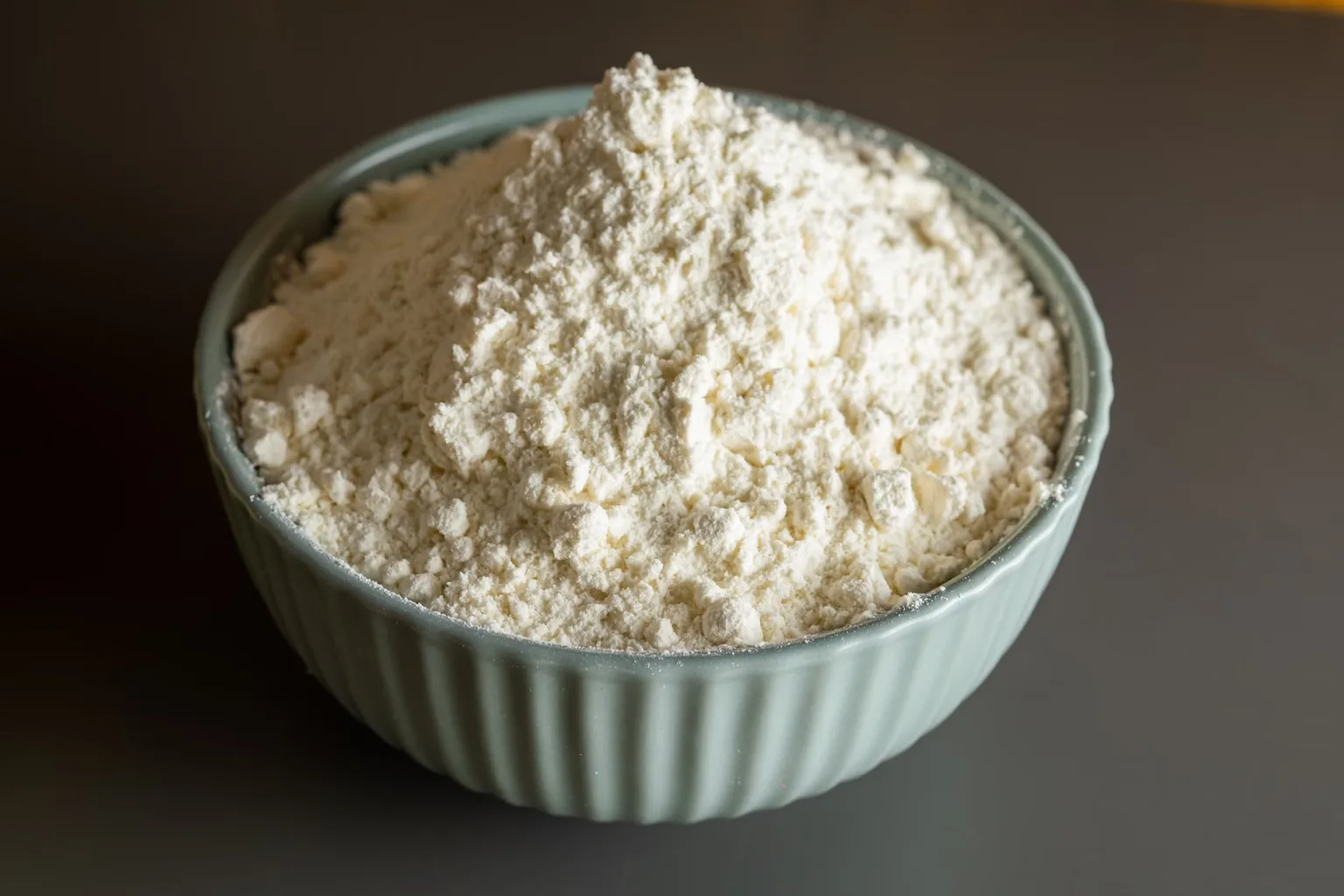
Cream of tartar, also known as potassium bitartrate or potassium hydrogen tartrate, is an acidic salt commonly sold as a white powder. It is not tartar sauce, and it is not the same compound as tartaric acid, although the related names can be confusing. In cooking, it is valued for several baking functions: it can help stabilize whipped egg whites, and, when combined with baking soda, provide the acidic component of a leavening mixture. It is also used in sugar preparations to help limit crystallization. Its role depends on the recipe, so it is not a universal replacement for baking powder or baking soda on their own.
When to use it
Use it when a recipe specifically calls for cream of tartar, particularly to help stabilize egg whites for meringues, soufflés, or icing, or when it is part of a baking-soda-and-acid combination intended to help a batter rise. It can also be useful in syrups, glazes, and other cooked-sugar preparations where limiting crystallization is desired. Do not add it automatically to every cake: recipes differ, and the effect depends on the balance of ingredients. Before substituting, check whether the recipe uses cream of tartar alone or together with baking soda.
How to use it
Measure cream of tartar according to the recipe and add it at the stated step rather than estimating. For whipped egg whites, it is incorporated while they are being prepared to help maintain their structure; it is not there to sweeten or flavor them. In batters, its acidic role is useful when the formula also includes baking soda. Changing the quantities or using it without considering the other ingredients may affect the result. In icing, syrup, or cooked sugar, follow the recipe directions to help limit crystallization. If you are out, lemon juice or white vinegar can provide acidity, but they may affect flavor and their amounts are not interchangeable in every recipe.
Flavour and texture
Cream of tartar is commonly described as a fine, white, odorless powder without a pronounced specific flavor. It is chosen for its acidic function and its effect in particular preparations, not to provide a dominant taste. In whipped egg whites it can help maintain structure; in recipes with baking soda it contributes to leavening, and in cooked sugar it can help limit crystallization. Too much, or an unsuitable substitution, can upset a recipe’s balance, so follow the stated amount.
How to choose it
Look for a product labeled cream of tartar or potassium bitartrate at baking-supply shops and food retailers. Read the product name carefully: tartaric acid and cream of tartar are related but not identical, so do not treat their names as interchangeable. Since recipes may call for only a small amount, choose a package size you can reasonably use and check that the label matches the ingredient requested.
Storage
Cream of tartar is sold as a powder, and some culinary sources give an approximate shelf life of one year; the specific date depends on the product. Check the date and directions on the package rather than assuming that every brand has the same shelf life. If the product looks different from what you expect or its packaging says not to use it, follow the label and replace it as appropriate.
Substitutions
Lemon juice and white vinegar can replace cream of tartar when a recipe needs acidity, but they may alter the flavor and the appropriate amount depends on the preparation. If cream of tartar appears alongside baking soda, baking powder can replace that combination in some recipes; it is not automatically equivalent to cream of tartar used alone. Check the full formula before changing ingredients.
Common mistakes
Do not confuse cream of tartar with tartaric acid, tartar sauce, baking soda, or baking powder: these are different products with different functions. Another common mistake is substituting without checking whether the recipe also contains baking soda, or assuming there is one universal replacement ratio. Use the ingredient and amount specified, and remember that lemon juice or vinegar may change the flavor.
Safety and allergens
Use the product only as directed on its label and in the recipe. The supplied evidence contains no specific official warning about its culinary handling; follow any product-specific directions on the package.
Culinary uses
- Estabilizante de claras y merengues
- Acidulante para recetas con bicarbonato
- Ayuda a limitar la cristalización del azúcar
Recommended techniques
- Batir claras con una pequeña cantidad incorporada según la receta
- Combinar con bicarbonato cuando la receta lo indique
- Añadir a preparaciones de azúcar cocido para ayudar a limitar la cristalización
Pairs well with
- Claras de huevo
- Bicarbonato de sodio
- Azúcar para glaseados y jarabes
Frequently asked questions
Is cream of tartar the same as tartaric acid?
No. They are related, but they are different compounds. Check which one the recipe requests before buying or substituting.
What does cream of tartar do in meringue?
It can help stabilize whipped egg whites and maintain their structure. Follow the amount specified in the recipe.
Can I substitute lemon juice for cream of tartar?
Sometimes, when the recipe needs an acid, but lemon can change the flavor and the appropriate amount depends on the preparation.
Estimated nutrition
- Fat
- 0 g
- Saturates
- 0 g
- Carbohydrate
- 0 g
- Sugars
- 0 g
- Protein
- 0 g
- Salt
- 0 g
Sources and review
Automatically researched, cross-checked and validated content. Sources consulted:
- ¿Por qué la muerte es origen de miedos y tabúes? doi.org
- Pan - Wikipedia, la enciclopedia libre es.wikipedia.org
- Client Challenge doi.org
- Teresa Carnero i Arbat Expansión vinícola y atraso agrario ... mapa.gob.es
- You may also like… beard.cps.edu
- Cremor tártaro: qué es, para qué sirve, usos en cocina y sustitutos bonviveur.com
- Crémor Tártaro: Qué es y qué aplicaciones de uso tiene drogueriaelbarco.com
- Cremor tártaro, ¿qué es y cómo reemplazarlo? | The Gourmet Journal thegourmetjournal.com
- Cremor tártaro: qué es, y por qué no puede faltar en tu cocina - Estudia Hostelería estudiahosteleria.com
- Qué es el cremor tártaro y cuáles son sus usos en la cocina directoalpaladar.com
- Cómo usar el cremor tártaro en nuestra cocina - facilisimo.com facilisimo.com
- ricu Itu ra mapa.gob.es