- Category
- Herbs and spices
- State
- Dry
- Usual unit
- teaspoon
What it is
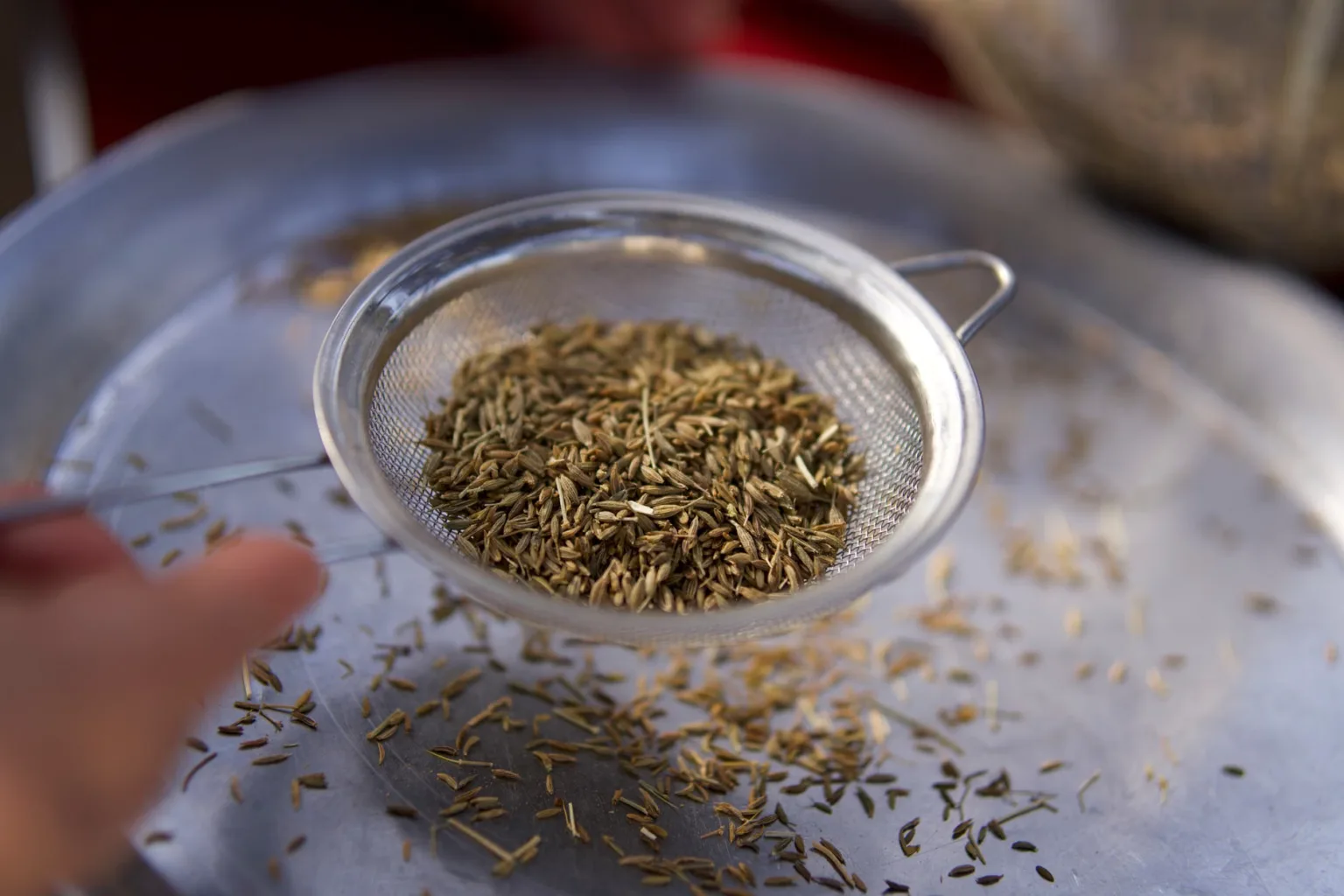
Cumin seeds are the dried fruits of Cuminum cyminum, a plant in the Apiaceae family. They are commonly called seeds in cooking, although botanically they are dry fruits. Small, elongated and ridged, they are usually light brown and sold whole or ground. This guide refers to common cumin, not black cumin, a name that can refer to a different species, or caraway, a similar but distinct spice. Cumin has a strong aroma and a warm, earthy, slightly bitter flavor, so a little can add character to a dish. It is used in many culinary traditions and appears in preparations such as curry, couscous, hummus, mojo sauce and chili con carne.
When to use it
Use cumin when you want to add aromatic depth to legumes, stews, soups, rice, couscous, sauces or fillings. Whole seeds are useful when you want the flavor to develop during cooking or plan to toast and grind them just before use. Ground cumin blends readily into spice mixtures and smooth preparations. It works particularly well with chickpeas, beans, onion, garlic, tomato and meats, though its intensity can overpower other flavors if you add it without tasting. There is no specific culinary season for this dried spice: use it whenever a recipe calls for its warm, earthy character.
How to use it
Add whole seeds directly to a dish, or toast them briefly in a dry pan and grind them afterward for a more pronounced aroma. You can also crush them with a mortar and pestle or a grinder, then combine them with other seasonings. To flavor the base of a stew, add the seeds to the cooking oil; there is no single fixed amount, since dish size and product intensity vary. Ground cumin can be stirred directly into soups, sauces, fillings and spice blends. Start with a little, taste and adjust: its flavor is strong and can mask the nuances of other ingredients. Distinguish common cumin seeds from caraway and from spices called black cumin.
Flavour and texture
The aroma is warm, penetrating and somewhat sweet; the flavor is earthy, intense and slightly bitter, with a savory spice note. Whole seeds provide a noticeable texture and release aroma gradually, while ground cumin disperses more evenly and is perceived quickly. Brief toasting can make the aroma more expressive. The exact profile can vary with the product and degree of grinding.
How to choose it
Choose whole seeds if you want to toast or grind them fresh, and ground cumin if you want to add it directly and evenly. Check the label for common cumin or Cuminum cyminum: “black cumin” can refer to another spice, and caraway is also sometimes confused with cumin. The seeds described here are typically small, elongated and brown. When buying in bulk, verify the product identification and that it is intended for culinary use.
Storage
The available evidence does not specify a storage period or particular storage conditions for cumin seeds. Keep the product in its packaging and follow the label instructions rather than assuming a universal shelf life. If you buy whole seeds, you can grind only the amount you need for cooking. Check the package before use, and do not use the product if its label says to discard it or it appears deteriorated.
Substitutions
Caraway can play a similar culinary role, but it is not cumin: its aroma is described as more penetrating and its flavor profile is different, so the result will change. You can also swap whole seeds for ground cumin, or vice versa; this is not an exact equivalent because it changes the texture and how the flavor disperses.
Common mistakes
Confusing common cumin with caraway or black cumin can noticeably change a dish’s flavor. Another mistake is adding too much without tasting: cumin is intense and can dominate the dish. Do not assume whole seeds and ground cumin incorporate in exactly the same way; whole seeds add texture and tend to release aroma gradually.
Safety and allergens
Use cumin as a culinary spice and follow the package directions. The available evidence provides no specific official safety warning for cumin seeds.
Culinary uses
- Especia aromática para sazonar platos salados
- Base de sabor para mezclas de especias, guisos y salsas
- Aromatizante para aceites de cocción
Recommended techniques
- Tostar brevemente las semillas en seco para intensificar su aroma y molerlas después
- Moler las semillas en mortero o molinillo
- Añadir semillas a un aceite de cocción para aromatizarlo
Pairs well with
- Garbanzos y hummus
- Cuscús y arroz
- Cebolla y ajo
- Carnes de cerdo, cordero y pollo
- Tomate, pimiento y legumbres
- Cilantro, pimienta y cúrcuma
Frequently asked questions
Are cumin seeds and ground cumin the same thing?
They are two forms of common cumin. Seeds are whole; ground cumin is made by crushing them. They differ in texture and in how they blend into a dish.
Is cumin the same as caraway?
No. They look similar and can be confused, but they are distinct spices with different aromatic profiles.
How can I bring out the aroma of cumin seeds?
Briefly toast them in a dry pan and grind them afterward. Begin with a modest amount, then taste before adjusting.
Estimated nutrition
- Fat
- 0 g
- Saturates
- 0 g
- Carbohydrate
- 133 g
- Sugars
- 0 g
- Fibre
- 0 g
- Protein
- 0 g
- Salt
- 0 g
Sources and review
Automatically researched, cross-checked and validated content. Sources consulted:
- ¿Por qué la muerte es origen de miedos y tabúes? doi.org
- Cuminum cyminum - Wikipedia, la enciclopedia libre es.wikipedia.org
- Cómino: qué es y para que sirve | JUST SPICES ® justspices.es
- Curry - Wikipedia, la enciclopedia libre es.wikipedia.org
- Propiedades y beneficios del Comino - Trevijano trevijano.com
- Comino: qué es, propiedades, beneficios y uso en la cocina bonviveur.com
- Comino - Región de Murcia Digital regmurcia.com
- Qué es (y qué no es) la estadística, usos y abusos de una disciplina clave en la vida de los países y las personas | Estudios económicos doi.org
- - YouTube youtube.com
- INFORME RESULTADOS 2021 PNCOCA_E.indd aesan.gob.es
- El comino, una de las especias más populares del mundo: propiedades, beneficios y cómo sacarle partido en la cocina directoalpaladar.com
- ¿Para qué sirve el comino en la cocina? | Recetas Nestlé | Recetas Nestlé recetasnestle.com.ar
- Ingredientes que maridan con comino ✓ basmatic.com