- Category
- Herbs and spices
- State
- Dry
- Usual unit
- teaspoon
What it is
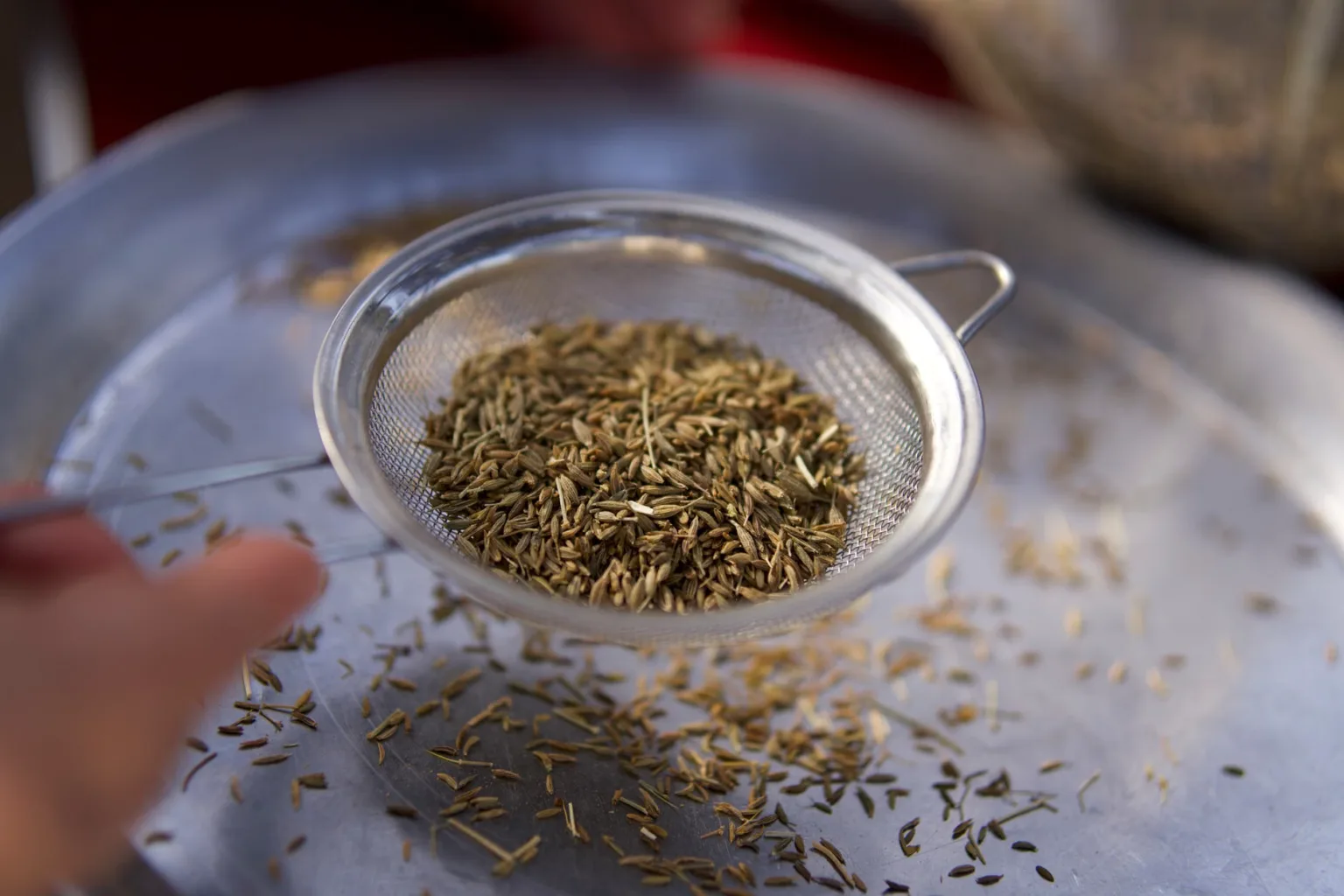
Cumin seeds are the whole, dried form of a spice used to season food. Their flavour is commonly described as warm, pungent and slightly bitter, with a distinctive aroma that can stand out even in small amounts. They can be used whole, ground, or toasted and then ground. Do not confuse ordinary cumin with black cumin: that name may refer to Nigella sativa, a botanically different species with different seeds and flavour. The botanical family identified for cumin is Apiaceae.
When to use it
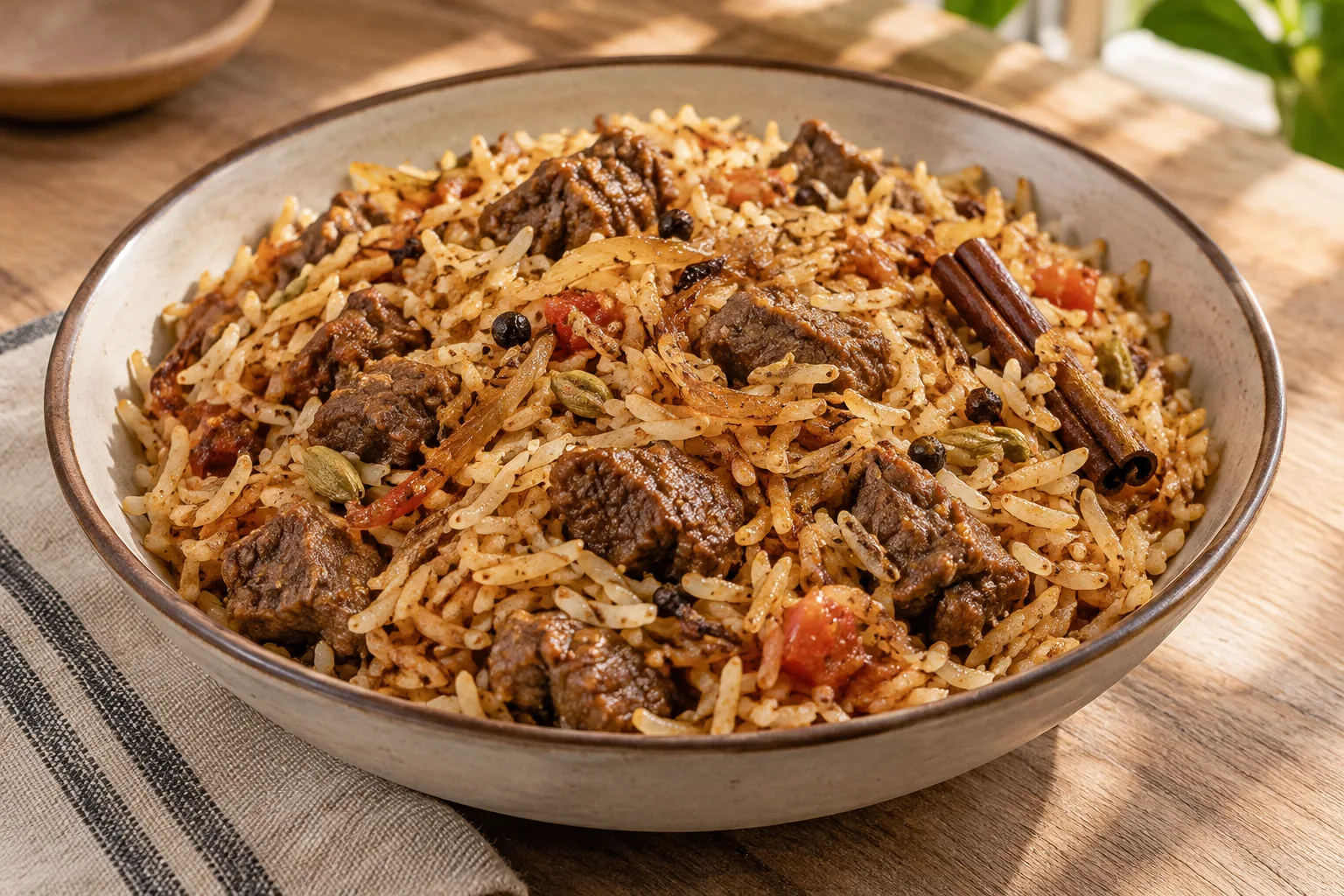
Use cumin when you want to add a warm, aromatic note to a savoury dish, especially legumes, rice, couscous, vegetables, stews or meat. Whole seeds can contribute flavour during cooking or infuse the oil used as a base for a stew. For a more pronounced, fresh aroma, toast the seeds in a dry pan and grind them before adding. Start with a little and adjust to taste: cumin can easily become more prominent than the other ingredients.
How to use it
Add whole seeds to a stew, bean dish or spice blend. To flavour an oil base, add the seeds and let them release their aroma before adding the other ingredients. Alternatively, toast them briefly in a dry pan until fragrant, let them cool, then crush them with a mortar or grinder. Freshly ground cumin works well in hummus, rice, couscous, roasted vegetables, sauces and blends such as harissa. Begin with a small amount and taste before adding more, since too much can mask the flavour of the dish.
Flavour and texture
Whole seeds have a warm, pungent aroma and a distinctive, slightly bitter, spicy flavour. They provide a firm texture when bitten; once ground, they blend into the dish and distribute their flavour throughout. Brief toasting intensifies their aroma, and grinding them afterwards gives a more fragrant result than using ground spice that has been stored for a long time.
How to choose it
Choose a clearly labelled whole-seed cumin product if you want to toast or grind it as needed. Check the label so you do not mistake it for black cumin, which may be a different species. Ground cumin is a convenient option when you want to cook quickly, while whole seeds let you grind only what you need. The available evidence does not establish a buying season or more specific objective quality criteria.
Storage
Keep the dry seeds in a tightly closed container in a cool, dry place, away from heat and moisture. Avoid leaving the container open beside a steaming pot, since moisture can affect spices. Dry seeds may remain usable without spoiling, but their aroma and flavour fade over time; check their fragrance before use if they have been stored for a long while.
Substitutions
Ground cumin can stand in for whole seeds when you want the spice to blend in without visible grains; the texture changes and the flavour may be distributed more evenly. Caraway can provide a different warm note in some blends, but it is not identical to cumin and will change the result. Do not automatically substitute black cumin, which may be a different botanical species.
Common mistakes
Adding too much cumin can make its flavour dominate and hide the other ingredients. Do not confuse cumin seeds with seeds sold as black cumin, which may come from another species. Avoid storing the open jar beside steam, and do not expect older seeds to retain the aroma of freshly ground cumin.
Safety and allergens
The supplied evidence establishes no specific safety warning for culinary cumin. Use it as a food seasoning and follow the package directions.
Culinary uses
- Seasoning for savoury dishes
- Aromatic ingredient in spice blends and sauces
- Flavouring for legumes, grains, vegetables and meat
Recommended techniques
- Toast whole seeds briefly in a dry pan until fragrant, then cool
- Grind whole seeds with a mortar or grinder shortly before use
- Add whole seeds to oil as a flavouring base for stews
Pairs well with
- Legumes, including chickpeas and beans
- Rice, couscous and other grains
- Vegetables and roasted squash
- Chicken, pork and lamb
- Garlic, coriander and chilli
Frequently asked questions
Should I toast cumin seeds before using them?
Toasting is an option for intensifying their aroma. Toast them in a dry pan until fragrant, let them cool, and grind them if you want a fine addition.
Can whole cumin seeds and ground cumin be used interchangeably?
They can play similar roles, but they do not give the same texture or distribute in the same way. Ground cumin blends into a dish; whole seeds remain visible.
Are black cumin and cumin the same?
Not necessarily. The name black cumin is also used for Nigella sativa, which is botanically different from ordinary cumin.
How do I keep cumin seeds aromatic?
Store them in a closed container in a cool, dry place, away from heat and steam. Their aroma fades over time.
Estimated nutrition
- Fat
- 0 g
- Saturates
- 0 g
- Carbohydrate
- 133 g
- Sugars
- 0 g
- Fibre
- 0 g
- Protein
- 0 g
- Salt
- 0 g
Sources and review
Automatically researched, cross-checked and validated content. Sources consulted:
- Romanica Olomucensia : «¿Qué pinga es esto?». Usos disfemísticos en el español de Cuba doi.org
- Cómino: qué es y para que sirve | JUST SPICES ® justspices.es
- FSHN13-03s/FS264: De compras para la salud: Las hierbas y las especias ask.ifas.ufl.edu
- Washington State Food Access English-Spanish Glossary wpcdn.web.wsu.edu
- Propiedades y beneficios del Comino - Trevijano trevijano.com
- Comino: qué es, propiedades, beneficios y uso en la cocina bonviveur.com
- Comino - Región de Murcia Digital regmurcia.com
- Comité Científico aesan.gob.es
- de comino molido Archives | Dinner Tonight dinnertonight.tamu.edu
- ARROZ INTEGRAL CON COMINO pediatrics.columbia.edu
- Mezcla de Especias Harissa extension.oregonstate.edu
- Stock de especias multiusos - Spend Smart Eat Smart spendsmart.extension.iastate.edu
- Dal Cocinado a Fuego Lento - MyLLU - Loma Linda University myllu.llu.edu
- El Origen del Comino: Un Viaje por el Mediterráneo desde Egipto hasta – Puerto de Oriente puertodeoriente.es