- Category
- Fish and seafood
- State
- Fresh
- Usual unit
- g
What it is
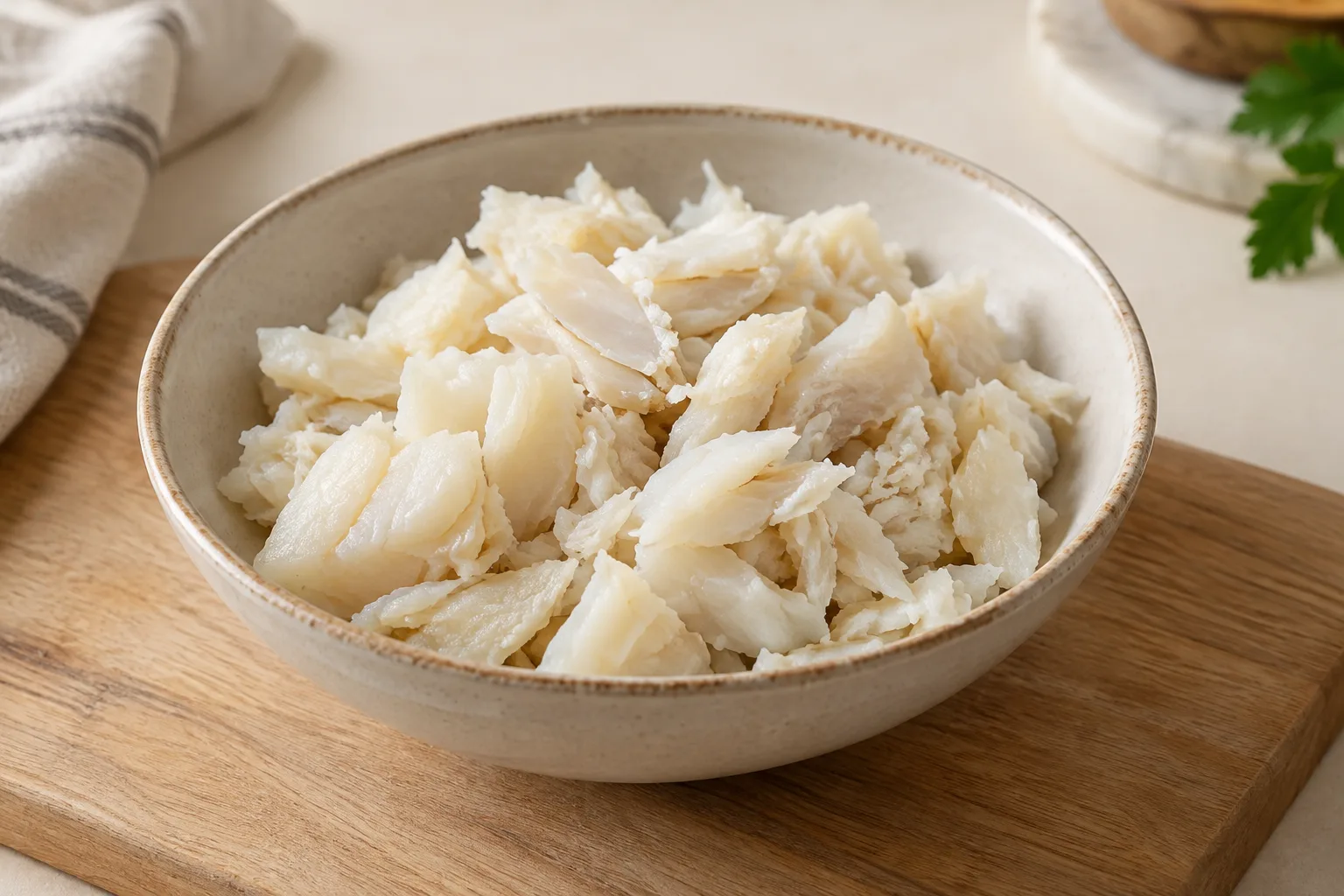
This is cod that has been salted and subsequently desalted, sold in small pieces or flakes rather than as a whole loin. Desalting reduces some of the salt and also transfers water and other soluble components. It is different from unsalted fresh cod and from cod sold as «lightly salted». It may be sold refrigerated or deep-frozen, so check the package and follow its handling directions.
When to use it
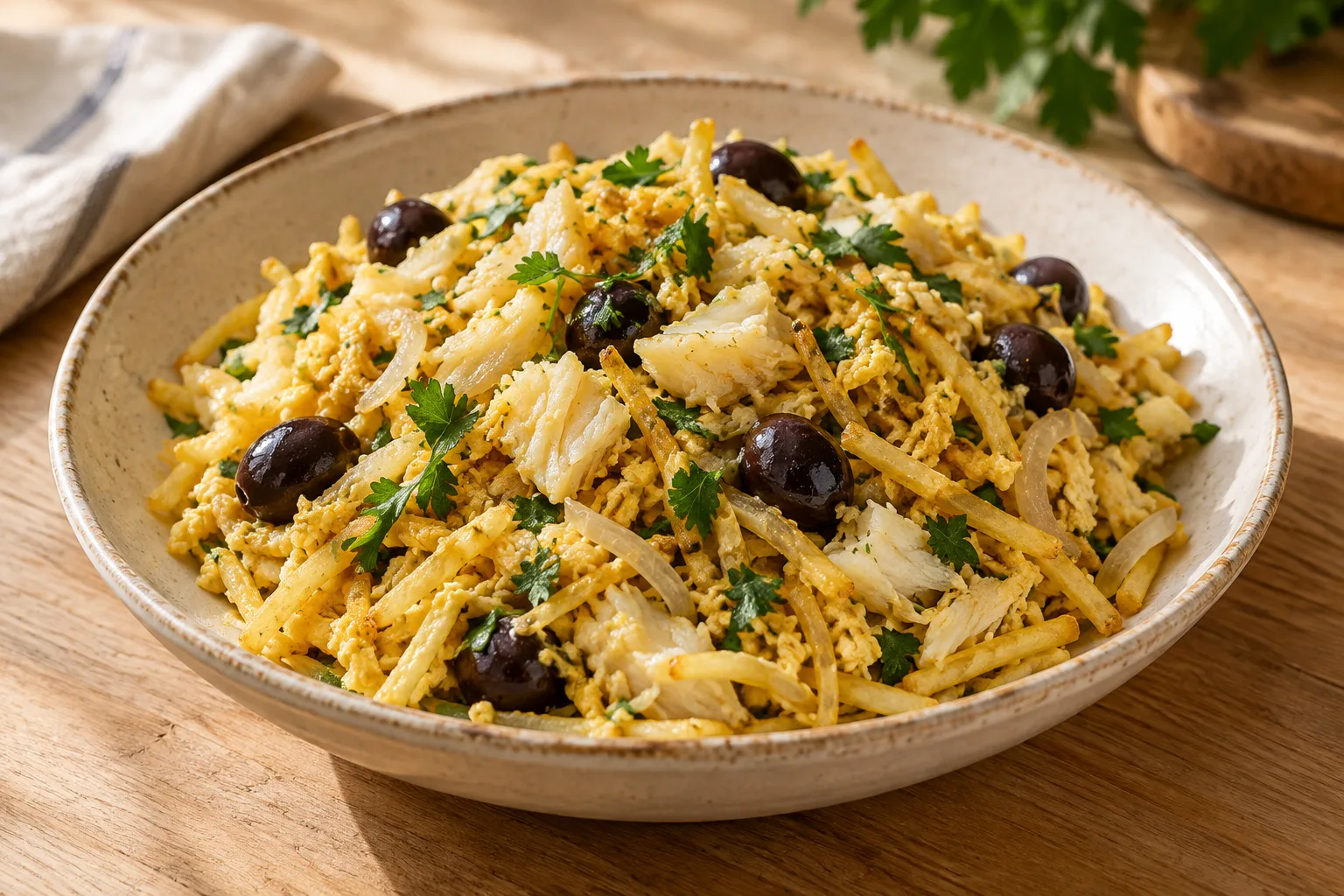
Use it when a recipe calls for small pieces of cod or when you want to distribute the fish evenly, such as in omelets, croquettes, scrambled egg dishes, pasta, cold salads or stews. Its flaked format blends readily into sauces and mixtures. Saltiness and intensity can differ between products; taste it before adding salt, and consider whether the dish will be served cold or cooked.
How to use it
Check the label to confirm that the product is desalted cod and whether it is sold refrigerated or deep-frozen. Drain and gently pat it dry if the recipe calls for it, then separate the flakes by hand and remove any visible bones or remnants. Fold it into an omelet, scrambled eggs, a pasta sauce or a stew, or combine it with tomato, onion and olive oil for a salad. Taste before seasoning, since the cod may still contribute salt. If serving it uncooked, follow official food-safety advice for raw fish.
Flavour and texture
It generally has a more pronounced flavor and aroma, and a firmer texture, than lightly salted cod. The flakes and irregular pieces mix easily with other ingredients. Color and saltiness can vary with the product and how it was made; appearance alone does not tell you how salty it is.
How to choose it
Read the label to confirm that it is desalted cod and distinguish it from lightly salted cod, which is a different product. Check whether it is refrigerated or deep-frozen and follow the package directions. Look for an even appearance, firm flesh and a mild, fresh smell; avoid pieces with dark marks or a dried-out appearance.
Storage
Follow the package storage instructions and keep the product under the stated conditions for its format, refrigerated or deep-frozen. Once opened, store it according to the label and do not leave it exposed at room temperature. The available evidence does not establish one storage duration that applies to every product, so do not rely on a generic number of days as a guarantee.
Substitutions
You can substitute desalted cod loin or portions, flaking them before use. Choose a piece size that suits the dish and check the salt level, since the format or product may affect how evenly the fish is distributed and how the finished dish tastes.
Common mistakes
Do not confuse it with fresh cod or lightly salted cod; these are different products. Do not add salt automatically: taste the fish and the assembled dish first. Do not substitute salted cod without desalting it, and do not ignore the package storage instructions.
Safety and allergens
Cod is fish and may cause a reaction in people with a fish allergy. Follow the storage and preparation instructions on the package. If you plan to eat it uncooked, consult and follow official food-safety advice for raw fish; desalting does not replace those precautions.
Culinary uses
- Desmigado para integrar en platos
- Ingrediente principal o complemento en recetas de pescado
Recommended techniques
- Desgarrar o separar en lascas con los dedos
- Añadir a la sartén y saltear
- Incorporar a guisos o salsas
- Servir sin cocción en preparaciones frías, solo siguiendo las recomendaciones oficiales de seguridad para pescado crudo
Pairs well with
- Tomate y cebolla
- Aceite de oliva y vinagre
- Pasta, aceitunas y alcaparras
- Patatas y pimientos
Frequently asked questions
Does it need desalting before cooking?
The product described has already been desalted. Check the label and taste it before adding salt, as the salt level can vary.
What dishes can I use it in?
Flaked cod is used in omelets, croquettes and scrambled egg dishes; it can also be added to pasta, sauces, salads or stews.
Can it be eaten uncooked?
Some dishes use uncooked desalted cod, but anyone eating fish without cooking it should follow official food-safety advice.
Sources and review
Automatically researched, cross-checked and validated content. Sources consulted:
- Client Challenge doi.org
- El Bacalao: Historia, Diseminación Y Usos Culinarios - Restaurante Romero restaurante-romero.es
- Gestión medioambiental de salmueras de desalado de bacalao. Tratamiento mediante tecnología de membranas doi.org
- Grupo Ubago ubagogroup.com
- Bacalao: Historia, Tradición y Recetas en El Paladar elpaladar.es
- - YouTube youtube.com
- Restaurante O'Grelo. El Bacalao: Tradición, Cultura y Gastronomía Ibérica restauranteogrelo.com
- Bacalao desalado: claves para comprar el mejor esta Semana Santa gourmets.net
- Secretos de la alta cocina revelados: Cómo cocinar nuestro bacalao de autor como un chef estrella - Bacalao BARQUERO bacalaobarquero.com
- Receta de pasta con bacalao: Sabores del mar en tu plato - Pasta Garofalo pasta-garofalo.com
- Esqueixada de bacalao - Gallina Blanca gallinablanca.es