- Category
- Vegetables
- State
- Fresh
- Usual unit
- g
What it is
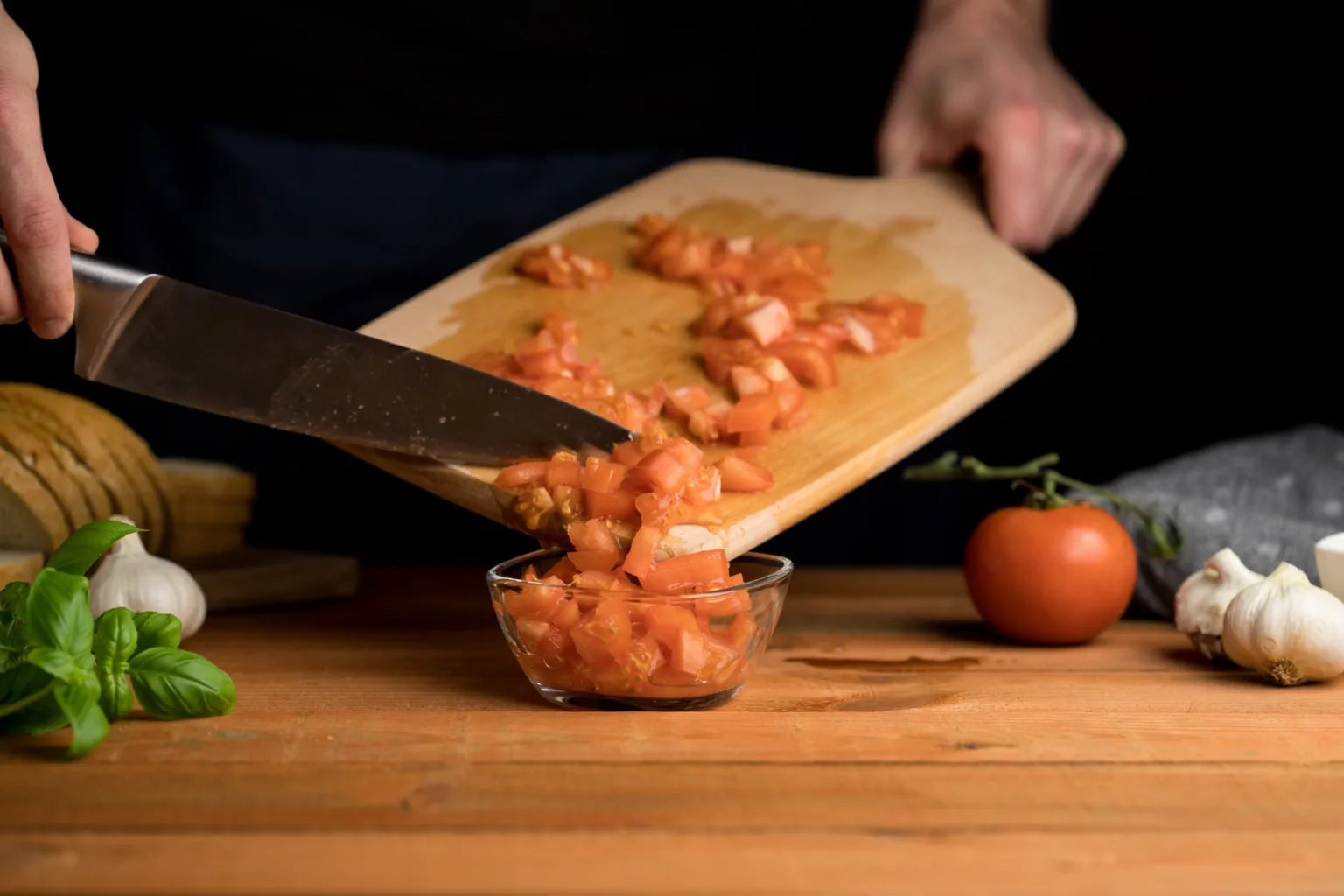
Diced tomatoes are fresh tomatoes cut into small cubes or pieces so they can be added easily to a recipe. Botanically, a tomato is a fruit, although it is commonly used as a vegetable ingredient in cooking. It belongs to the nightshade family. Once cut, it is easy to mix into salads, cold soups, sauces, sofrito, and stews. The result depends on the tomato variety and ripeness: the pieces may contribute more or less flesh, juice, sweetness, and acidity. This profile refers to fresh diced tomatoes; the same name may also be used for canned products, which do not necessarily have the same form or handling directions.
When to use it
Use diced tomatoes when you want tomato pieces distributed through a dish or want their juice to become part of a preparation without cutting them during cooking. They work raw in salads and cold dishes, and cooked in sauces, sofrito, and stews. If a thick texture matters, pear tomatoes may be an alternative because they are described as fleshier and less watery. For a dish where freshness is important, use the tomatoes uncooked or add them near the end of preparation.
How to use it
If starting with whole tomatoes, wash them and cut them into similarly sized pieces so they distribute evenly. Add them straight to salads or cold preparations, or cook them with ingredients such as onion and pepper to make a sofrito. They can also go into sauces and stews, where their juices mix with the other ingredients. For a cold tomato preparation with garlic, oil, and vinegar, they can be part of a gazpacho-style mixture. If roasting them, use pieces of similar size to encourage even cooking. Adjust the recipe’s liquid to suit how juicy the tomatoes are.
Flavour and texture
Tomatoes have a characteristic flavor that balances sweetness and acidity, with intensity varying by variety and ripeness. Diced pieces are soft and juicy and may release liquid into a dish. Some varieties are fleshier than others; pear tomatoes, for example, are described as having more flesh and less water. Do not assume that every diced tomato will have the same sweetness, acidity, or firmness.
How to choose it
If you plan to dice whole tomatoes yourself, choose sound-looking tomatoes suited to the dish: fleshier ones can be useful when you want more pulp, while other varieties contribute more juice. Available sources describe differences among varieties but do not establish one ideal firmness or ripeness for diced tomatoes. If buying a pre-cut, packaged product, check the condition of the package and read the label to confirm whether it is fresh or canned.
Storage
The available sources do not specify a storage period or method for fresh tomatoes after they have been diced. If you buy them packaged, follow the label directions. Information for whole tomatoes says they can be kept at room temperature and that, if a ripe tomato is refrigerated, bringing it out before use may help its aromatic compounds become perceptible again; this guidance does not by itself establish how to store cut tomatoes safely.
Substitutions
For a cooked dish, fresh diced pear tomatoes can replace another tomato when you want more flesh and less juice. Round tomatoes can also work in sauces or stews, although their juiciness and acidity may change the result. Neither variety guarantees an exact match, so adjust the liquid and taste as you cook.
Common mistakes
Do not assume every diced tomato has the same water content, fleshiness, sweetness, or acidity. A very juicy variety may change the texture of a thick sauce; a fleshier variety may be a better fit for that goal. Also, do not confuse fresh diced tomatoes with canned diced tomatoes: check the product form before applying recipe directions.
Safety and allergens
For home-canned tomatoes, use a tested recipe intended for that type of preserve and do not improvise its proportions. The available sources do not give specific safe-storage directions for fresh tomatoes once cut; if they are packaged, follow the product label.
Culinary uses
- Base jugosa para salsas, sofritos y guisos
- Ingrediente fresco para ensaladas, sopas frías y acompañamientos
Recommended techniques
- Cortar en dados uniformes y añadir en crudo a ensaladas o platos fríos
- Cocinar en salsas, sofritos o guisos
- Asar para concentrar su presencia en el plato
Pairs well with
- Cebolla y pimiento en sofritos
- Ajo, aceite y vinagre en preparaciones frías como el gazpacho
- Pan, en tostadas o preparaciones de pan con tomate
Frequently asked questions
Is a tomato a fruit or a vegetable?
Botanically, it is a fruit, but it is commonly used as a vegetable ingredient in cooking.
Which tomato variety works well in a sauce?
Pear tomatoes are an option when you want more flesh and less water. Different varieties can produce different results.
Are diced tomatoes always fresh?
Not necessarily. The name can also refer to a canned product, so check the label and package directions.
Estimated nutrition
- Fat
- 0 g
- Saturates
- 0 g
- Carbohydrate
- 4.13 g
- Sugars
- 2.48 g
- Fibre
- 0.8 g
- Protein
- 0.83 g
- Salt
- 0.03 g
Sources and review
Automatically researched, cross-checked and validated content. Sources consulted:
- Client Challenge doi.org
- Tomate - Wikipedia, la enciclopedia libre es.wikipedia.org
- La historia del tomate en la cocina | Hida hida.es
- Los 6 mejores tipos de tomate y cómo usarlos en cocina mercadosantamariadelacabeza.es
- 6 VARIEDADES DE TOMATES Y SUS USOS EN COCINA - Masymas Supermercados super-masymas.com
- Agencia Española de Seguridad Alimentaria y Nutrición aesan.gob.es
- Salsa de Tomate y Chile Verde (Spanish) - National Center for Home Food Preservation nchfp.uga.edu
- Tomates: los imprescindibles de la gastronomía | Consumer consumer.es
- Vamos a Conservar Alimentos: La Congelación de Frutas extension.psu.edu
- BIODIVERSIDAD, BIOPROSPECCION Y BIOSEGURIDAD digitalrepository.unm.edu
- Cómo la cuentística de Claudia Hernández devela las ... etd.ohiolink.edu
- Ingredientes para la receta: El tomate — Cuaderno de Cultura Científica culturacientifica.com
- Tipos de tomate y usos en la cocina | Cocina deia.eus
