- Category
- Herbs and spices
- State
- Dry
- Usual unit
- teaspoon
What it is
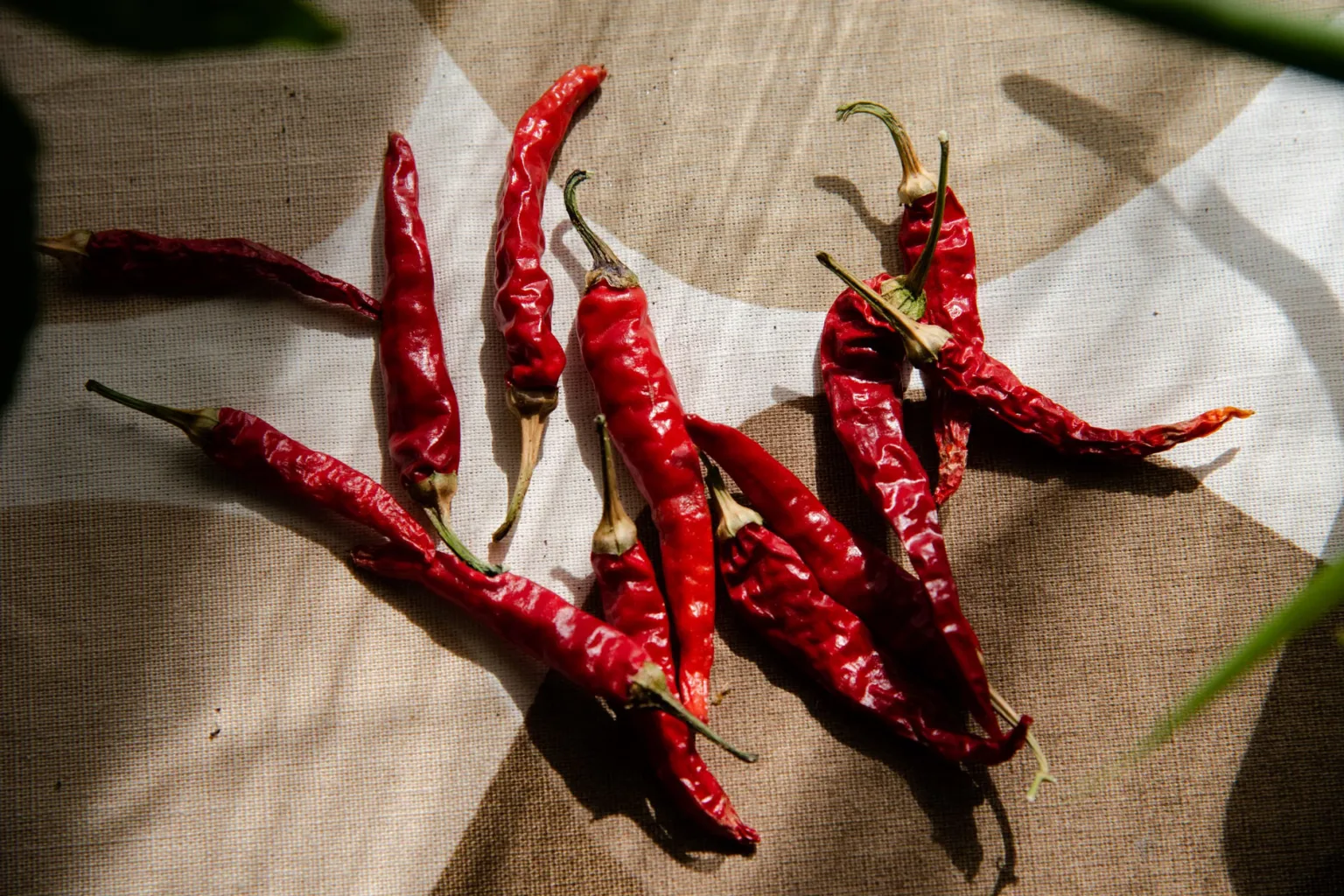
Dried chili is a chili that has been dehydrated; the name can refer to different varieties, not one ingredient with a fixed flavor or heat level. In cooking, dried chilies can contribute color, aroma, and heat, and some have flavor notes that differ from those of the fresh form. Variety matters: red or orange dried chilies may be more fruity and acidic, while some darker chilies are described as sweeter. So “for the filling” describes a culinary use, not a specific variety. Check which chili you have before deciding how much to add.
When to use it
Use it when you want to build chili flavor and heat into a filling, sauce, or stew. It can season a mixture directly or form the base of a blended sauce. Heat and flavor depend on the variety, so do not assume all dried chilies taste alike. For a preparation in which the chili will be mixed with other ingredients, such as a filling or a tomato-based sauce, choose a variety that suits the flavor you want and adjust the amount gradually.
How to use it
Remove the stem and, if your recipe calls for it, the seeds and veins; one culinary source describes removing these parts before blending rehydrated chilies. For a sauce or filling that will be blended, you can briefly toast the chili and then rehydrate it, or follow a tested method specific to the variety. Do not let it burn: the cited ancho recipe toasts in a dry skillet, and culinary guidance warns that burning can spoil the flavor. Blend it with the preparation’s moist ingredients, then mix the resulting paste into the filling. Start with a small amount, taste the mixture, and adjust gradually, since the generic name does not predict heat precisely.
Flavour and texture
Flavor is not uniform; it depends on variety and processing. Dried chilies can contribute heat and aroma. Red or orange varieties are described as more fruity and acidic, while some dark varieties are described as sweeter. Dried chilies have a wrinkled appearance and may range in color from red to black. Once rehydrated, they are easier to blend and incorporate into a moist mixture.
How to choose it
Choose dried chilies identified by variety when possible: “dried chili” alone does not specify a particular heat level or flavor profile. Available descriptions suggest color and variety may indicate flavor notes, but they do not replace identifying the product. Select packaging that lets you check what is inside, and match the variety to your intended use and preferred heat. If the label does not name the variety, add it cautiously and taste before adding more.
Storage
The available evidence describes dried chili as dehydrated but does not establish a validated storage duration or conditions for this generic product. Follow the package directions, and do not assume a moist preparation containing chili keeps like the dried ingredient. For home canning, use only a tested process appropriate to the food; do not improvise a method just because the chili itself is dried.
Substitutions
Another dried chili may work if you accept a change in heat, aroma, and color: varieties are not exact substitutes. Ancho appears in a fish-and-sauce recipe and is described as a dried form of poblano; it can be a culinary alternative, but it will not guarantee the same result. Start with less and adjust after tasting.
Common mistakes
Treating every dried chili as if it had the same heat and flavor can throw off a filling. It is also easy to burn chili while toasting it; culinary guidance warns that this can make it bitter. Identify the variety when possible, toast attentively, and taste the mixture before adding more.
Safety and allergens
The evidence package provides no specific official warning about handling dried chili. Follow the package directions. If you make a home-canned filling, use a tested recipe and canning process: safety depends on the food and method, not simply on the presence of dried chili.
Culinary uses
- Aporta picor, color y sabor a rellenos y salsas
- Da profundidad a guisos, adobos y moles
Recommended techniques
- Tostar brevemente y con atención, sin dejar que se queme
- Rehidratar y triturar para incorporar a salsas o rellenos
Pairs well with
- Tomate y ajo
- Especias, vinagre y otros chiles secos
Frequently asked questions
Do all dried chilies have the same heat?
No. The sources describe heat differences among varieties. If you do not know the variety, start with a small amount and taste the dish.
Do I need to rehydrate it for a filling?
There is no single rule for every dried chili. Rehydration is used when the chili will be blended; follow the method in your recipe.
Can I substitute ancho chili?
It can be a culinary alternative, but heat and flavor notes will change. Adjust the amount to suit the result you want.
Sources and review
Automatically researched, cross-checked and validated content. Sources consulted:
- Client Challenge doi.org
- Pescado a la Veracruzana 1952 (Veracruz-style Fish) - lacocina.utsa.edu
- educational content to support healthful lifestyle practices sjsu.edu
- Dictionary of Health Related Terms: English – Spanish hia.berkeley.edu
- Glimpses of an 18th century Colonial Kitchen in Manila archium.ateneo.edu
- El chile, ingrediente esencial en la cocina de México - Formacion en Gastronomia formacionengastronomia.com
- Tipos de Chiles Secos Mexicanos: Características y Usos abarrotes.es
- Chiles secos: el Ama de nuestra gastronomía | Love Veg loveveg.mx
- Fresh Produce Recipe Book | Wsu s3.wp.wsu.edu
- Vamos a Conservar Alimentos: Aspectos Básicos de la Preparación de Conservas en Casa extension.psu.edu
- SCHOLAR OF GLOBAL DISTINCTION Application Template worldview.unc.edu
- Maqueta.qxp:Maqueta Comità CientÃfico Nâ« 2 aesan.gob.es
- Peruanidad, food memory and cultural capital in ... digitalcommons.lib.uconn.edu
- - YouTube youtube.com
- Chile seco: usos y beneficios - Recetarama recetarama.com