- Category
- Herbs and spices
- State
- Dry
- Usual unit
- teaspoon
What it is
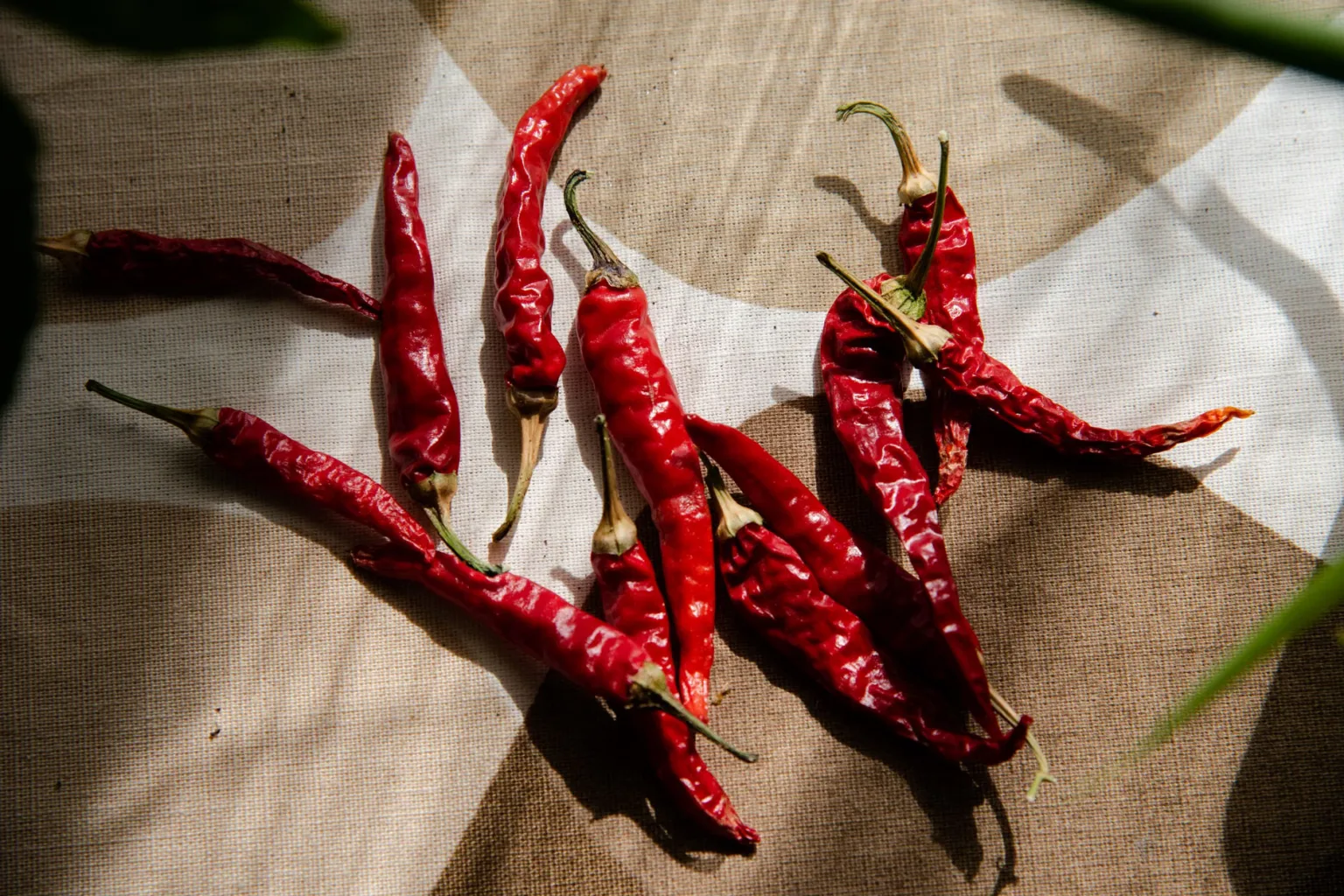
Dried chili for sauce is chili that has been dried and is used to add flavor and heat to savory preparations, especially sauces. It may be sold as whole pods or flakes, and the type of chili affects how hot it is: some varieties are described as mild, while others are hot. The available evidence covers sauces made with dried red pods as well as recipes that use dried chili flakes. The ingredient name does not identify one specific variety, so its color, shape, and heat cannot be assumed to be identical in every product.
When to use it
Use it when you want chili character in a sauce without relying only on fresh chilies. Dried pods can form the basis of a red chili sauce, while dried chili flakes also appear in sauce and relish recipes. Because varieties range from mild to hot, start with a small amount and taste before adding more. Do not assume that a teaspoon of one variety will have the same heat as a teaspoon of another.
How to use it
First check that the pods are in good condition: do not use any showing mold, insects, disease, or decay. For a sauce, follow the recipe method: depending on the preparation, the pod may be used whole, soaked and blended, or added as flakes. Add chili gradually and taste as you go, since the variety affects the heat. If using a different dried-chili form, adjust cautiously. Do not improvise room-temperature canning or preservation steps from an arbitrary sauce recipe: this profile does not provide a validated process for that purpose.
Flavour and texture
Dried chili brings a spicy, hot character, although intensity depends on variety: some chilies are described as mild and others as hot. In sauce, a blended pod can become integrated with the other ingredients, while flakes leave visible pieces. There is no single flavor or texture profile that applies to all dried chilies.
How to choose it
Choose a product identified as dried chili and inspect the pods before use. Discard pods showing mold, insect infestation, disease, or decay. If the package names a variety or gives a heat description, use that as guidance rather than a guarantee that every pod will have identical heat.
Storage
The available evidence confirms the use of dried chilies but does not provide ingredient-specific storage conditions, packaging, or time limits. Follow the package directions and protect the product from contamination and moisture. Before use, check for mold, insects, or decay, and discard pods showing those signs.
Substitutions
Dried red chili flakes can replace a pod when the recipe allows a crushed form. Another dried chili variety may also work, but the heat and result can change. Add gradually and taste; the available evidence does not support a universal quantity conversion.
Common mistakes
Do not assume all dried chilies have the same heat: varieties can be mild or hot. Avoid pods with mold, insects, or decay, and do not swap varieties without tasting and adjusting. A sauce recipe should not automatically be treated as a validated canning process.
Safety and allergens
Do not use pods showing mold, insect infestation, disease, or decay. The available information does not validate a canning method or storage life for homemade sauce; use a tested preservation recipe from a competent authority if preserving it.
Culinary uses
- Aportar picor a salsas y condimentos.
- Añadir sabor de chile seco a preparaciones saladas.
Recommended techniques
- Remojar o rehidratar las vainas secas antes de triturarlas en una salsa, si la receta lo indica.
- Triturar o desmenuzar chile seco para incorporarlo a una salsa; ajustar la cantidad poco a poco.
Pairs well with
- Salsas de tomate y chile.
- Salsas de chile con otros ingredientes vegetales, como cebolla o pimiento.
Frequently asked questions
Is dried chili for sauce always very hot?
No. Heat varies by variety; some chilies are described as mild and others as hot. Start with a small amount, taste, and adjust.
Can I use flakes instead of a dried pod?
They can work when the recipe allows crushed chili. Adjust gradually because the form and variety can affect the result.
When should I discard a pod?
Do not use it if you see mold, insects, disease, or decay.
Sources and review
Automatically researched, cross-checked and validated content. Sources consulted:
- Storing White Rice | USU extension.usu.edu
- Agencia Española de Seguridad Alimentaria y Nutrición aesan.gob.es
- Qué es eso llamado epistemología, para qué sirve, por qué es inexcusable para la universidad y para la paz | Reencuentro. Análisis de problemas universitarios doi.org
- Salsa Picante de Jícama (Spanish) - National Center for Home Food Preservation nchfp.uga.edu
- Using Chile to Make Ristras and Chile Sauce | New Mexico State University - BE BOLD. Shape the Future. pubs.nmsu.edu
- Salsa picante con quínoa y chile serrano seco | Revista Científica Quántica doi.org