- Category
- Pulses
- State
- Dry
- Usual unit
- g
What it is
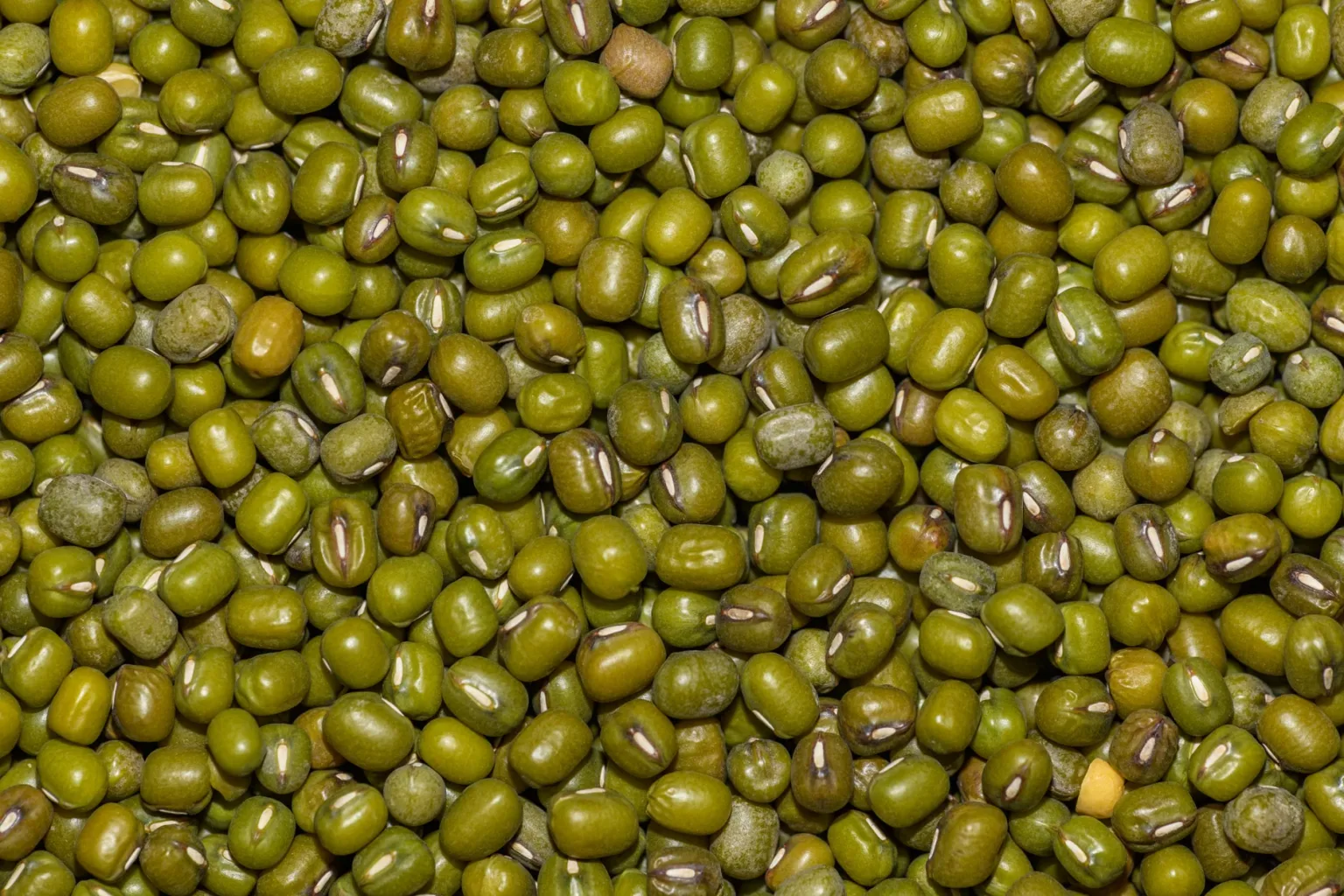
Mung beans are the dried seeds of a legume. They are sold whole or peeled, and are also used to produce sprouts. The name “green soybean” can be misleading: mung beans are not soybeans. This profile covers the dried seeds, not fresh green pods or ready-to-use sprouts. Like other dried beans, they need rehydrating and cooking before they are served. Their mild flavor makes them easy to pair with simple or boldly seasoned ingredients, while the whole beans suit spoon dishes and salads. Check whether a product is whole or peeled, since the two forms can behave differently in a recipe.
When to use it
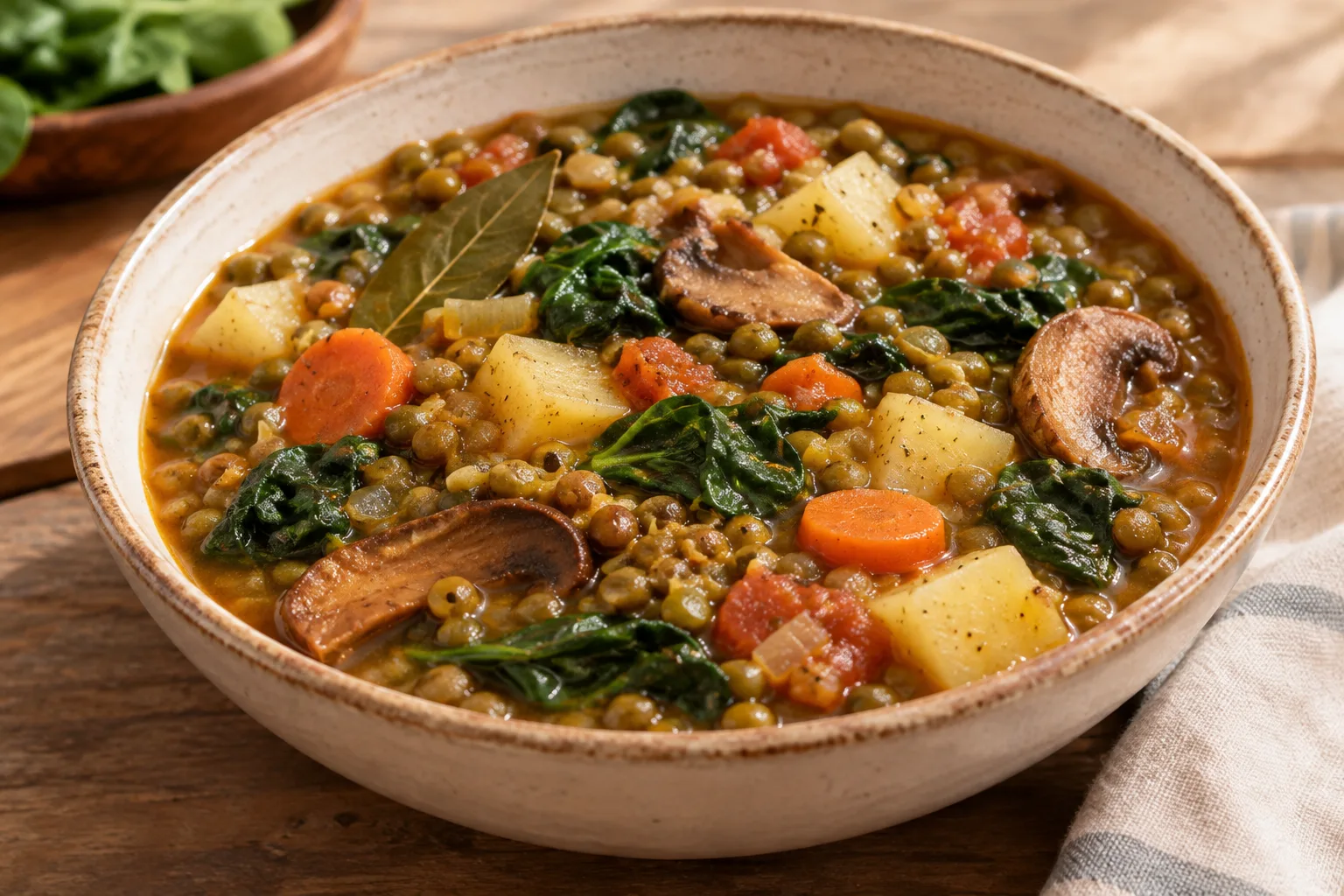
Use dried mung beans when you want to add a legume to soup, stew, a rice dish, or a salad made with cooked beans. They also work in dal-style dishes with rice and vegetables, or can be germinated when a recipe calls for sprouts. Choose whole beans when you want the seeds to remain visible; peeled mung beans offer a different form and may give a different texture. Plan ahead: dried seeds need soaking and then cooking until tender, so they are not ready to add straight to a salad. Their mild flavor also makes them a useful base for aromatic spices and vegetables.
How to use it
Inspect the beans and remove any foreign material. To cook them as a legume, soak them, drain and rinse, then cover with water and simmer until tender. The available evidence does not support one universal cooking time: the result can vary with the product and its storage history. Add cooked beans to soups or stews, serve them with rice and vegetables, or use them in a salad after they have been cooked and cooled safely. Mung beans are also sold peeled or used to make sprouts, but these are different forms from whole dried beans. Season a spoon dish to suit your recipe, and do not treat dry beans as if they were fresh pods or ready-to-eat sprouts.
Flavour and texture
Dried mung beans have a mild flavor that works with vegetables, rice, and spices. Once cooked, their texture depends on whether the beans were whole or peeled and on how far they are cooked: they may hold their shape or become softer. The available sources do not establish one precise sensory profile for every variety or brand. Choose the cooking endpoint for the dish rather than assuming mung beans will always be firm or creamy.
How to choose it
Check that the package clearly identifies the product as mung beans, and note whether the beans are whole or peeled, since these are different forms. When buying in bulk, ask how the product is identified and handled if the name “green soybean” is unclear. Choose beans that appear dry, with no visible dampness, and check that the package is intact. The available evidence does not establish a universal visual grading standard or shelf life for every brand, so follow product-specific label information.
Storage
Keep dried mung beans in a tightly closed container in a dry place away from light. Moisture can contribute to deterioration, while light can fade color; packaging that limits exposure to air can help preserve quality. Cooler storage can also help extend quality, but no single shelf life can be guaranteed for every product. Follow the package directions first, and do not store dry beans beside a source of moisture.
Substitutions
Other dried beans can replace mung beans in a soup or stew, but flavor, texture, and cooking results will differ. Peeled mung beans can stand in for whole mung beans when the recipe can accommodate a different texture. They are not an exact substitute for soybeans or mung bean sprouts: these are different products and need different handling.
Common mistakes
A common mistake is to confuse mung beans with soybeans because of the trade name “green soybean.” Another is to add the dried beans directly to a salad or assume they are ready to eat without cooking. Soak and cook them until tender, and do not assume every batch will take the same time. Whole and peeled mung beans should not be expected to have identical textures.
Safety and allergens
Do not eat dried mung beans raw; cook them before eating and follow the package directions. For bulk products, or if you need to check ingredients or possible allergens in a particular product, ask the seller or consult its label.
Culinary uses
- Whole cooked legume for soups, stews, and salads
- Base for dal-style dishes and mung bean sprouts
Recommended techniques
- Soak and simmer until tender
- Cook whole or use peeled mung beans
- Germinate for sprouts
Pairs well with
- Rice and other grains
- Vegetables
- Aromatic spices
Frequently asked questions
Are mung beans soybeans?
No. Although they are sometimes called “green soybeans,” mung beans and soybeans are different products.
Should I soak mung beans before cooking?
Soaking is recommended to rehydrate dried beans. Drain and rinse them afterward, then cook in water until tender.
Can dried mung beans be sprouted?
Yes. Mung beans are used to produce sprouts. Sprouts are a different form from cooked dried beans, so use reliable, specific sprouting instructions.
How should I store dried mung beans?
Keep them dry in a closed container, away from moisture and light, and follow any product-specific storage directions.
Sources and review
Automatically researched, cross-checked and validated content. Sources consulted:
- En el etiquetado alimentario hay algunas menciones que son obligatorias eletiquetadocuentamucho.aesan.gob.es
- Informe sobre Legumbres, Nutrición y Salud aesan.gob.es
- Usos culinarios apropiados de las variedades de plátano verde barraganete, dominico y maqueño, en la gastronomía ecuatoriana. | Revista de Gastronomía y Cocina doi.org
- Using & Storing Green Beans | Home & Garden Information Center hgic.clemson.edu
- Vamos a Conservar Alimentos: Judías verdes (habichuelas) extension.psu.edu
- Judías verdes (habichuelas) (Spanish) - National Center for Home Food Preservation nchfp.uga.edu
- Judías verdes (judías verdes) - Spend Smart Eat Smart spendsmart.extension.iastate.edu
- Cultivo de frijoles en huertos familiares | Extensión de la UMN es.extension.umn.edu
- Habichuela moruna Sierra del Segura (Albacete) mapa.gob.es
- Storing Dry Beans | USU extension.usu.edu
- Judía mungo: ¿qué es y cómo cocinarla? | LÉKUÉ lekue.com
- Judias Mungo | www.cocinista.es cocinista.es
- Judía mungo = Soja verde - Oriental Market orientalmarket.es
- Judía mungo o también llamada soja verde • Rosa Tugores ▷ Escuela de cocina Macrobiótica ♡ rosatugores.com
- Soja Verde o Judía Mungo - Slow Shop granel slowshopgranel.es