- Category
- Grains, flour and pasta
- State
- Dry
- Usual unit
- g
What it is
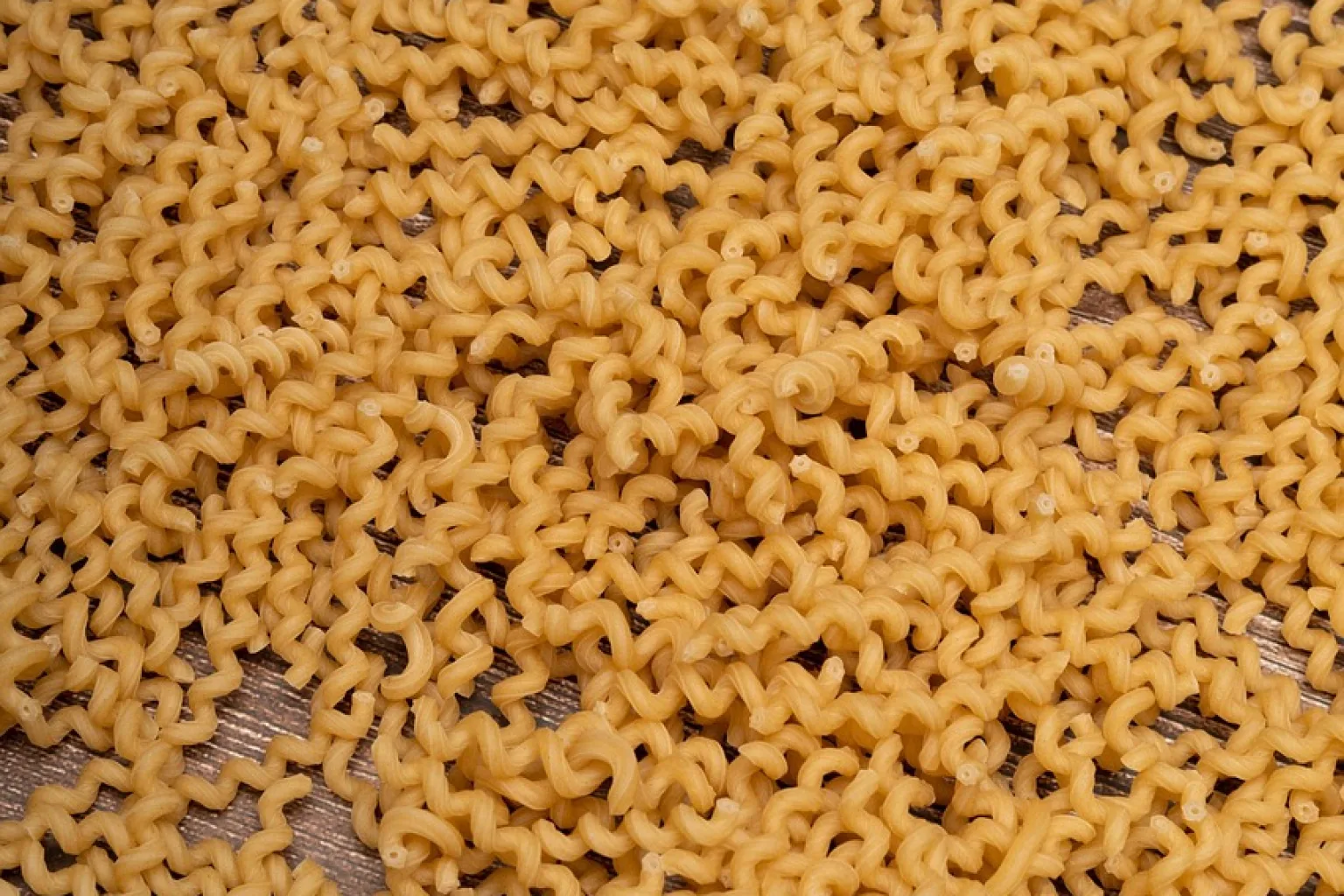
Dried pasta is pasta shaped from dough and dried before sale. A common base is durum wheat semolina and water, although some recipes include additional ingredients that change the product's composition, color or flavor. It is sold in many shapes, from spaghetti and noodles to macaroni and sheets. It is distinct from fresh pasta: ingredients and products vary, so check the product name and ingredient list rather than assuming they are interchangeable. Wheat pasta contains gluten, while some varieties include egg or other ingredients.
When to use it
Choose dried pasta when you want a pantry ingredient that can be used in a range of dishes. Long shapes can be served with sauces, while short shapes are convenient in dishes where pasta is mixed with other ingredients; sheets suit layered preparations. It can also be used in soups, salads or stews, with the shape chosen to suit the recipe. Since products differ, check the package for ingredients and cooking directions, especially if you need to avoid wheat, gluten or egg.
How to use it
Read the package to check ingredients, declared allergens and directions for the specific variety. Cook the pasta in water according to the manufacturer's instructions, and check its texture before draining because shape and product can affect the result. Combine it with your chosen sauce or preparation; for a cold salad, drain and cool it as the recipe requires. In soup or stew, consider when to add it to reach the texture you want. There is no single cooking time that applies to every dried pasta: follow the package and check doneness as it cooks.
Flavour and texture
Dried pasta generally has a mild flavor, so it works with sauces and other ingredients without dominating a dish. Once cooked, it can be firm or more tender depending on the variety and cooking time. Shape, thickness and composition also affect how it feels to eat. Pasta with added ingredients may differ in color and flavor; do not assume colored pasta replaces a serving of vegetables. Adjust cooking to the texture you prefer and the package directions.
How to choose it
Choose a shape that suits the dish and check that the package clearly identifies the product. Read the ingredient list and allergen information: wheat pasta contains gluten, and some varieties may include egg or other ingredients. If you want whole-wheat pasta, check that the ingredient is identified as whole wheat rather than relying on color or appearance alone. Compare composition and cooking instructions without assuming that all varieties are the same.
Storage
Keep dried pasta in a clean, dry, dark place, protected from moisture and extreme temperature changes. Keep it in a tightly closed package or a clean, dry container, and follow any specific package directions. Do not confuse storage advice for commercially dried pasta with advice for homemade egg noodles: guidance for those homemade products differs and should not be applied to all dried pasta.
Substitutions
You can replace one shape with another if it suits the recipe, although texture and how the pasta holds sauce may change. Whole-wheat pasta can replace non-whole-wheat pasta in many dishes, but its characteristics may differ. If you are substituting because of an allergy or intolerance, changing the shape is not enough: check the ingredients and allergen information for each product.
Common mistakes
Do not assume all dried pasta has the same composition, shape or cooking directions. Avoid relying only on color to identify ingredients or on a generic time to decide when pasta is done. Another common mistake is overlooking allergen information: some varieties contain added ingredients, so check the package even when the shape looks familiar.
Safety and allergens
Check the package for ingredients, allergens and directions for use. If you have an allergy or intolerance, verify the information for the specific product instead of relying on the pasta's name or shape. For homemade egg noodles, do not assume drying makes them safe to store in a pantry; follow food-safety guidance specific to that preparation.
Culinary uses
- Base para platos principales
- Ingrediente para sopas, ensaladas y guisos
Recommended techniques
- Cocer en agua hasta la textura deseada
- Escurrir y mezclar con salsa o incorporar a una preparación
Pairs well with
- Salsas de tomate
- Verduras, legumbres y salsas de hierbas
Frequently asked questions
Does all dried pasta contain only wheat and water?
Not necessarily. Wheat semolina and water are a common base, but some varieties add ingredients such as egg. Always check the ingredient list.
How long should dried pasta cook?
There is no single cooking time for every shape and product. Follow the package directions and check the texture as it cooks.
How should dried pasta be stored?
Keep it in a clean, dry, dark place protected from moisture, and follow any specific instructions on the package.
Sources and review
Automatically researched, cross-checked and validated content. Sources consulted:
- En el etiquetado alimentario hay algunas menciones que son obligatorias eletiquetadocuentamucho.aesan.gob.es
- Cooking Food Storage | USU extension.usu.edu
- Informe del Comité Científico de la Agencia Española de ... aesan.gob.es
- Tipos de pastas italianas secas y sus usos en la cocina · APTC El Corte Inglés elcorteingles.es
- Pasta seca: distintas variedades | OCU ocu.org
- Qué es la punción seca y para qué la usan los fisioterapeutas doi.org
- Cooking Fresh or Dry Pasta Formula - Ratio Guide - LibGuides at Conrad N. Hilton Library library.culinary.edu
- Preparing an Emergency Food Supply, Long Term Food Storage | Food Preservation | Food | Extension | UGA FACS fcs.uga.edu
- 1 DENOMINACIÓN DE ORIGEN PROTEGIDA "CABRALES" mapa.gob.es
- Making Fresh Pasta - Escoffier escoffier.edu
- Homemade Egg Noodles Made Safe • AnswerLine • Iowa State University Extension and Outreach blogs.extension.iastate.edu
- Pastabilities | Montana State University montana.edu
- Cooking parameters affect the sodium content of prepared pasta vtechworks.lib.vt.edu
- Diferencias entre pasta fresca y pasta seca. ¿Cuál elegir? blog.scoolinary.com
- Curiosidades sobre los tipos de pasta que no conocías pastanostrazaragoza.es