- Category
- Herbs and spices
- State
- Dry
- Usual unit
- unit
What it is
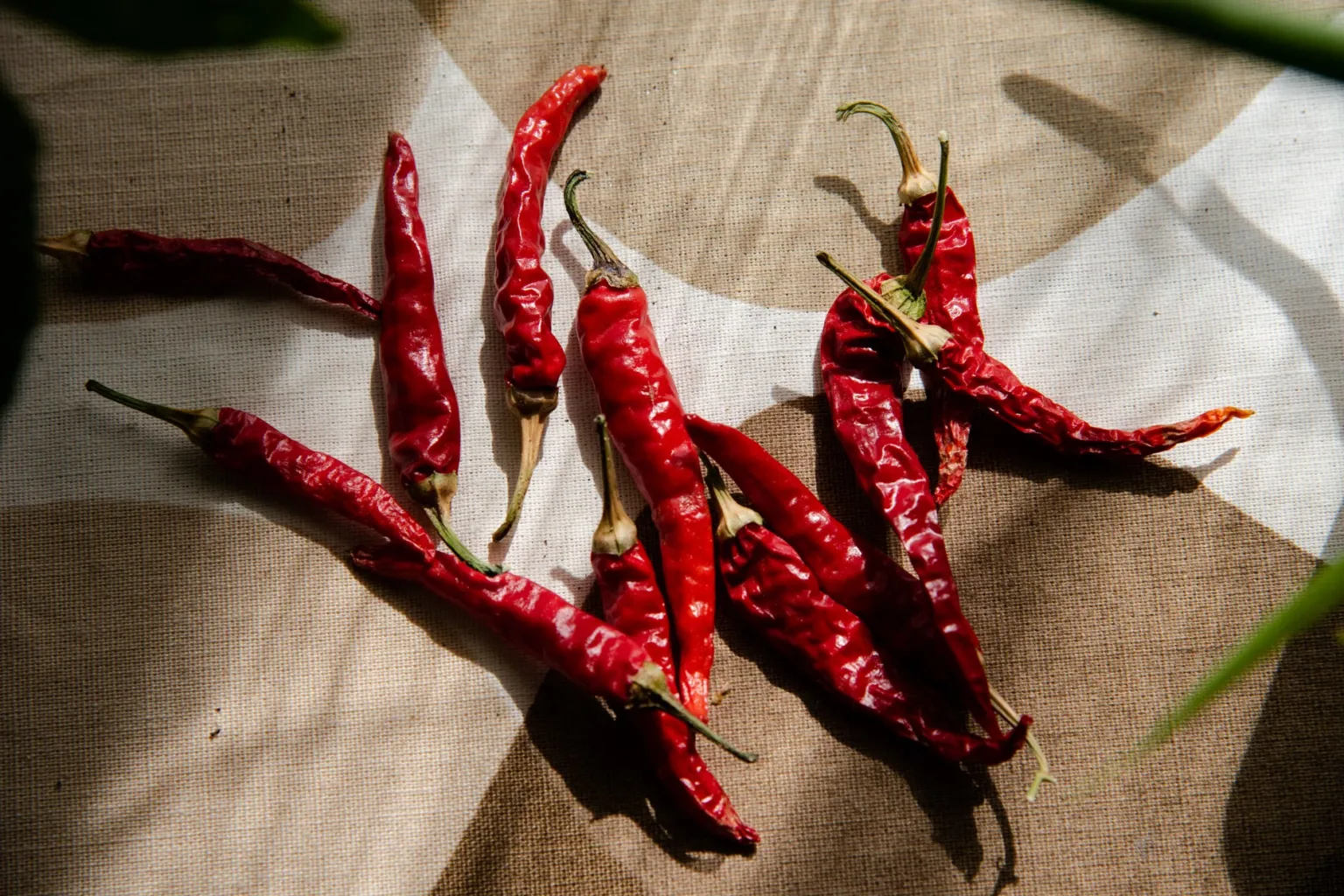
Dried red chiles are fruits from different Capsicum varieties that have been dehydrated. The name describes a broad category, not one specific pepper: shape, skin thickness, color, aroma, and heat depend on the variety and drying method. Some chiles are also smoked, adding another distinct note. Removing moisture concentrates flavor, which may be fruity, earthy, sweet, or smoky. For that reason, identify the variety when a recipe calls for a particular one rather than assuming all dried red chiles taste alike.
When to use it
Use dried red chiles when you want to add heat, color, or a deeper aromatic character to a dish, particularly sauces, marinades, moles, and stews. The result depends greatly on the variety: some are fruitier or more acidic, while others are earthier, sweeter, or smoky. If a recipe names a specific chile, try to use that type; if it simply calls for dried chile, choose according to the flavor and heat you want. The generic name alone cannot reliably tell you how hot it will be.
How to use it
Before cooking, check that the chiles are clean and in good condition. To use them in a sauce or paste, you can rehydrate and blend them; you can also grind them into dried chile powder. If the recipe calls for a whole chile, follow that direction. Start with a cautious amount if you do not know the variety, then taste before adding more, since heat and flavor vary. Some dried chiles are smoked, and their aroma can noticeably change a dish. When replacing a named variety, account for those differences.
Flavour and texture
Flavor is not uniform: depending on the variety, it may be fruity, tangy, sweet, earthy, or smoky, and heat also varies. Drying concentrates the flavors and leaves the chile dry and wrinkled. The skin may be thin or thick; rehydrating softens it so the chile can be blended into a sauce or paste.
How to choose it
Because this is a broad category, look for the variety name when a recipe depends on a particular flavor profile. Check that the pieces are in good condition, without visible mold or insects, and that their color and aroma seem appropriate for the product. Appearance naturally differs between varieties, so dried red chiles will not all have the same shape or shade.
Storage
Keep dried chiles in an airtight container or package in a cool, dry place to limit moisture absorption. Avoid leaving them exposed to air or ambient moisture. Follow any storage directions on the package. Check the product before use, and do not use chiles with visible mold or signs of deterioration.
Substitutions
Another dried chile may work as an alternative, but it will not necessarily be equivalent: varieties differ in heat, aroma, color, and texture. Ground dried chile can also replace whole chile in some preparations, although it is incorporated differently. Adjust to the recipe and taste cautiously; there is no universal ratio for such a diverse category.
Common mistakes
Treating all dried red chiles as if they had the same heat and flavor can throw off a dish. It is also easy to overlook whether a chile is smoked or to replace a named variety without accounting for its differences. Check the product name when available, and use a cautious amount if you do not know its intensity.
Safety and allergens
Check the product before cooking and follow the package directions. Do not use chiles with visible mold, insects, or signs of deterioration.
Culinary uses
- Aportar picor, color y aroma
- Dar profundidad a salsas, adobos, moles y guisos
Recommended techniques
- Rehidratar y triturar para preparar pastas o salsas
- Moler para obtener chile seco en polvo
Pairs well with
- Salsas y adobos
- Moles y guisos
- Carnes blancas, según el perfil del chile
Frequently asked questions
Do all dried red chiles have the same heat?
No. Heat and aroma vary by variety; the general name does not indicate one fixed level of heat.
How can I use dried red chiles in a sauce?
You can rehydrate and blend them into a sauce or paste, or grind them into dried chile powder. Follow the method in your recipe.
How should I store them?
Keep them in an airtight package in a cool, dry place, and follow the package directions.
Estimated nutrition
- Fat
- 5.81 g
- Saturates
- 0.81 g
- Carbohydrate
- 69.9 g
- Sugars
- 41.1 g
- Fibre
- 28.7 g
- Protein
- 10.6 g
- Salt
- 0.23 g
Sources and review
Automatically researched, cross-checked and validated content. Sources consulted:
- Client Challenge doi.org
- Agencia Española de Seguridad Alimentaria y Nutrición aesan.gob.es
- educational content to support healthful lifestyle practices sjsu.edu
- Vamos a Conservar Alimentos: Tomates extension.psu.edu
- UCCE efforts improve quality of and demand for fresh ... ucanr.edu
- EFNEP Hispanic Heritage Recipes | Community Nutrition | Extension/College of Agriculture, Health & Natural Resources | University of Connecticut communitynutrition.cahnr.uconn.edu
- Chile seco - Wikipedia, la enciclopedia libre es.wikipedia.org
- Salsa Picante de Jícama (Spanish) - National Center for Home Food Preservation nchfp.uga.edu
- Pantry Staples and Other Commodity Food Recipes – Food Smart Colorado foodsmartcolorado.colostate.edu
- Transnational identity, food and community dr.lib.iastate.edu
- neoliberal multiculturalism in early digital discourse about food. iro.uiowa.edu
- Healthy Eating Plan for Weight Management med.uc.edu
- chiles secos rojos - Ingrediente - Guías de Cocina guiasdecocina.com
- 10 chiles secos comunes utilizados en todo el mundo - SHUNDI shundifood.com
- Guía completa de tipos de chiles: variedades, usos y secretos postposmo.com
- Chiles Secos Tipos: Guía completa de variedades, usos y secretos culinarios – Eatdrinkmore.es eatdrinkmore.es