- Category
- Herbs and spices
- State
- Dry
- Usual unit
- pinch
What it is
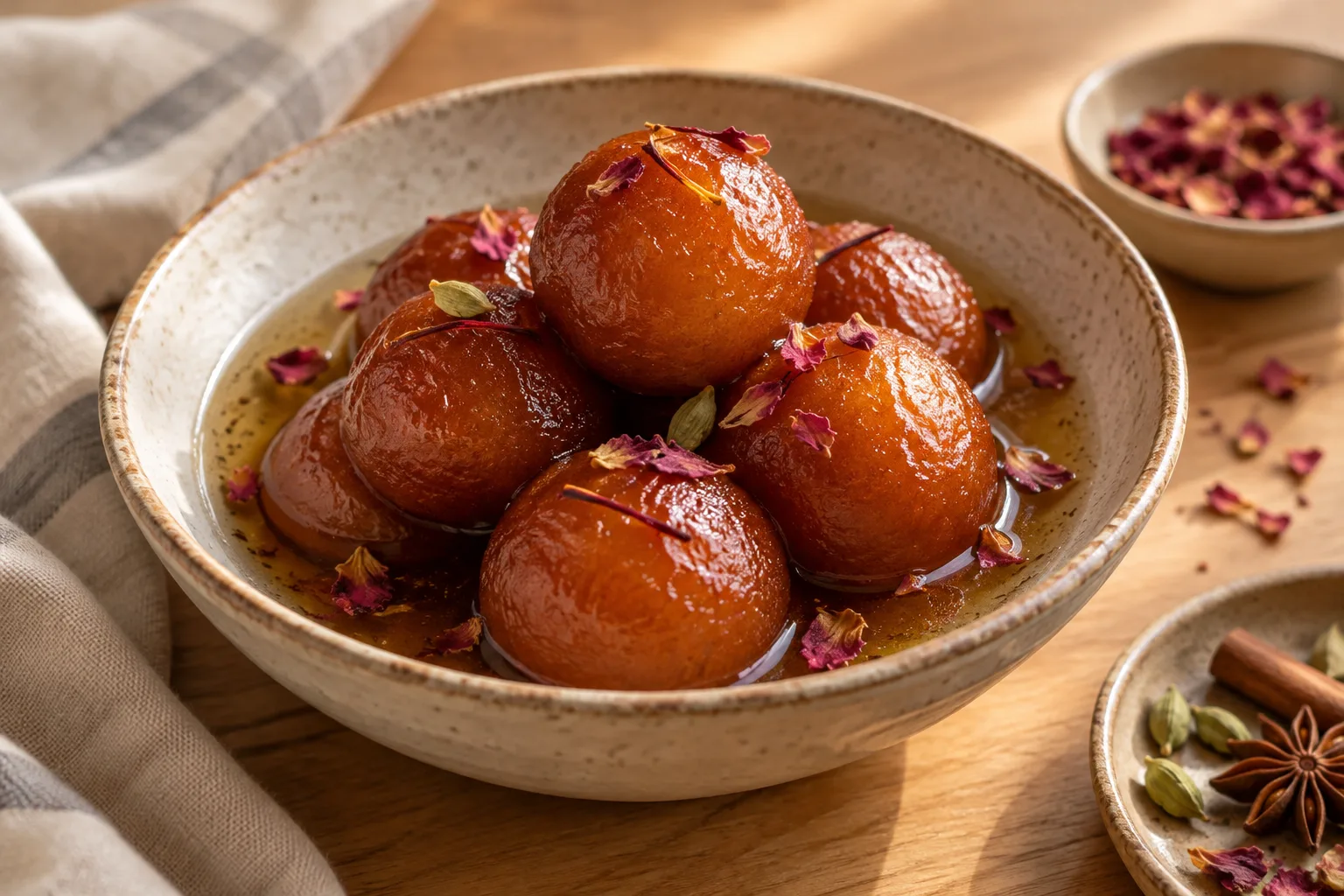
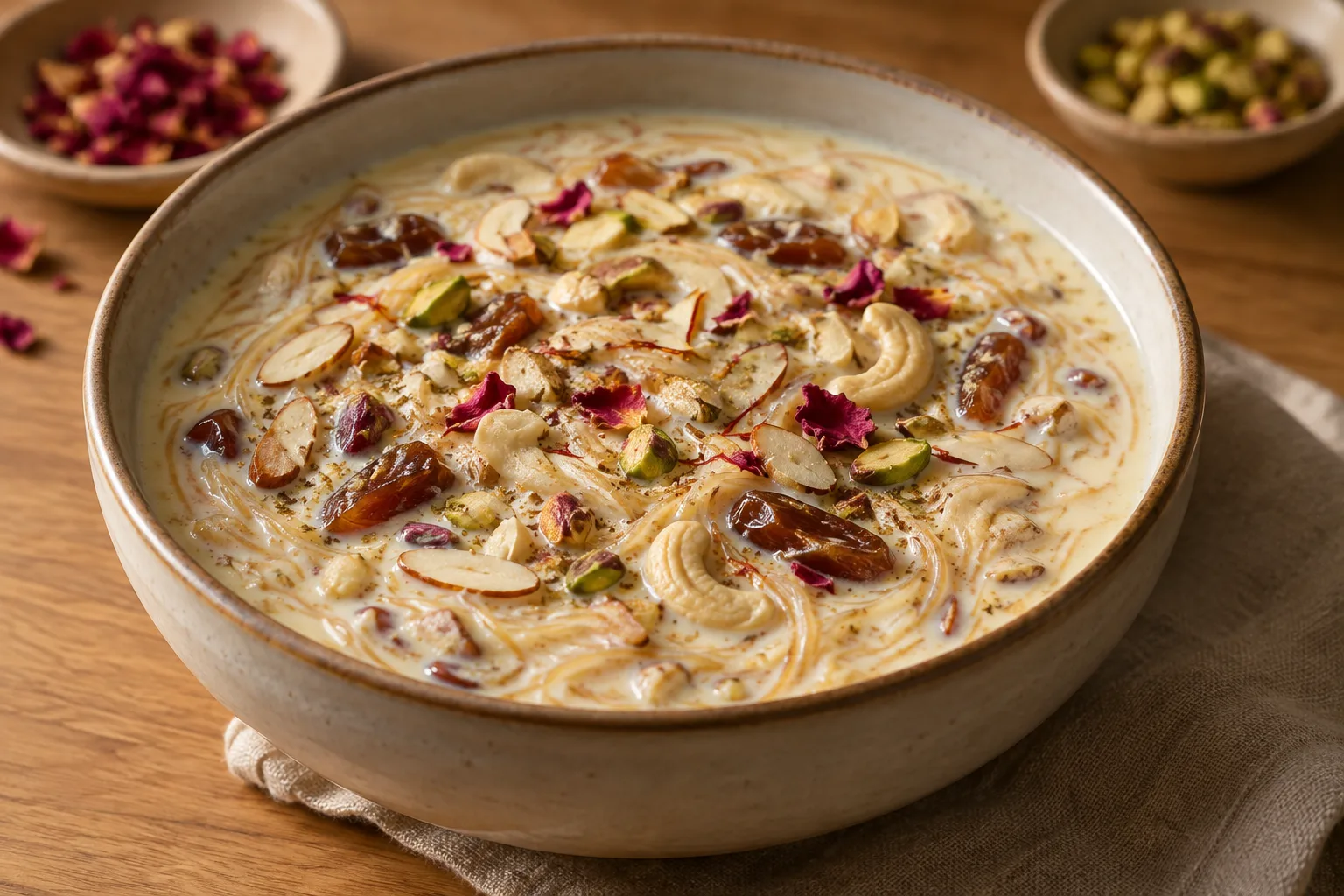
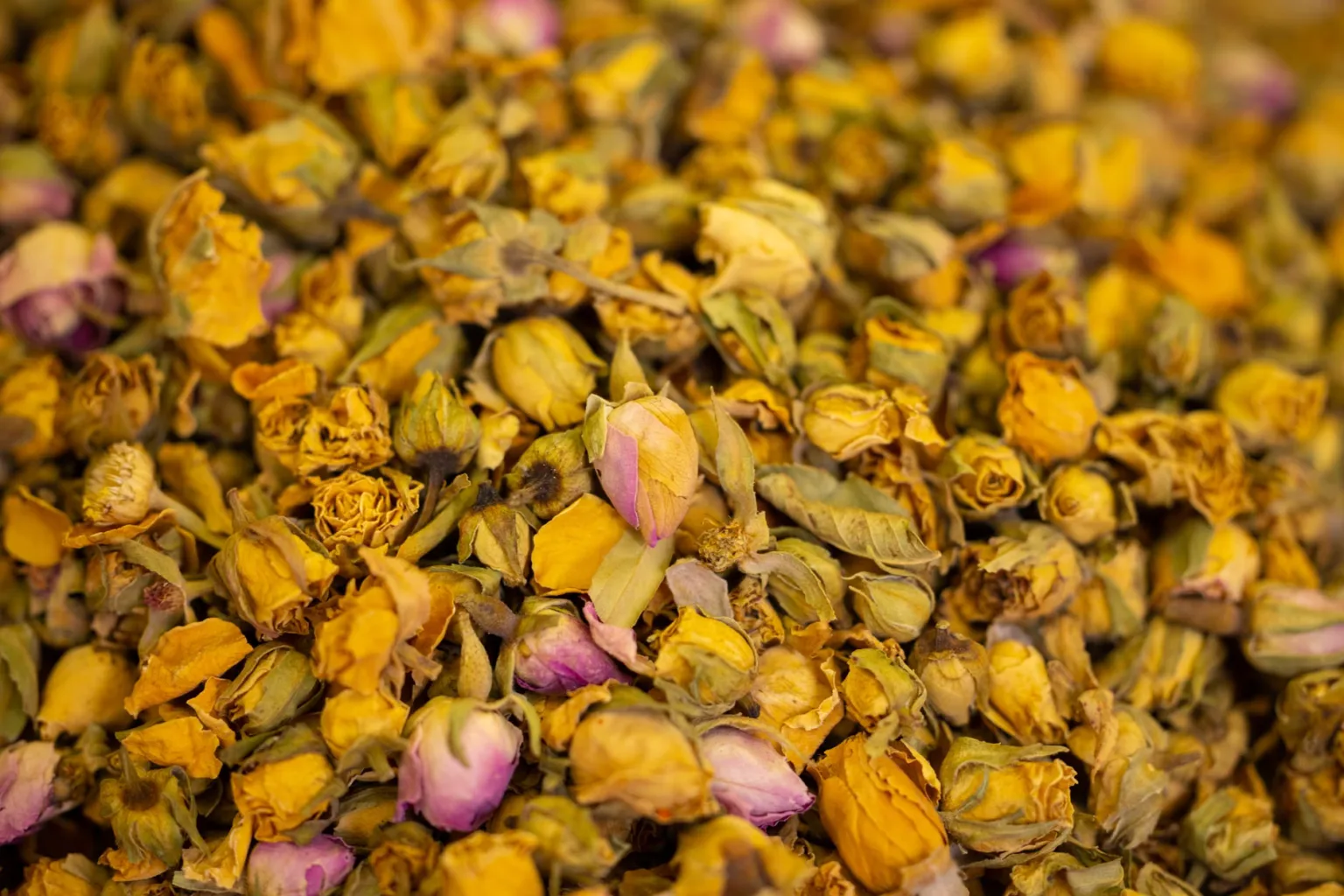
Dried rose petals are rose petals that have been dried and are used in cooking as an aromatic ingredient and, when left whole, as a garnish. They can be treated as a floral spice: culinary sources describe their use in both sweet and savory preparations, and they may be ground with other spices. Not every dried petal is necessarily edible. For cooking, choose a product explicitly sold for food use rather than reusing ornamental or perfumery flowers whose suitability for eating is unclear.
When to use it
Use dried rose petals when you want to add a floral note without making it overpowering. The culinary evidence includes them in a spice mixture for cauliflower and describes their broader use in sweet and savory dishes. They are also suggested for flavoring infusions, sauces and drinks, or for a decorative finish. Since the aroma may differ between products, begin with a pinch, taste and adjust.
How to use it
Add whole petals to a dish as a decorative finish, or crush or grind them and mix them with other spices. A cauliflower recipe uses a teaspoon of dried petals in a ground spice blend; treat this as one example of a pairing, not a universal quantity. For a drink or infusion, let the petals flavor the liquid and remove them if you do not want them in the cup. They can also be used in sauces or sweet preparations. Start with a small amount, taste, and add more only if the floral note is balanced.
Flavour and texture
Their main contribution is a delicate aroma and floral flavor, as described in the available culinary sources. The exact profile may vary by product, so taste before adding more. Dried petals are light and fragile; whole, they remain visible in an infusion or as a garnish, while ground petals blend more readily into a spice mixture.
How to choose it
Look for petals whose packaging clearly identifies them as edible or intended for culinary use. A culinary source cautions that flowers intended for perfumery may have treatments or components unsuitable for cooking, so do not assume a decorative bouquet or an unlabeled product is edible. Choose packaging that identifies the product and allows you to check the maker’s directions.
Storage
The available evidence does not specify a shelf life or particular storage conditions for dried rose petals. Follow the package directions and keep the container closed between uses to avoid unnecessary exposure to the environment. If you notice moisture, deterioration or unusual signs, do not use the product; the available information does not establish an exact shelf life.
Substitutions
Rose water can provide a related floral character, but it is a liquid and does not replace the petals’ texture or decorative role; adjust the amount cautiously. If the petals were intended only as a garnish, you can leave them out. The evidence does not establish an equivalent dry substitute or a reliable conversion ratio.
Common mistakes
The most important mistake is using petals from a bouquet or a perfumery product without confirming they are sold for food use. A recipe can also become unbalanced if too much floral aroma is added at once. Add a small amount, taste and adjust; remember that ground petals blend differently from whole ones, and rose water does not provide texture.
Safety and allergens
The supplied evidence contains no specific official warning for this ingredient. As a proportionate precaution, use only petals sold for culinary consumption and follow the label; do not assume that an ornamental or perfumery flower is suitable to eat.
Culinary uses
- Aromatizante floral
- Adorno comestible
Recommended techniques
- Infusionar en líquido
- Moler con una mezcla de especias
Pairs well with
- Fresas y yogur
- Mezclas de especias para platos salados, como ras el hanout
Frequently asked questions
Are all dried rose petals edible?
Do not assume they are. Buy a product identified as suitable for culinary use; ornamental or perfumery flowers may not be appropriate for cooking.
How can I use dried rose petals?
You can infuse them, grind them with other spices, add them to a sweet or savory dish, or use them as an edible garnish, provided the product is sold for food use.
Can I substitute rose water?
It can provide a related floral aroma, but it is liquid and does not give the same texture or decorative effect. Adjust the amount to taste.
Sources and review
Automatically researched, cross-checked and validated content. Sources consulted:
- ¿Por qué la muerte es origen de miedos y tabúes? doi.org
- Quédate en casa y cocina: #LeCordonBleuAtHome (Steak de coliflor con especias) cordonbleu.edu
- Paisajes Comestibles-Sostenibles | Integrated Pest Management | College of Agriculture, Health and Natural Resources | University of Connecticut ipm.cahnr.uconn.edu
- Revista del Comité Científico de la ... aesan.gob.es
- Azahares 2024 uafs.edu
- Maduración de la Fruta y Manejo del Etileno ucanr.edu
- HS1406s/HS1421: El maracuyá en Florida ask.ifas.ufl.edu
- The Origin of Species -- El origen de las especies people.duke.edu
- Shakespeare uses the power of plants to tell his tales | Servicio de Extensión de OSU extension.oregonstate.edu
- Polinización Integrada de Cultivos de Calabazas extension.psu.edu
- Simbolismo de los pétalos de rosa y sus múltiples usos en la vida y la cultura thursd.com
- Rosas secas | Gastronomía & Cía gastronomiaycia.com
- ¿Qué hacer con los pétalos de rosas? | Interflora interflora.es
- - YouTube youtube.com
- Pétalos de rosa en la cocina - La Despensa de Cercedilla ladespensadecercedilla.com