- Category
- Dairy and eggs
- State
- Fresh
- Usual unit
- g
What it is
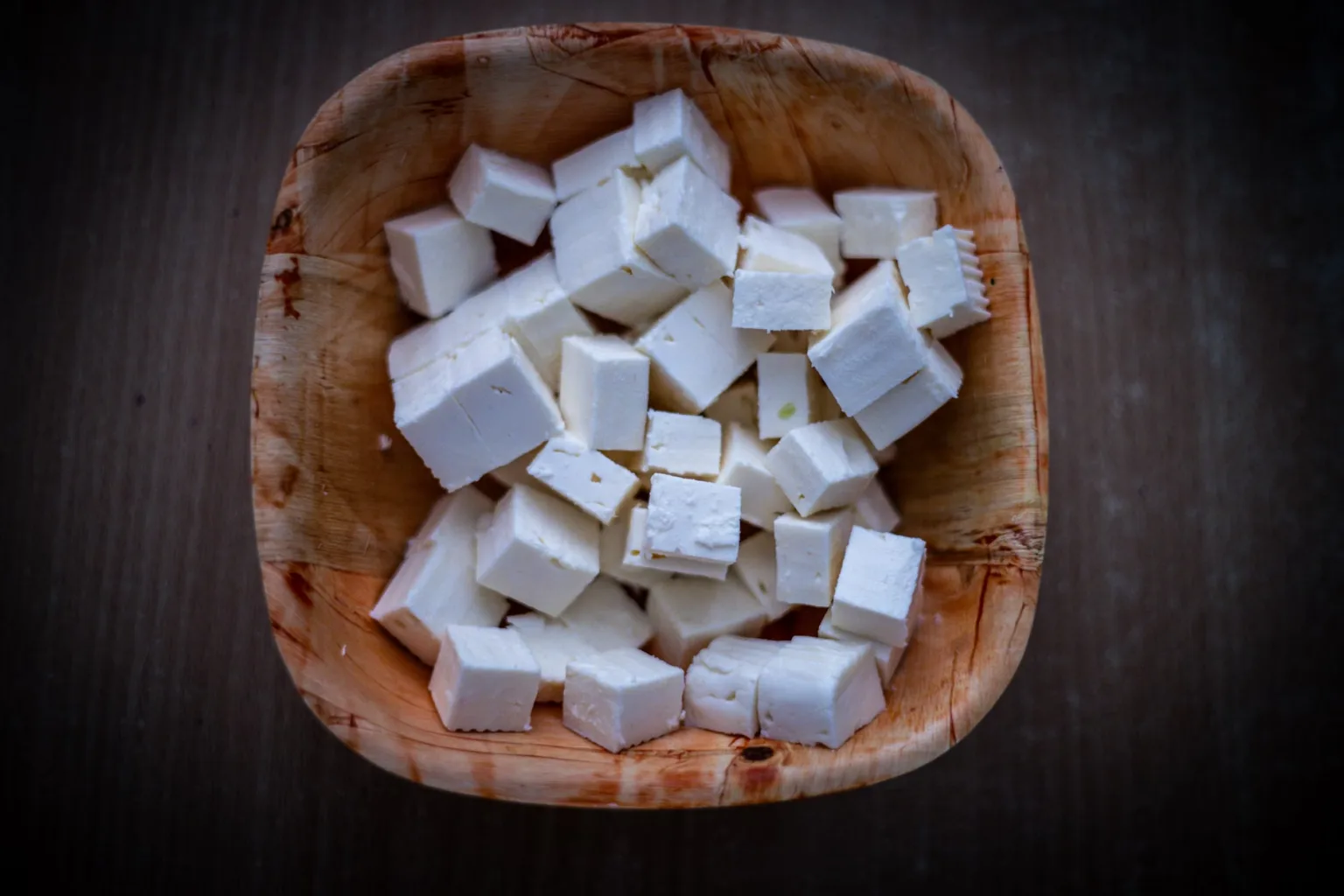
Feta-style fresh cheese is a dairy cheese presented in a feta-like style; the name alone does not establish the exact milk or production method. Fresh cheeses generally undergo little or no aging and tend to contain more moisture than aged cheeses, but their textures can range from crumbly to spreadable. Feta-style cheeses are often associated with a salty, somewhat tangy flavor and may break into small pieces or be cut into portions. Products can differ, so check the product name and ingredient list to find out what a particular cheese contains.
When to use it
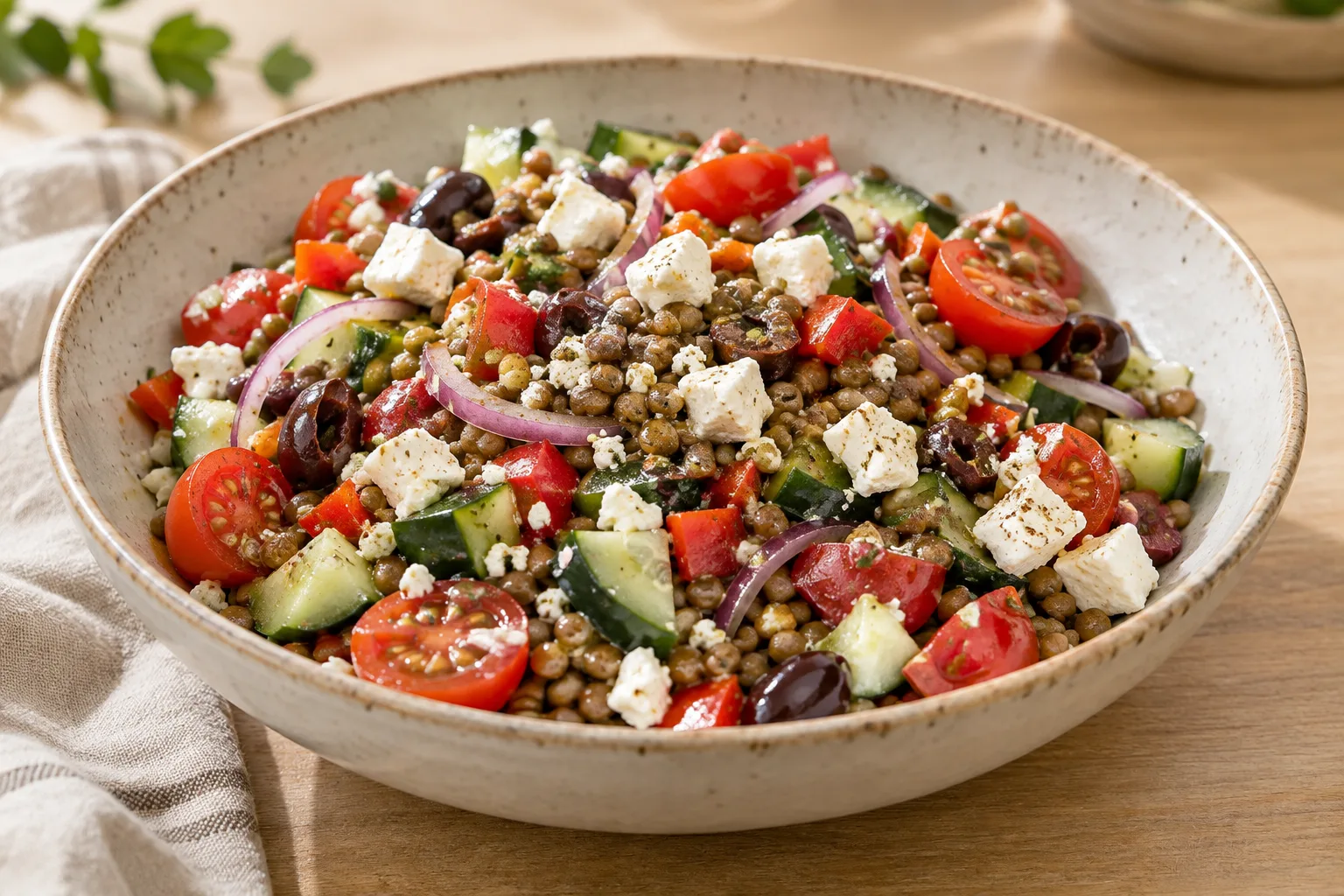
Use it when you want a salty, slightly tangy accent, especially in a dish that benefits from a cheese you can crumble over the top. It works with salads and fresh or cooked vegetables, and can also be added to pasta, used in a filling or worked into a sauce. Because saltiness and texture vary by product, taste it before seasoning the rest of the dish. If you want distinct pieces, add it at the end or serve it separately.
How to use it
Take it from the package and drain it only if it is packed in liquid and your recipe calls for that; follow the package directions. Crumble it with your fingers or cut it into cubes for salads, vegetables, pasta and sandwiches. For a filling, combine it with vegetables or other ingredients and taste before adding more salt. You can also break some into a sauce for added body and flavor, bearing in mind that heat may change its texture. To keep recognizable pieces, fold it in near the end rather than mixing it for a long time.
Flavour and texture
Feta-style cheese is commonly associated with a salty, slightly tangy flavor, but the intensity depends on the product. Fresh cheeses can be more moist than aged cheeses and vary in texture: some crumble readily, while others are softer or creamier. Do not assume every feta-style product will behave the same way when cut, mixed or heated.
How to choose it
Read the product name, ingredient list and package directions before choosing a cheese. The phrase feta-style does not, by itself, identify the milk used or every detail of production, and flavor and texture can vary. Check allergen, storage and date information as well. If you need a cheese that crumbles, choose one whose stated or visible consistency suits that use.
Storage
Keep it refrigerated and follow the package storage directions, which apply to that specific product. After opening, protect it from air: reseal the original package if it closes securely or move the cheese to a clean, tightly closed container. Keep it away from strongly scented foods and use clean utensils when serving. If its smell or appearance changes unusually, or you are unsure it is still in good condition, do not taste it; check the package or official guidance.
Substitutions
Another crumbly fresh cheese can work when you want a similar role and texture, but the result may be less salty, more moist or creamier. Queso costeño has been noted as an alternative in some preparations, though it is not identical. Adjust salt at the end, and consider whether the substitute needs to hold its shape or blend into a sauce.
Common mistakes
Do not add salt automatically: the cheese may already contribute a strong salty flavor, and products differ. Do not assume all feta-style cheeses have the same texture or melt in the same way. If you want distinct pieces, avoid prolonged mixing or adding them too early to a hot dish.
Safety and allergens
This is a fresh cheese, and products can differ. Keep it refrigerated and follow the package instructions, date and warnings. Check the label for pasteurization information and declared allergens. Do not eat a product with damaged packaging or one whose condition raises doubts.
Culinary uses
- Aporte salado y ácido para ensaladas y platos de verduras
- Ingrediente desmenuzable para rellenos, pastas y salsas
Recommended techniques
- Desmenuzar o cortar en dados y añadir al final para conservar su forma
- Incorporar como relleno o deshacer en una salsa
Pairs well with
- Tomate, pepino, calabacín, zanahoria y otras verduras
- Pasta, aceitunas, cebolla y hierbas
Frequently asked questions
Is feta-style fresh cheese always the same as feta?
Not necessarily. Feta-style describes a style, but it does not by itself confirm the milk, production method or exact product designation. Check the label.
How can I use it in a salad?
Crumble it or cut it into cubes and add it with vegetables. Taste the dish before adding salt, since the cheese may already be salty.
What can I use instead?
Try another crumbly fresh cheese for a broadly similar texture. Flavor and moisture may differ, so adjust the salt and the recipe.
Estimated nutrition
- Fat
- 21.4 g
- Saturates
- 8.93 g
- Carbohydrate
- 3.57 g
- Sugars
- 3.57 g
- Fibre
- 0 g
- Protein
- 10.7 g
- Salt
- 3.3 g
Sources and review
Automatically researched, cross-checked and validated content. Sources consulted:
- En el etiquetado alimentario hay algunas menciones que son obligatorias eletiquetadocuentamucho.aesan.gob.es
- Cheese «Burgos» Es un queso blanco, blando y acuoso (debido a que mapa.gob.es
- Aesan - Agencia Española de Seguridad Alimentaria y Nutrición aesan.gob.es
- Cheese-Storage-Bulletin-4-8-20.pdf cdr.wisc.edu
- Handling of Cheese for Safety & Quality | Home & Garden Information Center hgic.clemson.edu
- Making Homemade Cheese ucanr.edu
- Queso feta | qué es, origen, tipos y beneficios codinafoods.com
- Queso feta: origen, propiedades y usos en la cocina | El Diario Vasco diariovasco.com
- Feta - Wikipedia, la enciclopedia libre es.wikipedia.org
- Understanding Fresh Cheeses | Institute of Culinary Education ice.edu
- (PDF) Quesos frescos: propiedades, métodos de determinación y factores que afectan su calidad academia.edu
- A Guide to Cheese: 30 Cheeses You Should Know - Escoffier escoffier.edu
- Making Homemade Cheese | New Mexico State University - BE BOLD. Shape the Future. pubs.nmsu.edu
- Queso Fresco | Skagit County | Washington State University extension.wsu.edu
- ¿Cuál es el queso feta? Descubre sus secretos y cómo se compara con otros quesos gourmet donquesotori.es
- Beneficios del Queso Feta: Un Tesoro Nutricional de Grecia - Grupo TGT grupotgt.com