- Category
- Herbs and spices
- State
- Dry
- Usual unit
- teaspoon
What it is
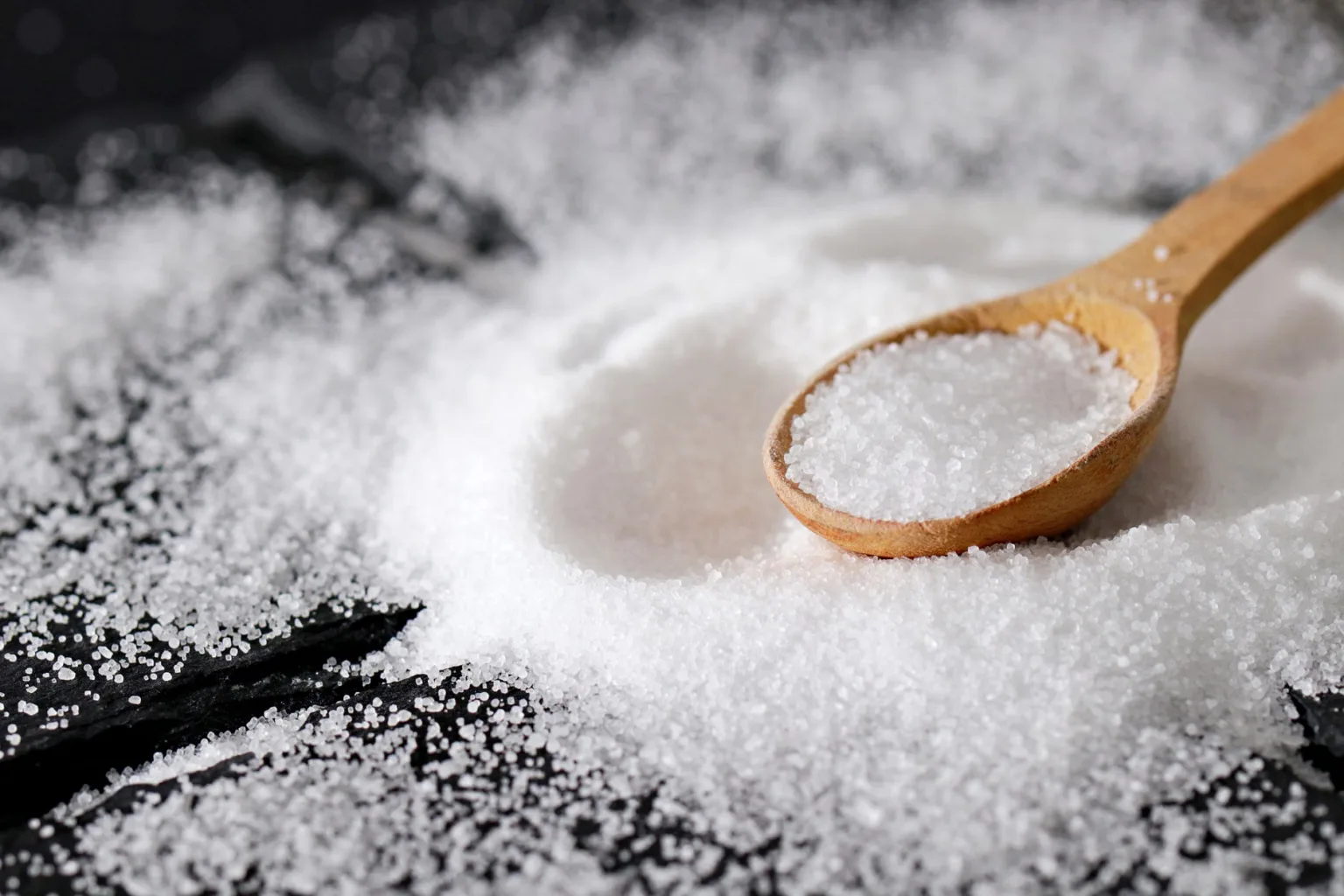
Fine sea salt is edible salt obtained from seawater evaporation and sold as small crystals. Sea salt is produced by concentrating seawater in salt pans until salt crystals form; the product is then collected and dried. Fine describes the grain size, not a guaranteed place of origin, single production method or identical composition across brands. Product names can vary by manufacturer, so check the package to confirm what you are buying. Like other salts, it is used primarily for seasoning and enhancing flavor. It is not the same as fleur de sel or flaky sea salt, which have different textures and are often used differently.
When to use it
Use it when you want a straightforward seasoning that can be spread in small crystals throughout a dish. Its fine grain is convenient for everyday cooking and for mixing into moist ingredients, although the right amount depends on the recipe, the other ingredients and personal taste. You can also add it at the end to adjust flavor, adding gradually and tasting as you go. If you want a noticeable crunch or a flaky finishing texture, choose a coarse or flaky salt rather than expecting fine salt to provide that effect.
How to use it
Add fine sea salt gradually as you prepare a dish, mix to distribute it, and taste before adding more. It can also be dissolved in liquids or mixed into moist preparations; check that it is evenly distributed. In cooked dishes, use small additions to adjust the flavor just before serving. Salt can enhance some flavors and temper others, but fine salt does not provide the crisp crunch of salt flakes. When replacing fine salt with a larger-grained salt, do not assume that the same spoonful contains exactly the same amount: crystal shape and size affect volume measures. Adjust gradually and follow the recipe where precise measurement matters.
Flavour and texture
Its basic taste is salty; differences among varieties can reflect intensity, refinement and texture. Fine crystals distribute readily and do not provide the pronounced crunch of large flakes. Seawater is the starting material for sea salt, but color, moisture and flavor notes can vary by product and production. Do not assume every sea salt has exactly the same flavor or grain size.
How to choose it
Read the product name and package information: salt names can vary between manufacturers, and some products include ingredients or flavorings in addition to salt. For a straightforward fine sea salt, check that the description indicates fine grains and that the product is not flaky salt, fleur de sel or a seasoned blend. If you want iodized salt, verify that the package says so; sea salt is not necessarily naturally iodized.
Storage
The available evidence does not establish a specific storage method or shelf life for fine sea salt. Check the manufacturer's instructions and keep the package according to its guidance. Do not assume a particular shelf life or that every product should be stored in exactly the same way; packaging and directions may vary by manufacturer.
Substitutions
Fine table salt can be used as a seasoning alternative, but check its label because it may be iodized or contain anti-caking agents. Coarser sea salt can also replace it if you add it gradually and taste the dish. Do not swap volume measures without adjustment: crystal size and shape can make the amount in a spoon differ.
Common mistakes
Do not confuse fine sea salt with flaky salt or fleur de sel; they do not provide the same texture or finish. Another mistake is assuming every sea salt is iodized or that a volume measure of one grain size equals the same measure of another. Read the label and add gradually, especially when substituting one variety for another.
Safety and allergens
The available evidence provides no specific official warning for this particular product. Use it as a seasoning, do not assume different varieties are interchangeable measure for measure, and follow the package directions.
Culinary uses
- Condimento para sazonar
- Potenciador del sabor
Recommended techniques
- Sazonar durante la preparación
- Añadir al final para ajustar el sabor
Pairs well with
- Verduras
- Platos asados
Frequently asked questions
What does fine mean in fine sea salt?
It describes the small size of the crystals; it does not guarantee one origin or production method.
Is fine sea salt always iodized?
Not necessarily. Check the package for an explicit statement that it is iodized.
Can I substitute coarse salt?
Yes. Add it gradually and taste, since grain size affects volume measurements.
Estimated nutrition
- Fat
- 0 g
- Saturates
- 0 g
- Carbohydrate
- 0 g
- Sugars
- 0 g
- Protein
- 0 g
- Salt
- 98.25 g
Sources and review
Automatically researched, cross-checked and validated content. Sources consulted:
- Client Challenge doi.org
- 15 tipos de sal para dar variedad a nuestros platos: cómo elegirlas y usarlas en la cocina directoalpaladar.com
- Sal Marina: Qué es, cuál es su historia y cuáles son sus beneficios - Monti pmonti.com
- Tipos de sal y cuál elegir - Unión Vegetariana Española (UVE) unionvegetariana.org
- revista del - Comité Científico aesan.gob.es
- Development and testing of methods for extraction and ... upcommons.upc.edu
- The Early Life History Transitions of the Bivalve Aulacomya ... diposit.ub.edu
- Student Projects | Food Systems, Nutrition, and Health foodsystems.uw.edu
- The salts of the earth - Harvard Health health.harvard.edu
- Predator Group Composition Indirectly Influences Food ... laskowskilab.faculty.ucdavis.edu
- Biosafety in Microbiological and Biomedical Laboratories prospective-health.ecu.edu
- Food Habits of Harbor Seals (Phoca vitulina) in Two Estuaries ... faculty.aceveda.wwu.edu
- Goodbye to gas stoves? Climate fight moves into the kitchen - Los Angeles Times earthsystemscience.stanford.edu
- Cuatro variedades de sal marina gourmet para paladares exquisitos - SALIMAR asosalimar.com