- Category
- Grains, flour and pasta
- State
- Dry
- Usual unit
- g
What it is
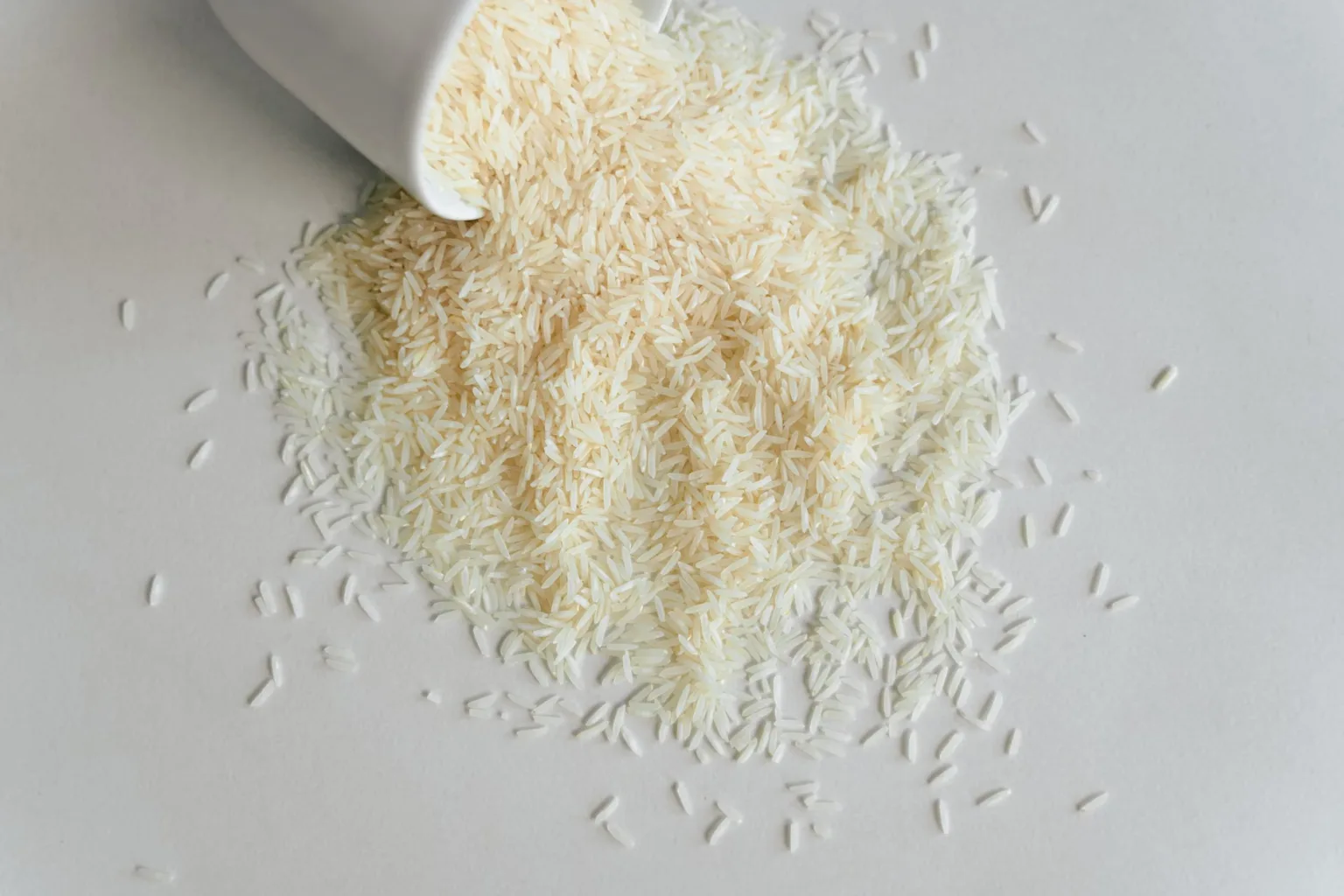
Fine white rice flour is white rice milled into a fine powder. It is a dry ingredient, and its texture and performance can vary with the rice variety and the fineness of the milling. Unlike wheat flour, it does not develop an elastic gluten structure, so it behaves differently in doughs that need stretch, cohesion or the ability to hold air. In cooking, it can be used to thicken sauces, creams and puddings, as a coating for foods to be fried, and in a range of baking recipes. White rice flour is often described as mild in flavor, but the exact result depends on the product. Do not automatically treat it as interchangeable with brown rice flour, rice semolina or pregelatinized rice flour: those products may have different textures or cooking functions.
When to use it
Choose fine white rice flour when you want to thicken a sauce, cream or pudding, or when you need a coating for frying. It can also be used in pancakes, biscuits, cakes and light batters. In recipes where flour provides elasticity and structure, it is not usually a direct replacement for wheat flour: because it does not form a gluten network, the mixture may be more crumbly and may need other ingredients or a flour blend. For a reliable result, use a recipe written for rice flour or adjust the formula carefully. Check the package as well if the recipe specifically calls for white rice flour rather than another rice product.
How to use it
To thicken a sauce, first whisk the flour with a little cold liquid until smooth, then add this mixture to the hot preparation while stirring. This helps disperse the flour and avoids tipping dry powder straight into hot liquid. Alternatively, make a roux by cooking the flour with oil or butter before adding liquid, or follow a suitable rice-flour béchamel recipe. For coating, use the flour on its own or mix it with liquid to make a batter; cold sparkling water can be used in a light tempura-style batter. For baking, follow a recipe designed for rice flour. Blending it with another flour, such as almond or corn flour, can produce a different structure. Rice flour on its own does not reproduce the elasticity of gluten.
Flavour and texture
Fine white rice flour is generally described as mild or neutral in flavor and has a fine powdery texture, although milling and rice variety can affect the result. Its starch can give body to sauces and creams, while a coating may contribute to a light fried crust. In baked goods, the lack of an elastic structure can make the result more fragile or crumbly than one made with wheat flour. Texture and thickening also depend on the recipe and the specific flour, so different rice flours are not automatically interchangeable.
How to choose it
Read the product name and ingredient list to confirm that you are buying white rice flour rather than brown rice flour, rice semolina or a blend. Look for a fine or extra-fine description when a smooth texture matters to the recipe. Do not assume all rice flours have the same grind or function: some products are treated in ways that change how they hydrate and thicken. When a recipe calls for a particular type, follow that specification and avoid substituting another rice product without checking its intended use.
Storage
The available evidence identifies this ingredient as a dry flour but does not establish one universal shelf life or special storage conditions for every brand. Follow the package directions and protect the flour from moisture, dirt and strong surrounding odors. Close the package after use and check the flour’s appearance and smell before cooking with it. If the manufacturer gives storage directions or a best-before date, follow those rather than assuming a fixed keeping time for all rice flour.
Substitutions
There is no single substitute that behaves the same in every recipe. Wheat flour may be used for some coatings, but the result will differ and the preparation will no longer be wheat-free. In baking, almond flour or corn flour may be blended with rice flour, or used in recipes formulated for a different structure; neither is a universal one-for-one replacement. Cornstarch is another possible thickener in recipes designed for it, but follow the recipe’s method rather than swapping it in without adjustment.
Common mistakes
A common mistake is replacing wheat flour with rice flour in any recipe and expecting the same elasticity, volume or binding. Rice flour does not create the same structure, so baking may require a recipe specifically developed for it or a blend with other flours. Another mistake is adding it dry to a hot sauce; mixing it with cold liquid first helps prevent lumps. Also check whether a recipe calls for ordinary rice flour or pregelatinized rice flour, since they do not necessarily behave alike.
Safety and allergens
The supplied sources identify no specific safety warning for this flour. Follow the package directions and do not use it if the package is damaged or the flour shows unusual changes.
Culinary uses
- Thickener for sauces, creams and puddings
- Flour for baking and light batters
- Coating for fried foods
Recommended techniques
- Whisk into a little cold liquid before adding to a hot sauce
- Use in a roux with oil or butter
- Mix with liquid to make a batter or coating
- Combine with other flours for baked goods
Pairs well with
- Water or another recipe liquid in sauces and creams
- Oil or butter in a roux
- Other flours, such as almond or corn flour, in baking
- Cold sparkling water in a light frying batter
Frequently asked questions
Can fine white rice flour replace wheat flour directly?
Not in every recipe. It does not form the same elastic structure, so the cohesion and texture of doughs and baked goods can change. Use a recipe designed for rice flour or adjust the blend carefully.
How should I add it to a sauce as a thickener?
Whisk it into a little cold liquid until smooth, then stir the mixture into the sauce. It can also be used in a roux when the recipe calls for that method.
Are white, brown and pregelatinized rice flour the same?
Not necessarily. They can differ in milling, flavor and how they hydrate. Check the package description and use the type specified by your recipe.
Estimated nutrition
- Fat
- 1.42 g
- Saturates
- 0.39 g
- Carbohydrate
- 80.1 g
- Sugars
- 0.12 g
- Fibre
- 2.4 g
- Protein
- 5.95 g
- Salt
- 0 g
Sources and review
Automatically researched, cross-checked and validated content. Sources consulted:
- The Essential Glossary of Cooking Terms for the Culinary Arts - Escoffier escoffier.edu
- Evaluación de harina de amaranto como ingrediente antioxidante para la preparación de matrices alimentarias funcionales doi.org
- A PROGRAM FOR extension.usu.edu
- educational content to support healthful lifestyle practices sjsu.edu
- Aplicaciones de la Biotecnología en Seguridad Alimentaria aesan.gob.es
- Food & Fun Afterschool hsph.harvard.edu
- Healthy Eating Plan for Weight Management med.uc.edu
- Aplicaciones de la harina de arroz harinadearrozcliment.com
- La harina de arroz, ingrediente clave de la pinsa: todo lo que debes saber - Di Marco dimarco.it
- Harina de arroz: cómo hacerla en casa fácilmente, beneficios e ideas de uso bonviveur.com
- Harina de Arroz Blanco | Riviana Foods rivianaindustrial.com
- No toda la harina de arroz es igual margavilan.substack.com