- Category
- Vegetables
- State
- Fresh
- Usual unit
- g
What it is
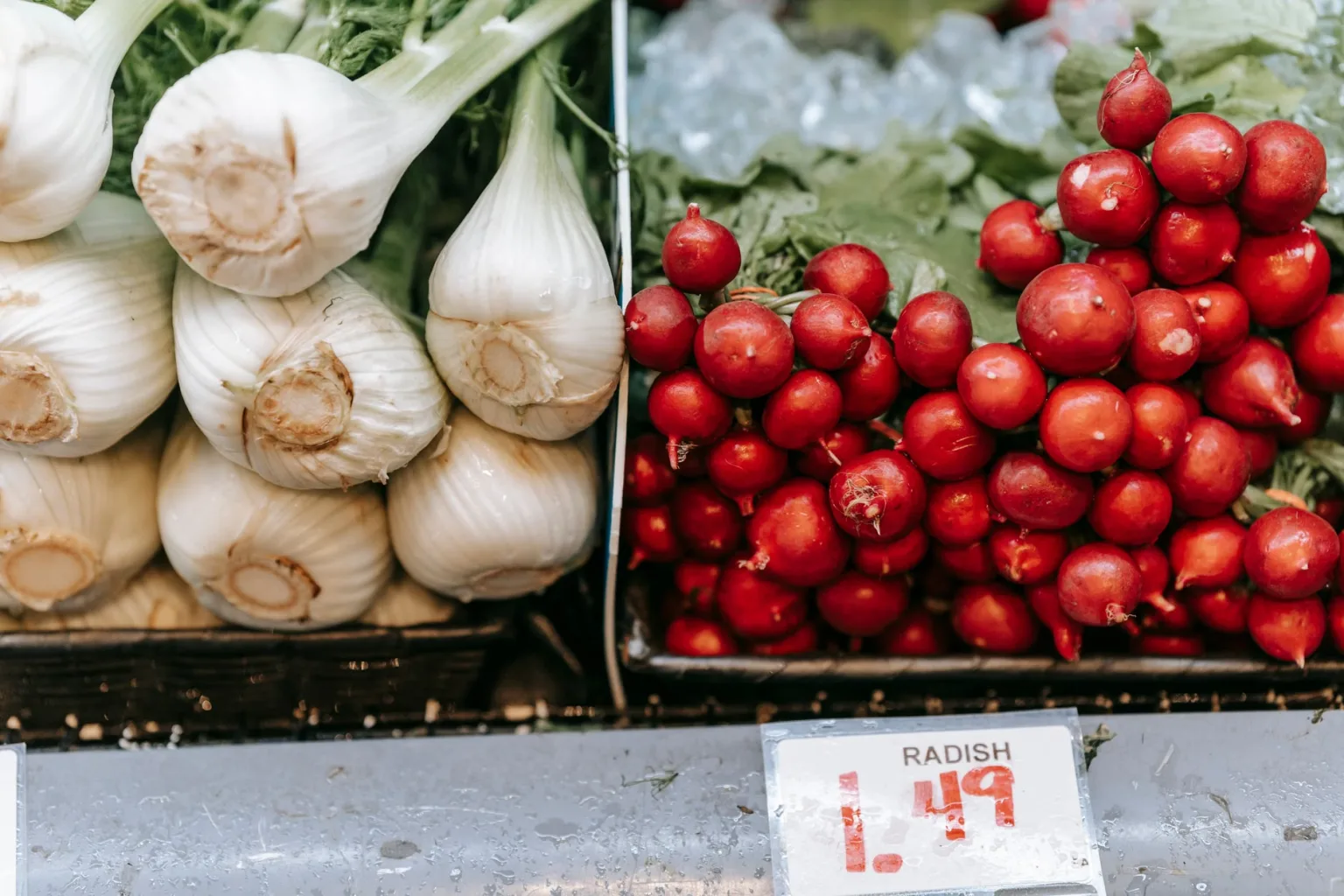
Fresh fennel is the tender part of Foeniculum vulgare sold chiefly as a pale bulb with green stalks and fine, feathery leaves. In cooking, the bulb is treated as a vegetable: its firm layers can be sliced and eaten raw or cooked. The stalks and leaves are aromatic and can be chopped into dishes or used to flavor cooked preparations. The cultivated bulb fennel in this profile is distinct from wild fennel, which is more often used for its stalks, leaves and seeds. This ingredient profile is for fresh bulb fennel, not dried fennel seeds or sea fennel.
When to use it
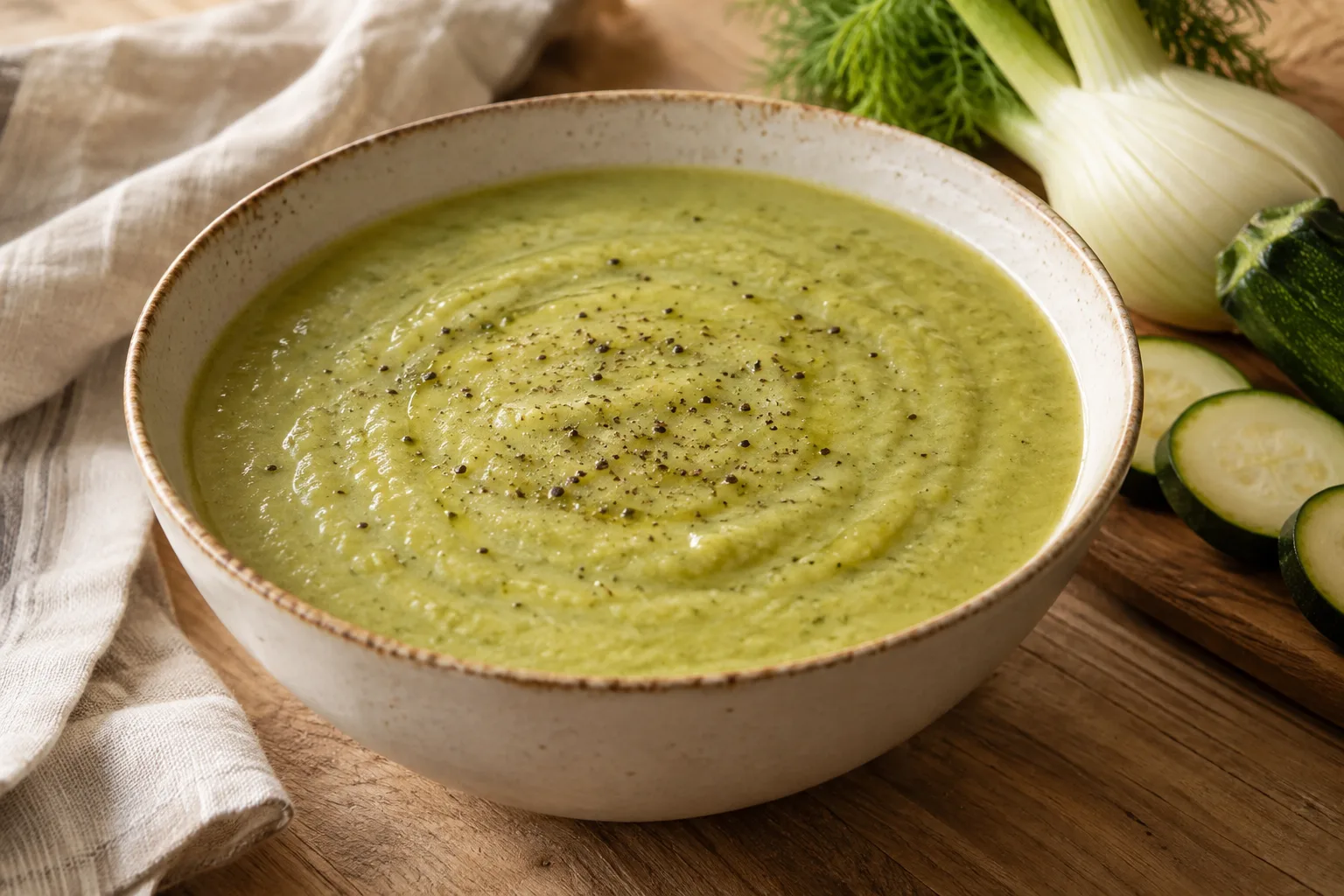
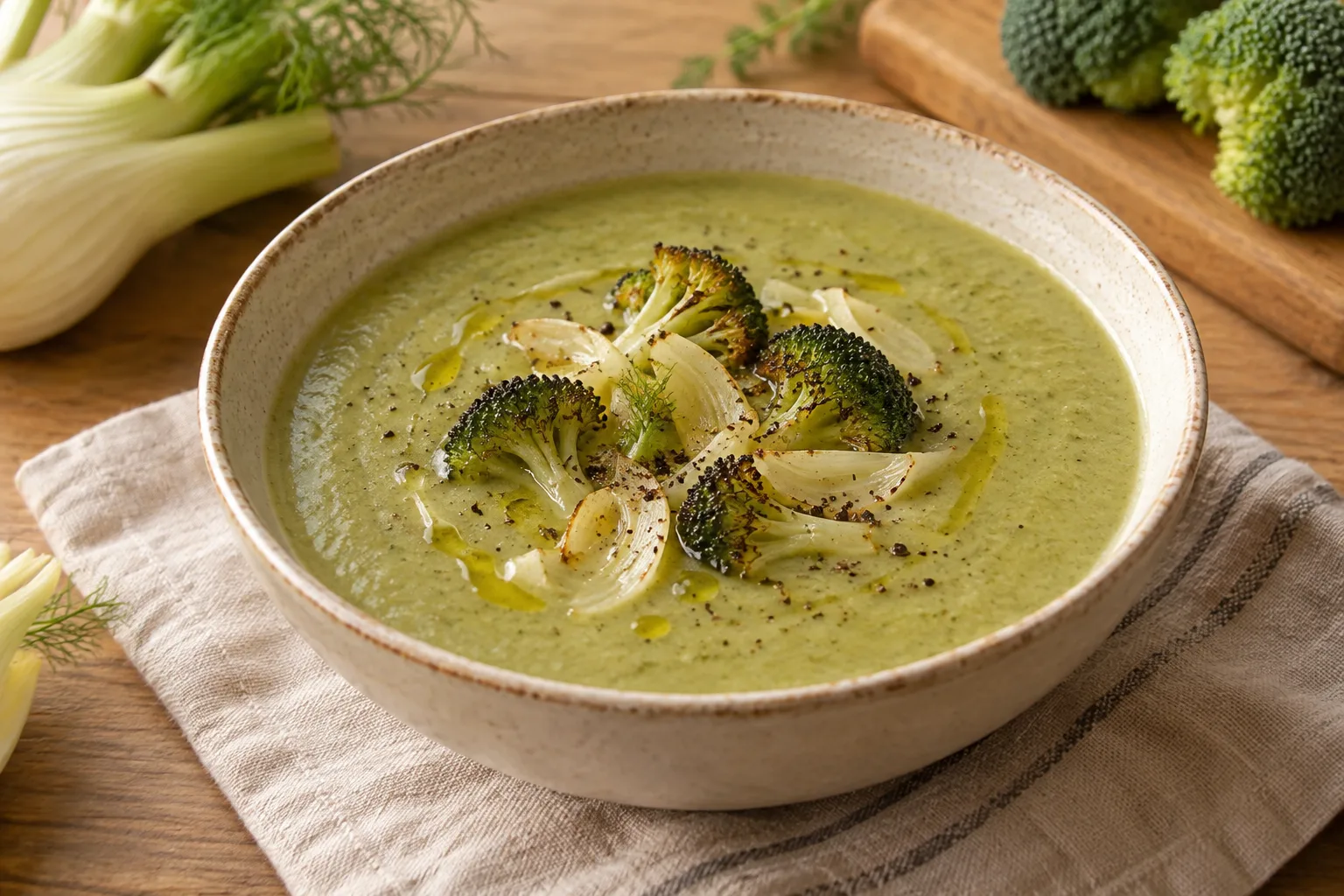
Use fresh fennel when you want to add a crisp vegetable element and anise-like note to a salad, or an aromatic flavor alongside fish, legumes or other vegetables. Raw fennel shows its fresh character and firm texture clearly; cooking softens its anise-like aroma and brings out a sweeter impression. It can take the lead as a side dish or contribute aroma to soups and stews. Bulbs vary in size and shape, so choose a cut that suits the preparation rather than judging the ingredient by appearance alone.
How to use it
Remove any damaged outer parts and cut the bulb to suit the dish. For salads, slice it thinly or cut it into strips so it is comfortable to eat, then combine it with other vegetables or citrus. For cooked dishes, cut it into chunks or wedges and sauté, roast, or add it to soup or stew; heat softens the texture and mellows its anise-like note. Stalks can be chopped or added to cooked preparations for aroma, while the fine leaves can be used as a finishing touch. Match the cut to the dish: thin slices work well raw, while larger pieces are practical for cooking.
Flavour and texture
The raw bulb is firm, juicy and crisp, with an anise-like aroma that can recall anise or licorice. When cooked, it becomes tender and its flavor is generally milder and sweeter. Stalks are more fibrous than the bulb, while the fine leaves contribute a delicate aroma. Bulbs can vary in size and shape; that variation alone does not determine how they should be used.
How to choose it
Choose a firm bulb that looks pale and has no spots, bruises or soft areas. If stalks and leaves are attached, look for green, fresh-looking foliage rather than wilted leaves. Bulbs may be rounder or more elongated; for raw use, prioritize firmness and overall condition, and do not mistake a difference in shape for a defect. These are useful freshness cues, but they do not by themselves establish how long the fennel will keep at home.
Storage
Keep fresh fennel refrigerated and check its condition before use. Culinary sources give differing storage periods, so a single guaranteed shelf life is not appropriate: judge by the bulb’s condition and use it while it remains firm and fresh-looking. If stalks or leaves wilt or damaged areas appear, assess its quality before adding it to a dish. Follow any storage directions on the package or from the seller.
Substitutions
Celery can stand in when the main goal is a crisp vegetable texture, but it does not reproduce fennel’s anise-like aroma. Anise can contribute a similar aromatic note in a dish, but it cannot replace the bulb’s texture or bulk. Choose an alternative according to the role you need to replace and expect a different result.
Common mistakes
Cutting the bulb too thickly for a salad can leave it tougher and less pleasant to eat; try thin slices instead. Another mistake is expecting the same aromatic profile raw and cooked: heat mellows the anise-like note. Do not reject a bulb automatically because it is more elongated or rounded; focus on firmness and the absence of visible damage.
Safety and allergens
Follow use and storage directions on the package or from the seller, and use ordinary food-hygiene practices. If fennel appears deteriorated, assess its condition before using it. Allergen information depends on the product and how it is sold; check the label or ask the seller when you need that information.
Culinary uses
- Hortaliza para ensaladas y guarniciones
- Aromático para sopas, guisos y platos de pescado
Recommended techniques
- Cortar en láminas finas y servir crudo
- Saltear
- Asar
- Cocinar a fuego lento en sopas o guisos
Pairs well with
- Cítricos, especialmente naranja y limón
- Pescado
- Legumbres
- Otras verduras y ensaladas
Frequently asked questions
Can fresh fennel be eaten raw?
Yes. The bulb can be sliced thinly or cut into strips for salads, where it keeps its crisp texture and anise-like aroma.
How does cooking change its flavor?
Heat softens the bulb and generally mellows its anise-like note, which may taste sweeter.
Can the stalks and leaves be used?
Yes. Stalks and leaves can add aroma to dishes, and the fine leaves can also be used as a finishing touch.
Estimated nutrition
- Fat
- 0.2 g
- Saturates
- 0.09 g
- Carbohydrate
- 7.3 g
- Sugars
- 3.93 g
- Fibre
- 3.1 g
- Protein
- 1.24 g
- Salt
- 0.13 g
Sources and review
Automatically researched, cross-checked and validated content. Sources consulted:
- En el etiquetado alimentario hay algunas menciones que son obligatorias eletiquetadocuentamucho.aesan.gob.es
- Client Challenge doi.org
- Aesan - Agencia Española de Seguridad Alimentaria y Nutrición aesan.gob.es
- Foeniculum vulgare - Wikipedia, la enciclopedia libre es.wikipedia.org
- Hinojo de temporada, una verdura mediterránea saludable y deliciosa: qué es y cómo usarlo en la cocina con cinco recetas directoalpaladar.com
- Hinojo, la hortaliza de los dioses | Gastronosfera gastronosfera.com
- Hinojo marino: historia, propiedades y usos en la cocina elpaladar.es
- Hinojo: para qué sirve, propiedades y beneficios | El Diario Vasco diariovasco.com
- Artes culinarias/Ingredientes/Hinojo - Wikilibros es.wikibooks.org
- ¿Qué es el Hinojo? Origen, beneficios y posología | Dieti Natura dieti-natura.es
- Guía completa para aprovechar el hinojo | Recetas Nestlé recetasnestle.com.ar
- Hinojo: usos, propiedades y recetas | Fine Dining Lovers finedininglovers.es
- Hinojo: desde sus orígenes hasta sus usos, todo lo que necesitas saber - Wilden Herbals - Share your nature wildenherbals.com
- Guía completa para aprovechar el hinojo | Recetas Nestlé recetasnestlecam.com
- AI Chef Pro Funciones Avanzadas: Técnicas de Power User | Blog AI Chef Pro blog.aichef.pro
- 7 recetas con HINOJO fáciles y saludables - PequeRecetas pequerecetas.com
- 10 consejos creativos para usar Hinojo - Paulina Cocina paulinacocina.net