- Category
- Vegetables
- State
- Fresh
- Usual unit
- unit
What it is
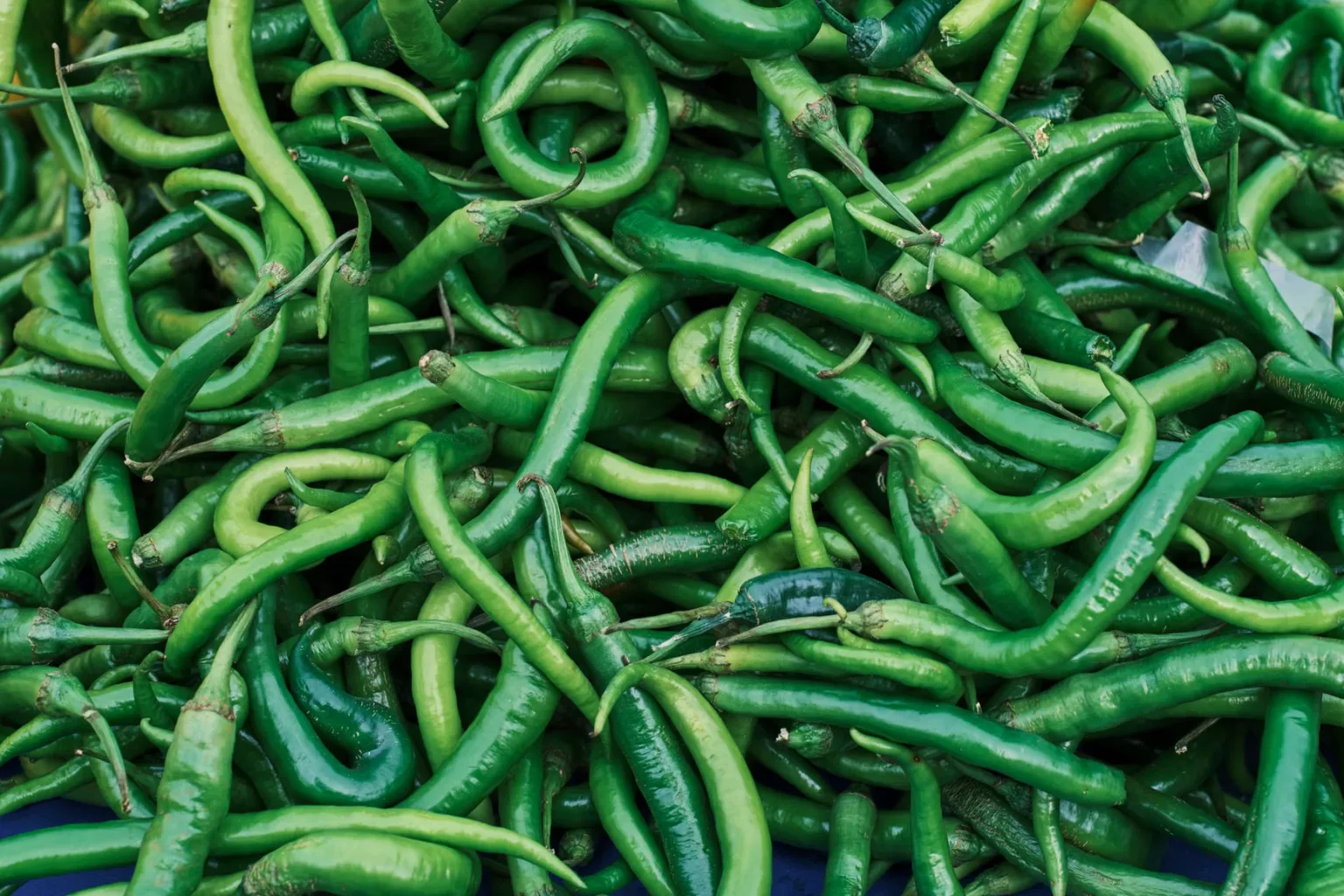
Fresh green chilies are edible fruits from plants in the Capsicum genus, sold fresh and green. In many varieties, green is an earlier stage before the fruit changes to other colors as it matures, but color alone cannot identify a variety or predict its heat. Green chilies come in different sizes and heat levels, from relatively mild to very hot. They can be used whole, sliced, or chopped, and may also be roasted or cooked before being added to a dish. They are not simply interchangeable with dried chilies: the fresh form contributes a distinct vegetal character.
When to use it
Use green chilies when you want to add heat and a fresh note to a salsa, stir-fry, stew, or vegetable dish. The right amount depends on the variety and the diners’ tolerance; green color alone does not show how hot a chili will be. For a more pronounced note, chop and distribute it through the dish; to keep the result easier to control, begin with a small amount and taste. Thin slices can also be used raw as a garnish. Dried red chili can add heat instead, but it will not reproduce the exact profile of a fresh green chili.
How to use it
Rinse chilies under cold running water and dry them before preparation. Remove the stem if your recipe calls for it, then use them whole, sliced, or chopped to suit the texture you want. Add them raw to salsa or as a garnish, or roast, fry, or cook them into stews and other dishes. Heat varies greatly by variety, so start with a small amount and adjust after tasting. Removing the seeds and inner white membrane may reduce the heat, though the result depends on the chili. When handling hot varieties, wear gloves and avoid touching your face or eyes.
Flavour and texture
Their flavor can be fresh, vegetal, and pungent, with heat that varies widely among varieties. Some green chilies are mild, while others are very hot; do not assume they all have the same heat or that green means mild. Raw chilies bring a crisp bite; roasting or cooking changes their texture and flavor. Dried chilies have a different profile, so they are not an exact match for fresh green ones.
How to choose it
Choose chilies that are firm and fresh, with smooth skin and no soft spots, bruises, mold, or pronounced shriveling. Shape, size, and shade of green depend on the variety and do not reliably indicate heat. If you need to manage a dish’s intensity, look for a variety identified as mild when available and add it gradually. Avoid pieces with visible damage or a wilted appearance.
Storage
The evidence consulted does not establish exact conditions or a precise storage life for fresh green chilies, so do not assign them a specific shelf life. For longer preservation, they can be frozen: extension guidance describes freezing them whole or prepared in pieces in freezer-suitable packaging. Freezing does not remove their heat. For home canning, do not improvise a process: unpickled chilies require a tested pressure-canning method.
Substitutions
Another fresh chili can stand in, but variety affects both heat and the dish’s character; adjust the amount gradually. A dried red chili can also add heat, although its profile is not identical to that of a fresh green chili. A sweet pepper may work when you want vegetable volume without the same heat, but it changes the result substantially. There is no universal quantity conversion.
Common mistakes
Assuming all green chilies are mild, or that color accurately predicts heat, can make a dish much hotter than intended. Adding a large amount at once makes it harder to correct; start small and taste. Do not treat fresh and dried chilies as identical in flavor. When cutting chilies, avoid touching your eyes or face, especially if you do not know how hot the variety is.
Safety and allergens
Rinse chilies under running water before preparation and use clean hands and utensils. Wear gloves when handling hot chilies; avoid touching your face and eyes, and wash your hands thoroughly if you did not wear gloves. Do not treat this guidance as a canning process: for unpickled chilies, follow a tested recipe requiring a pressure canner.
Culinary uses
- Aporta picor y sabor vegetal fresco a platos y salsas.
- Funciona como condimento crudo o como ingrediente cocinado.
Recommended techniques
- Picar o cortar en rodajas para añadir crudo.
- Asar, freír o cocinar antes de incorporarlo a una preparación.
Pairs well with
- Tomate, frijoles y maíz.
- Arroz, pasta, tofu y otras verduras.
Frequently asked questions
Are all green chilies hot?
No. Some varieties are mild and others are very hot; green color alone cannot predict intensity.
How can I reduce the heat?
Removing the seeds and inner white membrane may reduce it. Handle hot chilies carefully and wear gloves.
Can I freeze fresh green chilies?
Yes. Extension guidance describes freezing chilies whole or cut into pieces. Freezing does not remove their heat.
Sources and review
Automatically researched, cross-checked and validated content. Sources consulted:
- Ingredientes para Recetas de Salsa (Spanish) - National Center for Home Food Preservation nchfp.uga.edu
- Client Challenge doi.org
- The Essential Glossary of Cooking Terms for the Culinary Arts - Escoffier escoffier.edu
- Agencia Española de Seguridad Alimentaria y Nutrición aesan.gob.es
- El chile, ingrediente esencial en la cocina de México - Formacion en Gastronomia formacionengastronomia.com
- How to Preserve Chiles | USU extension.usu.edu
- Vamos a Conservar Alimentos: Chiles/Pimientos extension.psu.edu
- Chiles Verdes Frescos — Open Spice Box openspicebox.com
- El CHILE como alimento amc.edu.mx
- Breakfast & Break Snacks saltaire.ucsd.edu
- informe anual de indicadores - agricultura, pesca y alimentación servicio.mapa.gob.es
- 2026/2027 Catering Menu - Auxiliary Services - Fresno State auxiliary.fresnostate.edu
- EWG's Shopper's Guide to Pesticides in Produce | Summary go.middlebury.edu
- Ulster | Cornell Cooperative Extension ulster.cce.cornell.edu
- Chiles verdes (¿crudos, orgánicos?) | Fundación G+E diet-health.info