- Category
- Herbs and spices
- State
- Fresh
- Usual unit
- leaves
What it is
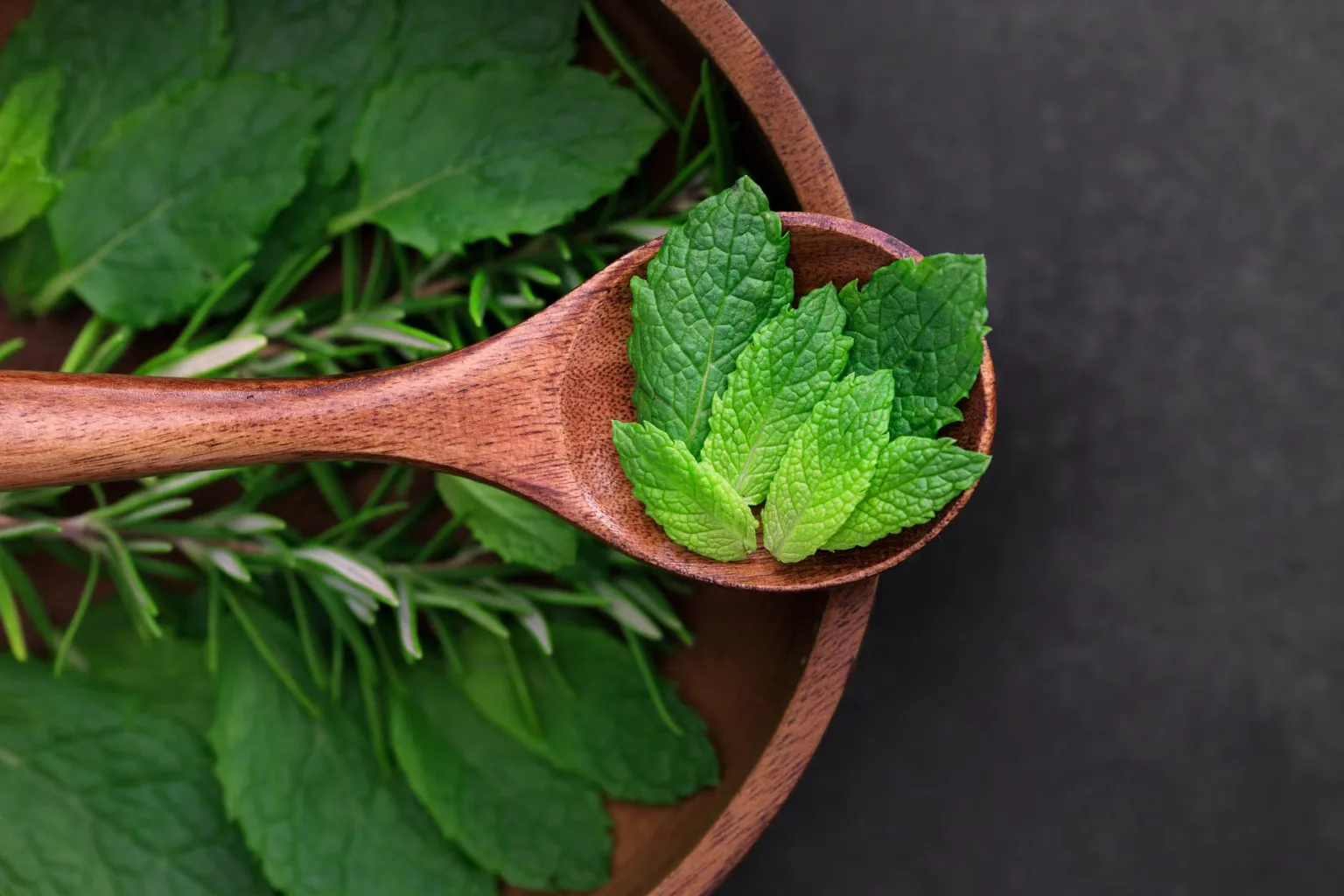
Fresh mint is the recently harvested leaf of an aromatic plant in the genus Mentha, within the Lamiaceae family. The name covers several species and varieties, so appearance and aromatic strength can vary. Leaves are commonly green, simple, and edged with small teeth, but not all mints are identical: spearmint, for example, is a distinct mint species. In cooking, the leaf is used whole or chopped to add a fresh, green aromatic character. This profile is about fresh leaves, not extracts or essential oils.
When to use it
Use fresh mint when a dish needs an aromatic counterpoint in a salad, drink, sauce, or vegetable preparation. It works in both sweet and savory cooking: pair it with fruit, chocolate, yogurt, chickpeas, couscous, or quinoa, and also with lamb. In cold dishes, raw leaves contribute a green, fresh note; in hot dishes or liquids, they can be added during cooking or steeped. Since intensity varies by variety and mint can dominate, begin with a little and taste before adding more.
How to use it
Strip the leaves from the stems when you want a more delicate texture, then chop them shortly before serving and add them to salads, tabbouleh, fruit dishes, yogurt sauces, or garnishes. You can also leave the leaves whole as an accent, or steep them in drinks and other liquids to flavor them. For an infusion, leave the leaves in the liquid and remove them once the flavor is sufficient; no universal steeping time is specified here. Mint can also go into cooked dishes, including stews or meat preparations, though heat changes its fresh expression. To release aroma without completely breaking the leaves down, press or rub them gently. Taste and adjust: too much can overwhelm other flavors.
Flavour and texture
Fresh mint is commonly described as fresh, green, herbal, and aromatic, with a cooling impression; its precise character depends on the species or variety. The leaves are tender and can be used whole or chopped. Spearmint is similar but not identical to other mints, and may taste more assertive. Cooking or steeping changes how the aroma comes through, so the result will not be the same as adding raw leaves at the end.
How to choose it
Choose leaves that look fresh, have an even color, and feel firm, with no yellowing, visible damage, decay, or wilting. Apparent freshness, uniformity, and freedom from defects are useful quality checks for culinary herbs. If the package names a species or variety, remember that its aroma may be more or less intense: the common name “mint” does not guarantee an identical flavor in every product.
Storage
For tender herbs, trim the bottom of the stems and stand them in a container with a little cold water; they can be refrigerated or kept on a counter. This general guidance for tender herbs does not establish a specific storage life for mint. Check the leaves before use and follow package directions if provided. Discard leaves that are deteriorated or show visible decay.
Substitutions
Fresh spearmint can work as an alternative, but it is a distinct mint and may taste more pronounced; start with less and adjust. Dried mint is another option when fresh leaves are unavailable, though it does not reproduce the texture or green character of fresh mint exactly. No universal quantity conversion is established here, so taste the dish and adjust gradually.
Common mistakes
Adding a large amount of mint at the start can let its aroma dominate the dish. Begin with a small amount and taste again before adding more. Another mistake is assuming that every mint, including spearmint, has the same flavor profile: varieties differ. Do not confuse fresh leaves with extract or essential oil; these are different products and are not interchangeable measure for measure.
Safety and allergens
Use leaves identified as a culinary ingredient, inspect them before cooking, and follow package directions when provided. Avoid leaves that are deteriorated or show visible decay. Some people may be sensitive to particular plants or foods; do not use mint if you already know you react to it.
Culinary uses
- Fresh aromatic accent for salads, sauces, cold soups, and vegetable dishes
- Flavoring for drinks, infusions, desserts, and savory dishes
Recommended techniques
- Use the leaves raw, whole or chopped
- Add to cooked dishes or infuse in liquid
- Gently bruise leaves to release aroma without crushing them completely
Pairs well with
- Watermelon, cucumber, tomato, lemon, and lime
- Yogurt, chickpeas, couscous, and quinoa
- Lamb and other robust meats
- Chocolate and sweet preparations
Frequently asked questions
Are mint and spearmint the same?
Not necessarily. Spearmint, Mentha spicata, is a distinct species within the genus Mentha and may taste more pronounced than other mints.
Can fresh mint be cooked?
Yes. It can be used raw, added to cooked preparations, or steeped in liquids. Heat changes how its aroma comes through.
How do I choose good fresh leaves?
Look for leaves that appear fresh, feel firm, and have an even color. Avoid leaves that are yellow, damaged, wilted, or decayed.
Sources and review
Automatically researched, cross-checked and validated content. Sources consulted:
- En el etiquetado alimentario hay algunas menciones que son obligatorias eletiquetadocuentamucho.aesan.gob.es
- ¿Por qué la muerte es origen de miedos y tabúes? doi.org
- 9 recetas con menta, frescas y aromáticas | Gastronosfera gastronosfera.com
- Todo sobre la menta: qué es, cómo utilizarla en cocina y cinco recetas con menta para utilizar esta planta aromática directoalpaladar.com
- Mentha - Wikipedia, la enciclopedia libre es.wikipedia.org
- Los matices de la menta | El Comercio: Diario de Asturias elcomercio.es
- Menta, ¡qué fresca! - Wilden Herbals - Share your nature wildenherbals.com
- GUÍA DE APLICACIÓN DE LA LEGISLACIÓN DE AROMAS ALIMENTARIOS aesan.gob.es
- Selecting, Storing, and Using Fresh Herbs | Ohioline ohioline.osu.edu
- · 106 · USOS PRINCIPALES Javier Tardío menta, menda mapa.gob.es
- Flores comestibles | Extensión de la UMN es.extension.umn.edu
- Haga un cambio Agua saborizada Rinde: 2 cuartos de galón eatingsmartbeingactive.colostate.edu
- Las hierbas son plantas que son empleadas como agentes aggie-horticulture.tamu.edu
- Drink Up! Looking for ways to hydrate this summer? communitynutrition.cahnr.uconn.edu
- Todo lo que necesitas saber sobre la menta: usos, beneficios y curiosidades - La web de Ainhoa ainhoaweb.es