- Category
- Vegetables
- State
- Fresh
- Usual unit
- g
What it is
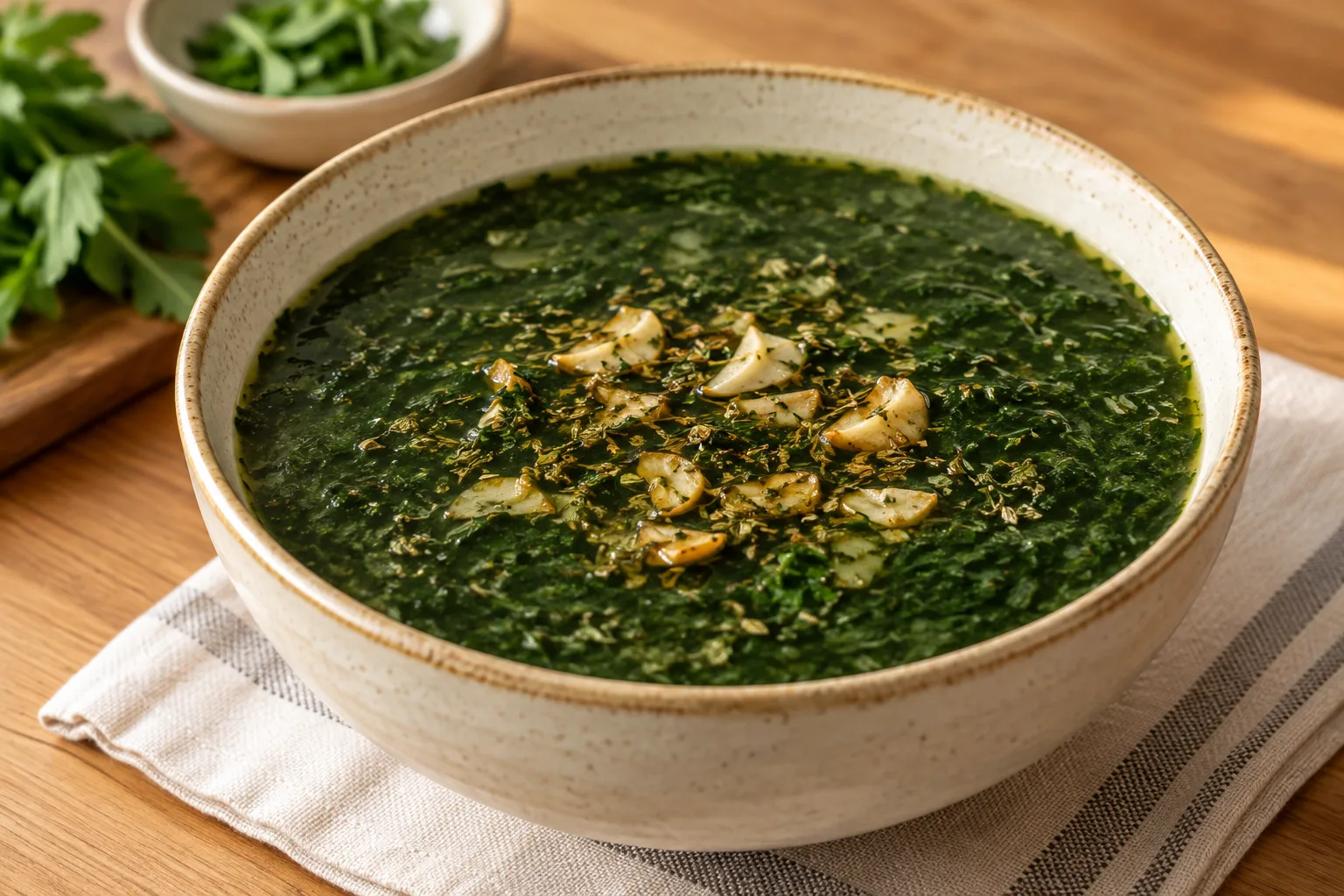
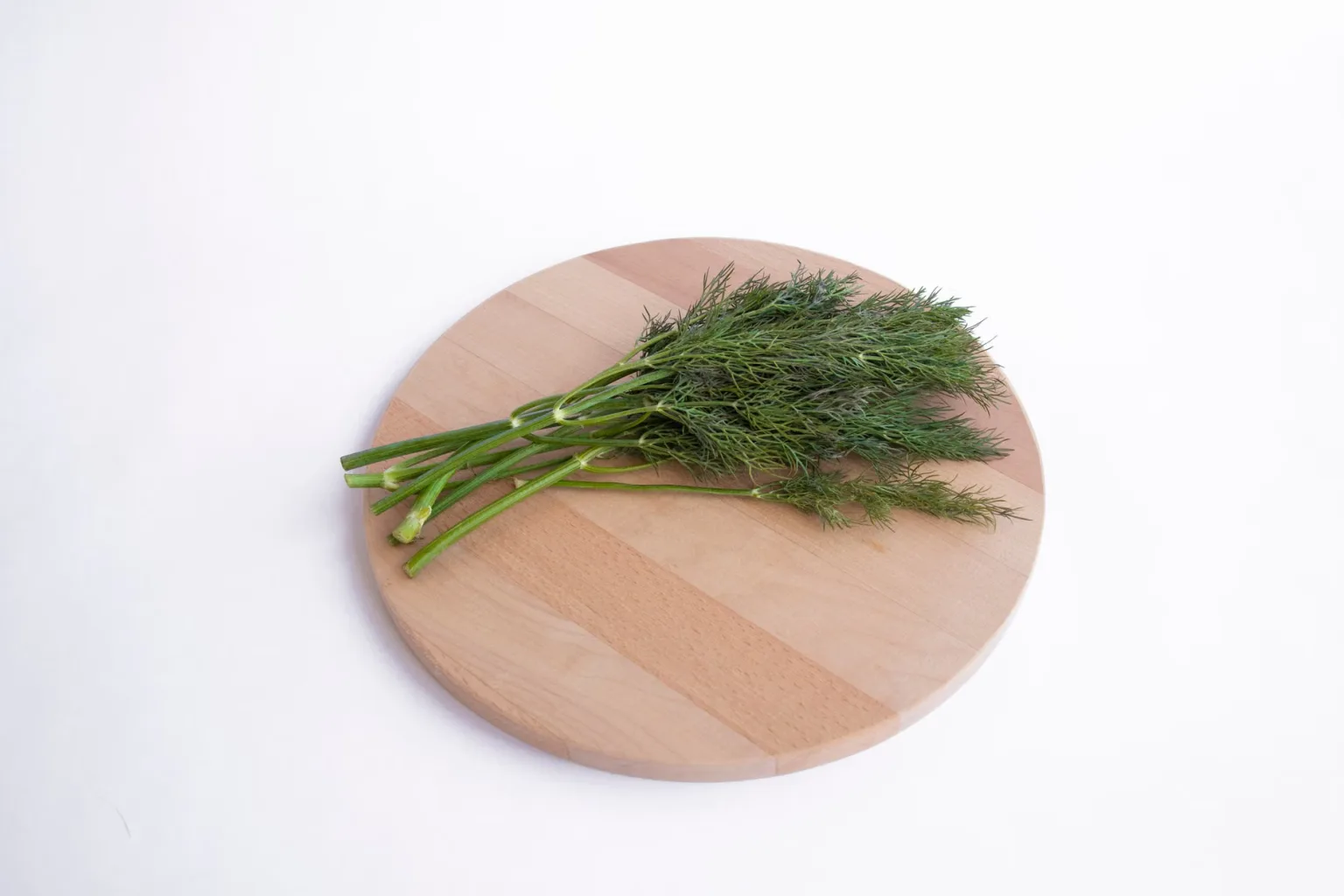
Fresh molokhia branches are the leafy plant commonly called molokhia or leafy jute, identified in the supplied sources as Corchorus olitorius. The leaves are the part used in the preparations described: remove them from the stems, wash them and usually chop them finely. When cooked, the leaves can give broth a thick, silky, mucilaginous consistency, characteristic of dishes also called molokhia. The flavor is described as slightly bitter, though cooking softens it. The natural texture that develops during cooking should not be mistaken for a defect; it is an expected culinary feature of this preparation.
When to use it
Use fresh molokhia when you want to make a leafy soup or stew in which molokhia is the main ingredient and its thickened texture is part of the intended result. Remove the leaves from the branches, chop them and add them to broth; they work especially well in preparations flavored with garlic and coriander. Serve the dish with rice or bread, and note that some versions include chicken or meat. If you want leafy greens that remain light and do not thicken the liquid, molokhia may not be the right choice.
How to use it
Remove the leaves from the stems and set aside any parts you do not plan to use. Wash the leaves well, drain them and let them dry before chopping; a fine cut gives you more control over the finished texture. Heat your chosen broth, add the chopped molokhia and stir to distribute it. The recipes described cook the leaves in broth and pair them with garlic and coriander, often combined as an aromatic finishing mixture. Serve the soup or stew with rice or bread. Lemon can be offered for diners to add acidity to taste. The sources describe variations in ingredients and consistency, so adjust the cut and liquid to the style you want; do not expect the leaves to behave like spinach that does not thicken a soup.
Flavour and texture
The supplied sources describe a green, slightly bitter flavor that becomes milder with cooking. Its most distinctive feature is the mucilaginous texture it can develop in broth, making the result thicker and silkier than an ordinary leafy soup. This texture is compared with okra, though the two are not identical. If you have not tried molokhia before, the consistency may be unexpected; it is a characteristic of the cooked dish.
How to choose it
When buying fresh molokhia branches, look for a product clearly identified as molokhia and check that the leaves are present, since they are the part used in the preparations described. The available sources do not provide reliable criteria for leaf color, firmness, branch size or season, so do not treat those features as guaranteed measures of quality. If it is sold in a bunch, check that the leaves are not badly damaged and ask whether the branches are fresh if the product description is unclear.
Storage
The available evidence does not establish how long fresh molokhia branches keep or provide verified home-storage conditions. Follow the seller’s or package’s storage directions if available, and avoid leaving the leaves exposed for long periods. Before cooking, separate, wash and dry the leaves. Do not infer freezing or preservation instructions for the fresh product from these sources; they do not provide enough support for recommending a method or duration.
Substitutions
The evidence does not establish a complete substitute for molokhia. Spinach can provide leafy greens, but it does not reproduce the characteristic mucilaginous texture. Okra is mentioned as a textural comparison, not as an equivalent replacement. If you use either in place of molokhia, treat the dish as an adaptation and expect a different texture and flavor.
Common mistakes
A common mistake is to assume that molokhia’s mucilaginous texture means something has gone wrong; that consistency is characteristic of the cooked preparation. If following the described method, separate the leaves from the stems before chopping rather than leaving the branches mixed in. Finally, do not expect spinach alone to reproduce molokhia’s distinctive texture.
Safety and allergens
The supplied sources contain no specific official safety warning for molokhia. Wash the leaves thoroughly with potable water before preparing them and use clean utensils; the evidence here does not support claims of specific hazards or special storage instructions.
Culinary uses
- Leafy vegetable for soups and stews
- Main leafy ingredient in molokhia-style dishes
Recommended techniques
- Separate leaves from the stems, wash, dry and finely chop
- Cook the chopped leaves in broth
- Finish with a garlic-and-coriander aromatic mixture
Pairs well with
- Garlic and coriander
- Chicken or meat broth
- Rice or bread
- Lemon
Frequently asked questions
Which part of fresh molokhia is used?
The preparations described use the leaves. Remove them from the branches before washing and chopping.
Is it normal for cooked molokhia to be viscous?
Yes. The sources describe a thick, mucilaginous texture as a characteristic of cooked molokhia.
Can I replace molokhia with spinach?
Spinach can provide leafy greens, but it will not reproduce molokhia’s characteristic texture.
Sources and review
Automatically researched, cross-checked and validated content. Sources consulted:
- Romanica Olomucensia : «¿Qué pinga es esto?». Usos disfemísticos en el español de Cuba doi.org
- Qué es (y qué no es) la estadística, usos y abusos de una disciplina clave en la vida de los países y las personas | Estudios económicos doi.org
- Recetas del mundo (Egipto): Molokhia expogourmetmagazine.com
- Molokhia: la verdura verde de Egipto y por qué espesa saboresarabes.com
- Molokhia: Calorías, Nutrición y Beneficios para la Salud nutriscan.app
- Explorando Magazine explorandomagazine.com
- Mulujía - Wikipedia, la enciclopedia libre es.wikipedia.org