- Category
- Fish and seafood
- State
- Fresh
- Usual unit
- g
What it is
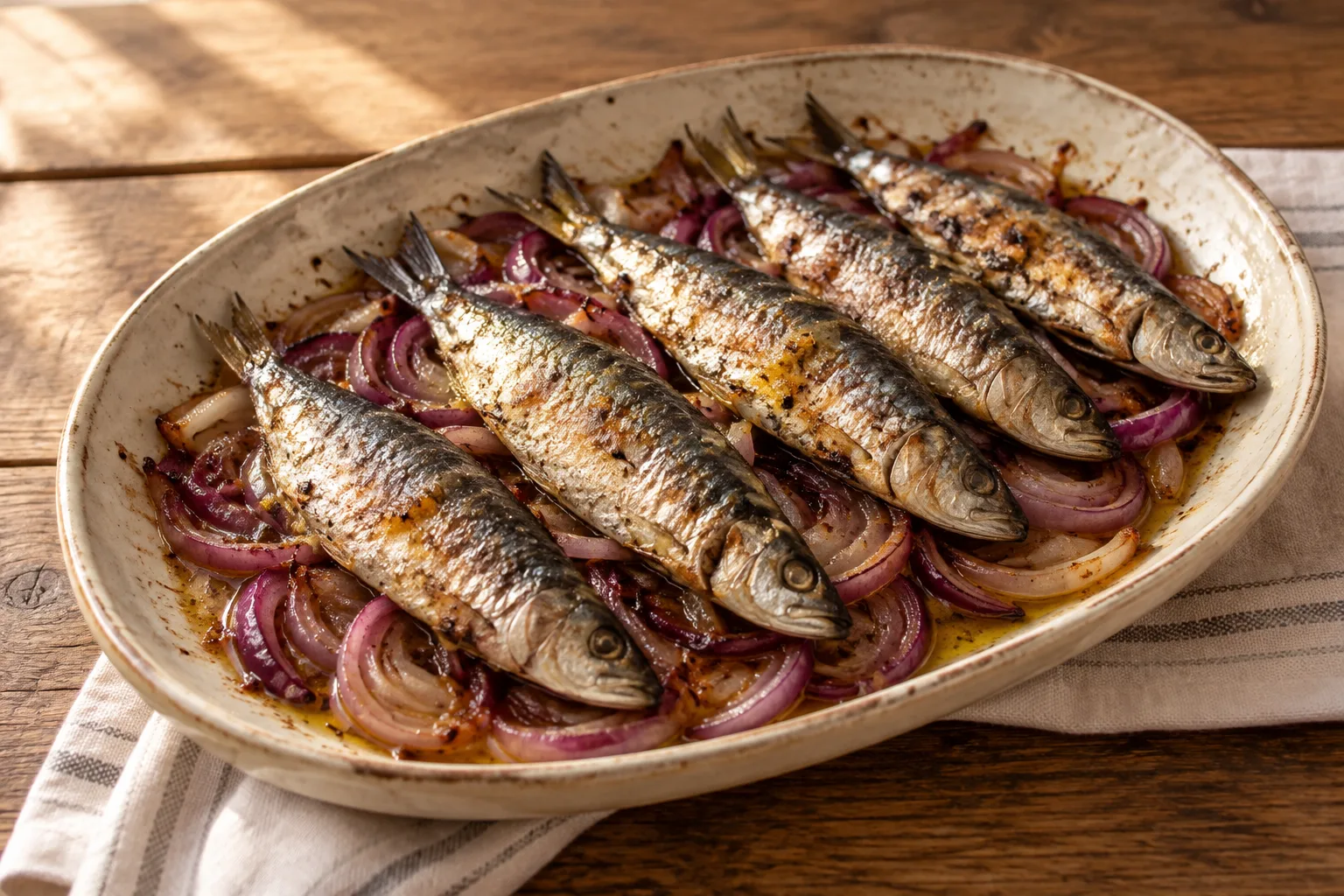
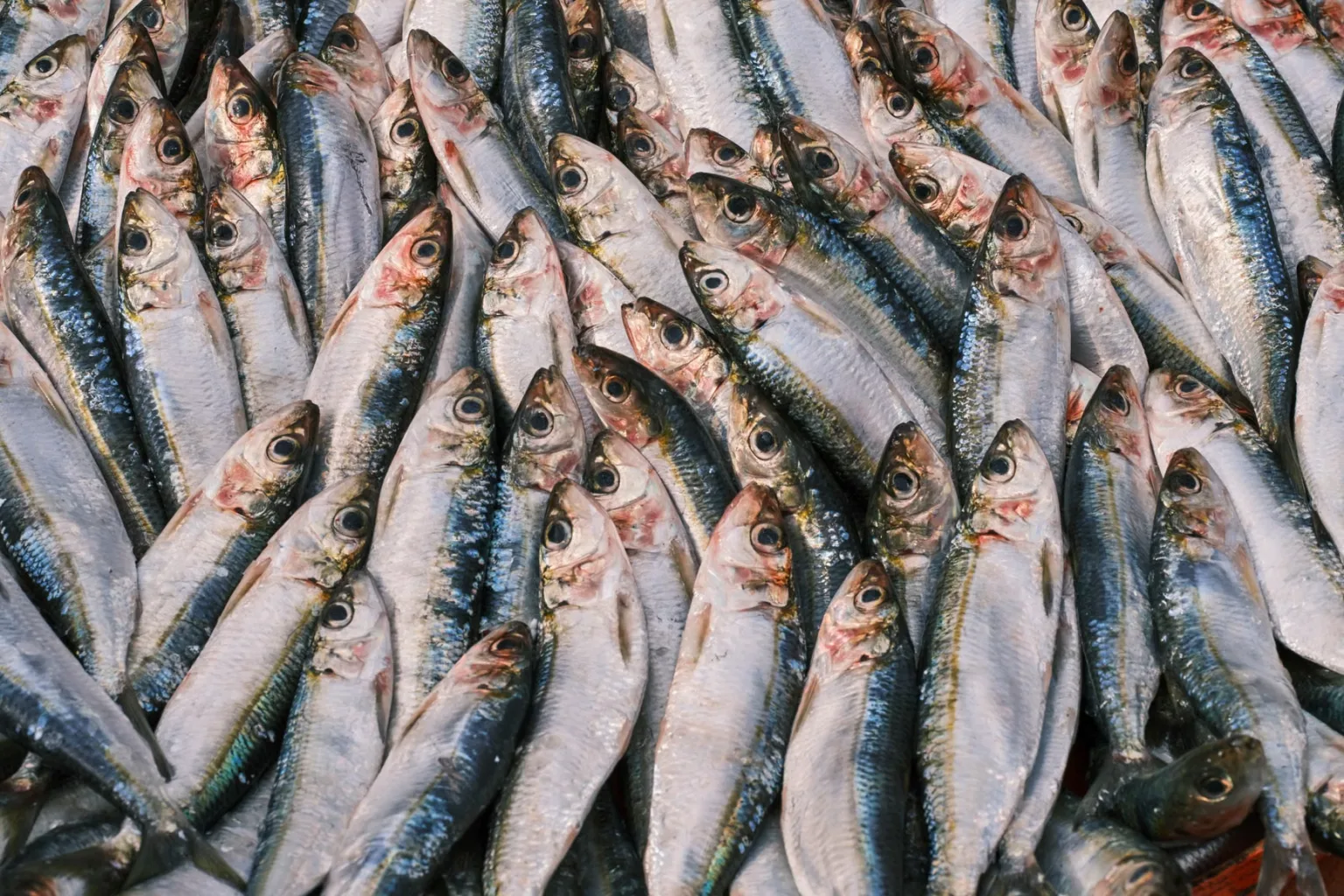
Fresh sardines are marine fish sold without the processing associated with canning or pickling. Sources describe sardines as oily fish and place them among the clupeids, a group that also includes herring. The name “sardine” can refer to different species and populations, so check the exact product name on the label or ask the fishmonger if it is unclear. This profile is about fresh sardines, not canned, salted, smoked, or marinated sardines; those are different products with different characteristics and uses.
When to use it
Choose fresh sardines when you want fish as a main dish or an addition to a simple meal with salad and bread. Depending on the recipe and how they were sold, you can cook them whole or opened out. Pan-cooking, grilling, and oven preparations are all cited options for fresh sardines; they may also be used in a marinade. Availability and season can vary by species and location, so this profile cannot establish a universal calendar.
How to use it
Before cooking, check with the fishmonger whether the sardines are whole or cleaned, and ask for preparation to suit your recipe if needed. You can cook them whole or opened out in a pan or on a grill; oven preparations are also documented. One cited recipe combines sardines with mint and lemon, while salad and bread are other serving ideas for this kind of fish. Season to taste and follow the directions for your chosen recipe: this profile does not set cooking times or temperatures. If marinating, use a reliable recipe for that preparation and do not assume marinating replaces safe cooking.
Flavour and texture
Sardines are described as oily fish with flavorful flesh. Size and cut can vary, and different species may be sold under related names, so texture is not identical across every product. Lemon and herbs offer a fresh contrast in cooked dishes, while salad or bread adds a different texture alongside the fish. The specific result depends on the fish and how it is prepared.
How to choose it
Check that the product is sold as fresh sardines, and ask for the exact name or species if it is unclear. For packaged fish, read the relevant storage, use, and date information; fresh fish may carry a use-by date. For unpackaged fish, ask the seller how to store it and when to use it. The available evidence does not establish universal visual freshness tests or a season that applies to every sardine.
Storage
Follow the storage directions and date on the package or those provided by the fishmonger. Fresh fish is highly perishable and may carry a use-by date, so do not treat it like a shelf-stable preserve. The available evidence does not set specific home storage times or temperatures for sardines; consult local official guidance and do not keep the fish beyond the product’s stated directions.
Substitutions
Herring and anchovy can be alternatives in dishes that allow another fish, but they are not exact replacements for sardines. Herring is a related, larger fish; anchovy has its own flavor profile and is often used in different preparations. Adapt the cut, amount, and seasoning to the chosen fish, and check whether the substitute is fresh, salted, or preserved.
Common mistakes
Do not confuse fresh sardines with canned, salted, smoked, or pickled sardines: these are different products and may not be used in the same way. Do not assume that every fish sold as a sardine has the same size or origin, or that one season applies in every region. Do not treat marinating as a substitute for cooking without an appropriate recipe.
Safety and allergens
Fish is an allergen that should be identified where required. Observe the use-by date and the product’s storage and use instructions; fresh fish is highly perishable. For handling or cooking times and temperatures, follow local official guidance and the seller’s instructions, since the available sources do not provide sardine-specific values.
Culinary uses
- Plato principal de pescado
- Ingrediente para ensaladas, bocadillos y preparaciones con pan
Recommended techniques
- Cocinar a la plancha o en sartén
- Asar a la parrilla
- Cocinar al horno
- Marinar
Pairs well with
- Limón y menta
- Ensaladas y pan crujiente
- Perejil y cebolla
Frequently asked questions
How can I cook fresh sardines?
Documented options include cooking in a pan, grilling, and oven preparation. Choose a recipe suited to whether the fish is whole or opened out.
What can I serve with fresh sardines?
Try lemon and mint, or serve them with salad and bread. These are serving ideas rather than an exhaustive list.
Do fresh sardines have a fixed season?
The available evidence does not establish a universal season. Availability depends on location and species, so check local information.
Estimated nutrition
- Fat
- 7.96 g
- Saturates
- 1.21 g
- Carbohydrate
- 21.87 g
- Sugars
- 2.37 g
- Fibre
- 1 g
- Protein
- 17.87 g
- Salt
- 0.93 g
Sources and review
Automatically researched, cross-checked and validated content. Sources consulted:
- En el etiquetado alimentario hay algunas menciones que son obligatorias eletiquetadocuentamucho.aesan.gob.es
- Cómo conservar sus propios alimentos | Extensión UMN es.extension.umn.edu
- Client Challenge doi.org
- Cooking Food Storage | USU extension.usu.edu
- Aecosan - Agencia Española de Consumo, Seguridad Alimentaria y Nutrición aesan.gob.es
- ESTUDIO DE LA CADENA DE VALOR Y FORMACIÓN DE PRECIOS DE LA SARDINA FRESCA mapa.gob.es
- Eat Sardines! - Tufts Health & Nutrition Letter nutritionletter.tufts.edu
- Pacific Sardine | California Sea Grant caseagrant.ucsd.edu
- 4 Reasons Sardines are Great | Bastyr University bastyr.edu
- Sardines wrapped in a sustainable (and baby-friendly) package - Pickles and Tea apa.si.edu
- Sardina - Pescados, características e información pescaderiascorunesas.es
- Los diferentes tipos de sardinas y sus alternativas cuina.cat
- Sardina | Introducción | Pescados y mariscos | EROSKI CONSUMER pescadosymariscos.consumer.es
- Características de los alimentos: sardinas nestlefamilyclub.es
- Recetas con sardinas frescas: deliciosas y sorprendentes cookpad.com