- Category
- Baking
- State
- Fresh
- Usual unit
- g
What it is
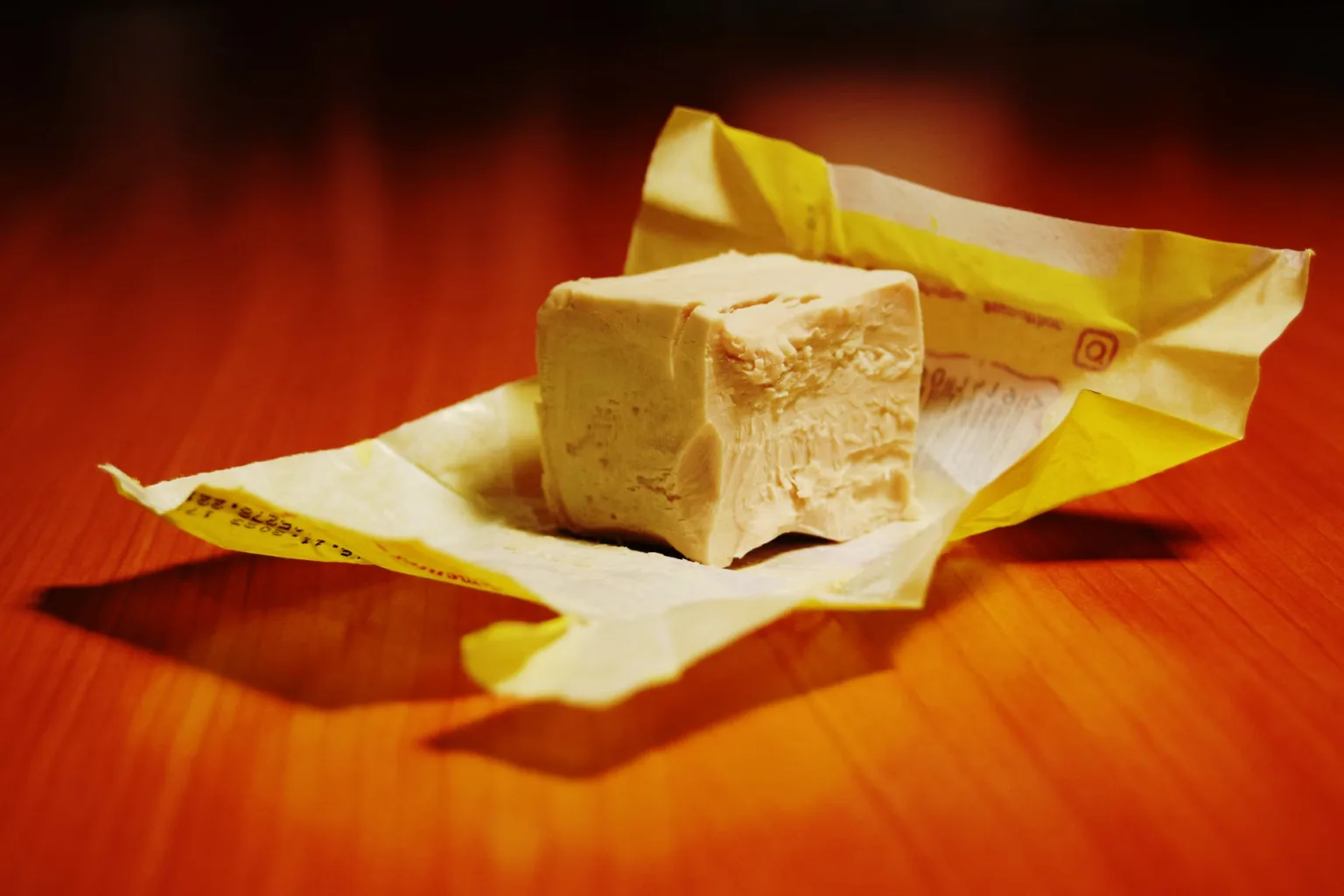
Fresh yeast, also called compressed or block yeast, is a moist, compact form of baker’s yeast sold in portions. Unlike chemical raising agents, it does not work by producing gas through a baking-time chemical reaction: it ferments dough before baking. This process produces carbon dioxide and alcohol, and the gas helps the dough rise. Fresh yeast is used particularly for bread and pizza dough, as well as some enriched or sweet yeasted doughs. It should not be confused with dry baker’s yeast, which is another form of yeast, or with chemical baking powder used in recipes such as some cakes.
When to use it
Choose fresh yeast when a recipe calls for fresh or compressed baker’s yeast and includes a resting stage for fermentation. It is suitable for bread, pizza and some sweet or enriched yeasted doughs. It is not a like-for-like replacement for chemical baking powder, which works differently and is commonly used in preparations such as some cakes. If you only have dry yeast, adjust the amount using the recipe or the manufacturer’s directions rather than assuming the two forms measure equally.
How to use it
Check that your recipe calls for fresh yeast and weigh the amount it specifies. You can crumble or dissolve the yeast in lukewarm water before adding it, as described in the sources; then combine it with the other ingredients until the dough is evenly mixed. Knead as directed and let the dough rest so fermentation can take place before baking. Fermentation is the stage that helps the dough rise; it is not the same as the action of chemical leavening during baking. If replacing fresh yeast with dry yeast, adjust both the quantity and incorporation method according to the recipe or package directions.
Flavour and texture
Fresh yeast is compact, moist and easy to crumble, and it can blend readily into dough. Fermentation helps create an airy crumb and may contribute flavor notes to the baked result. The final effect depends on the dough and process; fresh yeast is not a chemical raising agent that acts only once the food goes into the oven.
How to choose it
Look for a product labeled fresh, compressed or baker’s yeast, rather than chemical baking powder intended for cakes. The sources describe the usual form as a compact, somewhat moist block. Check the package label, stated date and manufacturer’s usage directions, especially if you plan to use a different form of yeast.
Storage
The sources describe fresh yeast as a product that should be kept refrigerated. Follow the storage directions and date on the package, since no universal shelf life is established here. Keep it in its packaging or otherwise protected, and do not assume its storage needs are the same as those of dry yeast.
Substitutions
Dry baker’s yeast is the closest alternative: one source gives a practical reference of one part dry yeast to three parts fresh yeast by weight. Check the recipe or package for the appropriate amount. Sourdough starter can also ferment dough, but it is not a direct equivalent and requires changes to the formula and process.
Common mistakes
A common mistake is treating fresh yeast and chemical baking powder as the same ingredient: fresh yeast ferments dough before baking, while chemical leaveners produce gas in a different way. Another is swapping fresh yeast for dry yeast without adjusting the amount, or skipping the fermentation rest required by the recipe.
Safety and allergens
The sources consulted provide no specific official safety warning for fresh yeast. Follow the package’s storage and use directions, and use standard food-handling hygiene.
Culinary uses
- Leudante biológico para masas de panadería
- Aporta fermentación y matices de sabor a masas fermentadas
Recommended techniques
- Desmenuzar o disolver en agua templada antes de mezclar
- Amasar y dejar reposar la masa para que fermente antes de hornear
Pairs well with
- Harina y agua en masas fermentadas
- Azúcares de la masa; también puede usarse en panes, pizza y bollería
Frequently asked questions
Is fresh yeast the same as baking powder?
No. Fresh yeast ferments dough before baking; baking powder is a chemical raising agent that works differently and is used in preparations such as some cakes.
Can I replace fresh yeast with dry yeast?
Yes, with an adjustment. One source gives a reference of 1 g dry yeast for 3 g fresh yeast, but follow your recipe or the product label where available.
Does dough made with fresh yeast need to rest?
Yes. Resting gives the dough time to ferment and rise before baking. Follow the process and timing specified by your recipe.
Estimated nutrition
- Fat
- 7.61 g
- Saturates
- 1 g
- Carbohydrate
- 41.22 g
- Sugars
- 0 g
- Fibre
- 26.9 g
- Protein
- 40.44 g
- Salt
- 0.13 g
Sources and review
Automatically researched, cross-checked and validated content. Sources consulted:
- REGLAMENTO (UE) No 1169/2011 DEL PARLAMENTO ... eletiquetadocuentamucho.aesan.gob.es
- Tipos de levadura, características y usos | IFEMA MADRID ifema.es
- Levadura: qué es, tipos y beneficios bonviveur.com
- Client Challenge doi.org
- The Essential Glossary of Cooking Terms for the Culinary Arts - Escoffier escoffier.edu
- Agencia Española de Seguridad Alimentaria y Nutrición aesan.gob.es
- Desarrollo de un pan de masa madre rico en GABA y ... diposit.ub.edu
- Distintos usos de la levadura: Conócelos aquí levanova.es
- UTILIZACIÓN DE SUERO ÁCIDO LÁCTEO EN LA ... scholar.uprm.edu
- Las levaduras. Su uso en cocina directoalpaladar.com
- Las Mejores Prácticas Para La Inocuidad De Los Productos Agrícolas Frescos extension.psu.edu
- La levadura fresca perfecta - abmauri abmauri.es