- Category
- Vegetables
- State
- Fresh
- Usual unit
- unit
What it is
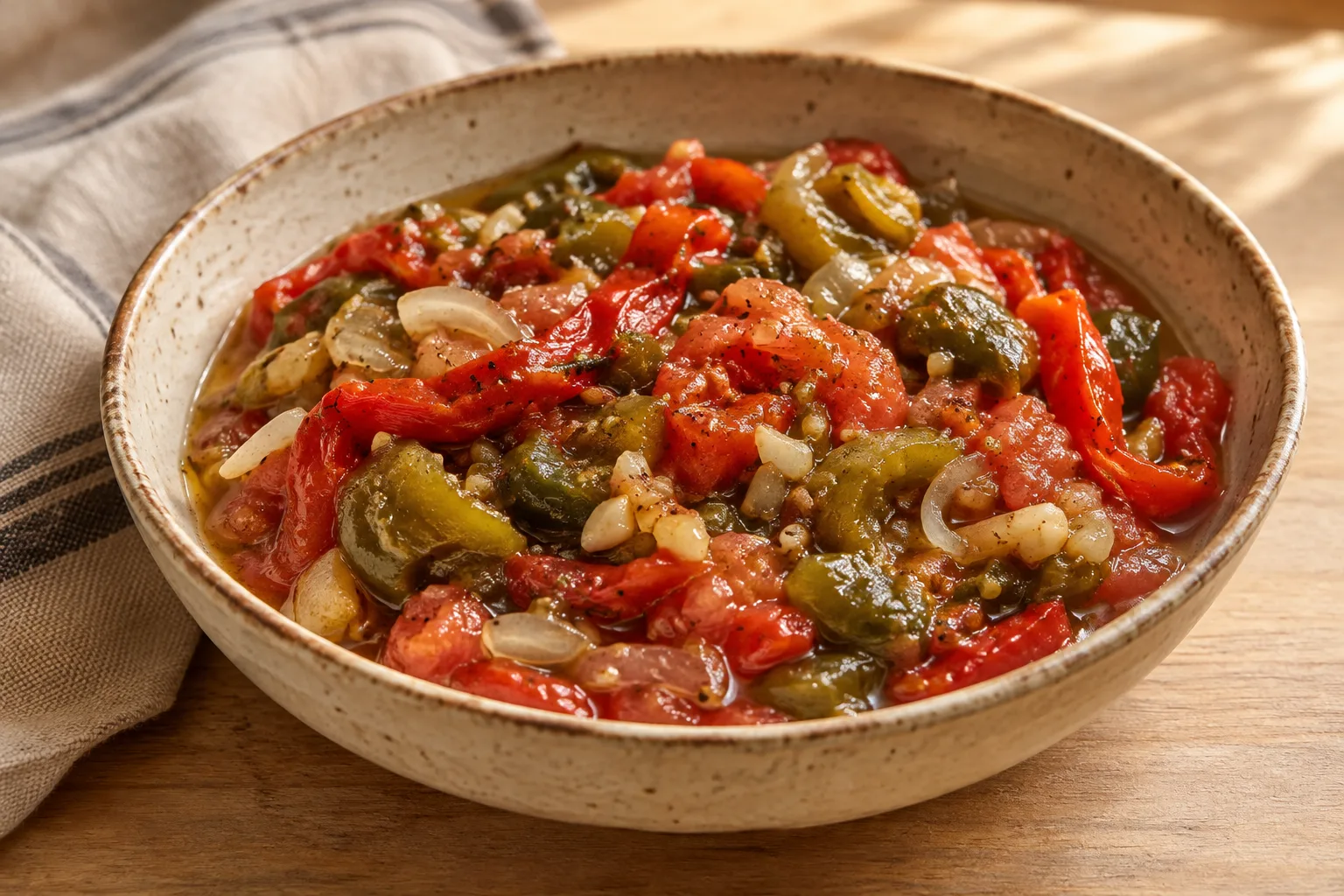
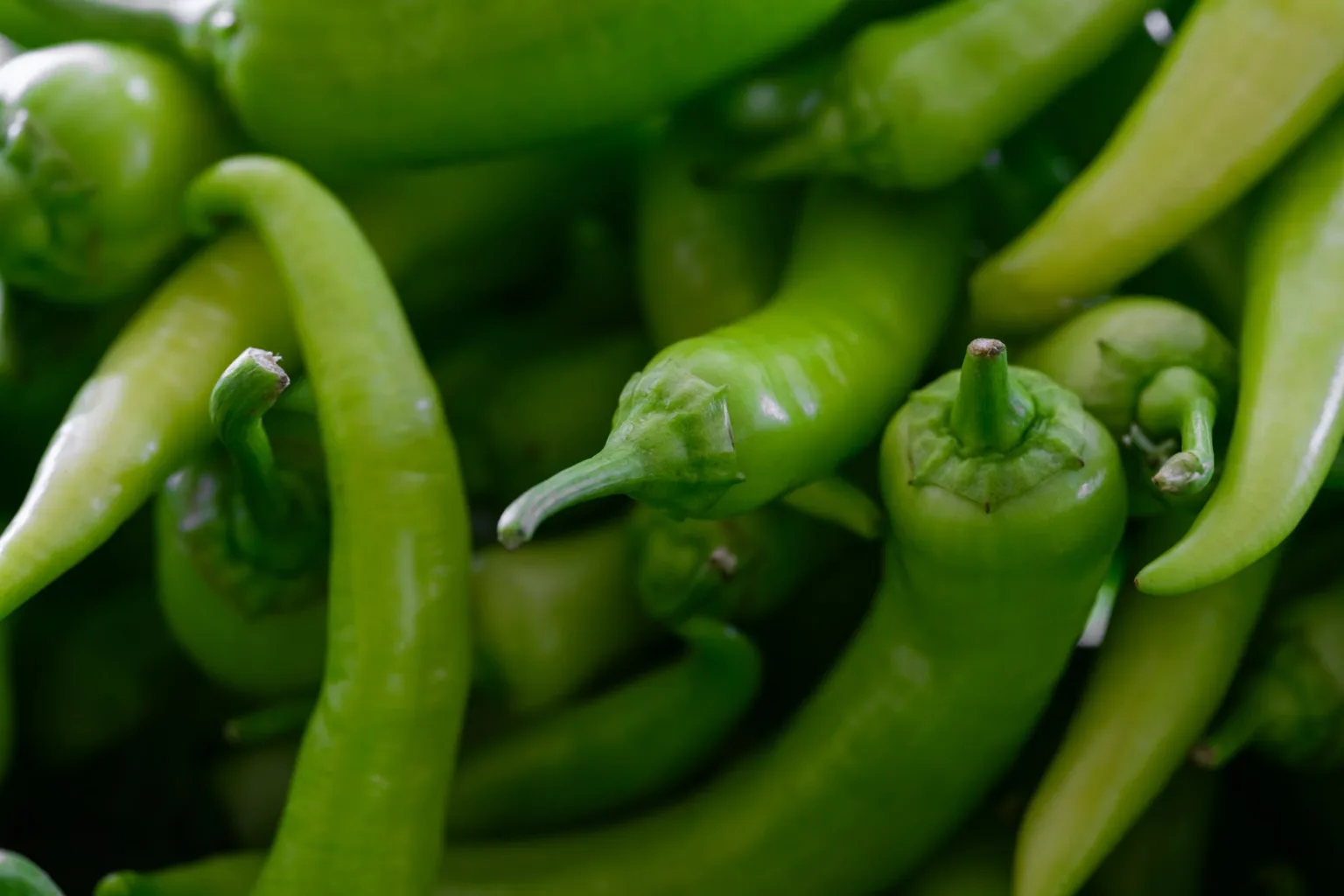
Green Anaheim pepper is the fresh fruit of a plant in the Capsicum genus and is used as a vegetable in cooking. The sources identify Anaheim as a type of chile and list an Anaheim cultivar whose fruit changes from green to red as it matures. Diced, it can be added to salsa with grapes, green onion, cilantro, garlic, vinegar and salt. Do not assume every pepper has the same heat: the available information does not establish a uniform level for this ingredient. It is also distinct from black pepper, which comes from a different plant. Green describes the product’s color state, but does not by itself establish its heat or exact sensory profile.
When to use it
Use it when you want to add a fresh, chopped pepper to salsa or another preparation suited to a chile. An extension recipe suggests Anaheim as one of several options for grape salsa, alongside poblano or jalapeño, and combines the pepper with green onion, cilantro, garlic and vinegar. For a milder result, that same recipe suggests bell pepper instead of hot chile. Since the sources do not establish the specific heat of every Anaheim pepper, taste a small amount before adding more and adjust it to the result you want.
How to use it
Rinse the pepper under running water before preparing it. Dice it and mix it with the other recipe ingredients; for example, it can go into salsa with grapes, green onion, cilantro, garlic, vinegar and salt. The cited recipe suggests serving that salsa with baked tortilla chips. Add the pepper gradually and taste the mixture, since the available information does not establish a consistent heat level for all Anaheim peppers. If handling it as a hot chile, wear gloves and avoid touching your face or eyes; if you do not wear gloves, wash your hands thoroughly with soap and water before touching your face. For leftovers of the prepared salsa, follow that recipe’s specific directions, which say to refrigerate them within two hours; this is not an instruction for storing a whole pepper.
Flavour and texture
The available sources do not specifically describe the flavor and texture of every green Anaheim pepper. They present Anaheim as a chile option for salsa and list a cultivar that changes from green to red as it matures. Avoid assuming a particular degree of sweetness, heat or firmness: these characteristics may vary, and the supplied information does not offer a more precise sensory description. If heat matters to the recipe, taste a small amount before adding the rest.
How to choose it
If you want this particular variety, check that the product is identified as green Anaheim, since peppers of different types are not necessarily equivalent in flavor or heat. The sources mention an Anaheim cultivar that matures from green to red, but provide no freshness, appearance, size or firmness criteria for selecting an individual pepper. Check the variety name on the label or ask the seller. If Anaheim is unavailable, consider the recipe’s listed alternatives in light of how mild you want the result to be.
Storage
The available information does not specify how long a fresh Anaheim pepper keeps or the exact conditions for storing it whole. For that reason, this profile does not recommend a storage period, temperature or preservation method. Keep the item identified as fresh and consult its label or an official vegetable-storage guide for storage decisions. If the pepper is already part of a prepared dish, follow the storage instructions for that recipe; do not treat them as guidance for storing a whole pepper.
Substitutions
For a similar salsa, the cited recipe lists poblano and jalapeño alongside Anaheim as chile options. For a milder version, it suggests bell pepper instead of hot chile. These alternatives do not guarantee identical flavor or heat. Choose according to the result you want, add the substitute gradually and taste before adding more.
Common mistakes
Do not assume all Anaheim peppers have the same heat or that poblano, jalapeño and Anaheim produce identical results. The recipe presents them as options, not as flavor-equivalent ingredients. Another avoidable mistake is handling the pepper as a hot chile and then touching your face or eyes without washing your hands. If the heat matters, taste a small amount first.
Safety and allergens
Rinse fresh pepper under running water before preparing it. If handling it as a hot chile, wear gloves and avoid touching your face or eyes; if you do not wear gloves, wash your hands thoroughly with soap and water before touching your face. The cited recipe says to refrigerate leftovers from that preparation within two hours; this instruction concerns the prepared recipe, not storage of a whole pepper.
Culinary uses
- Fresh chile ingredient for salsa
- Green pepper component in fresh preparations
Recommended techniques
- Rinse under running water before preparation
- Dice and mix into salsa
Pairs well with
- Grapes, green onion and cilantro
- Garlic, vinegar and salt
Frequently asked questions
Is green Anaheim pepper always hot?
The sources present Anaheim as a chile option but do not establish one heat level for every pepper. Taste a small amount and adjust the recipe.
What can I use instead of Anaheim?
For the cited salsa, poblano or jalapeño are options. For a milder result, the recipe suggests bell pepper.
How do I prepare it for salsa?
Rinse it under running water, dice it and mix it with the recipe ingredients. One documented combination includes grapes, green onion, cilantro, garlic, vinegar and salt.
Estimated nutrition
- Fat
- 11.8 g
- Saturates
- 1.59 g
- Carbohydrate
- 4.22 g
- Sugars
- 2.17 g
- Fibre
- 1.8 g
- Protein
- 0.78 g
- Salt
- 0.04 g
Sources and review
Automatically researched, cross-checked and validated content. Sources consulted:
- Pimientos: variedades y usos en cocina - CocinoPedia.com cocinopedia.com
- El Pimiento Verde. Un ingrediente tradicional - Restaurante La Española restaurantelaespanola.es
- Usos culinarios apropiados de las variedades de plátano verde barraganete, dominico y maqueño, en la gastronomía ecuatoriana. | Revista de Gastronomía y Cocina doi.org
- El Pimiento Y Su Importancia En La Gastronomía Española - Restaurante Romero restaurante-romero.es
- El pimiento ecológico: un ingrediente principal en nuestras ... afuegolento.com
- Making Corn Tortillas and Salsa coloradosph.cuanschutz.edu
- NEP-221s - Extension Publications - University of Kentucky publications.mgcafe.uky.edu
- Producción de pimiento extension.psu.edu
- Chiles (Ajies o Pimientos) en el Huerto extension.usu.edu
- Chiles walworth.extension.wisc.edu
- Salsa de Uvas receta | Servicio de Extensión de OSU extension.oregonstate.edu
- Vegetable Cultivar Descriptions for North America – Pepper (M-Z) – Cucurbit Breeding cucurbitbreeding.wordpress.ncsu.edu
- Tipos de pimientos: todo lo que necesitas saber de este alimento | El arte de comer bien | mentta mentta.com
- 4 diferencias entre el pimiento verde y el pimiento rojo - Ametller Origen ametllerorigen.com
- Ingredientes para la receta: El pimiento — Cuaderno de Cultura Científica culturacientifica.com