- Category
- Fruit
- State
- Preserved
- Usual unit
- unit
What it is
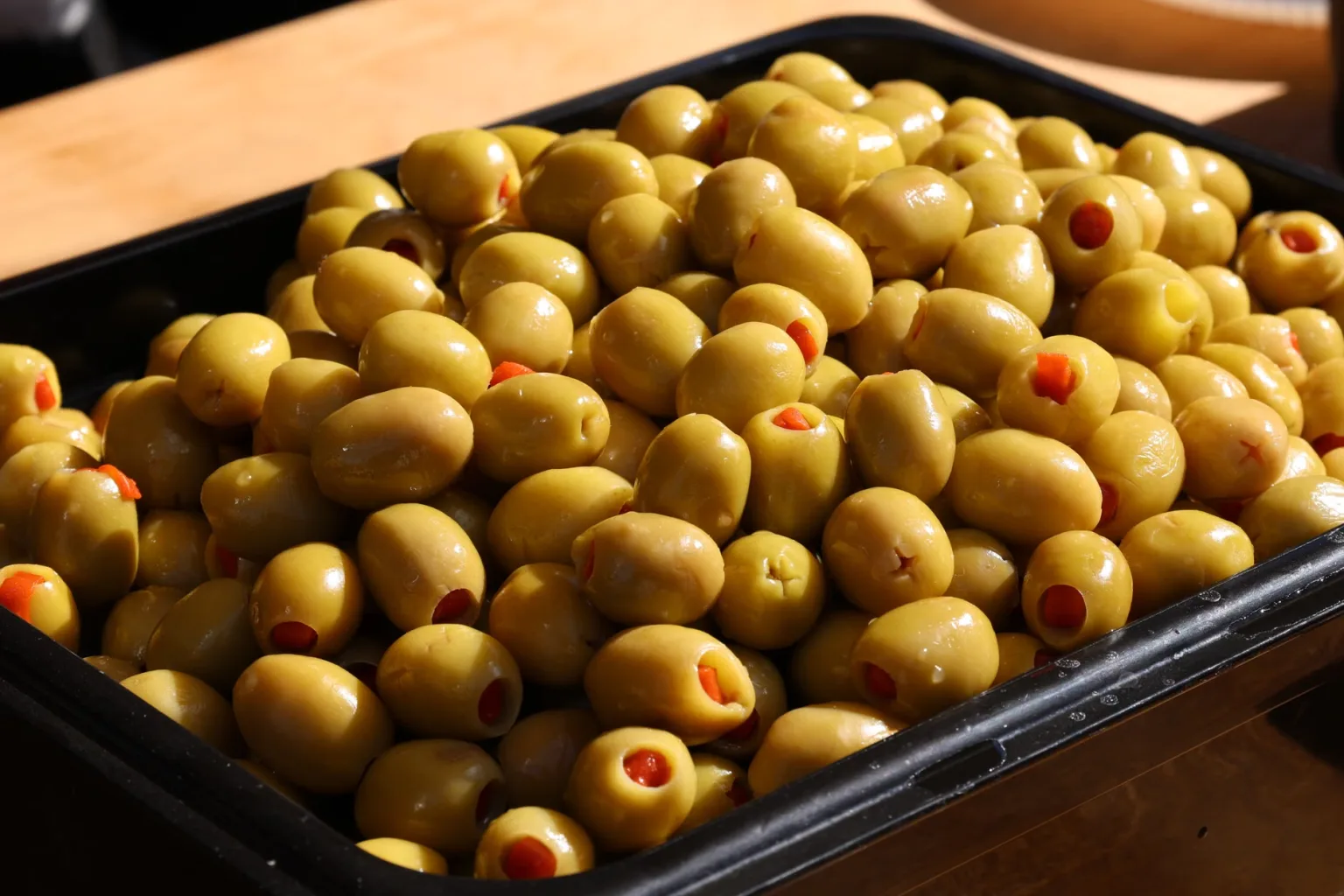
These are green olives with the pit removed and a pimento filling placed inside. Commercial versions may use a pepper paste or pieces, and the olives are generally sold already cured or pickled, often in brine or in a pasteurized package. They should therefore be treated as a prepared food rather than as fresh, unprocessed olives: serve them according to the package directions. The color, texture and strength of the pepper flavor can differ between brands and preparations, so check the product name and ingredient list to learn what a particular jar or pack contains.
When to use it
Use them when you want a small, savory bite for a snack platter or a way to distribute olive and pepper flavor through a dish. They work particularly well in salads and sandwiches and can also accompany main courses. Because they are sold already filled and ready to serve according to the label, they are useful when you want an ingredient that needs little preparation. Choose a product based on the filling’s form and the flavor you want to bring forward.
How to use it
Serve them whole on a snack platter or in a cocktail, or slice or chop them to spread through a salad or sandwich. They can also be added to a main course as a savory accent, bearing in mind that the filling contributes pepper flavor and products can differ. Taste one first to judge its intensity before adjusting the other ingredients. Follow the package directions; if the label says to drain them, remove them from the liquid before serving. They do not need cooking when used as a snack.
Flavour and texture
The cured green olive brings a firm texture and savory, salty character, while the pimento adds a sweet, vegetal contrast. The filling’s feel depends on how it is made: it may be an incorporated paste or recognizable pieces. Firmness and flavor intensity vary by brand and preparation, so stuffed olives do not all taste or feel exactly alike.
How to choose it
Check that the package is intact and read the product name and ingredient list to confirm the filling: some products specify pimento paste, while others contain pieces. Also check the package format, drained weight if provided, and storage and use directions. Differences between brands are normal; do not assume every product uses the same olive variety or recipe.
Storage
Store the product according to its package directions and observe the date shown. Storage may depend on the format and the specific product; do not assume a jar, can and pouch all require the same conditions once opened. If the instructions for an opened package are unclear, consult the label or the manufacturer’s information.
Substitutions
If you do not have stuffed olives, use plain green olives when you need the olive flavor alone, or serve them with chopped sweet pepper to recreate some of the filling’s contrast. Olives stuffed with roasted pepper are another option if available. None is an exact match: texture, the balance of olive and pepper, and how the filling is distributed may all change.
Common mistakes
Do not assume every version has the same filling: it may be pepper paste or pieces. Do not treat them as fresh olives or overlook the package directions. When adding them to a recipe, taste first and account for the savory, salty character the olives already contribute before adjusting other ingredients.
Safety and allergens
Follow the package’s storage, date and use directions, and check the specific product’s ingredient and allergen information. If the package is damaged or you are unsure about the product’s condition, do not eat it until you have checked with the seller or manufacturer.
Culinary uses
- Aperitivo
- Ingrediente para ensaladas y bocadillos
- Acento salado para platos principales
Recommended techniques
- Servir enteras como aperitivo
- Cortar o picar para repartir en ensaladas y bocadillos
- Añadir al final a platos preparados para conservar su presencia
Pairs well with
- Ensaladas
- Bocadillos y sándwiches
- Aperitivos y cócteles
- Platos principales
Frequently asked questions
Is the filling always a paste?
Not necessarily. Depending on the product, it may be pimento paste or pieces; check the product name and ingredient list.
How can I serve them?
Serve them whole as a snack, or slice them into salads and sandwiches. They can also accompany main courses.
How should I store them after opening?
Follow the specific label instructions. Storage can depend on the package and product, so do not assume one rule applies to all versions.
Sources and review
Automatically researched, cross-checked and validated content. Sources consulted:
- En el etiquetado alimentario hay algunas menciones que son obligatorias eletiquetadocuentamucho.aesan.gob.es
- Observatorio del Consumo y la Distribución Alimentaria “ ... mapa.gob.es
- Conservando los Coloridos Pimientos del Huerto extension.psu.edu
- Aceituna | Postharvest Research and Extension Center postharvest.ucdavis.edu
- Aceitunas rellenas de pimiento vimafoods.com
- Pimientos | Center for Community Health communityhealth.ucsd.edu
- Aesan - Agencia Española de Seguridad Alimentaria y Nutrición aesan.gob.es
- Aceitunas verdes rellenas de pimiento - Borges borges1896.com
- COMPARACIÓN DE TRATAMIENTO ALCALINO EN PRODUCCIÓN DE ACEITUNAS VERDES FERMENTADAS VARIEDADES MANZANILLA Y SEVILLANA | Ciencia & Desarrollo doi.org
- Aceitunas verdes: beneficios y usos culinarios mercantilmx.com
- Estaciondeluque.es - Recetas saludables, nutrición y bienestar para tu vida estaciondeluque.es
- Pimientos rellenos | University of Maryland Extension extension.umd.edu
- Member's Selection Aceitunas Rellenas con Pimiento 2 Unidades / 950 g / 33.5 oz | Store Room stristoreroom.si.edu
- MENÚ ELABORADO POR EL DEPARTAMENTO DE NUTRICIÓN DE Marzo 2025 MES: ENTREOLIVOS fomento.edu
- Aceitunas verdes rellenas de pimiento asado – Hacendado – 350 g es.openfoodfacts.org
- Aceitunas verdes rellenas de pimiento rojo – – 350 g (neto), 150 g (escurrido), 370 ml world-es.openfoodfacts.org