- Category
- Herbs and spices
- State
- Powdered
- Usual unit
- teaspoon
What it is
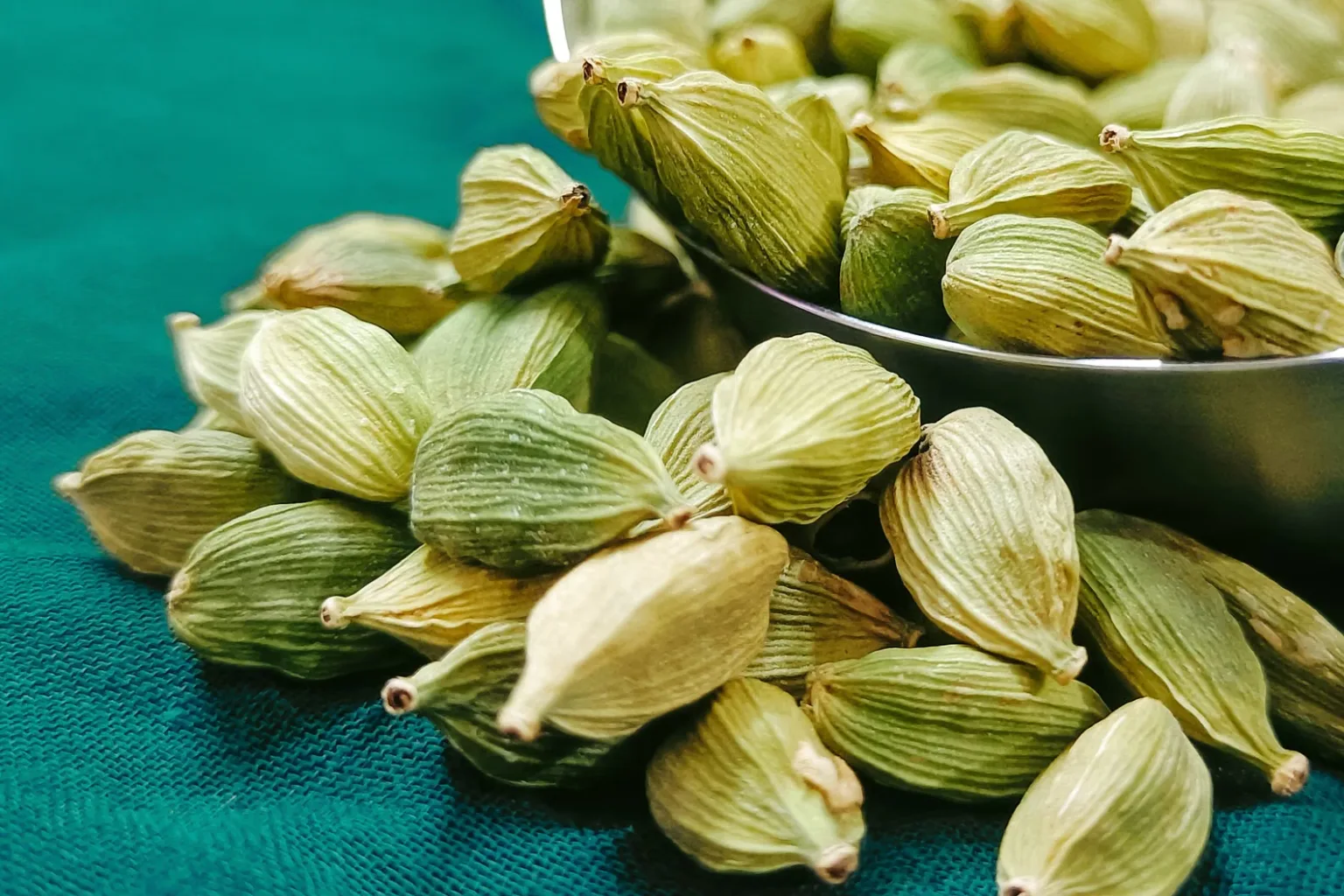
Ground cardamom is a powdered spice made from the aromatic seeds of the cardamom plant. The seeds sit inside small pods and may also be sold whole or in their pods. Green cardamom is a common culinary form; black cardamom has different characteristics and should not automatically be treated as equivalent. Powder is convenient because it can be added directly to a mixture, dough, or liquid. Its aroma is intense, with notes described as citrusy, fresh, warm, and gently spicy. The precise strength and character can vary with the type of cardamom and the product.
When to use it
Use it when you want to give a recognizable aroma to a sweet or savory dish without adding whole pods. It can lend character to curries, stews, rice, and spice blends, and it also works in buns, cookies, cakes, and other doughs. For drinks, try a small amount in coffee or chai to add an aromatic note. It pairs especially well with cinnamon and ginger in sweet preparations. Because its flavor is pronounced, begin with a little and adjust to the recipe and your taste.
How to use it
Add the powder directly to dough, rice, a spice blend, or the liquid you want to flavor; ground cardamom does not need to be removed before serving. For an even distribution, mix it with the other dry ingredients in a dough or with the other spices. In curries and stews, start with a small amount and taste before adding more. In coffee or chai, use it as part of the spice combination so that it does not mask the other aromas. If you have green cardamom seeds, grind them just before use: freshly ground seeds are an alternative to ready-ground powder and are reported to retain their aroma better than powder stored for longer.
Flavour and texture
Its profile is usually intense, warm, and spicy, with citrus-like and fresh notes; some descriptions also mention floral, minty, or eucalyptus-like hints. The powder is fine and blends into a dish, although it does not dissolve like a liquid. Variety and product can change the aroma: black cardamom is described as smokier and more bitter than green. Do not assume the two types will give the same result.
How to choose it
Choose a container clearly labeled ground cardamom and check that it is well sealed and shows no visible moisture. If you want the more familiar profile for baking and drinks, look for green cardamom on the label when that distinction is provided. Aroma is a useful guide if you can smell the product when opening it: it should be recognizable rather than faded or unusual. Whole seeds or pods are another useful option if you prefer to grind them just before cooking; powder is convenient to add directly.
Storage
Keep ground cardamom in a tightly closed container, protected from moisture and outside odors. Powder loses aromatic strength faster than whole pods, so buy an amount you can use while its aroma is still noticeable. The sources consulted do not establish one universal storage period for every product: follow the package directions and check its aroma before use. Avoid transferring it to a damp container or leaving it open unnecessarily.
Substitutions
To replace the powder, grind green cardamom seeds and add them to the recipe. You can also remove the seeds from green pods and grind them before use. The exact equivalent depends on the product and the flavor strength you want, so begin with less and adjust to taste. Black cardamom has a different profile, described as smoky and bitter, so it is not a dependable direct replacement when the green-cardamom flavor is needed.
Common mistakes
The most common mistake is adding too much: cardamom is aromatic and intense, and it can dominate the other ingredients. Start with a little and taste before adjusting. Another pitfall is treating every variety as interchangeable; black cardamom has a different profile from green. Finally, remember that powder blends into the dish, whereas a whole pod may need to be removed or pointed out to diners.
Safety and allergens
The sources consulted did not identify a specific official warning for ordinary culinary use of ground cardamom. Use it as a culinary spice and avoid it if you know you are sensitive or allergic to cardamom. Do not use a product if its packaging is damaged, it appears damp, or it has an unusual odor.
Culinary uses
- Aromatizar platos dulces y salados
- Aportar un matiz cálido y cítrico a bebidas y mezclas de especias
Recommended techniques
- Incorporar directamente a masas, mezclas de especias y guisos
- Infusionar en bebidas o preparaciones líquidas
- Moler las semillas de cardamomo verde justo antes de usarlas
Pairs well with
- Canela y jengibre
- Café y té chai
- Arroz y curris
- Chocolate y cítricos
Frequently asked questions
Can I use ground cardamom instead of pods?
Yes. Add the powder directly to doughs, spice blends, stews, and drinks. Unlike a whole pod, it does not need to be removed before serving.
Do green and black cardamom taste the same?
No. Black cardamom is described as smokier and more bitter, with a profile different from green cardamom. Do not swap them automatically if you want to preserve a recipe's flavor.
How can I stop cardamom from overpowering a dish?
Begin with a small amount, mix it in well, and taste before adding more. It is an aromatic, intense spice, so gradual adjustment helps keep the flavors balanced.
Estimated nutrition
- Fat
- 0 g
- Saturates
- 0 g
- Carbohydrate
- 0 g
- Sugars
- 0 g
- Protein
- 0 g
- Salt
- 0 g
Sources and review
Automatically researched, cross-checked and validated content. Sources consulted:
- ¿Por qué la muerte es origen de miedos y tabúes? doi.org
- Client Challenge doi.org
- Curry - Wikipedia, la enciclopedia libre es.wikipedia.org
- llistat 2016 cast contextos (19/09/2024) repositori.upf.edu
- Encapsulación de Aceite Esencial de Clavo para su ... repositorio.ucam.edu
- ISSUE 20 La ciudad en la literatura hispánica de los siglos ... lehman.edu
- El Cardamomo. El Tesoro Aromático de la Cocina Mundial | Hierbalia hierbalia.com
- Cardamomo: Propiedades y Recetas | Enciclopedia Cocinista cocinista.es
- ¿Cómo usar el cardamomo en la cocina? - Blog de La Parada de las Especias comprarespecias.net
- Cardamomo: Propiedades, Beneficios y Usos de esta Especia koken.es
- ¿Qué es el cardamomo? | Propiedades, beneficios y usos mehueleaquemao.com
- ¿Qué es el cardamomo? Definición, origen y para qué sirve cardamomocolombia.com
- Todo lo que siempre quisiste saber sobre... el cardamomo tamarisesizarra.com
- A Freír Espárragos afreiresparragos.com