- Category
- Herbs and spices
- State
- Powdered
- Usual unit
- g
What it is
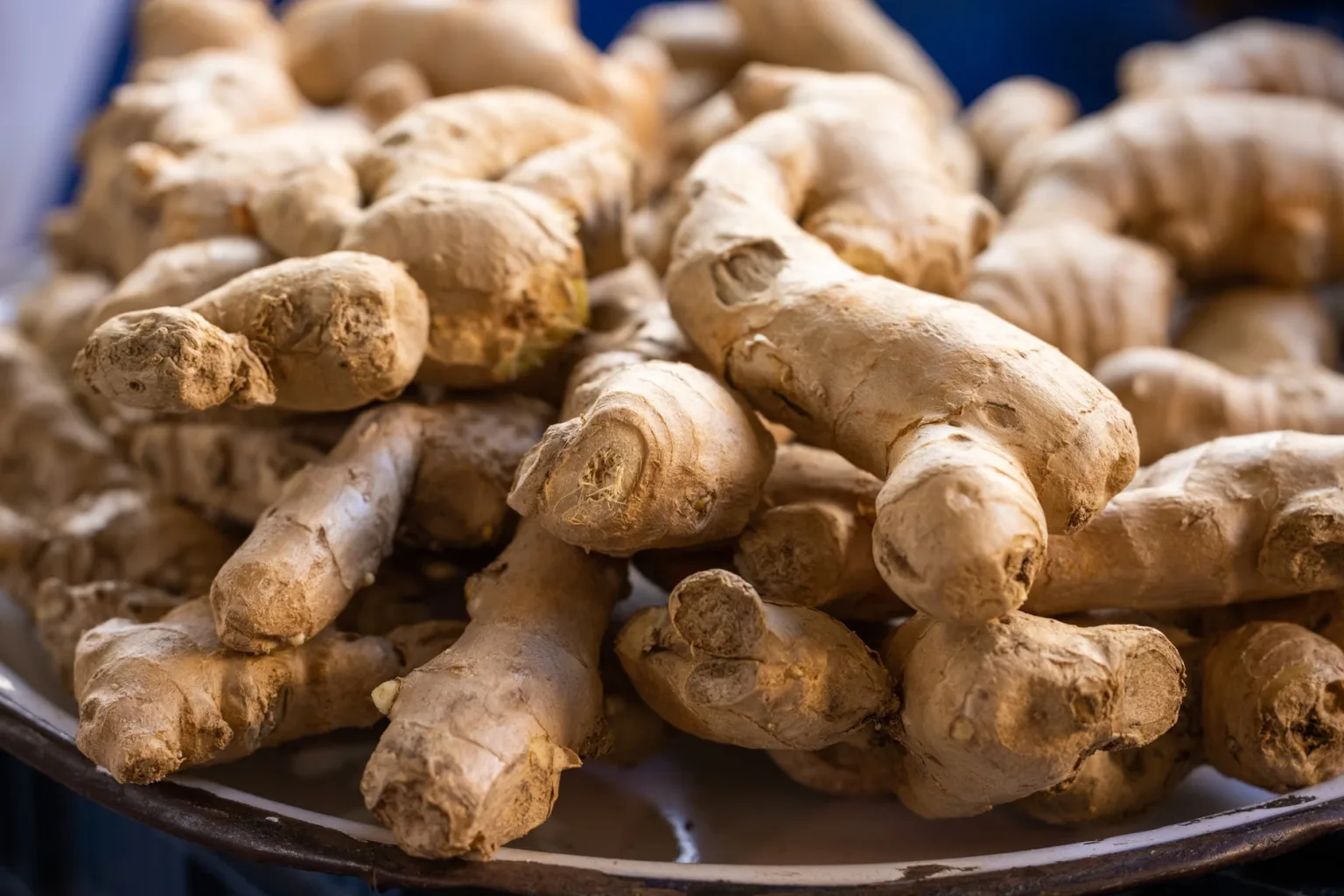
Ground ginger is dried ginger milled into a fine powder. It comes from the rhizome of Zingiber officinale, the underground plant stem often called ginger root in everyday language. Drying and grinding make it different from fresh ginger: powder is easy to distribute through doughs, dry mixtures, and liquids, and its aroma and flavor are not identical to those of freshly grated rhizome. It is sold as a single spice and may also appear in spice blends. Its warm, peppery character works in both sweet and savory cooking. Flavor strength and aroma can vary with the product and how it was processed, so use the recipe as a guide and taste as you go.
When to use it
Choose ground ginger when you want ginger flavor distributed evenly, especially in cakes, cookies, spiced breads, and other baked goods. It can also add warmth to soups, stews, and sauces, or season spice blends and some drinks. It pairs well with ingredients such as squash, pear, and fruit, as well as baking spices like cinnamon, clove, and cardamom. Powder is convenient when you do not want to peel or grate a fresh rhizome. Start with a modest amount and taste the dish, since too much can make its peppery character dominate.
How to use it
Measure the ground ginger and combine it with the dry ingredients in a dough or batter so it can be distributed evenly. For soups, stews, and sauces, add it as the dish is prepared and stir well to avoid concentrated pockets of powder; you can also mix it with other spices before cooking. In drinks and other liquids, add it gradually and mix thoroughly, since powder may not disperse evenly on its own. Adjust the amount to the recipe and the strength of the spice you have. Freshly grated ginger can be used in place of ground ginger, but do not assume the same volume will give the same result. A Maryland Extension squash soup recipe uses two tablespoons of fresh ginger or one teaspoon of ground ginger; other dishes may need a different adjustment.
Flavour and texture
Ground ginger is aromatic, warm, and peppery, with a gently sweet note that suits both sweet and savory dishes. Its texture is fine and dry, so it mixes readily into dry ingredients and doughs compared with pieces of fresh rhizome. Its aroma and flavor may be less vivid than those of fresh ginger, and the exact character varies with processing and product. Too much can make the peppery note overpower the rest of a dish.
How to choose it
Choose a product clearly labeled as ground ginger, and check the ingredient list if you want a single-ingredient spice rather than a blend. Use any storage directions or date information on the package to guide your purchase and use. Buy an amount you expect to use rather than stocking more powder than needed. Aroma can be a practical cue when opening a package: if it is very faint, the ginger may contribute less character to a recipe.
Storage
Keep ground ginger tightly closed in a cool, dry, dark place, away from heat and moisture, such as a spot next to the stove. Protecting the container helps preserve the aroma of ground spices. Avoid using a damp spoon, and reseal the package after each use. Follow the package directions and date; there is no single storage period that applies to every product.
Substitutions
Finely grated fresh ginger can replace ground ginger, but the texture and result will not be exactly the same. One specific squash soup recipe uses two tablespoons of fresh ginger or one teaspoon of ground ginger; do not treat that as a universal conversion for every dish. Adjust to the recipe and taste. A spice blend containing ginger can also work, but it will add the flavors of its other ingredients.
Common mistakes
A common mistake is replacing fresh ginger with the same amount of ground ginger without accounting for their different forms. It is also easy to add too much: the peppery flavor can overwhelm a delicate dish. For baking, mix the powder with the dry ingredients rather than leaving it in one concentrated spot. Do not store it open, near a heat source, or where moisture can get in, since those conditions can diminish aroma.
Safety and allergens
Read the label to check the product identity and whether it lists other ingredients or declared allergens. Labeling requirements vary by product and presentation; if you have an allergy or intolerance, check the package information or ask the seller when details are unclear.
Culinary uses
- Especia aromática para preparaciones dulces y saladas
- Condimento cálido y picante para intensificar el sabor
Recommended techniques
- Incorporar en masas y mezclas de ingredientes secos
- Añadir a sopas, guisos y salsas mientras se cocinan
Pairs well with
- Calabaza y pera
- Canela, clavo y cardamomo
- Frutas, chocolate y productos de repostería
Frequently asked questions
Is ground ginger the same as fresh ginger?
No. Ground ginger is made from dried, milled ginger, while fresh ginger is a rhizome with a different texture and an aroma that may be more vivid.
What can I cook with ground ginger?
Use it in baked goods, drinks, soups, stews, sauces, and spice blends. Start with a small amount and adjust to taste.
How should I store ground ginger?
Keep the container sealed in a cool, dry, dark place away from heat and moisture, and follow the package directions.
Estimated nutrition
- Fat
- 4.24 g
- Saturates
- 2.6 g
- Carbohydrate
- 71.6 g
- Sugars
- 3.39 g
- Fibre
- 14.1 g
- Protein
- 8.98 g
- Salt
- 0.07 g
Sources and review
Automatically researched, cross-checked and validated content. Sources consulted:
- En el etiquetado alimentario hay algunas menciones que son obligatorias eletiquetadocuentamucho.aesan.gob.es
- Client Challenge doi.org
- ➮ Distribución y Consumo SEPTIEMBRE-OCTUBRE 2005 133 mapa.gob.es
- Selecting, Storing, and Using Fresh Herbs | Ohioline ohioline.osu.edu
- The Mango - A Tropical Treat - National Center for Home Food Preservation nchfp.uga.edu
- El jengibre: beneficios y contraindicaciones de su consumo - FOM ortegaygasset.edu
- Ingredientes: Porciones: 8 4 pulgadas, Jengibre pelado, picado grueso myllu.llu.edu
- La textura de los rizomas de jengibre es firme, nudosa y áspera. Dependiendo aggie-horticulture.tamu.edu
- Storing Fresh Ginger • AnswerLine • Iowa State University Extension and Outreach blogs.extension.iastate.edu
- Crema de calabaza con jengibre | University of Maryland Extension extension.umd.edu
- Growing Ginger at Home | Virginia Cooperative Extension | Virginia Tech ext.vt.edu
- 5 Tips for Buying and Storing Spices (at the Holidays and All the Year Round) | Institute of Culinary Education ice.edu
- Ginger, Zingiber officinale – Wisconsin Horticulture hort.extension.wisc.edu
- Recetas con jengibre molido .. qué es y cómo usarlo en la cocina gourmetleon.es
- Jengibre Molido - Selección Especias Oriente - Ruca jaimaalkauzar.es
- Jengibre molido (en polvo, ¿crudo?, ¿orgánico?) | Fundación G+E diet-health.info
- Jengibre: Propiedades y Usos en Cocina - Cocina Casera cocina-casera.com