- Category
- Pulses
- State
- Other
- Usual unit
- cup
What it is
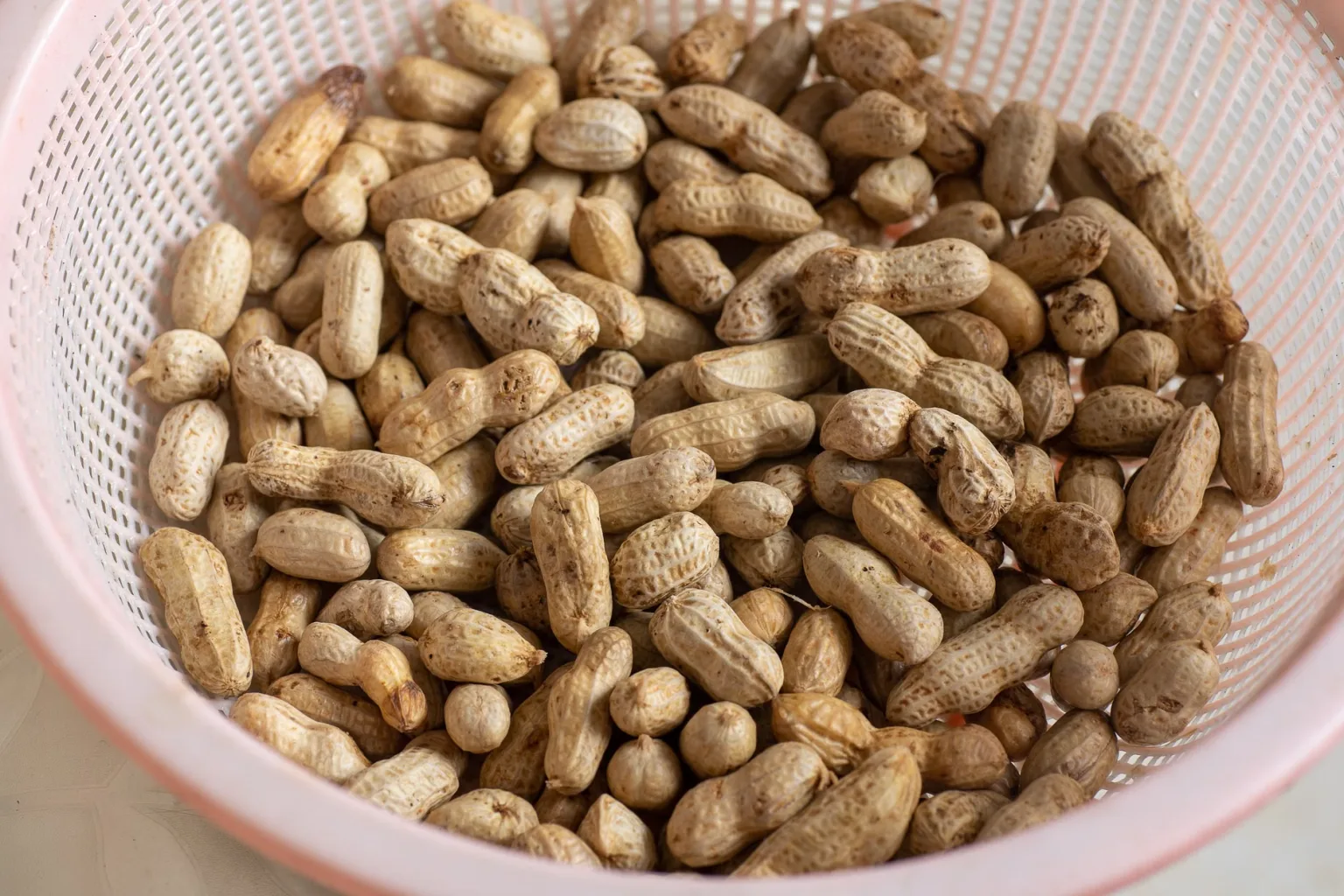
Peanuts are legumes, although shops and everyday cooking often group them with nuts. In this guide, “raw” means not roasted, and “ground” means the kernels have been crushed or processed. The name alone does not establish whether the result is a loose grind, flour or paste. These forms can behave differently in cooking: a dry ingredient can be blended into a mixture or help thicken it, while a paste has a different consistency. Check the label and the product’s texture before deciding how to use it. Do not assume that every product called ground peanuts has the same fineness or consistency.
When to use it
Use ground raw peanuts when you want peanut flavor without adding whole kernels, for example in sauces, stews, creams or baking mixtures. They can also add contrast to salads and other savory dishes, and pair with chocolate preparations. The specific form matters: a dry grind and a paste do not give a recipe the same consistency. Before choosing how much to add or when to add it, check the product and consider the result you want. If adapting a recipe that calls for another form of peanut, remember that moisture and texture may change.
How to use it
First check whether the product is a dry grind, flour or paste, and follow any specific directions on its packaging. For a sauce, cream or stew, add a small amount and stir it in; if the texture changes more than expected, adjust the preparation gradually. In a salad, a dry grind can be mixed into the dressing or added over the finished dish, depending on the texture you want. In baking, consider whether the product is dry or paste-like before combining it with the recipe ingredients. It can also be used in chocolate preparations. Do not automatically substitute one form for another: a dry product and a paste can affect the finished consistency differently.
Flavour and texture
Raw peanuts generally taste milder and less roasted than roasted peanuts. After grinding, their texture can vary with processing: the product may be a loose grind, flour or paste. It may therefore feel dry or slightly granular, or have a paste-like consistency. The ingredient description does not establish which form you have. Check the packaging and texture before using it, especially when a recipe depends on a particular consistency.
How to choose it
Read the label to confirm that the product is ground raw peanuts and to identify whether it is a dry grind, flour or paste. These forms do not behave the same way in every recipe, so choose according to the intended use. Review the ingredient list and any manufacturer directions, especially if you need to know exactly what the product contains. The available information does not support a recommendation for a particular variety, origin or package type. Do not infer texture from the name alone; check the product and its label description.
Storage
The available information does not establish a specific storage method or shelf life for ground raw peanuts. Follow the label and manufacturer directions, including any instructions for the package after opening. Keep the product closed between uses if the package directs you to do so, and do not assume that advice for one form also applies to another: the description may refer to a dry grind, flour or paste. If the product provides specific storage directions, use those as the reference.
Substitutions
Peanut butter or peanut flour may work in some recipes, but they are not universal one-to-one substitutes. Peanut butter is a paste and peanut flour is a dry ingredient, so they can change a preparation’s moisture and consistency. Before substituting, check which form the recipe calls for and which one you have. Make the change only if the textural difference fits the result you want, rather than assuming the formats are equivalent.
Common mistakes
Do not assume that “ground peanuts” always means powder: the product may be a dry grind, flour or paste. Replacing one form with another without considering its consistency can change the recipe. Also, do not confuse raw peanuts with roasted peanuts: roasting develops a more intense flavor and a crunchier texture. Check the label and the product before deciding how to use it.
Safety and allergens
This product contains peanuts. Check the label and manufacturer directions, and take into account the food allergies of anyone who will eat the preparation. The available information does not provide specific handling or storage instructions for this ground product.
Culinary uses
- Base o espesante para salsas y cremas
- Ingrediente para masas y repostería
- Aporte de sabor y textura a platos salados
Recommended techniques
- Incorporar gradualmente a salsas, guisos o cremas
- Mezclar en masas según se presente como ingrediente seco o pasta
- Añadir a un aliño o espolvorear sobre el plato si la textura lo permite
Pairs well with
- Chocolate
- Verduras
- Ensaladas y aliños
- Salsas para carnes
Frequently asked questions
Are peanuts tree nuts?
Botanically, peanuts are legumes, although shops and everyday cooking often group them with nuts.
Does ground raw peanut always mean powder?
No. The product may be a dry grind, flour or paste. Check its label and consistency.
Can I substitute peanut butter?
Only if the recipe can accommodate a creamier, wetter consistency. Peanut butter is not automatically equivalent to a dry grind.
Estimated nutrition
- Fat
- 21.2 g
- Saturates
- 7.87 g
- Carbohydrate
- 0 g
- Sugars
- 0 g
- Fibre
- 0 g
- Protein
- 16.9 g
- Salt
- 0.14 g
Sources and review
Automatically researched, cross-checked and validated content. Sources consulted:
- Client Challenge doi.org
- NORMA DEL CODEX PARA EL MANÍ - Food and Agriculture Organization fao.org
- Vamos a Conservar Alimentos: Tomates extension.psu.edu
- Español Inglés hia.berkeley.edu
- El maní y su versatilidad en la cocina | Recetas Nestlé recetasnestle.com.ar
- Descubre los alimentos - Maní molido | mentta.com mentta.com
- El maní | Consumer consumer.es
- - YouTube youtube.com
- Principales usos del maní - Agrotecnia de Cuba agrotecnia.edicionescervantes.com
- El Maravilloso Mundo del Maní: Origen, Beneficios y Usos – Mi Granja migranja.com
- Diferencia entre maní crudo y tostado - Rafael López SRL rlopezsrl.com
- Tipos De Maní: Todo Lo Que Necesitas Saber, Usos 2024 campograndeperu.com