- Category
- Vegetables
- State
- Fresh
- Usual unit
- unit
What it is
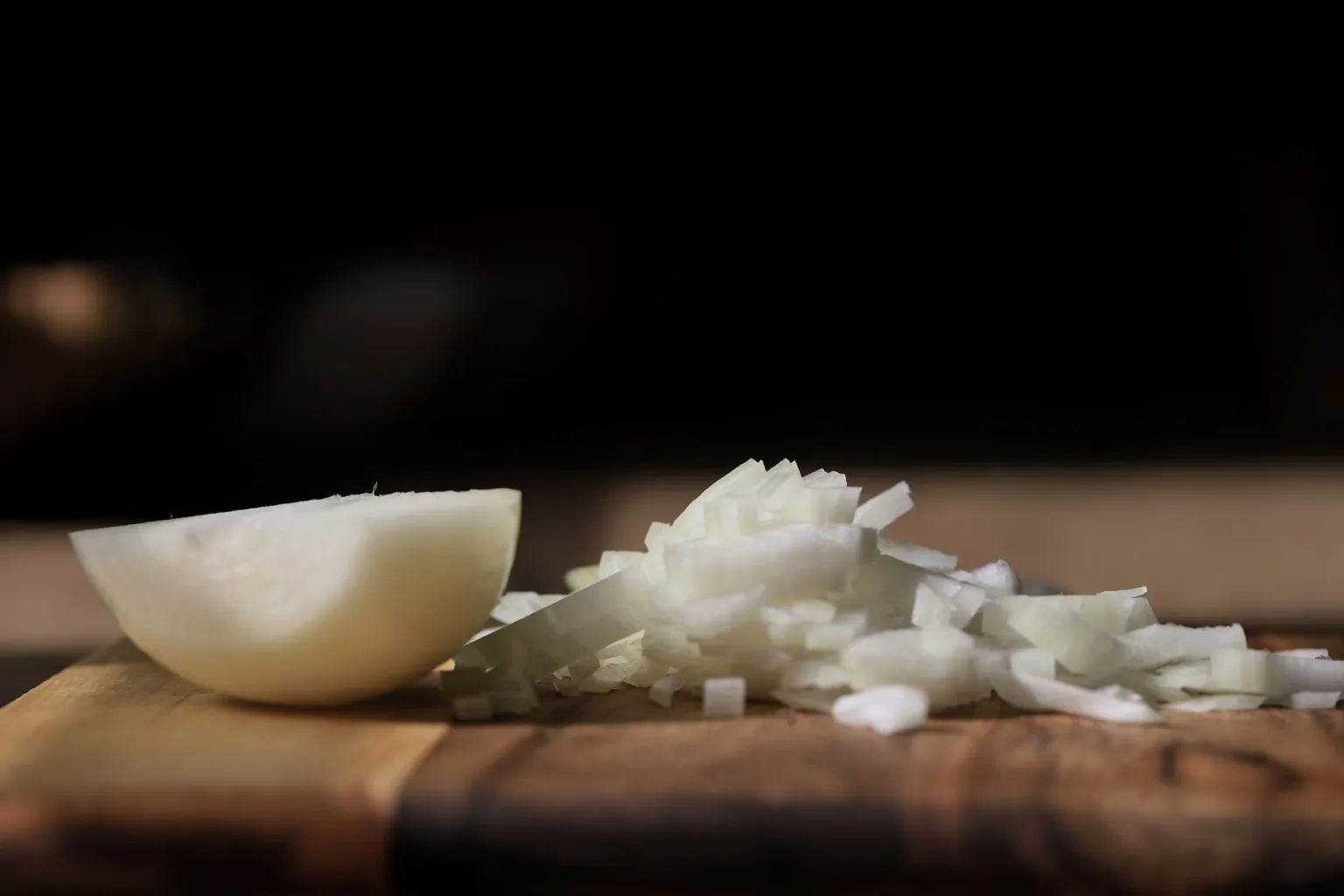
An onion is the edible bulb of Allium cepa, a vegetable made up of layers. “Half an onion” describes a portion, not a particular variety: it may come from a yellow, white or red onion, and flavor and texture vary by type. It can be diced, sliced or cut into larger pieces. In cooking, onion works both as an aromatic base for sautéed mixtures and stews and as a raw ingredient in salads, sandwiches and sauces.
When to use it
Use half an onion when a recipe needs an aromatic base but not a whole onion, or when you want to add a little freshness and crunch to a raw dish. Onions are used in sautéed bases, stews, stocks, sauces, salads and sandwiches. Variety matters: yellow onions are versatile for cooking, while red onions are commonly recommended for raw dishes. Match the cut to the effect you want, from finely diced pieces that blend into a base to slices that remain noticeable.
How to use it
Remove the dry outer skin and cut the half onion into dice, slices or rings, depending on how you want it to fit into the dish. For a sautéed base or stew, add it to the preparation and cook until softened; cooking mellows its intensity and makes the texture more tender. For salads, sandwiches or sauces, slice it thinly and use it raw when you want a crisp texture and fresh flavor. Red onions are commonly recommended for raw preparations. If you use only part of an onion, refrigerate the remaining cut portion.
Flavour and texture
Flavor can range from mild and slightly sweet to more pronounced and pungent, depending on the variety. Raw onion generally brings a crisp, juicy quality; cooking softens its texture and mellows its flavor. White onions are described as crisp and pungent, while red onions combine pungent and sweet notes. Half an onion has the same characteristics as the whole onion it came from, though its impact in a dish depends on the cut and the amount called for.
How to choose it
If you are buying a whole onion to use only half, choose a good-quality one without mold, unusual odors or colors, or visible damage. Handle it gently to avoid bruising and buy an amount you can use. Shape, color and intensity vary by variety, so consider whether the onion is intended for cooking or for serving raw. Yellow onions are versatile; red onions are often selected for raw preparations.
Storage
Refrigerate the remaining portion once the onion has been cut. Guidance to keep cut fresh produce refrigerated supports this precaution, although the evidence available here does not specify a storage period for half an onion. Handle it gently and discard any visibly spoiled parts. Storage guidance can vary with the product and its packaging; follow the label instructions where provided.
Substitutions
Shallot, leek and scallion can fill a similar role in some dishes, but they are not identical to onion. Shallot is described as finer and more fragrant; leek as milder and more fibrous; and scallion as a young-harvested onion with a gentler flavor. Choose according to the dish and expect a change in flavor and texture.
Common mistakes
Do not assume every onion variety tastes or cooks the same way. A coarse cut may leave noticeable pieces when a more even base is wanted; finer cutting helps it blend in. Also, raw onion, which is crisp, is not the same in texture or flavor as cooked onion, which softens and mellows. Refrigerate the cut remainder rather than leaving it out.
Safety and allergens
Keep a cut onion portion refrigerated and handle it cleanly. For a packaged or prepared product, check its label for storage directions and declared allergens; this profile does not assign allergens to the ingredient without supporting evidence.
Culinary uses
- Base aromática para sofritos, guisos y salsas
- Ingrediente crujiente y de sabor fresco para preparaciones crudas
Recommended techniques
- Cortar en dados o tiras según la preparación
- Pochar o saltear para suavizar su sabor y textura
- Servir cruda en ensaladas, sándwiches o salsas
Pairs well with
- Legumbres y guisos
- Salsas y sofritos
- Ensaladas y sándwiches
Frequently asked questions
Is half an onion a special variety?
No. It describes an amount, not a variety. It could be half of a yellow, white or red onion, among others.
Can I use half an onion raw?
Yes. Slice it thinly for salads, sandwiches or sauces when you want a crisp texture and fresh flavor.
How should I store the leftover portion?
Refrigerate it after cutting. The available sources do not give a specific storage period for half an onion.
Sources and review
Automatically researched, cross-checked and validated content. Sources consulted:
- En el etiquetado alimentario hay algunas menciones que son obligatorias eletiquetadocuentamucho.aesan.gob.es
- Client Challenge doi.org
- Cooking Food Storage | USU extension.usu.edu
- The Essential Glossary of Cooking Terms for the Culinary Arts - Escoffier escoffier.edu
- ::AESAN:: Agencia Española de Seguridad Alimentaria y Nutrición aesan.gob.es
- Conoce 15 tipos de cebolla y sus usos en la cocina - Mejor con Salud mejorconsalud.as.com
- Guía completa de tipos de cebolla: variedades, propiedades y usos culinarios jardineriaon.com
- Cebollas: variedades, usos y diferencias - CocinoPedia.com cocinopedia.com
- Cold Storage Chart & Reference Guide rvpadmin.cce.cornell.edu
- Cebollas de guarda | Postharvest Research and Extension Center postharvest.ucdavis.edu
- SCALLION/GREEN ONION - Extension St. Croix County stcroix.extension.wisc.edu
- 2. CEBOLLA-CARACTERISTICAS DE LA PLANTA, G. Fornaris uprm.edu
- DICIEMBRE 2012 ESTUDIO DE LA CADENA DE VALOR Y FORMACIÓN DE PRECIOS DEL SECTOR mapa.gob.es
- VARY YOUR VEGGIES: How to Select and Store Vegetables | NDSU Agriculture ndsu.edu
- Buying, Storing & Preparing Fresh Vegetables - Alabama Cooperative Extension System aces.edu
- Producción de Cebolla extension.psu.edu