- Category
- Other
- State
- Frozen
- Usual unit
- unit
What it is
An ice cube is a portion of frozen water, usually made in a tray or by an ice-making machine. In cooking, it is used mainly to chill drinks and can add water to a mixture as it melts. Shapes and sizes vary; crushed, flake and other forms are also available and do not behave in exactly the same way. Freezing juice or an infusion instead of water makes a flavored cube that can change a drink as it melts. Ice can therefore be a practical cooling aid or part of a drink's flavor and presentation.
When to use it
Add ice cubes when you want to serve a cold drink, such as a soft drink, a long drink or a cocktail. For quicker chilling or a texture closer to a frozen drink, consider crushed ice, which is commonly used in cocktails and slush-style drinks. In a smoothie made with fresh fruit, a few cubes can help chill the mixture; if the fruit is already frozen, they may not be needed. Choose juice or infusion cubes when you want the melting liquid to contribute flavor rather than just water.
How to use it
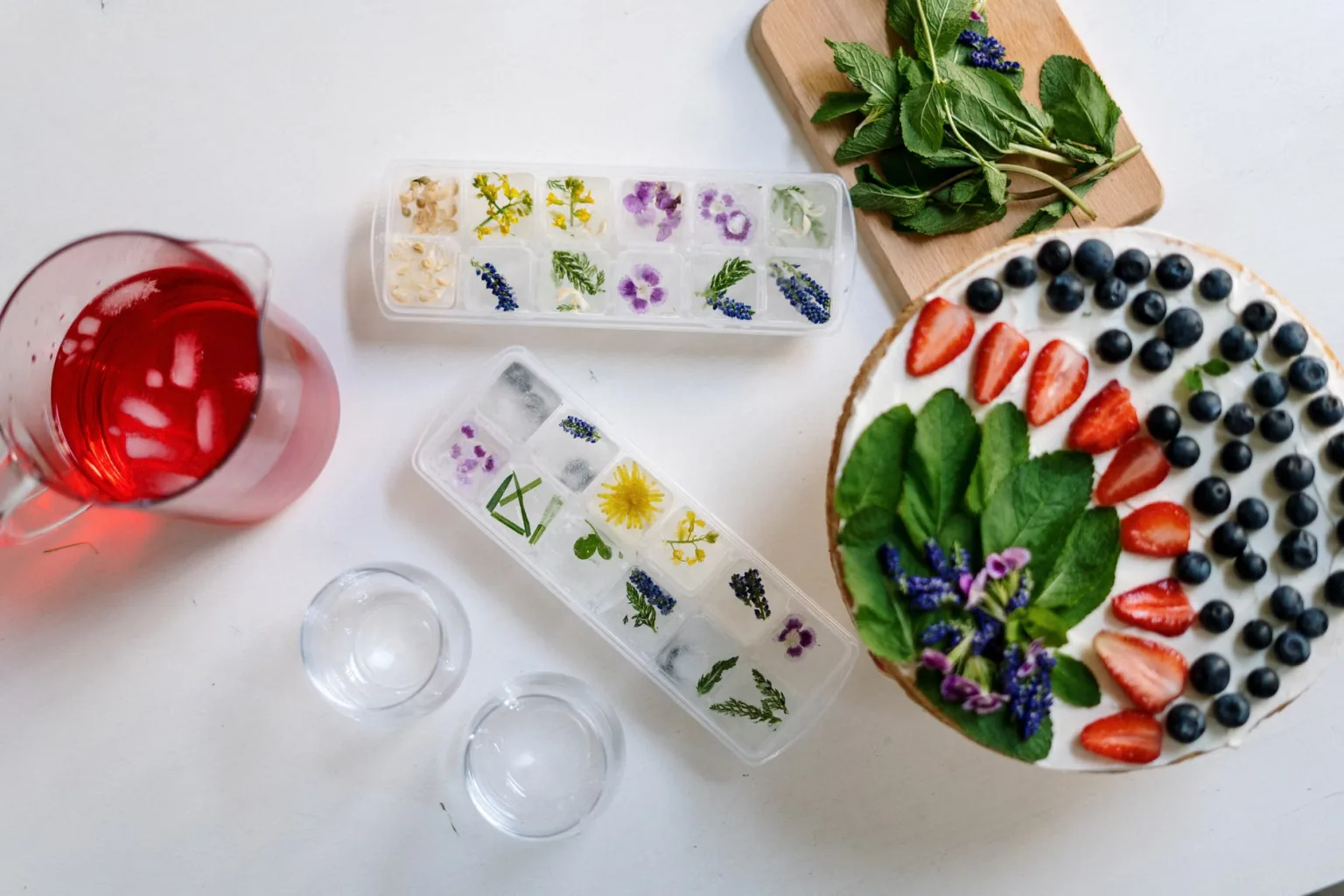
Place whole cubes directly in a glass or pitcher, then pour the drink over or around them. For a finer texture, crush the ice and use it in frozen drinks or cocktails. When making a smoothie with fresh fruit, add a few cubes to the blender if the mixture needs chilling, then blend until smooth. You can also freeze juice or an infusion in a tray and add those cubes to a drink for flavor as they melt. For a decorative touch, herbs or small pieces of citrus peel can be frozen inside water cubes. Remember that melting ice can dilute a drink; crushed ice is used when rapid chilling is desired.
Flavour and texture
Water ice has a very mild flavor and a cold, solid texture; as it melts, it adds water and may soften or dilute a drink. Ice shape and size affect its appearance and how it fits a recipe, but the available evidence does not support a general melting-time estimate. Crushed ice has more surface area and is used for rapid chilling. Juice or infusion cubes add flavor and color as they melt.
How to choose it
Choose whole cubes for everyday use in glasses and long drinks, or crushed ice when a recipe calls for a finer texture or that style of cocktail. For decorative or flavored cubes, you can make them at home with juice or an infusion and add items such as herbs or citrus peel. Commercial ice comes in different forms, so choose according to the drink and intended use. The available sources do not establish verifiable criteria for judging a particular brand's quality, clarity or safety.
Storage
Keep cubes frozen until you are ready to use them so they retain their shape. The available sources do not specify a storage life or exact temperature conditions for household ice, so no duration is given here. If you make cubes with juice, an infusion or other ingredients, label their contents so you can choose them correctly when serving and distinguish them from plain-water ice.
Substitutions
Crushed ice can replace whole cubes in cocktails or frozen drinks, but it changes the texture and rate of dilution. Juice or infusion cubes are useful when you want the melting liquid to add flavor, but they are not neutral. In a smoothie, frozen fruit can also provide chill; it changes the result and is not exactly equivalent to adding water ice.
Common mistakes
Do not assume every ice format is interchangeable: crushed ice is used in different preparations from whole cubes and changes texture. Also remember that water ice adds water as it melts. If you want to avoid diluting a drink, use juice or infusion cubes instead, while allowing for the flavor they contribute.
Safety and allergens
Use ice intended for consumption and handle it with clean utensils. No specific official warning about ice cubes is available in the supplied evidence.
Culinary uses
- Enfriar bebidas
- Aportar dilución gradual y volumen a bebidas servidas
Recommended techniques
- Servir entero en bebidas frías
- Triturar para cócteles y bebidas heladas
- Congelar zumos o infusiones en cubiteras para añadir sabor
Pairs well with
- Refrescos y bebidas largas
- Cócteles
- Licuados de fruta fresca
- Agua con fruta o hierbas
Frequently asked questions
What are ice cubes used for?
They are mainly used to chill drinks. They can also be added to smoothies made with fresh fruit or crushed for cocktails and frozen drinks.
Can I make ice cubes from juice or an infusion?
Yes. Freeze juice or an infusion in a tray and use the cubes to add flavor to a drink as they melt.
What is the difference between whole cubes and crushed ice?
Whole cubes are commonly served in glasses. Crushed ice is used in cocktails and frozen drinks and chills quickly, but changes the texture.
Sources and review
Automatically researched, cross-checked and validated content. Sources consulted:
- ¿Por qué la muerte es origen de miedos y tabúes? doi.org
- educational content to support healthful lifestyle practices sjsu.edu
- Food & Fun Afterschool hsph.harvard.edu
- UCCE efforts improve quality of and demand for fresh ... ucanr.edu
- EFNEP Hispanic Heritage Recipes | Community Nutrition | Extension/College of Agriculture, Health & Natural Resources | University of Connecticut communitynutrition.cahnr.uconn.edu
- melons - Extension St. Croix County stcroix.extension.wisc.edu
- Establecimientos detallistas de productos de la pesca y ... aesan.gob.es
- Agua con Sabor a Durazno | Servicio de Extensión de OSU extension.oregonstate.edu
- Recipe 22: Family Fun and Learning at Home fdp.unm.edu
- Licuado de fruta – Food Smart Colorado foodsmartcolorado.colostate.edu
- Uso de los cubitos de hielo | Cubiforma cubiforma.es
- Ideas para hacer cubitos de hielo originales | Consumer consumer.es
- Tipos de hielo y sus usos: guía definitiva | ICE FOR LIFE itv.es
- Tipos de Cubitos de Hielo para Enfriar en Hostelería hosteleriauno.es
- Tipos de hielos que existen. Diferencias y usos - Fábrica de Hielo y Distribución de Hielo en la Comunidad de Madrid hieloblasco.com