- Category
- Bread and dough
- State
- Fresh
- Usual unit
- unit
What it is
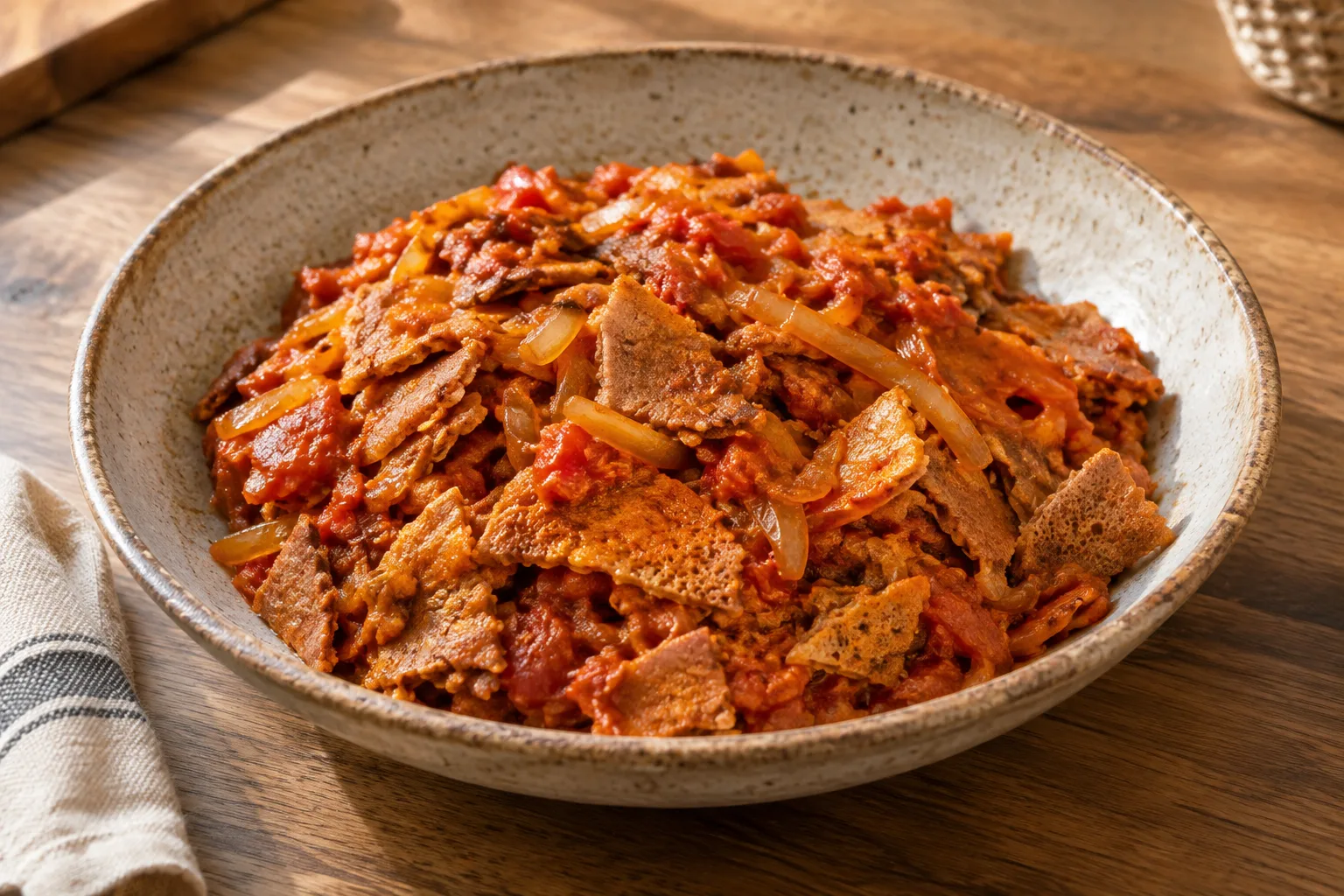
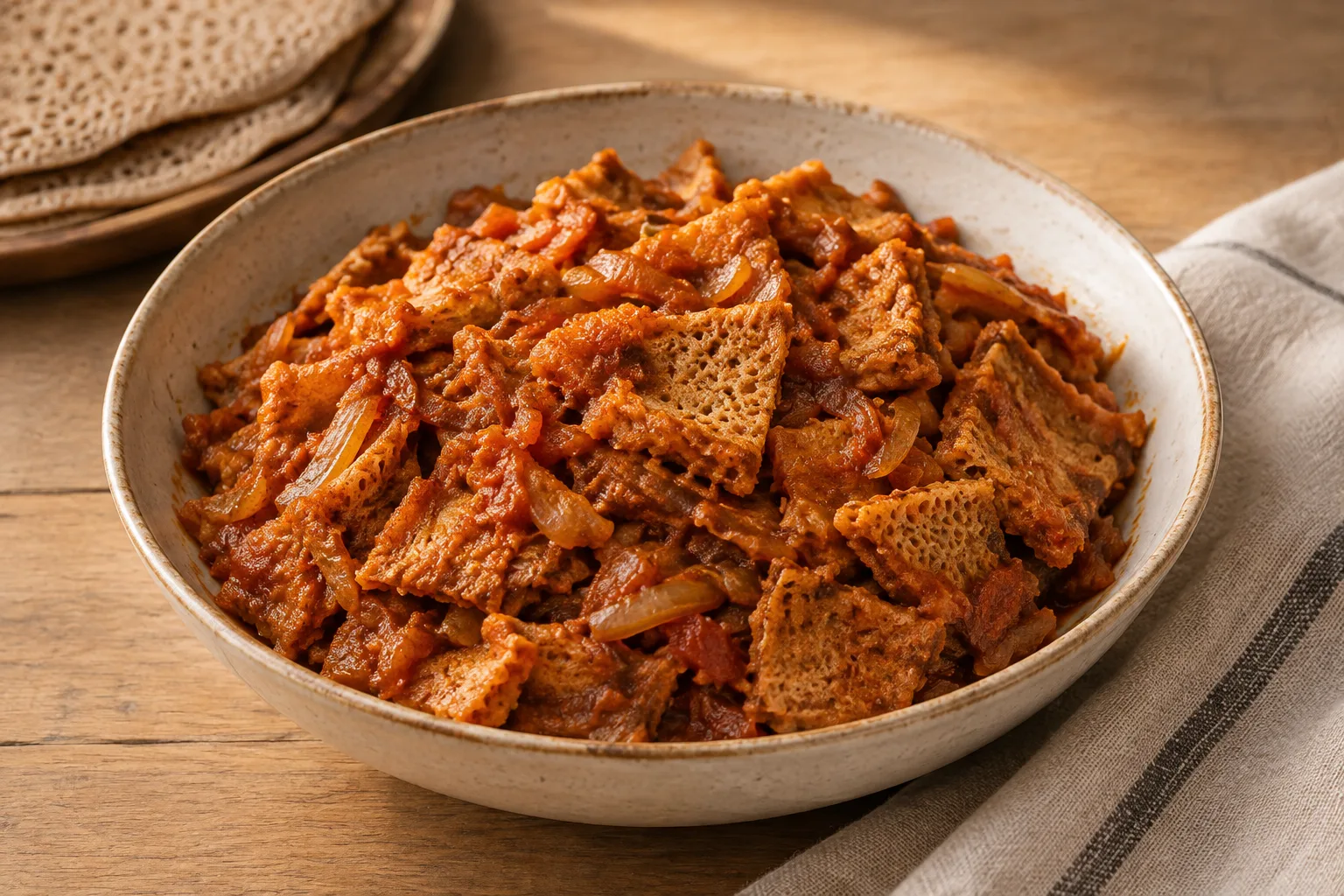
Injera is a fermented flatbread made from a pourable batter, recognized by its small, porous bubbles on top and a smoother underside. The traditional version described in the sources uses teff flour and water; other versions include or replace teff with flours such as wheat, barley, corn, or rice. It is cooked like a large, thin pancake, and its slightly sour flavor and flexible texture make it suitable for serving with meals. At Ethiopian and Eritrean tables, it can act both as a base for other foods and as an edible utensil for picking them up.
When to use it
Serve injera with stews and saucy dishes, especially Ethiopian preparations such as doro wat, misr wat, or shiro wat. Its porous surface helps pick up creamy foods, and torn pieces can be used to bring bites to the mouth. It can also be laid on a platter as a base for assorted accompaniments. If you need to avoid gluten, do not assume every injera is suitable: teff flour is described as gluten-free, but wheat versions also exist.
How to use it
Lay injera on a broad platter or plate and serve stews, legumes, vegetables, or other accompaniments on top. To eat, tear off a piece and use it to pick up a portion; its flexibility and porous upper surface suit this purpose. You can also serve it separately alongside each bite. For homemade injera, the sources describe a pourable mixture of flour and water that ferments before being poured onto a hot griddle or pan; it is commonly cooked on one side and covered as pores form. Flours and recipes vary, so follow the directions for your recipe or product.
Flavour and texture
Its characteristic flavor is described as slightly sour, a result of fermentation. Injera is a thin, flexible flatbread with a porous, spongy upper surface and a comparatively smooth underside. Teff is the preferred grain in the sources for its sensory qualities, but color and flavor can vary with the flour used; white, red, and mixed teff injera are described.
How to choose it
Read the ingredient list: injera may be made with teff, a flour blend, or other grains, and wheat injera is not equivalent to gluten-free teff injera. If you want a particular variety, confirm the grain with the seller or on the package. It may be sold fresh or dried, so check which form you are buying and follow the producer’s directions.
Storage
The available sources do not establish a storage method or universal shelf life for purchased injera. Store it according to the package or seller’s instructions, and do not assume fresh and dried injera keep in the same way. If no guidance is supplied, ask the seller before storing it; appearance alone is not a reliable way to determine how long it is safe.
Substitutions
Wheat injera can replace a teff version in a meal, but it contains wheat and may differ in flavor and texture. The sources also describe batters that replace some or all of the teff with barley, corn, or rice. These alternatives are not automatically interchangeable in flavor or gluten content, so check the specific flour before serving.
Common mistakes
Do not assume every injera is made only from teff or is gluten-free: wheat and other flour versions exist. Nor should it be treated only as bread served on the side; its porous surface is useful for picking up stews, and it can serve as an edible base. Sourness and appearance vary with flour and fermentation.
Safety and allergens
Check the ingredients and producer’s directions, especially where allergies or gluten avoidance matter. Follow the package or seller’s storage instructions; the available sources do not establish a universal shelf life.
Culinary uses
- Pan plano para acompañar guisos
- Base comestible y utensilio para recoger alimentos
Recommended techniques
- Fermentación de una masa fluida
- Cocción en una plancha o sartén, normalmente por un solo lado y con tapa
Pairs well with
- Guisos etíopes como doro wat, misr wat y shiro wat
- Guisos y preparaciones de carne, pescado, legumbres y verduras
Frequently asked questions
What does injera taste like?
It is described as slightly sour from fermentation. The flavor also depends on whether it is made with teff or other flours.
Is injera always gluten-free?
No. Teff flour is described as gluten-free, but wheat versions exist. Always check the ingredients.
How do you eat injera?
Tear off a piece and use it to pick up stews, legumes, or vegetables; it can also serve as a base for them.
Estimated nutrition
- Fat
- 0.68 g
- Saturates
- 0.18 g
- Carbohydrate
- 19.39 g
- Sugars
- 1.03 g
- Fibre
- 2.8 g
- Protein
- 2.55 g
- Salt
- 0.56 g
Sources and review
Automatically researched, cross-checked and validated content. Sources consulted:
- Client Challenge doi.org
- Receta Injera, el pan de Etiopía | Cooperación con Alegría cooperacioambalegria.co
- CART 030: Whole Food Natural Cooking collegeofthedesert.edu
- Ethiopian Grocery Store Near Me Provides Authentic Ingredients ~ cms.ncwc.edu cms.ncwc.edu
- Ínyera - Wikipedia, la enciclopedia libre es.wikipedia.org
- Injera de trigo | CreatiVegan.net creativegan.net
- Injera, el plato etíope (sin gluten) que vas a adorar | El Diario Vasco diariovasco.com
- Indoor air pollution from cook-stoves during Injera baking in Ethiopia, exposure, and health risk assessment cpaess.ucar.edu
- Food Startup ‘Ethiopian Delights’ Serves Cultural Connection | Darden Report news.darden.virginia.edu
- The International Footprint of Teff: Resurgence of an Ancient ... openscholarship.wustl.edu
- Online Health-Centered Culinary Arts Diploma | ICE ice.edu
- Traditional Ethiopian Meal - Great Research epm.cnc.stanford.edu
- La 'injera': el crepe agrio que está presente en cualquier plato de la comida etíope okdiario.com