- Category
- Meat
- State
- Fresh
- Usual unit
- unit
What it is
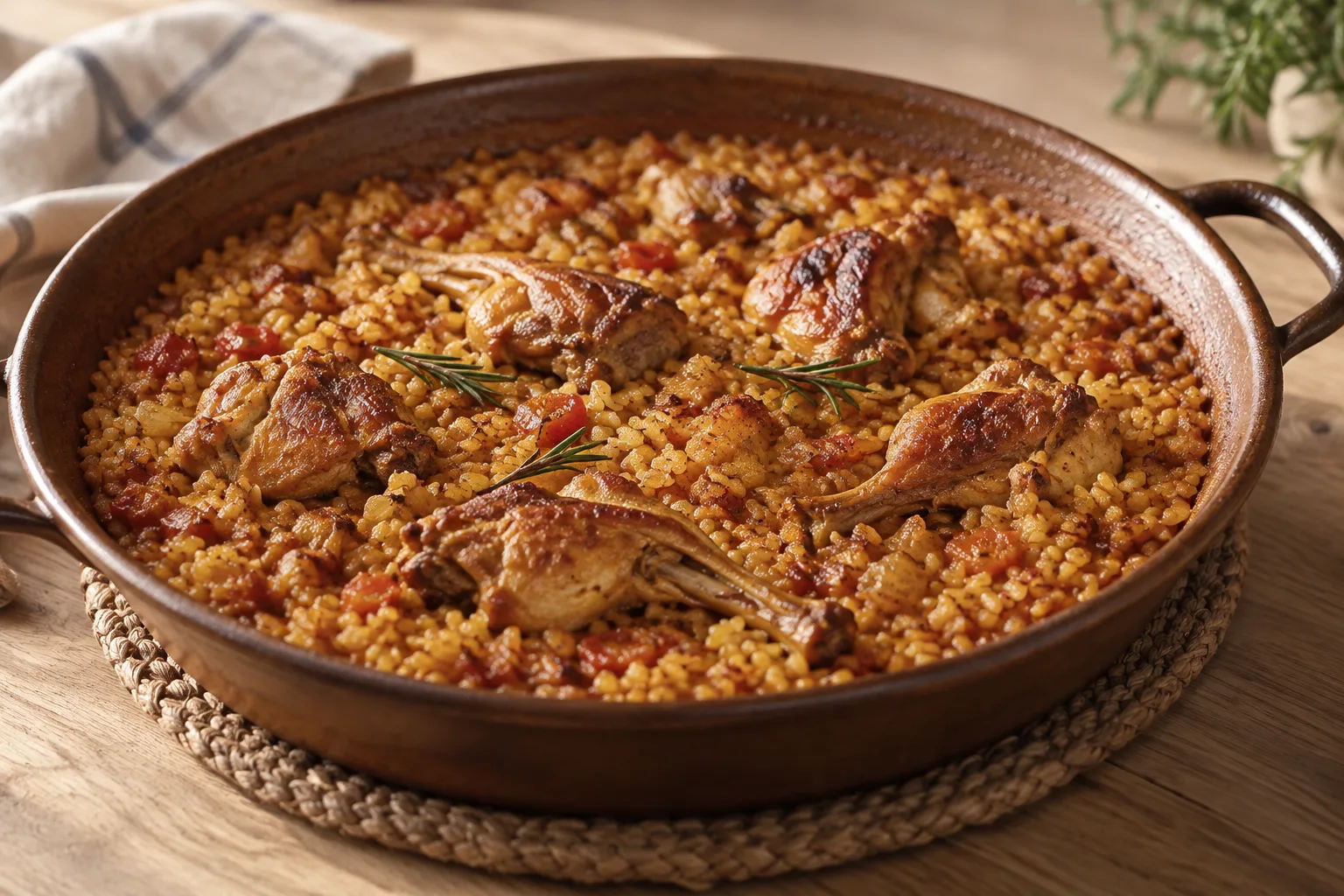
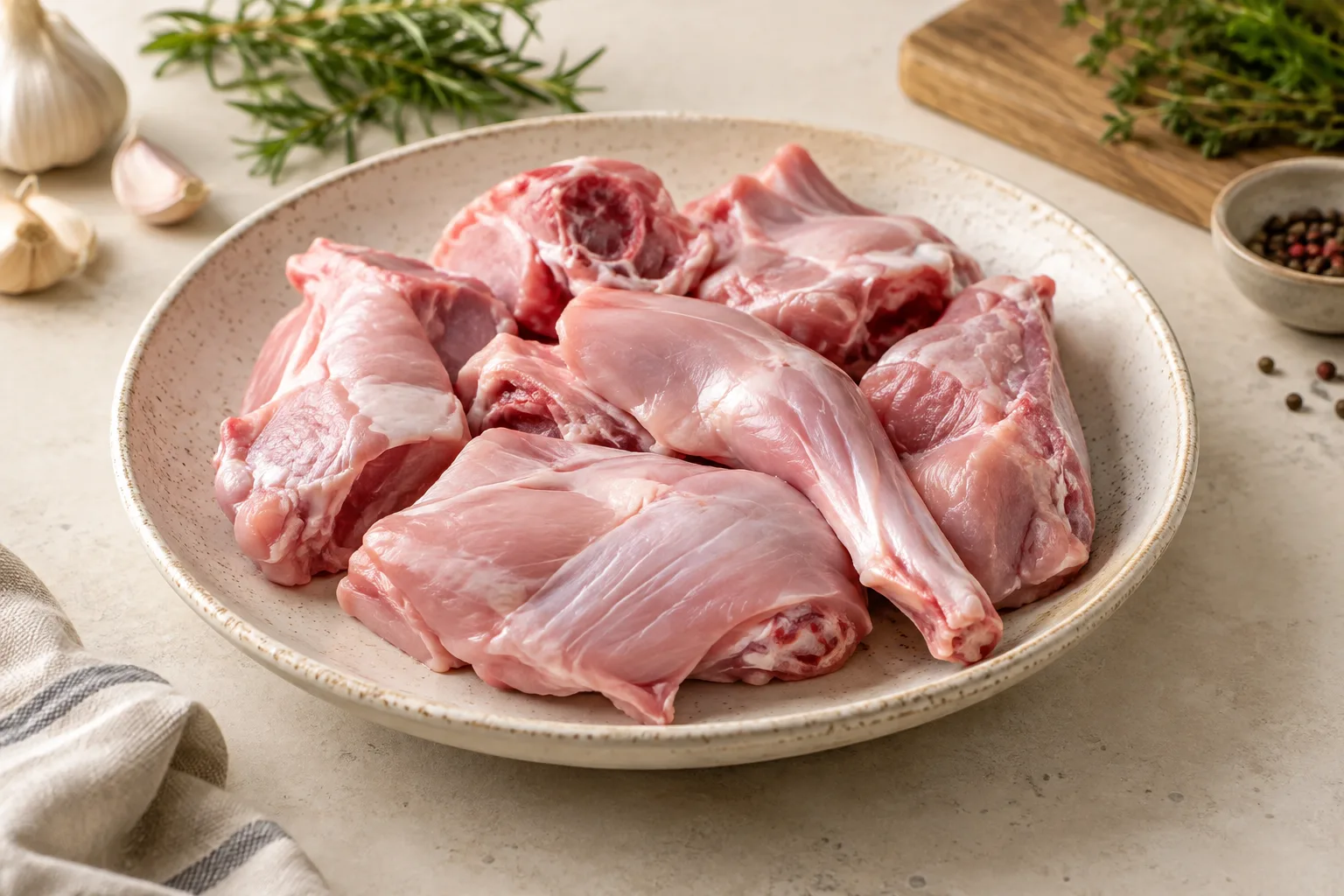
Jointed rabbit is rabbit meat sold as several pieces rather than as a whole carcass. Depending on the product, the pieces may include shoulder, leg, loin and rib portions; do not assume every pack has the same selection, size or number of pieces. When sold chilled as such, it is fresh meat and should not be confused with canned or frozen rabbit. Farmed rabbit is often described as milder and more tender than wild rabbit, whose characteristics may differ. The cut-up format makes it convenient to portion into dishes such as stews, rice dishes and meals with sauce. Check the product’s own description and label to see exactly what it contains.
When to use it
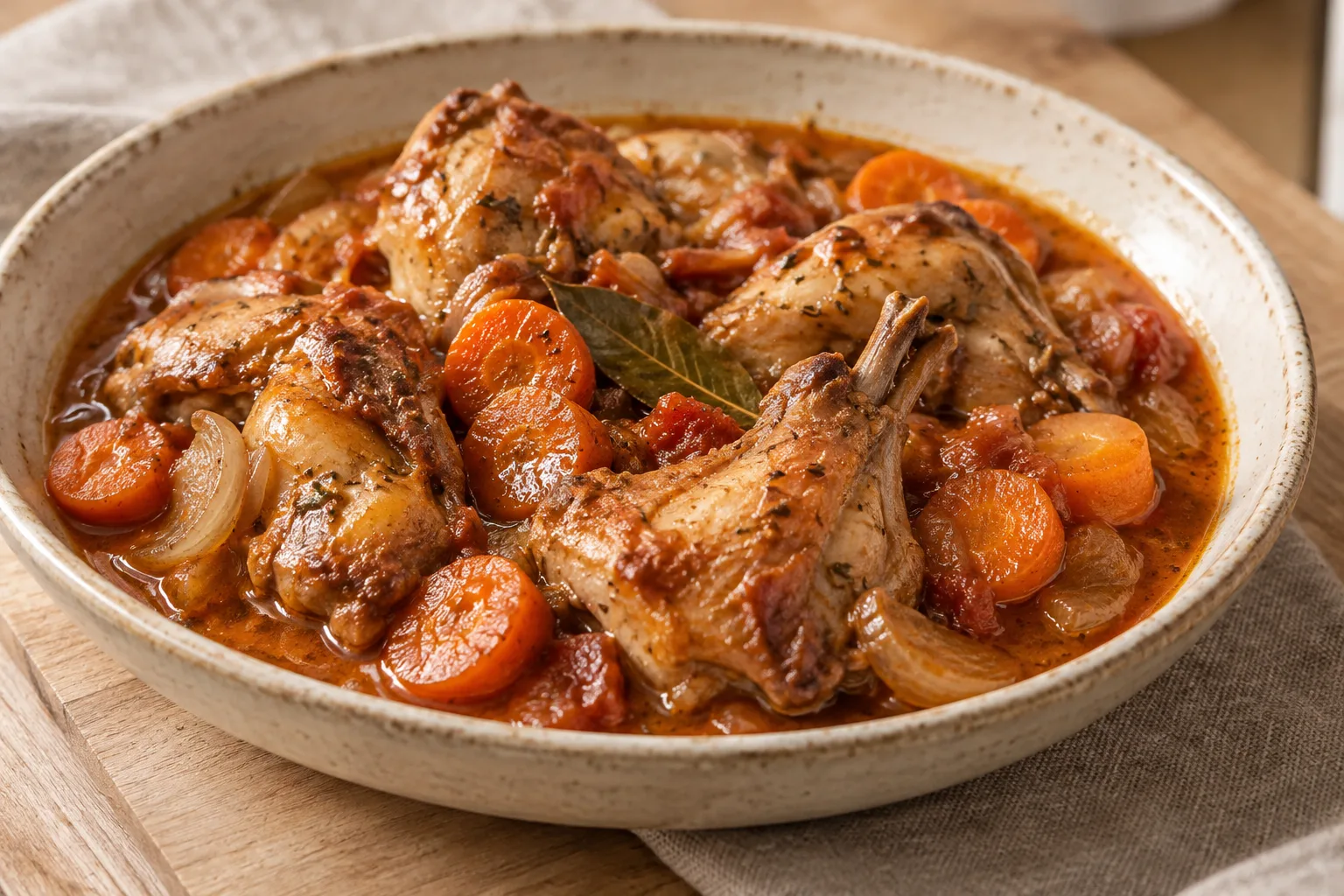
Choose jointed rabbit when you want separate pieces to cook in a casserole, brown before stewing, or distribute through a rice dish. It suits recipes with cooking liquid and aromatics, such as a stew with garlic, wine and thyme, and can also be roasted or grilled. If a recipe calls for small pieces, check the cut size and adapt the preparation; the format and cuts vary between products. For dry cooking, remember that lean meat can lose its juiciness readily. A sauce, cooking liquid or moist method can help reduce that risk.
How to use it
Check the label for the product name, state, date, and storage and use instructions. Before cooking, separate pieces by size if your recipe requires it, then season as desired. A versatile approach is to brown the pieces in a casserole and finish cooking them in a stew or sauce with wine, garlic, onion, thyme or rosemary. You can also add them to a rice dish or cook them in the oven or on a grill; lean meat can dry out, so keep an eye on the cooking and consider adding liquid or serving it with sauce. Rabbit does not need to be marinated before cooking, although a marinade can add aroma. Follow the instructions for the specific product you bought.
Flavour and texture
Rabbit usually has a mild, distinctive flavor; its intensity can vary between farmed and wild rabbit. Jointed portions include meat and bone depending on the cut. Lean meat can become tender with moist cooking, while dry or excessive cooking may leave it less juicy. Browning adds color and toasted flavor, making a good starting point for a sauce.
How to choose it
Look for a clear product name identifying jointed rabbit, and check the date, package condition and storage instructions. If you need particular cuts or evenly sized pieces for a recipe, ask what the pack includes: shoulder, leg, loin and rib portions are examples of cuts it may contain, but the selection varies. When buying from a counter, ask the seller to clarify the cuts and quantity. The label on the product you are buying is the reference for its use.
Storage
Store the rabbit according to the package instructions and date; guidance can vary with the way the product is sold and presented. If there is no label or the information is unclear, ask the seller before storing or using it. Do not infer a universal storage duration just from the name jointed rabbit. The label may also give use instructions, so check it before cooking.
Substitutions
Chicken can work in recipes that suit a mild, broadly poultry-like meat, though it does not taste identical and may not need the same handling. For a more pronounced, game-like preparation, hare may offer a closer style, but it is not equivalent to rabbit. When substituting, adapt the piece size and cooking method to the chosen meat. Do not expect a substitution to preserve exactly the original dish’s flavor, texture or result.
Common mistakes
Do not assume that every pack contains the same cuts or that every piece is the same size. Another common mistake is using a dry method for too long and letting the lean meat lose too much juiciness; a sauce or moist stew may be a better fit. Nor should the timing from one recipe be treated as a rule for every cut. Check the label and adapt the preparation to the product in hand.
Safety and allergens
Follow the package directions for storage, dates and safe use. If information is missing or a product instruction is unclear, ask the seller or food business operator; do not assume all formats have the same guidance.
Culinary uses
- main protein in a braise, stew, roast or rice dish
- cut-up meat for pan-frying or cooking with a sauce
Recommended techniques
- braising or stewing with liquid and aromatics
- roasting or grilling, with care to avoid drying
- browning pieces before finishing them in a sauce
Pairs well with
- garlic, thyme, rosemary and white wine
- mushrooms, carrots and other root vegetables
- lemon or other citrus, and apples or pears
Frequently asked questions
Which cuts may be included in jointed rabbit?
It may include shoulder, leg, loin and rib portions, but the selection and sizes vary by product. Check the label or ask the seller.
How can I cook jointed rabbit?
It can be stewed, roasted, grilled, or browned and finished in a sauce. Because lean meat can dry out, a moist stew is a useful choice when you want a tender texture.
Does rabbit have to be marinated?
No. Marinating is optional and can add aroma, but it is not a requirement for cooking rabbit.
How should I store it?
Follow the date and storage instructions on the package, which can vary with the product and how it is presented.
Sources and review
Automatically researched, cross-checked and validated content. Sources consulted:
- En el etiquetado alimentario hay algunas menciones que son obligatorias eletiquetadocuentamucho.aesan.gob.es
- Client Challenge doi.org
- Gastronomía de México - Wikipedia, la enciclopedia libre es.wikipedia.org
- Aesan - Agencia Española de Seguridad Alimentaria y Nutrición aesan.gob.es
- El conejo – Blog foodVAC foodvac.es
- Descubre las posibilidades de la carne de conejo, sus propiedades y recetas directoalpaladar.com
- Medio Conejo Troceado – Hacendado es.openfoodfacts.org
- Recetas con carne de conejo: versátil y deliciosa · Recetas Supermercado El Corte Inglés elcorteingles.es
- Las 33 mejores recetas con conejo saludables y fáciles nuevoestilo.es
- Artes culinarias/Ingredientes/Conejo - Wikilibros es.wikibooks.org
- El conejo en la gastronomía | Chefuri chefuri.com
- Comprar Medio conejo troceado en bonÀrea online | Directo del campo bonarea-online.com
- Ingredientes para la receta: El conejo — Cuaderno de Cultura Científica culturacientifica.com
- Consejos sobre maridajes de sabores y acompañamientos para resaltar el sabor de la carne de conejo. - Carne de Conejos Por Mayor y menor conejosdonguando.com
- Cocinar carne de conejo: preguntas frecuentes | INTERCUN intercun.org
- Conejo guisado al ajillo. Receta tradicional de la abuela - De Rechupete abc.es
- Conejo al horno - Gallina Blanca gallinablanca.es