- Category
- Herbs and spices
- State
- Fresh
- Usual unit
- leaves
What it is
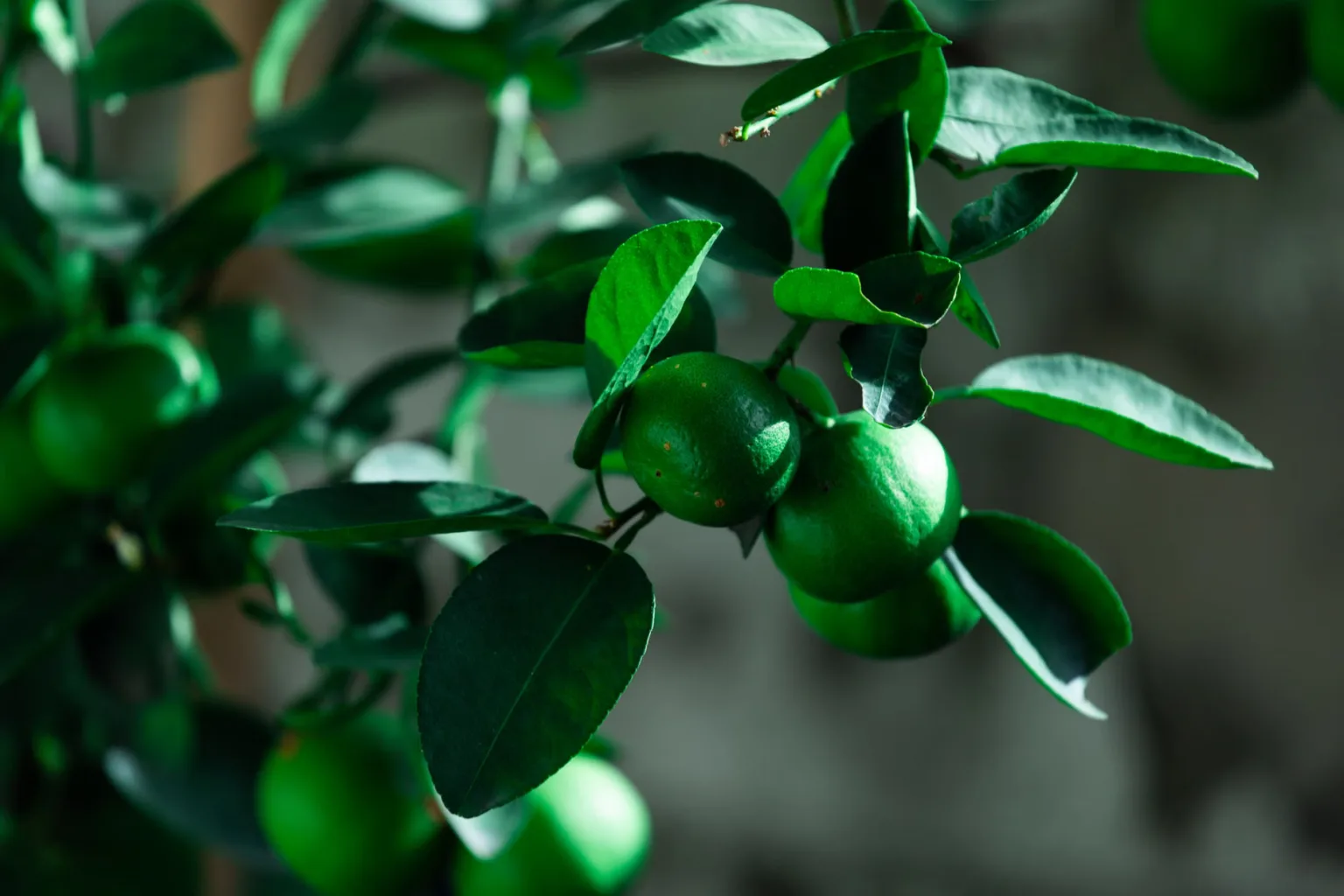
Kaffir lime leaves, also called makrut lime or combava leaves, come from the citrus plant Citrus hystrix. They are recognizable by their paired, distinctive two-lobed shape and their intense aroma, which combines citrus, floral and herbal notes. In cooking, they are used mainly for fragrance: add them whole while a dish cooks, or slice them finely to incorporate into the finished food. Fresh leaves are thick and somewhat tough, so they are not always left in the dish when it is served. The tree also bears aromatic fruit, but this profile concerns the leaves and their culinary use, not the fruit’s zest or juice.
When to use it
Use these leaves when you want a distinctive citrus fragrance in soup, curry or stew, particularly in Thai-inspired and Southeast Asian-style cooking. They work well infused in broth or sauce during cooking, and can also add a fresher note when sliced very finely over a finished dish. Their aroma is penetrating, so begin with a small amount and add more only if needed. If a recipe calls for citrus flavor and you cannot find the leaves, an alternative may help, but it will not reproduce their particular floral and herbal profile exactly.
How to use it
Rinse the leaves and decide whether you want a gentle infusion or a more direct flavor. For soups, curries and stews, add them whole or torn to the liquid base as it cooks; remove them before serving if they remain thick and tough. For an edible finish, remove the central rib if it seems fibrous, then slice the leaf into very fine strips before using it as a seasoning or garnish. You can also chop or pound the leaves with other ingredients to make an aromatic paste. Taste the dish before adding more: the leaves are strongly fragrant and can overpower other flavors. Do not confuse their use with fruit zest, which comes from a different part of the citrus plant.
Flavour and texture
The aroma is intensely citrusy, floral and herbal, and differs from ordinary lemon or lime. Fresh leaves are green, described as glossy, and relatively thick and somewhat tough in texture. They are particularly useful for scenting liquids, but large pieces may be unpleasant to eat.
How to choose it
Look for leaves labeled kaffir lime, combava or makrut; names used in shops can vary. Available descriptions characterize the leaves as green, glossy and two-lobed. They are sold fresh, frozen or dried, whole or ground, and may also be included in curry pastes. Check which form you are buying, since using a whole leaf is not the same as using a ground product.
Storage
The available information confirms that these leaves are sold fresh, frozen or dried, but does not establish safe storage conditions or time limits for each form. Do not assume that every format should be stored in the same way: follow the package or seller’s instructions and check the label before use. This profile does not recommend a specific storage period or a home-preservation method.
Substitutions
No substitute reproduces the leaves’ distinctive aroma exactly. Lemon or regular lime zest can give a different citrus note; regular lime leaves or lemongrass can offer a related aromatic direction, but the result will change. Add alternatives gradually and taste before adding more.
Common mistakes
Using too many leaves can let their fragrance dominate the other flavors. Another common mistake is leaving whole leaves or thick pieces in the finished dish: their texture can be tough. Remove them before serving an infusion, or slice them very finely if they are to be eaten.
Safety and allergens
The available evidence does not identify a specific official warning for these leaves. Because fresh leaves can be thick and tough, remove large pieces before serving or slice them very finely if they will be eaten.
Culinary uses
- Aromatic for soups, curries and stews
- Finely sliced fresh garnish and seasoning
Recommended techniques
- Infuse whole leaves in simmering dishes, then remove if desired
- Tear, slice finely or pound into a paste with other ingredients
Pairs well with
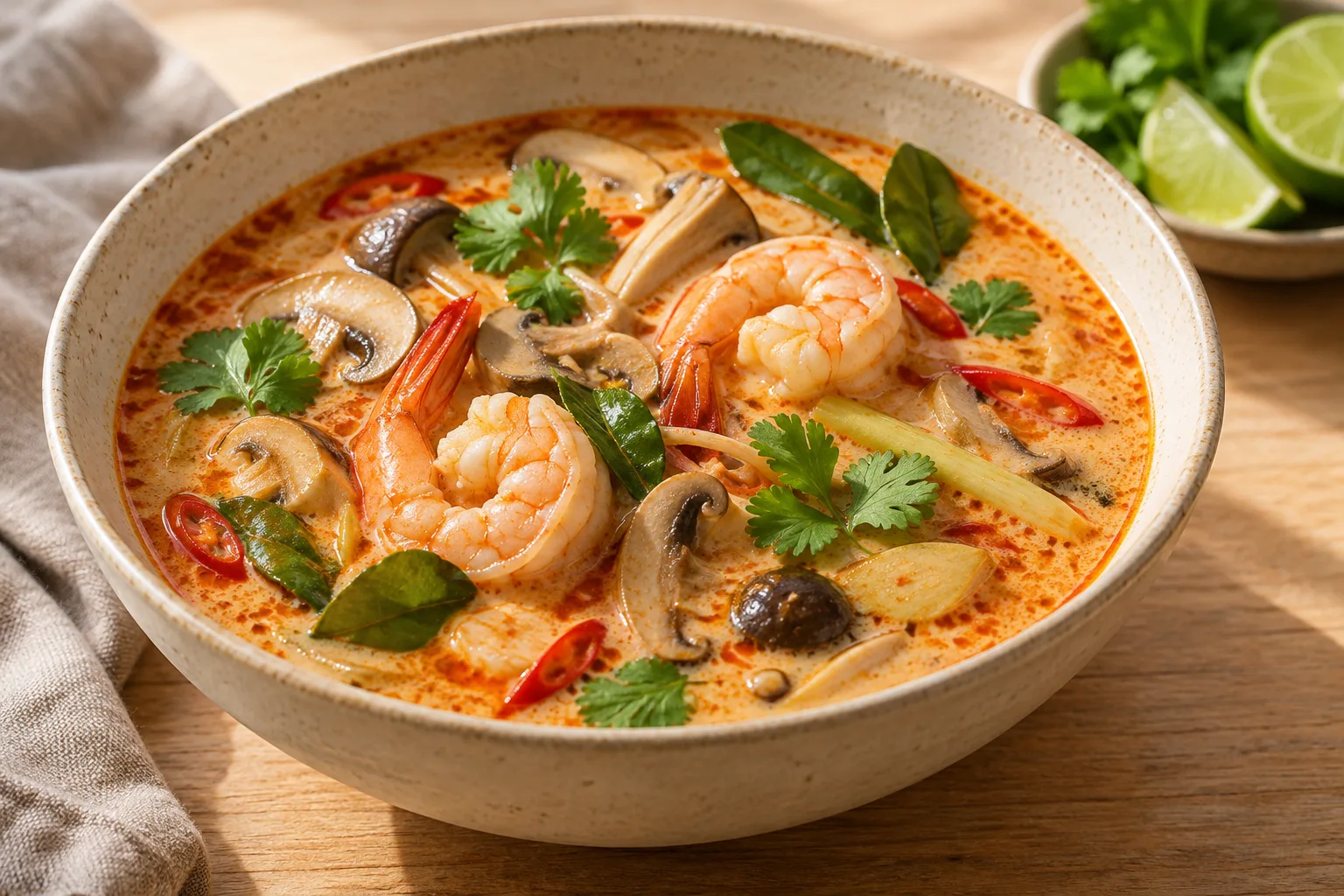
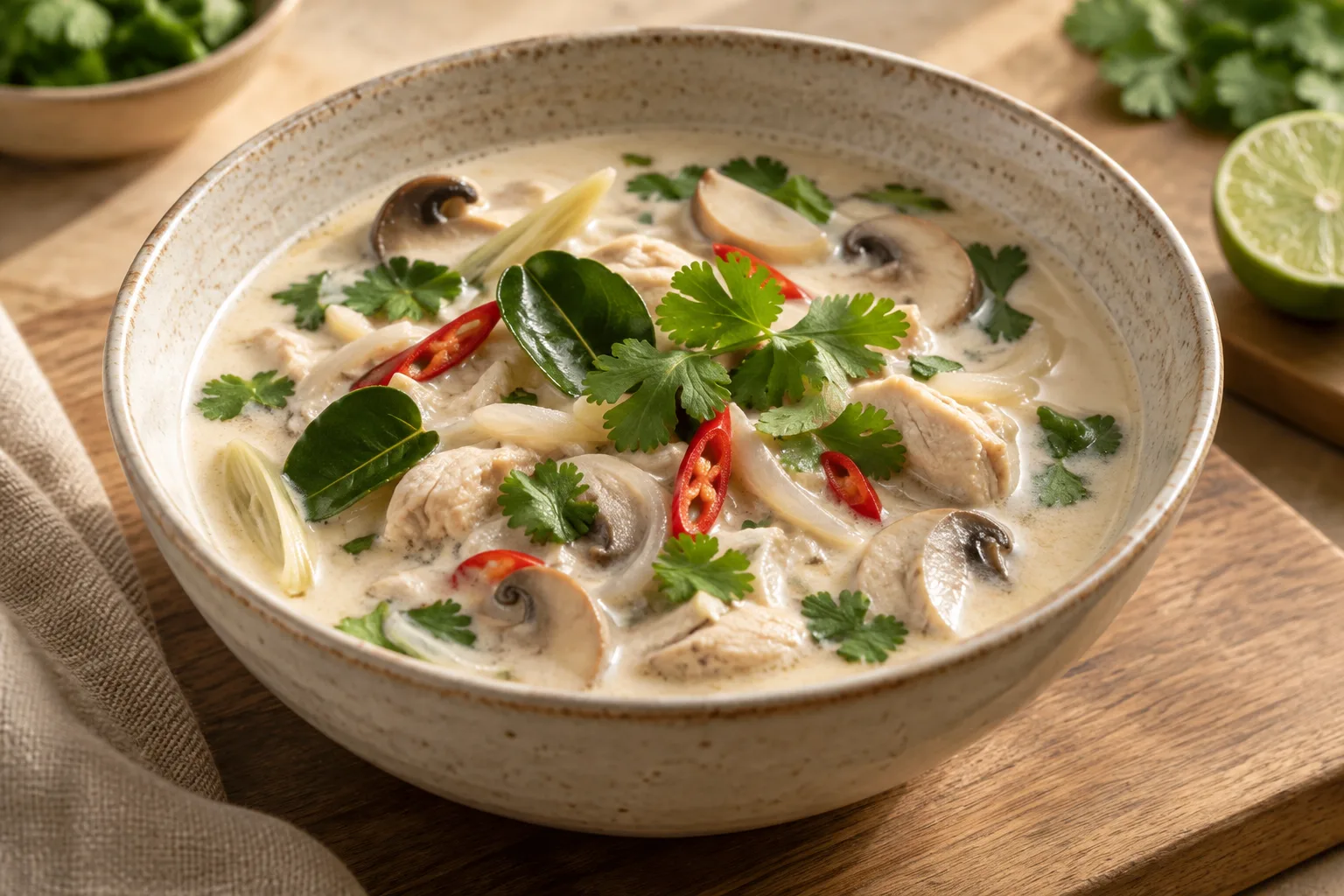
- Coconut-based soups and Thai-style curries
- Rice, fish, seafood, chicken and vegetables
Frequently asked questions
Are the leaves eaten whole?
They can be added whole to scent soups and curries, but their thick, somewhat tough texture makes it practical to remove them before serving. If you want to eat them, slice them very finely.
What do kaffir lime leaves taste like?
They have an intense citrus aroma with floral and herbal notes, distinct from ordinary lemon or lime.
What can I use if I cannot find these leaves?
Lemon or lime zest, regular lime leaves or lemongrass can provide related notes, but none reproduces their aroma exactly.
Sources and review
Automatically researched, cross-checked and validated content. Sources consulted:
- ¿Por qué la muerte es origen de miedos y tabúes? doi.org
- elBulli: un nuevo lenguaje en la gastronomía repositorio.ucjc.edu
- Qué es (y qué no es) la estadística, usos y abusos de una disciplina clave en la vida de los países y las personas | Estudios económicos doi.org
- biotecnología enzimática, industria alimentaria y ... repositorio.ucam.edu
- Race, Science, and the Language of Drug Control in the ... scholarworks.utep.edu
- Qué es la lima kaffir, ingrediente imprescindible de la cocina tailandesa directoalpaladar.com
- Lima Kaffir | Jardinería TOT en U en Valencia totenu.com
- Explorando los beneficios y usos de las hojas y fruta de Lima Kaffir picturethisai.com
- Comprar kaffir en fruta y hojas elsabordelmaset.com
- Lima Kaffir: el cítrico exótico que puedes cultivar en casa - Abonos Calsilla abonoscalsilla.com
- Hojas de Lima Kaffir — Open Spice Box openspicebox.com
- ¿Ya conoces las Hojas de Lima Kaffir? – Microgreens microgreens.pt
- 4 formas de usar hojas de lima Kaffir - wikiHow es.wikihow.com
- Cidra y lima kaffir | Umami Madrid umami-madrid.com