- Category
- Vegetables
- State
- Fresh
- Usual unit
- unit
What it is
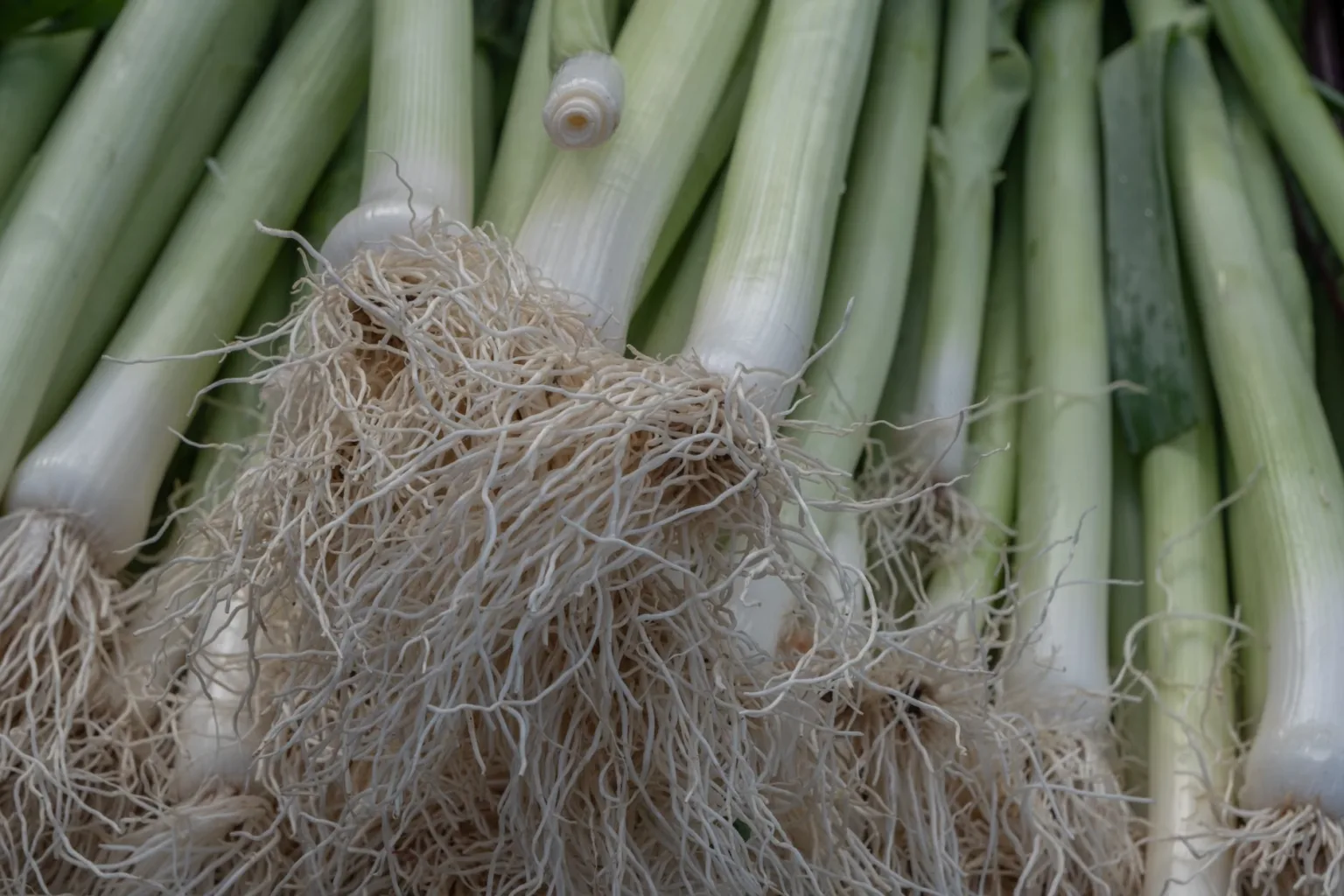
Leek is a vegetable from the species Allium ampeloprasum var. porrum, with culinary connections to onion and garlic. It has an elongated stem, a white section, and green leaves; both the stem and leaves are used in cooking. The name “large leek” describes the size of the item, not a specific variety established by the evidence available here. Its flavor is generally mild and slightly sweet, less forceful than onion. Depending on how it is prepared, it can become tender and soft or retain some bite. Soil can lodge between its layers, so clean the leek carefully before cutting or cooking it.
When to use it
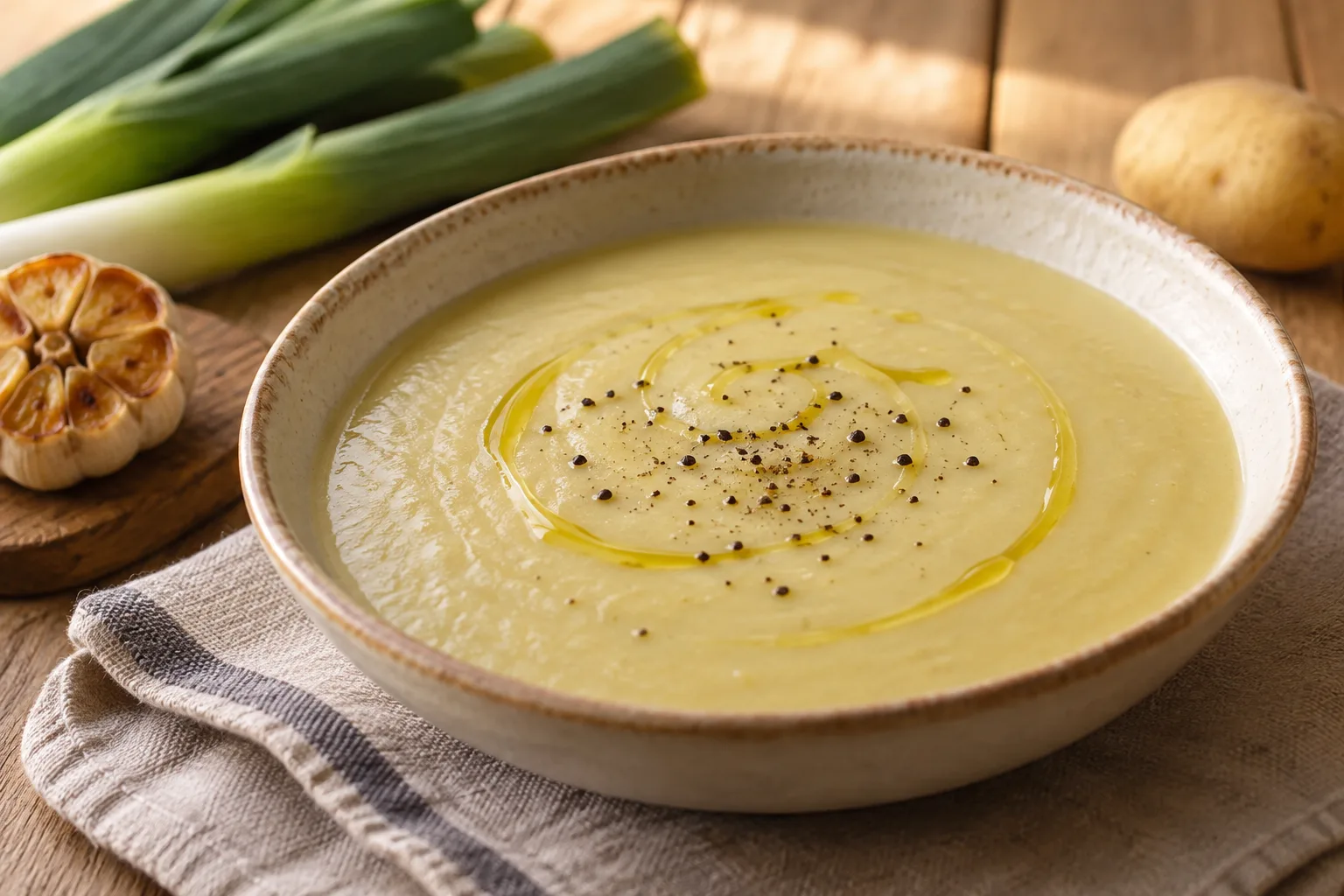
Choose leek when you want an aromatic base milder than onion, or a vegetable that contributes flavor without taking over a dish. It works in soups, creamy soups, stews, and purées, and can also be used in sautés, roasts, savory tarts, and salads. The white and green sections can both be included in cooked dishes; for a salad, slice the leek very thinly for a more pleasant texture. A large leek makes it convenient to cut broad pieces for roasting or rounds for sautéing.
How to use it
Trim away the roots and any damaged or very dry outer portions. Separate the leaves and split the leek lengthwise or slice it into rounds; rinse the layers with potable water to remove soil that may be trapped between them, then drain. Cut the white and green sections to suit the dish: rounds or chunks for soups and stews, larger pieces for roasting, or very thin slices for serving raw. To sauté, cook it with a little oil until softened; it can also be added to soup, stew, a creamy soup, or a purée. In savory tarts, it pairs well with egg and cheese. Choose the cut and cooking method for the texture you want, bearing in mind that not all parts soften at the same rate.
Flavour and texture
Leek tastes mild and slightly sweet, with an onion-like character that is less intense than onion itself. Cooking softens it and gives soups, purées, and stews a tender texture; larger roasted pieces can keep more definition. The white and green sections may differ in firmness, so the size of the cut affects the result. Raw leek tastes more assertive and is best sliced very thinly.
How to choose it
Choose leeks that look fresh and firm, with intact white and green sections and no obvious signs of deterioration. Consider size and thickness in relation to the recipe: a large leek is convenient for broad pieces or rounds, but size alone does not establish a particular variety or season. Avoid bruised or very wilted specimens, and buy an amount you can use while it still looks fresh.
Storage
Keep fresh leeks in the refrigerator and protect them from drying out and from transferring their aroma to other foods. Storage life can vary with initial freshness and storage conditions, so the available evidence does not support an exact time limit. If you cut the leek, keep the pieces covered and chilled, and use them soon. Leeks can also be frozen after brief blanching, cooling, and draining; this changes their texture and is more suitable for cooked dishes.
Substitutions
Onion can replace leek when you need an aromatic base, but its flavor is stronger: start with less and adjust to taste. Scallion may work in some dishes, although its flavor and texture will not be identical. Neither alternative exactly reproduces leek’s mildness and structure.
Common mistakes
Do not rinse only the outside: soil can be trapped between the layers, so separate or open them and rinse well. Avoid cutting leek too thickly when serving it raw, and do not automatically replace it with the same amount of onion, which has a stronger flavor. Do not assume every section has the same firmness.
Safety and allergens
Rinse leeks with potable water and discard damaged portions. The available evidence contains no leek-specific safety warning; follow any storage and use directions provided with the product.
Culinary uses
- base aromática suave
- verdura para sopas y guisos
- guarnición
- ingrediente para ensaladas y tartas saladas
Recommended techniques
- saltear
- asar
- cocinar en sopas o guisos
- cortar muy fino para servir crudo
Pairs well with
- patata
- huevo y queso
- otras verduras
- ajo y especias
Frequently asked questions
Which parts of a leek can you eat?
The white stem and green leaves are used. Remove the roots and damaged portions, and clean the layers thoroughly before cooking.
How do you clean a large leek?
Trim the roots, separate or open the layers, and rinse them with potable water to remove soil trapped between them. Drain and cut as needed.
Can leek be eaten raw?
Yes. Slice it very thinly for a more pleasant texture and use it in salads or other cold dishes.
Sources and review
Automatically researched, cross-checked and validated content. Sources consulted:
- En el etiquetado alimentario hay algunas menciones que son obligatorias eletiquetadocuentamucho.aesan.gob.es
- Client Challenge doi.org
- Explorando el puerro friolisa.es
- Puerro - Frutas Eloy frutaseloy.com
- Los secretos del puerro: un superalimento con grandes beneficios - concadelatordera.com concadelatordera.com
- Puerro Propiedades Usos y Cultivo para Salud y Cocina flores.ninja
- NC conservas vegetales mapa.gob.es
- Cold Storage Chart & Reference Guide rvpadmin.cce.cornell.edu
- FOCUS ON WHOLE FRUITS: How to Select and Store Fruit | NDSU Agriculture ndsu.edu
- Cultivo de puerros en huertos familiares | Extensión de la UMN es.extension.umn.edu
- How to Cook Porterhouse Steak for Beginners • southernwv.edu staging.southernwv.edu
- Storing Fresh Fruits and Vegetables (G1264) extensionpubs.unl.edu
- Fruit Pureés - National Center for Home Food Preservation nchfp.uga.edu
- Puerto Rican Cookery: A Layered Cuisine - Culinary Chronicles - LibGuides at Conrad N. Hilton Library library.culinary.edu