- Category
- Vegetables
- State
- Fresh
- Usual unit
- unit
What it is
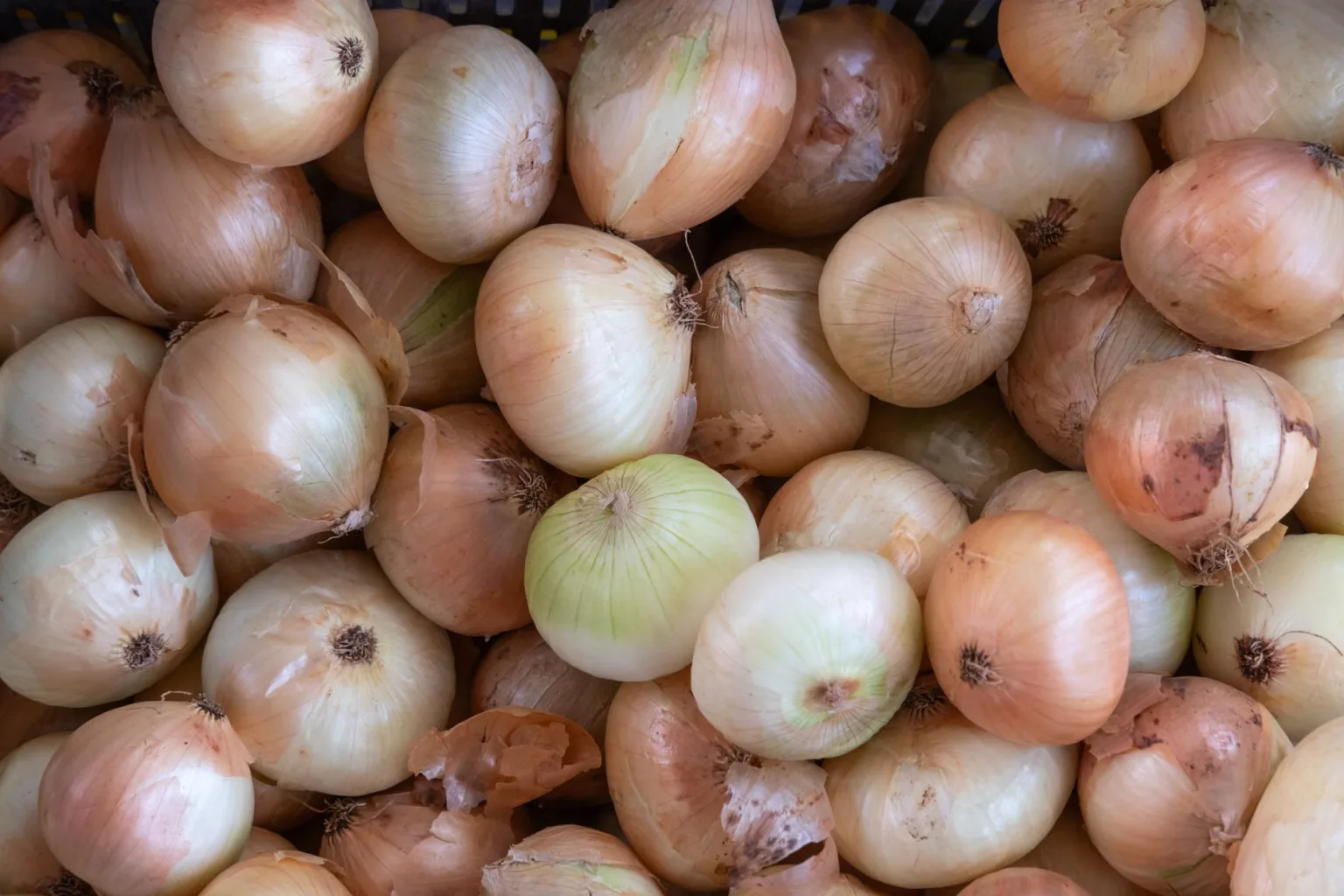
A large onion is a fresh onion described by its relative size; the name alone does not identify a specific variety or define an exact size. Onion is the edible bulb of Allium cepa, made up of overlapping fleshy layers. Varieties differ in size, shape, color and flavor: onions may be white, yellow or purple, with a taste ranging from mild or sweet to pungent. A large onion can therefore serve as a main vegetable or as part of an aromatic base, but the result depends on the particular onion and how it is prepared.
When to use it
Use a large onion whenever you want onion flavor and texture in a dish, raw or cooked. Raw onion can go into salads and other fresh preparations; cooked onion works in soups, sauces, stews, sautés, roasts and baked dishes. Slow cooking can soften it and bring out a sweet, caramelized character. Since “large” does not specify a variety or level of pungency, taste a small raw piece if the balance of the dish depends on how strong the onion is.
How to use it
Remove the outer skin, then slice, cut into half-moons or dice the onion to suit the dish. For salads and other raw preparations, choose a cut that distributes easily among the other ingredients. For a cooked base, fry or sauté it; you can also boil, roast or bake it with other ingredients. For a very soft texture and sweeter flavor, cook it slowly until softened and browned. Piece size and variety affect the final texture and intensity, so match the cut and cooking method to the recipe rather than assuming every large onion will behave the same way.
Flavour and texture
Onion flavor can be pungent, mild or sweet depending on the variety. Raw onion is usually crisp and more direct in flavor; cooking softens it, while slow cooking can produce a sweet, caramelized result. Color, size and intensity also vary: “large” describes relative size, not a single flavor profile.
How to choose it
Choose onions that feel firm and hard, with a short neck. Avoid onions that are damp, spotted or have a very soft neck; these can be past their best or not fully formed. Color and shape vary between varieties, so do not expect every large onion to look alike. If you need a particularly mild or strong flavor, check the variety when that information is available.
Storage
Keep whole onions in a cool, dry place. Once cut, wrap the onion in plastic film and store it in the refrigerator. Follow package directions when provided, since recommended conditions can depend on how the product is presented. Check the onion before use and discard specimens with obvious deterioration.
Substitutions
Shallot, leek and spring onion are related allium options, but they are not exact replacements: they can change a dish’s intensity, texture and appearance. Choose according to whether you need a cooked base or a fresh allium flavor, and start with a moderate amount if you do not know how strong the alternative is. The availability of different alliums does not mean they taste the same.
Common mistakes
Treating every large onion as though it were the same variety can produce a dish that is more pungent, sweet or mild than expected. Do not ignore dampness, spots or a very soft neck when selecting one. Also, do not store a cut onion as though it were whole: wrap it and refrigerate it. Match the cut and cooking method to the intended use.
Safety and allergens
Check package information and any stated storage or use directions. Sulphites may be present in some packaged onions; if you need to avoid this allergen, check the product information before eating.
Culinary uses
- Aromatic base for soups, sauces and stews
- Vegetable served raw or cooked as part of a dish
Recommended techniques
- Slice or chop for raw preparations
- Fry, sauté, boil, roast or bake
- Cook slowly for a soft, sweet, caramelized result
Pairs well with
- Soups and stews
- Sauces and sautés
- Salads and other raw preparations
Frequently asked questions
Does “large onion” mean a specific variety?
Not necessarily. It describes relative size, while onion varieties can differ in color, shape and pungency.
Can a large onion be eaten raw?
Yes. Slice it for salads and other raw preparations; its intensity depends in part on the variety.
How should I store an onion after cutting it?
Wrap it in plastic film and keep it in the refrigerator.
Do all onions contain sulphites?
The evidence indicates that sulphites may be present in some packaged onions, not that they are present in every onion. Check product information if you need to avoid them.
Sources and review
Automatically researched, cross-checked and validated content. Sources consulted:
- En el etiquetado alimentario hay algunas menciones que son obligatorias eletiquetadocuentamucho.aesan.gob.es
- Client Challenge doi.org
- Cooking Food Storage | USU extension.usu.edu
- ::AESAN:: Agencia Española de Seguridad Alimentaria y Nutrición aesan.gob.es
- Cebolla - Información general frutas-hortalizas.com
- Conoce 15 tipos de cebolla y sus usos en la cocina - Mejor con Salud mejorconsalud.as.com
- Guía completa de tipos de cebolla: variedades, propiedades y usos culinarios jardineriaon.com
- La cebolla, ese humilde ingrediente tan fundamental | Gastronosfera gastronosfera.com
- Cold Storage Chart & Reference Guide rvpadmin.cce.cornell.edu
- How to Cook Nopales for a Flavorful Experience • southernwv.edu staging.southernwv.edu
- Chile de Venado en Olla de Cocción Lenta | University of Maryland Extension extension.umd.edu
- Cebollín | Postharvest Research and Extension Center postharvest.ucdavis.edu
- Unlock the Flavor Secret: Cebollin's Surprising Culinary用途 - CodeForge Studio 6857simon.csail.mit.edu
- Kohlrabi | Real Life, Good Food - University of Minnesota reallifegoodfood.umn.edu
- Cebolla | Introducción | Verduras y hortalizas | EROSKI CONSUMER verduras.consumer.es