- Category
- Vegetables
- State
- Fresh
- Usual unit
- unit
What it is
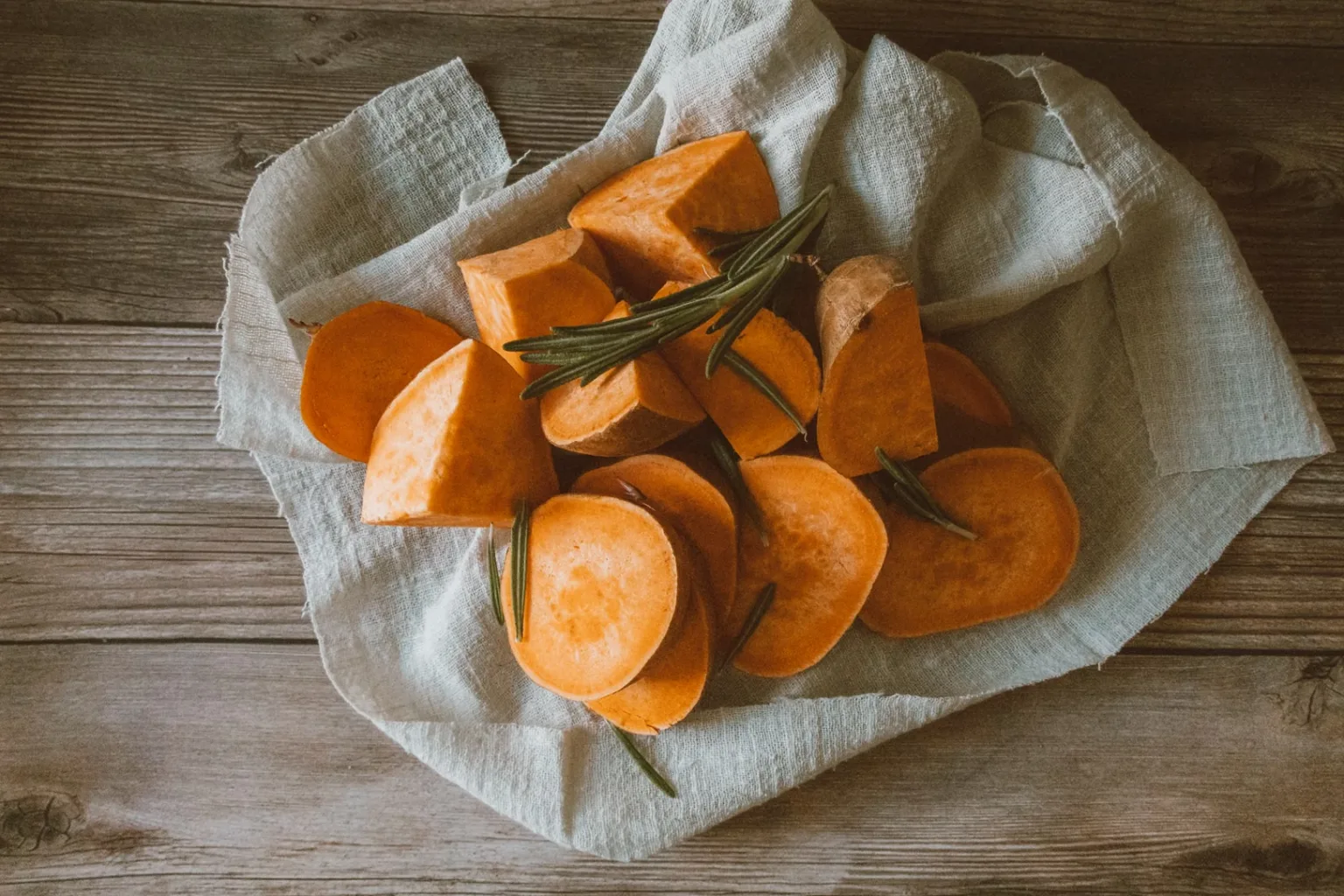
Sweet potato, also called boniato, batata, or camote in some regions, is the edible root of Ipomoea batatas, a member of the morning-glory family. Large describes the size of the piece, not a particular variety. The flesh may be white or cream, yellow, orange, or purple, and these differences can come with changes in flavor and texture. In particular, white-fleshed boniato may be drier, fluffier, and less sweet than orange-fleshed sweet potatoes. The outside appearance alone therefore does not tell you exactly how a large sweet potato will taste or behave when cooked.
When to use it
Use large sweet potatoes when you want a piece to serve as a side, include in a savory dish, or turn into a sweet preparation. Roasted or boiled, they can be served with a simple seasoning: cinnamon steers the dish toward a sweet profile, while garlic and aromatic herbs suit a savory one. Choose and season with the variety’s sweetness and moisture in mind. White-fleshed boniato can be drier and less sweet, while other varieties differ. Do not assume that all large sweet potatoes will cook or taste alike.
How to use it
Choose a preparation for the result you want: roasted sweet potato can be served as a side or contribute sweetness and texture to sweet dishes; boiled sweet potato can be added to other dishes or used in desserts. The available evidence supports these cooking methods but does not specify times or temperatures, so check the texture as you cook and follow your recipe. Finish a sweet version with cinnamon, or a savory one with garlic and aromatic herbs. If swapping white flesh for orange, or the reverse, allow for differences in moisture and sweetness. Adjust the seasoning and consistency to the result rather than relying on size alone.
Flavour and texture
Flavor and texture depend on variety, not just size. White-fleshed boniato can be milder, less sweet, and drier or fluffier than orange-fleshed sweet potatoes. Other varieties differ, so it is more useful to describe them by flesh color and cooking result than to assign one texture to all large sweet potatoes.
How to choose it
Choose pieces that look intact and suit the way you plan to use them; the available evidence does not establish a universal set of visual signs for selecting fresh sweet potatoes. If possible, ask about the flesh color or variety, since these can help you anticipate differences in sweetness and moisture. For packaged products, check the label to confirm the food’s identity and read any applicable directions.
Storage
Storage guidance can vary by sweet potato type. For the white-fleshed boniato described by the horticultural source, a cool, dry pantry is recommended, and refrigeration is described as potentially too cold. Do not automatically apply that guidance to every variety. If the product is packaged, follow its storage instructions, and do not assume a specific shelf life without product-specific information.
Substitutions
White-fleshed boniato can replace orange-fleshed sweet potato in many recipes, but the result may be drier and less sweet. In the other direction, orange-fleshed sweet potato may be sweeter and moister than white boniato. Adjust the consistency and seasoning for these differences; the ingredients are not exact equivalents just because both are called sweet potato.
Common mistakes
A common mistake is treating every variety as equally sweet and moist. White-fleshed boniato can be drier and less sweet than an orange-fleshed type, so swapping them may change a recipe. Do not rely on size alone to predict the result, or apply storage advice for one specific type to every variety.
Safety and allergens
For packaged sweet potatoes, check the label and follow its storage and use directions. The available evidence does not provide a specific safety warning for whole fresh sweet potatoes or a general storage duration.
Culinary uses
- Starchy vegetable for sides and main dishes
- Sweet ingredient for desserts and baking
Recommended techniques
- Roasting
- Boiling or cooking until tender
Pairs well with
- Cinnamon for sweet preparations
- Garlic and aromatic herbs for savory dishes
Frequently asked questions
Do all large sweet potatoes taste the same?
No. Flavor and texture vary by variety; white-fleshed boniato may be less sweet and drier than an orange-fleshed type.
How can I cook large sweet potatoes?
You can roast or boil them and use them in sweet or savory dishes. Cinnamon suits a sweet profile; garlic and aromatic herbs suit a savory one.
Can I refrigerate sweet potatoes?
The source recommends a cool, dry pantry for the white-fleshed boniato it describes and notes that refrigeration may be too cold. Do not assume the same guidance applies to every variety.
Sources and review
Automatically researched, cross-checked and validated content. Sources consulted:
- En el etiquetado alimentario hay algunas menciones que son obligatorias eletiquetadocuentamucho.aesan.gob.es
- Aesan - Agencia Española de Seguridad Alimentaria y Nutrición aesan.gob.es
- Client Challenge doi.org
- Cooking Food Storage | USU extension.usu.edu
- Boniato: ¿Cuáles son sus usos? | Recetas Nestlé recetasnestlecam.com
- El boniato: Historia y origen | Huercasa huercasa.com
- Análisis del origen del boniato: beneficios para tu huerta huertadelsello.es
- Alimento de temporada: Boniato quironprevencion.com
- Boniato – Gardening Solutions gardeningsolutions.ifas.ufl.edu
- Boniato Ipomoea batatas When to Plant: Spring, intolerant to frost greenu.miami.edu
- Identifying Boniato-Type Sweetpotato Cultivars Adapted to NC Growing Conditions-2003 Report - New Crops & Organics | NC State Extension newcropsorganics.ces.ncsu.edu
- Using & Storing Green Beans | Home & Garden Information Center hgic.clemson.edu
- Preparing an Emergency Food Supply, Long Term Food Storage | Food Preservation | Food | Extension | UGA FACS fcs.uga.edu
- Vamos a Conservar Alimentos: Chiles/Pimientos extension.psu.edu
- Bon Appétit catering staff tackles everything from Saint Martin’s meals to your next big event | Saint Martin's University stmartin.edu
- Michigan Fresh: Using, Storing, and Preserving Beets (HNI10) - Michigan Fresh canr.msu.edu
- Tipos de boniatos o batatas: variedades, características y usos jardineriaon.com