- Category
- Herbs and spices
- State
- Fresh
- Usual unit
- unit
What it is
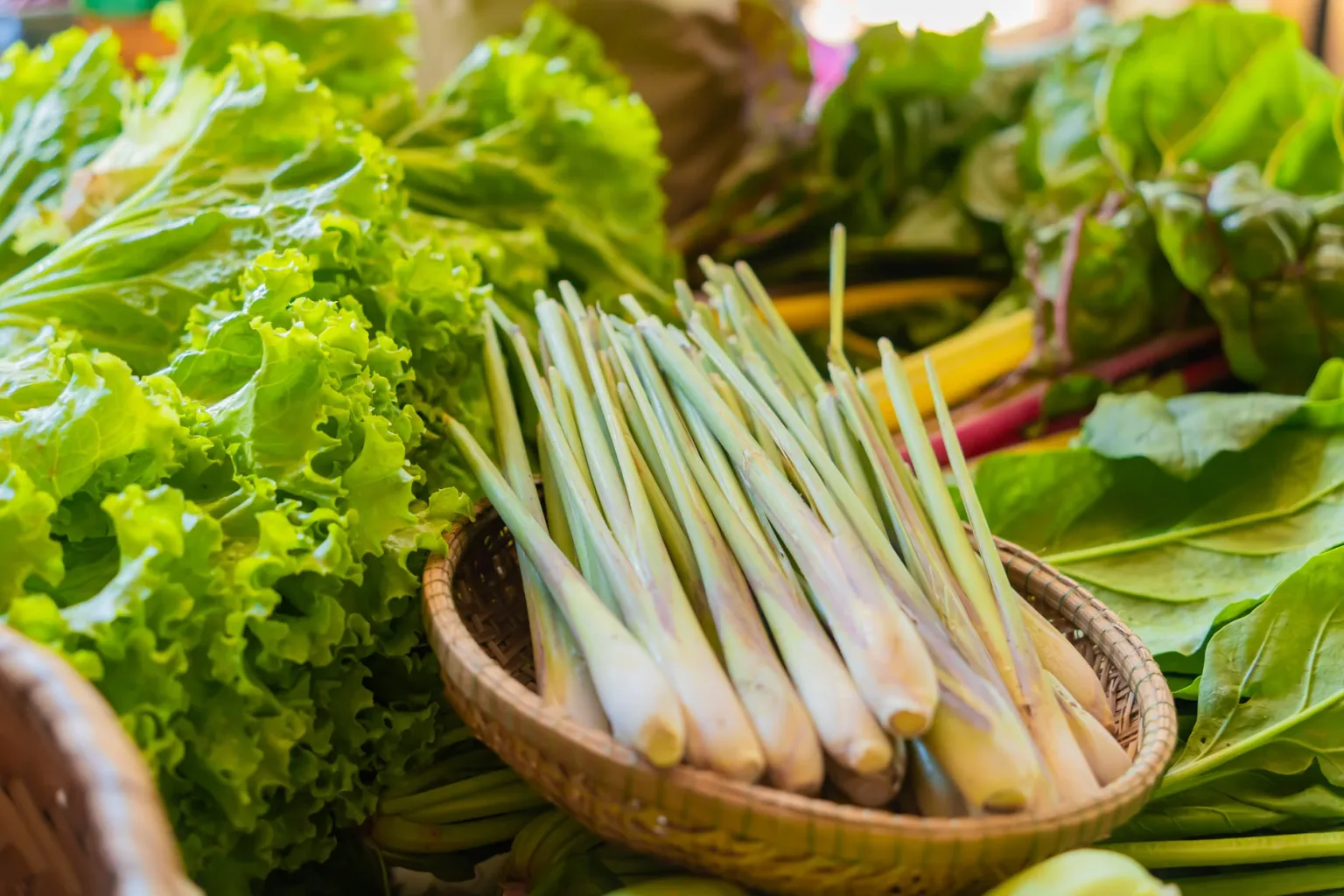
Lemongrass, also called lemon grass or citronella grass in some culinary contexts, is an aromatic grass-family herb. In cooking, the stalk is used most often. Its scent suggests lemon without bringing the same acidity as lemon juice. The stalk has tough outer layers and a paler, more tender center. Fresh lemongrass can be chopped or used whole to flavor food, and it is also sold dried or ground. It should not be confused with other lemon-scented plants such as lemon balm or lemon verbena: these are different ingredients and do not have exactly the same flavor profile.
When to use it
Use lemongrass when you want an aromatic citrus note without adding the sharp acidity of lemon juice. It works in soups, broths, curries, stir-fries, and marinades, and pairs well with fish, seafood, poultry, or meat. To flavor a liquid, add a bruised or roughly cut stalk and remove it if you do not want fibrous pieces in the finished dish. If you want the herb in every bite, use the tender inner portion and chop it very finely.
How to use it
Peel away the tough outer layers and trim the base to reach the tender part of the stalk. For soups, broths, and stews, bruise or crush the stalk before adding it so it can release its aroma into the cooking liquid. Cut it into large pieces if you plan to remove them before serving. For salads, pasta, sauces, or marinades that will not be strained, use the tender center and chop it very finely, since the fibers can be chewy. Dried or ground lemongrass is also available, but its freshness and texture differ from those of the fresh stalk.
Flavour and texture
Its aroma is clean, green, and distinctly citrusy, with a fresh quality reminiscent of lemon but without its pronounced acidity. Depending on the preparation, it may also seem lightly floral or spicy. The outer stalk is tough and fibrous; once peeled, the center is more tender and can be chopped. Whole or roughly cut, it mainly acts as a flavoring; finely chopped, it contributes flavor and texture to each bite.
How to choose it
Choose fresh stalks that feel firm and are pale green toward the base; avoid ones that look dried out or very brown. If possible, check that they have a recognizable citrus aroma and are not soft. Lemongrass is sold fresh, dried, and ground, so check the label: each form behaves differently in a recipe.
Storage
For fresh lemongrass, one culinary source recommends wrapping it and keeping it refrigerated for two to three weeks, or freezing it for up to six months. Storage depends on the product's condition and home conditions, so inspect the stalks before use and discard any that show spoilage. Store dried or ground forms according to the package directions.
Substitutions
Lemon zest can provide a citrus note when fresh lemongrass is unavailable, but it does not reproduce the herb's green aroma or stalk texture. Replacing fresh lemongrass with dried or ground product changes both the flavor profile and how the flavor is distributed; add cautiously and adjust to taste. Lemon may work as a flavor alternative, but its acidity will also change the dish.
Common mistakes
Do not chop the tough outer stalk as if it were a leafy herb: it can remain hard and stringy. For infusing, bruise the stalk and remove large pieces before serving; for eating, peel and finely chop the tender part. Also, do not assume that lemongrass and other lemon-scented plants are interchangeable without changing the flavor.
Safety and allergens
Buy lemongrass identified as a culinary ingredient and follow the handling directions from the seller or package. If you cannot identify a plant with confidence, do not gather or use it as food.
Culinary uses
- Aromatizante cítrico para sopas, caldos y guisos
- Hierba aromática para salteados, marinadas, salsas e infusiones
Recommended techniques
- Golpear o aplastar el tallo para liberar aroma antes de incorporarlo a sopas y guisos
- Picar muy fino la parte tierna para usarla en crudo, ensaladas, pastas o aderezos
- Infusionar en líquidos y retirar las piezas fibrosas antes de servir, si se desea una textura más suave
Pairs well with
- Pescado y marisco
- Aves y carnes
- Jengibre, chile y lima en preparaciones aromáticas
- Arroz, sopas y curris
Frequently asked questions
Which part of lemongrass do you use?
The stalk is commonly used. Peel away the tough outer layers and use the tender inside; leave it in large pieces for infusing or chop it very finely if it will be eaten.
Can lemongrass be eaten raw?
Yes. The tender part can be finely chopped for salads, pasta, dressings, or sauces. Avoid using the tough outer fibers without finely chopping them.
What can I use if I do not have fresh lemongrass?
Lemon zest adds a citrus note, but not the same aroma or texture. Dried or ground lemongrass is another option; adapt its use to the form and recipe.
Sources and review
Automatically researched, cross-checked and validated content. Sources consulted:
- The Essential Glossary of Cooking Terms for the Culinary Arts - Escoffier escoffier.edu
- Nutrition After Your Transplant - Health Online healthonline.washington.edu
- Comité Científico aesan.gob.es
- EFNEP Hispanic Heritage Recipes | Community Nutrition | Extension/College of Agriculture, Health & Natural Resources | University of Connecticut communitynutrition.cahnr.uconn.edu
- Fresh Herbs | UNL Food | Nebraska food.unl.edu
- Reimagining Marginalized Foods open.uapress.arizona.edu
- Lemon-Scented Herbs in the Garden and the Kitchen extension.psu.edu
- Wild Edibles: Stinging Nettle | OSU Extension Service extension.oregonstate.edu
- facts for consumer education - AgEcon Search ageconsearch.umn.edu
- Assessing Food Access in Oregon's Willamette Valley pdxscholar.library.pdx.edu
- Hierba Limón: Características y Recetas | Enciclopedia... cocinista.es
- Lemongrass o citronella: qué es, propiedades, beneficios y usus en cocina asiática directoalpaladar.com
- Limonaria: sabor, usos y blends de té | Alveus alveus.eu