- Category
- Grains, flour and pasta
- State
- Dry
- Usual unit
- g
What it is
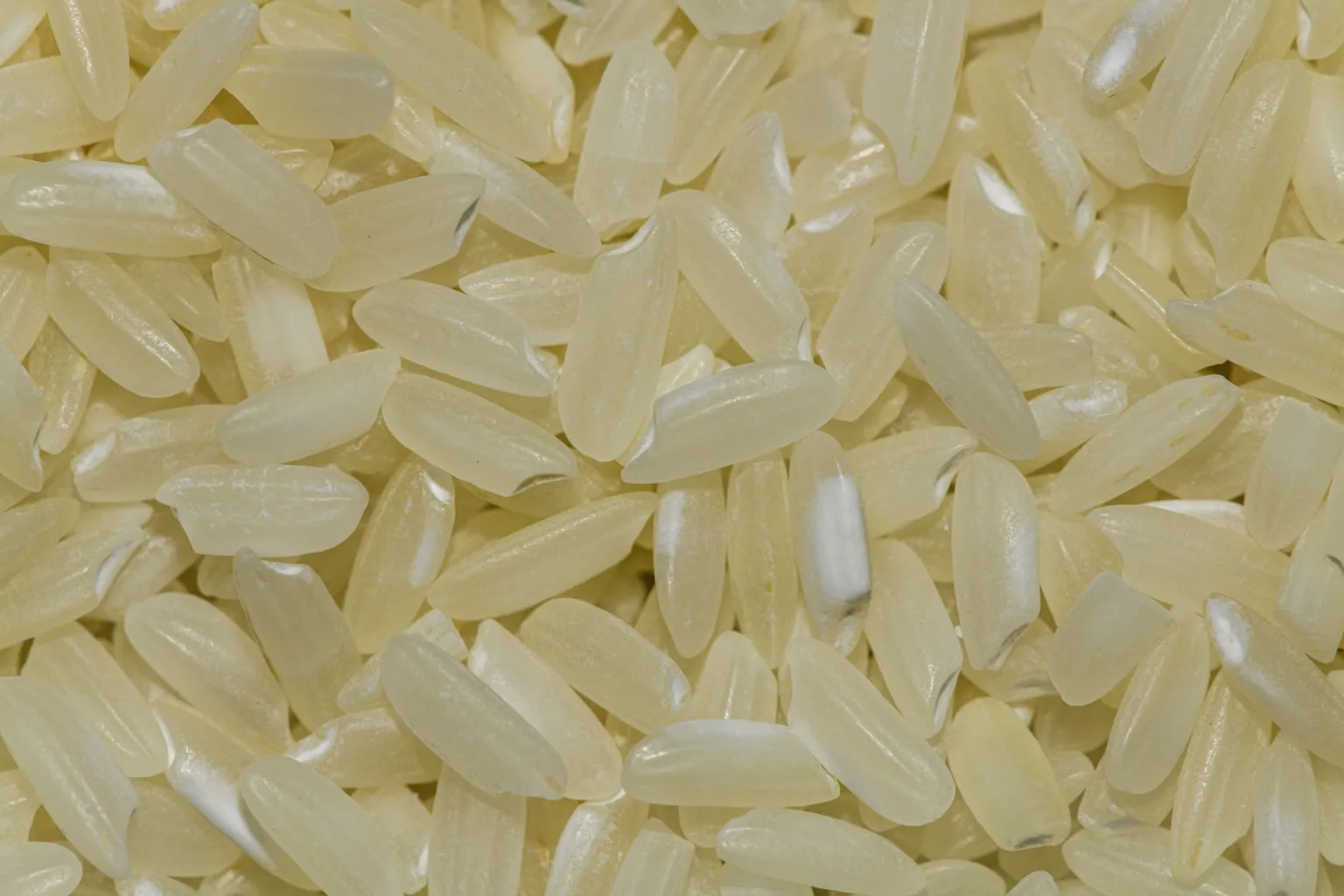
Long-grain rice is dry rice with kernels that are distinctly elongated. The name describes the grain shape, not one single variety or processing method: aromatic long-grain varieties include basmati and jasmine, and rice is also sold with different levels of processing. In polished white rice, the hull and bran have been removed; grain shape and the texture after cooking are separate characteristics from the degree of polishing. As a practical guide, white long-grain rice tends to cook up firm, fluffy and less sticky than medium- or short-grain rice. Check the package to identify the variety and follow its directions, because liquid amounts and results can vary between products.
When to use it
Choose long-grain rice when you want kernels that tend to remain separate, firm and fluffy after cooking. It works well as a side dish, in rice salads and in Asian-inspired dishes. You can also add it to soups, stews or casseroles when the recipe allows the rice to cook in and absorb liquid. It is not the best choice when you deliberately want a compact, sticky texture, which is more typical of short-grain rice. If the package names an aromatic variety, remember that its fragrance is part of the rice’s character and can influence the dish.
How to use it
Before cooking, check the rice type and read the package directions; the amount of water and stated cooking time can differ by product. For a simple preparation, combine the rice with water, bring the liquid to a boil, then continue cooking at a gentle simmer with the pot covered until the rice is ready. Do not treat a general ratio as a universal rule: use the package directions and the recipe as your guide. You can also add uncooked rice to a soup, stew or casserole with enough liquid for it to cook and absorb. In salads, side dishes and stir-fries, use it when you want a preparation built around separate grains; season or pair it with the ingredients specified in the recipe.
Flavour and texture
Long-grain rice usually has a mild flavor that readily takes on the seasonings in a dish. Once cooked, white long-grain rice tends to be firm, light and fluffy, with separate kernels and less stickiness than short-grain rice. Aroma and flavor are not identical across all products: basmati and jasmine, for example, are aromatic long-grain varieties. Processing also distinguishes products, so check the package before expecting a particular texture.
How to choose it
Choose a package that clearly identifies the product as long-grain rice and, if it matters for your recipe, check whether it specifies basmati, jasmine or another variety. Make sure the package is intact and inspect the grains for insects or visible discoloration. Grain shape helps distinguish it from medium- and short-grain rice, but does not by itself tell you whether it is aromatic or exactly how it should be cooked. To get the result you want, compare the label with your recipe and follow the manufacturer’s directions.
Storage
Keep uncooked rice in a tightly sealed container in a suitable storage area, protected from insects and moisture. Before storage, inspect the grains for insects or discoloration. After opening the package, reseal it or transfer the rice to a clean, airtight container. Cooked rice is a different product: follow official food-safety guidance that applies to cooked foods, and do not infer its storage conditions from advice for uncooked rice.
Substitutions
Basmati and jasmine are long-grain alternatives; their aroma may differ from unspecified long-grain rice. Medium-grain rice can also work if the recipe allows a softer, somewhat stickier result. Do not expect short- or medium-grain rice to reproduce the separate texture of long-grain rice exactly. If the recipe depends on a particular texture, choose another long-grain rice and adjust the method to its package directions.
Common mistakes
A common mistake is assuming that every long-grain rice has the same aroma or needs exactly the same amount of water and cooking. Check the package and avoid substituting short-grain rice when you want a separate texture. It is also easy to leave an opened package poorly sealed: an airtight container helps protect rice from insects and moisture. Do not use storage advice for uncooked rice as if it also described cooked rice.
Safety and allergens
Use a product with intact packaging and follow its preparation directions. For mixed, seasoned or prepared rice products, check the label for listed ingredients and allergens; do not assume that every rice product has the same composition.
Culinary uses
- Side dish
- Base for salads and rice dishes
Recommended techniques
- Simmer covered in water, following the package directions
- Cook directly in soup, stew, or casserole with liquid
Pairs well with
- Vegetables in rice salads or side dishes
- Seasoned dishes and broths
Frequently asked questions
What texture does cooked long-grain rice usually have?
White long-grain rice tends to cook up firm and fluffy, with separate kernels, though the product and preparation matter.
Is all long-grain rice basmati or jasmine?
No. Basmati and jasmine are examples of aromatic long-grain varieties; the term can also describe other elongated rice.
How should I cook it?
Follow the package directions. As a general method, cook it with water and then simmer it covered until ready.
Estimated nutrition
- Fat
- 0.66 g
- Saturates
- 0.18 g
- Carbohydrate
- 80 g
- Sugars
- 0.12 g
- Fibre
- 1.3 g
- Protein
- 7.13 g
- Salt
- 0.01 g
Sources and review
Automatically researched, cross-checked and validated content. Sources consulted:
- En el etiquetado alimentario hay algunas menciones que son obligatorias eletiquetadocuentamucho.aesan.gob.es
- Cocinamos con arroz | University of Maryland Extension extension.umd.edu
- Client Challenge doi.org
- Aesan - Agencia Española de Seguridad Alimentaria y Nutrición aesan.gob.es
- Tipos de arroz y para qué sirve cada uno en la cocina hogarmania.com
- Usos y variedades del arroz - Divina Cocina divinacocina.es
- How to Cook Nopales for a Flavorful Experience • southernwv.edu staging.southernwv.edu
- Arroz Panel de Hogares Enero 2007 – Diciembre 2007 mapa.gob.es
- Arroz integral - Spend Smart Eat Smart spendsmart.extension.iastate.edu
- Storing White Rice | USU extension.usu.edu
- Arroz Español | Extension extension.unh.edu
- Recipe: Filipino "Arroz Caldo" | Institute of Culinary Education ice.edu
- (PDF) Secado y Almacenaje de Arroz academia.edu
- [Video] How to Cook Arroz Caldo | BU Today | Boston University bu.edu
- 10 recetas de arroces con las claves para que siempre queden en su punto bonviveur.com
- Hablemos de arroces - BuleBar bulebar.es