- Category
- Grains, flour and pasta
- State
- Other
- Usual unit
- g
What it is
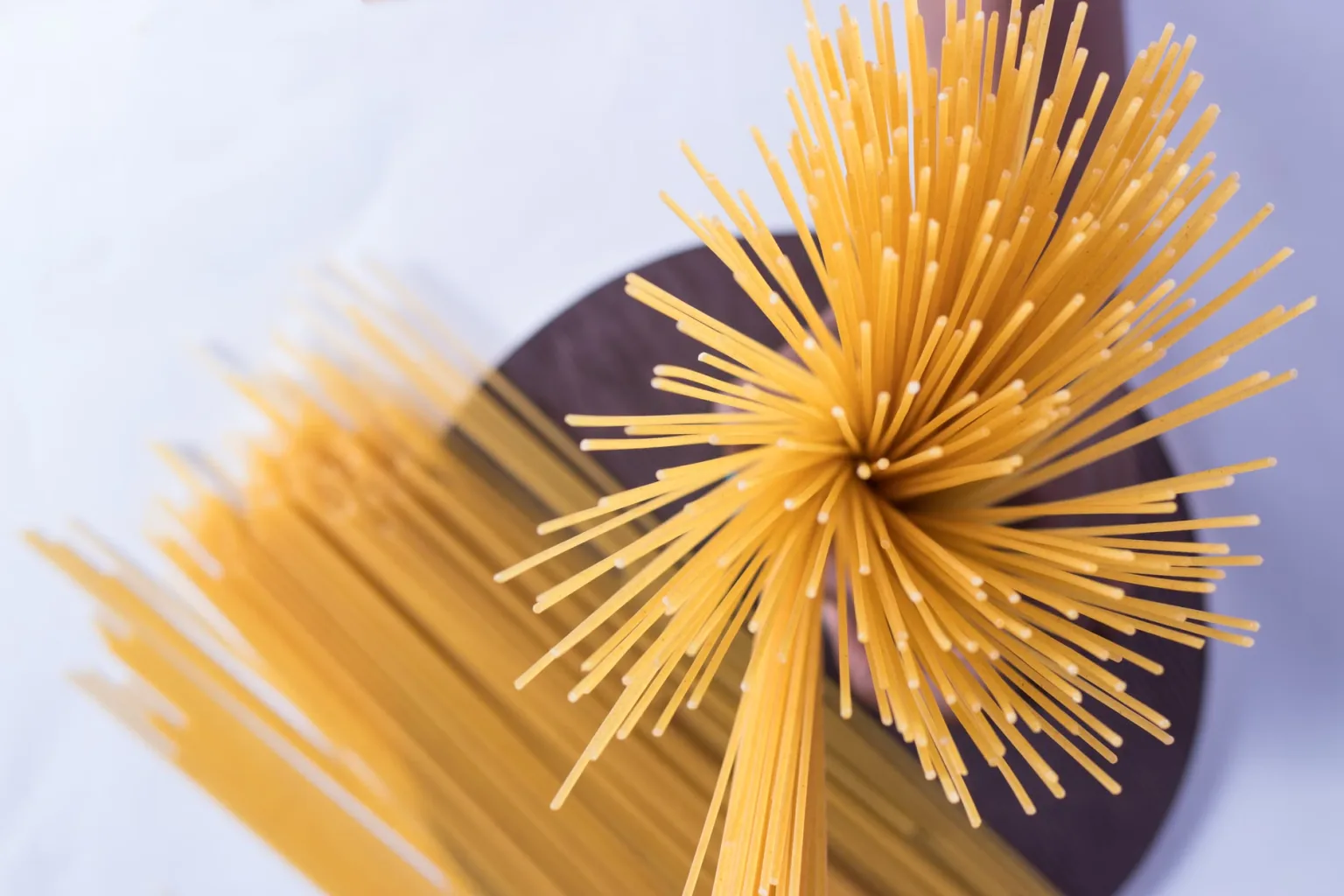
Long pasta is a category defined mainly by its elongated shape, not by one fixed recipe or ingredient list. It includes thin, round strands such as spaghetti, flat ribbons such as fettuccine, and hollow shapes such as ziti or bucatini. Thickness, surface and composition also vary. Long pasta may be fresh or dried and can be made with different flours or include egg and other ingredients. The label “long pasta” alone therefore cannot tell you the cooking needs, finished texture or allergens of a particular product. Check the specific shape and read its ingredient and use information.
When to use it
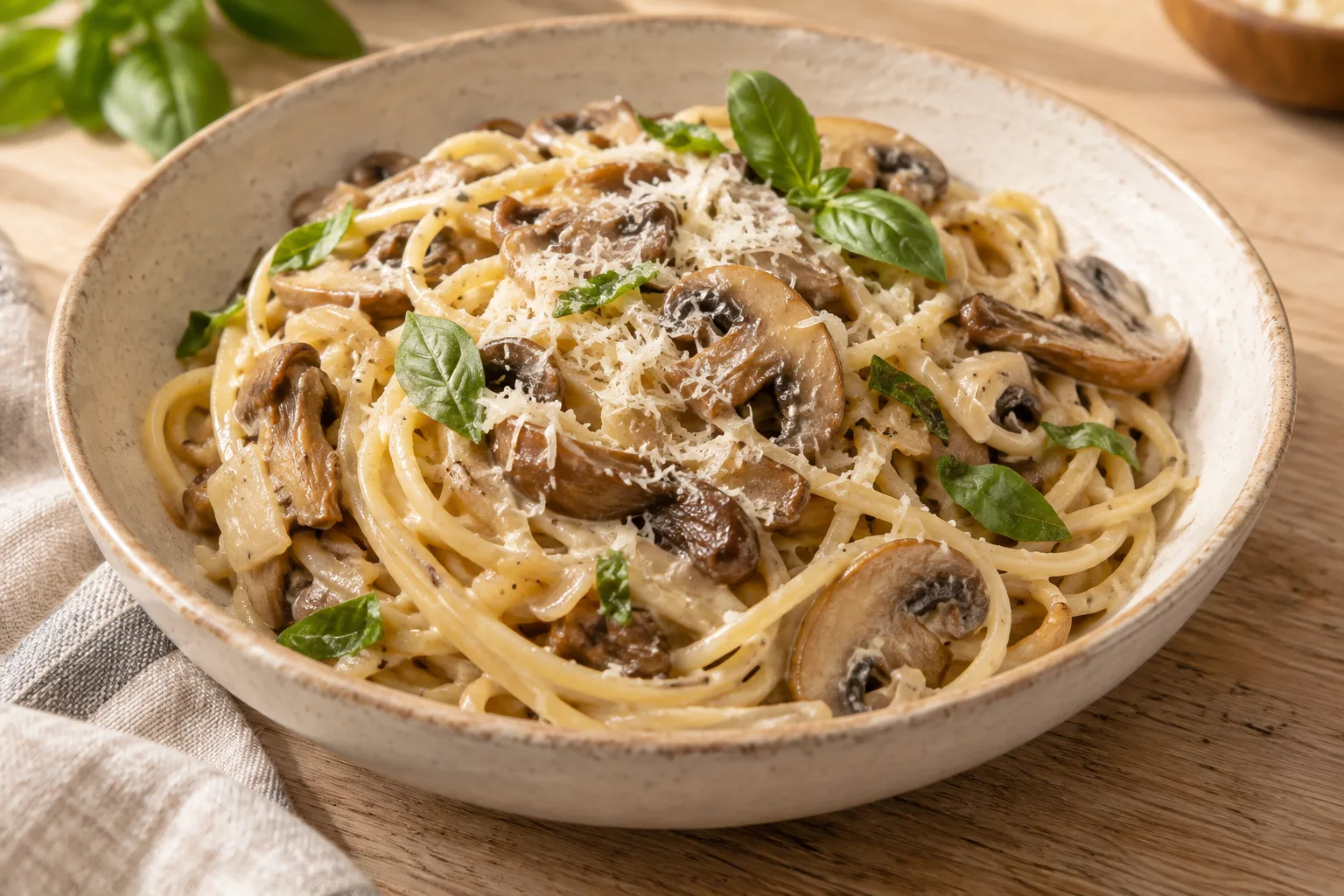
Choose long pasta when you want strands or ribbons that can be mixed with a sauce and twirled onto a fork. Fine round shapes may suit light sauces or combinations such as garlic and oil; other formats are served with tomato, pesto or ragù. Shape does not dictate a single recipe: consider whether the pasta is fresh or dried, as well as its thickness and ingredients. Some long noodles can be used in soups, but choose a recipe intended for that purpose rather than assuming every format behaves in the same way.
How to use it
First identify the shape and check whether the pasta is fresh or dried; shape alone does not determine how it should be cooked. Cook it in water according to the package directions, since requirements differ between products. Prepare the sauce specified by your recipe while the pasta cooks. Drain the pasta and toss it with the sauce so it coats the strands or ribbons, or serve it with the sauce as the dish directs. Tomato, pesto and ragù are options, as are preparations such as garlic and oil or clams when suited to the format. If substituting, compare shape and thickness, then follow the cooking directions for the product you are actually using.
Flavour and texture
Shape alone does not give long pasta one particular flavor; that depends on the flour and any other ingredients, such as egg if included. Texture varies too. Flat ribbons, round strands and long tubes do not feel or behave identically when combined with sauce. Fresh pasta is generally softer than dried pasta and needs less cooking, but follow the directions for the specific product.
How to choose it
Select a format for the dish: round strands, flat ribbons and long tubes are different options, not interchangeable names. Check whether the product is sold fresh or dried, and read the ingredient list to see which flour it uses and whether it contains egg or other ingredients. Composition is not uniform across this category, so check allergen information and the package directions as well.
Storage
Long pasta is sold fresh or dried, and those forms should not be assumed to have the same storage needs. Follow the package instructions and pay attention to any specific storage or use directions. Do not assume fresh pasta can be stored like dried pantry pasta. If making homemade pasta with raw egg and flour, different safety guidance applies: do not store it in the pantry simply because it has been dried.
Substitutions
For a substitute, choose another long pasta with a similar size and shape if you want a comparable result. A flat ribbon can replace a round strand when the recipe allows, but the outcome will not be identical. Switching between fresh and dried pasta is not a direct one-for-one change: check the substitute’s cooking directions and ingredients.
Common mistakes
Do not assume all long pasta has the same ingredients, shape or cooking needs. Avoid swapping a fresh product for a dried one without checking its directions, and do not choose a format by name alone without considering the sauce. Never assume a product is free of wheat, gluten or egg; check the label because composition varies.
Safety and allergens
Check the package ingredient list and allergen information, especially if you need to avoid wheat, gluten or egg. Follow the storage and use directions for the specific product. When making homemade noodles with egg and flour, do not taste the raw dough and cook the product thoroughly.
Culinary uses
- Base para platos de pasta con salsa
- Ingrediente para sopas y preparaciones caldosas
Recommended techniques
- Cocer en agua siguiendo las indicaciones del envase
- Mezclar con la salsa para repartirla entre las hebras o cintas
- Incorporar a sopas cuando el formato y la receta lo indiquen
Pairs well with
- Salsa de tomate, pesto o ragú
- Ajo y aceite, almejas o carbonara, según el formato y la receta
Frequently asked questions
Is all long pasta dried?
No. Long pasta may be sold fresh or dried. Check the package and follow the directions for that particular product.
Which sauces go with long pasta?
It can be served with tomato sauce, pesto or ragù, among other options. Choose according to the shape, recipe and your preferences; there is no single sauce for the whole category.
Does long pasta always contain egg?
Not necessarily. Ingredients differ by product. Read the ingredient list and allergen information to check whether it contains egg or wheat.
Sources and review
Automatically researched, cross-checked and validated content. Sources consulted:
- En el etiquetado alimentario hay algunas menciones que son obligatorias eletiquetadocuentamucho.aesan.gob.es
- Client Challenge doi.org
- Cooking Food Storage | USU extension.usu.edu
- Aesan - Agencia Española de Seguridad Alimentaria y Nutrición aesan.gob.es
- Pasta - Wikipedia, la enciclopedia libre es.wikipedia.org
- Tipos de pasta: cuáles son los más conocidos bonviveur.com
- La pasta | Consumer consumer.es
- Cooking Fresh or Dry Pasta Formula - Ratio Guide - LibGuides at Conrad N. Hilton Library library.culinary.edu
- Pasta Types Chart: Ultimate Guide to 20+ Shapes & Sizes - CodeForge Studio 6857simon.csail.mit.edu
- Preparing an Emergency Food Supply, Long Term Food Storage | Food Preservation | Food | Extension | UGA FACS fcs.uga.edu
- Homemade Egg Noodles Made Safe • AnswerLine • Iowa State University Extension and Outreach blogs.extension.iastate.edu
- Whole Grain Pasta - Spend Smart Eat Smart spendsmart.extension.iastate.edu
- AN APPROACH TO LONGER-TERM FOOD STORAGE ndfs.byu.edu
- Qué es la Pasta | Historia, Orígenes y Tipos (Guía Completa) napolienlamesa.com