- Category
- Drinks
- State
- Liquid
- Usual unit
- cup
What it is
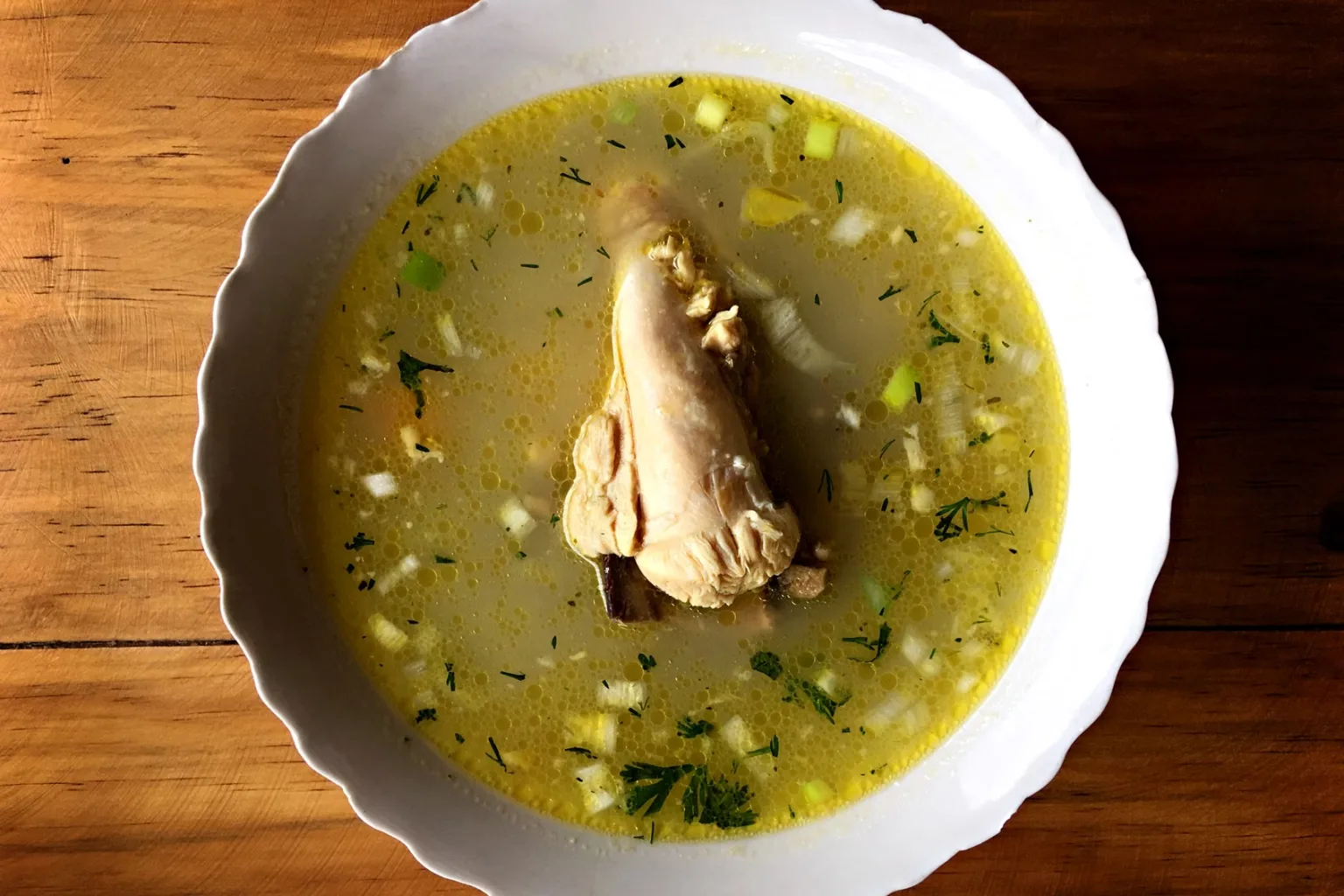
Low-sodium chicken broth is a liquid broth made with chicken and, depending on the formulation, ingredients such as vegetables, seasonings or flavorings. The phrase “low-sodium” describes the product, but the evidence available here does not establish a single threshold or show that all brands use the same formulation. One manufacturer describes its own broth as ready to consume and lists chicken, vegetables, spices and other ingredients; other products may differ. Treat the wording as a reason to compare labels, not as a substitute for the package information. The broth can be served hot or used as a cooking liquid.
When to use it
Use it when a recipe calls for chicken broth and you want a liquid chicken-broth base, such as in chicken soup, rice dishes or stews. It can also be used to cook grains or contribute liquid to a dish when its flavor suits the other ingredients. “Low-sodium” does not mean every product is identical: check the package details, especially if the amount of salt in the finished dish matters to you. Taste the dish before adding more salt, since the broth’s contribution depends on the product and the amount used.
How to use it
If the package says the broth is ready to consume, shake it if the manufacturer directs, open it and heat it according to the package instructions. For cooking, add it as part of the liquid in soups, stews or rice dishes; some recipes combine broth with water and vegetables. Use the amount called for by your recipe and taste before salting. Homemade chicken broth can replace packaged broth in some recipes. Substituting a different kind of broth may also change the dish’s flavor. Recipes and product concentrations are not uniform, so do not assume exact equivalence between brands or between packaged and homemade broth.
Flavour and texture
It contributes a chicken-broth flavor, with a profile that depends on the amount of chicken, vegetables, seasonings and flavorings in each formulation. It is a liquid and blends into soups, rice dishes and stews. The available evidence does not support claiming that every brand has the same flavor strength or texture. Taste the product before adding it to a dish to judge how much flavor it contributes.
How to choose it
Compare the specific product’s label: check its ingredients, sodium information, package size and storage directions. Do not assume that a “low-sodium” statement means the same thing across brands; the evidence available for this profile does not set a common threshold. Commercial recipes can contain different ingredients and different allergen notices. If you need to avoid an ingredient or allergen, check the current package rather than relying on a general description of the category.
Storage
Follow the package directions because storage depends on the product and its packaging. One manufacturer’s commercial broth says to keep it unopened in a cool, dry place and refrigerate it after opening; for that product, it gives a maximum of four refrigerated days. Do not apply that period to every brand. If the package gives different directions, follow its instructions. For homemade broth, the cited extension resource advises refrigeration and consumption or freezing, but use reliable guidance appropriate to the recipe and handling method for specific time limits.
Substitutions
Homemade chicken broth can replace packaged chicken broth in recipes calling for it; a cited academic recipe resource presents it as a replacement. Another low-sodium broth may also work when its flavor fits the dish. A substitution can change the finished flavor, so taste before adjusting salt. Regular chicken broth is not necessarily equivalent in sodium; check its label when that distinction matters.
Common mistakes
Do not assume all products labeled “low-sodium” have the same sodium level, ingredients or allergens. Do not add salt automatically; taste the dish first. Avoid applying one brand’s storage period to every broth, and do not overlook the storage directions printed on the package.
Safety and allergens
Check the current package for ingredients and allergens, and follow its storage directions. The cited manufacturer says to refrigerate its product after opening; do not generalize its stated time limit to other brands. If making broth with raw chicken, the cited official source recommends cooking the chicken to 70 °C at its center.
Culinary uses
- Base líquida para sopas y cremas
- Líquido de cocción y base para arroces y guisos
Recommended techniques
- Calentar y servir como caldo, siguiendo las indicaciones del envase
- Añadir a la cocción de sopas, arroces o guisos
Pairs well with
- Fideos, arroz y quinoa
- Cebolla, apio, zanahoria, verduras de hoja y especias
Frequently asked questions
Can I use it instead of regular chicken broth?
Yes, it can be used in recipes that call for chicken broth. Check the label and taste the dish before adjusting salt, because formulations vary.
Do all low-sodium chicken broths have the same ingredients?
Do not assume they do. Recipes and allergen notices can vary, so check the package you plan to use.
How should I store broth after opening?
Follow the package. One cited manufacturer instructs users to refrigerate its broth after opening and gives a maximum of four days; that period should not automatically be applied to other brands.
Estimated nutrition
- Fat
- 0.4 g
- Saturates
- 0 g
- Carbohydrate
- 0.4 g
- Sugars
- 0 g
- Fibre
- 0.1 g
- Protein
- 0.8 g
- Salt
- 0.14 g
Sources and review
Automatically researched, cross-checked and validated content. Sources consulted:
- TIEMPO-TEMPERATURA.pdf aesan.gob.es
- Caldo de pollo y pollo cocido - Spend Smart Eat Smart spendsmart.extension.iastate.edu
- aprovechamiento COOKING BATCH cocina de y Silvia antón | maite lópez unav.edu
- 27 Caldo de Pollo con Vegetales Estilo Marìa ihpr.uthscsa.edu
- Análisis de las principales especies pesqueras ^1 mapa.gob.es
- Conservación de nuggets de pollo con bajo contenido en sodio y formulados con fibra de trigo | Ciencia, Docencia y Tecnología doi.org
- Sopa De Pollo Baja En Sodio - Recipes - Live Healthier - UTHealth Houston School of Public Health sph.uth.edu
- de caldo de pollo reducido en sodio efnep.tamu.edu
- Sopa de Pollo y Hojas Verdes | Servicio de Extensión de OSU extension.oregonstate.edu
- ¿Qué es el caldo de pollo bajo en sodio? quesignificado.org
- Caldo casero de pollo bajo en sal30/4 – Gallina Blanca – 1 l es.openfoodfacts.org
- Caldo Casero de Pollo Bajo en Sal 100% Natural | Gallina Blanca gallinablanca.es
- Caldo de pollo - información nutricional, beneficios para la salud y consejos de compra listonic.com