- Category
- Vegetables
- State
- Fresh
- Usual unit
- unit
What it is
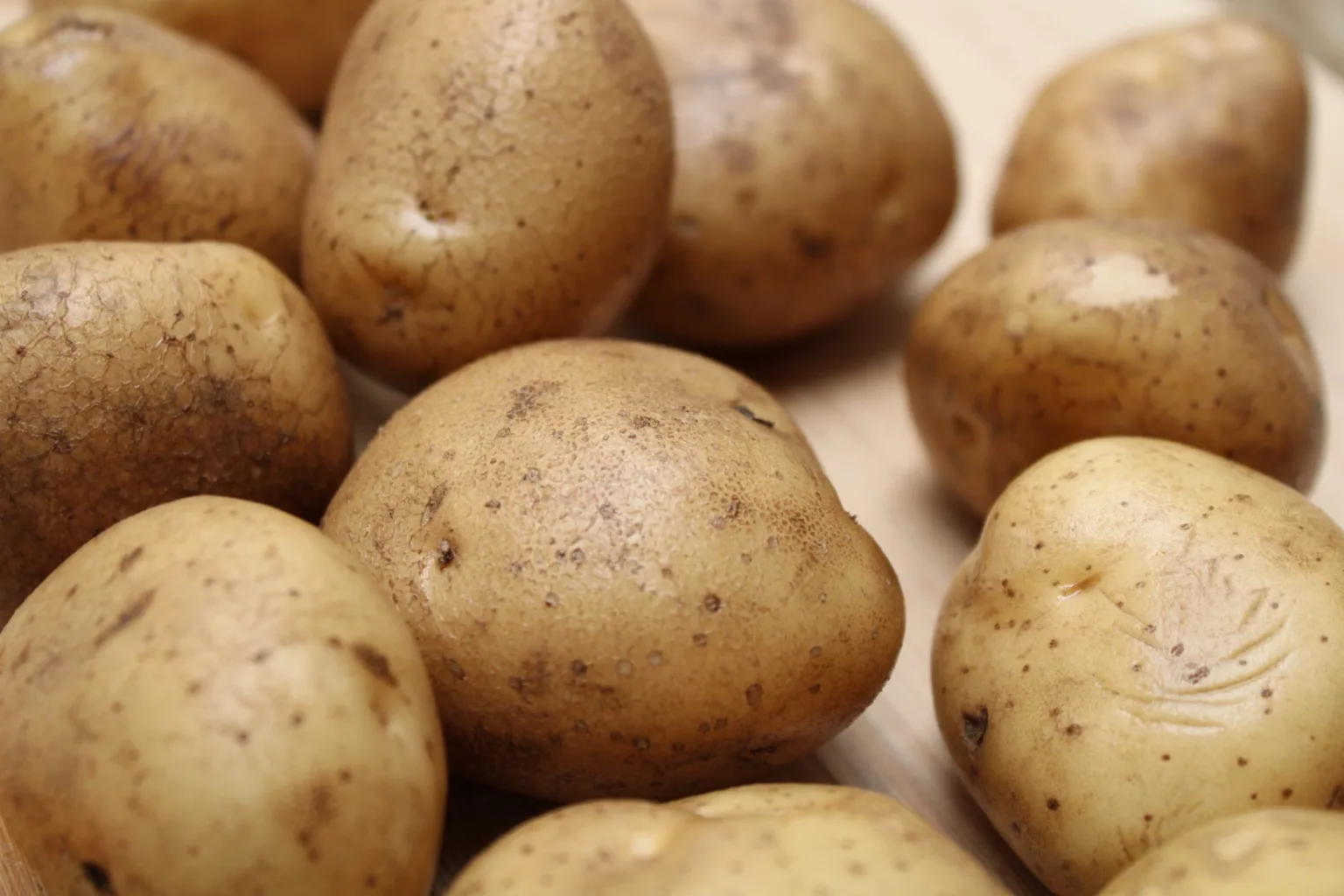
“Medium potatoes” describes the size of the ingredient, but the supplied evidence does not set a universal measurement for that category or identify a particular variety. The sources discuss potatoes generally and list several ways to prepare them, including boiling, frying, baking and mashing. They also feature potatoes as the main ingredient in potato tortilla, commonly made with potato, egg and salt, with possible additions such as onion, pepper, chorizo or ham. For some home-canning preparations, the extension source recommends waxy or boiling potatoes and advises against the starchy varieties commonly used for baking. So “medium” alone does not establish a potato’s variety, texture or best culinary use.
When to use it
Use them when you want a base or side that can be prepared in several ways. The evidence describes potatoes as suitable for boiling, frying, baking or mashing, and names potato tortilla as a preparation in which potatoes are the main ingredient. They can also be combined with egg and, depending on the recipe, onion, pepper, chorizo or ham. If you are preparing home-canned potatoes, do not choose by size alone: the source recommends waxy or boiling varieties and distinguishes them from starchy baking varieties. The evidence does not establish which specific variety is best for each everyday cooking method.
How to use it
Before preparing fresh potatoes, wash them under cold running water and gently scrub them with a clean vegetable brush; the extension guide also advises against soaking them. Then choose a preparation suited to your recipe: the evidence mentions boiling, frying, baking and mashing. For a potato tortilla, cut and cook the potatoes as your recipe directs, then combine them with egg and salt; onion, pepper, chorizo and ham are additions mentioned by the source. There is not enough information here to prescribe cut sizes, cooking times or temperatures. For home canning, use a tested preservation recipe and follow its directions for that method; the extension source distinguishes waxy or boiling potatoes from starchy baking potatoes.
Flavour and texture
The available evidence does not give a detailed flavor or texture profile for every medium potato, and size alone cannot establish either. It does note a practical distinction between types: varieties commonly used for baking are more starchy and, according to the extension guide, do not give good results when canned in jars; the guide recommends waxy or boiling potatoes for that purpose. Preparation also changes the result: the sources mention boiled, fried, baked and mashed potatoes, but do not provide a precise sensory description for each method.
How to choose it
The supplied evidence does not provide general buying criteria for fresh potatoes or define the diameter of a medium potato. For home canning, it does recommend selecting small or medium mature potatoes and choosing waxy or boiling varieties; it also says that many red-skinned potatoes are suitable for that purpose. This guidance applies to the described canning use and should not be treated as a universal rule for frying, baking or mashing. If you need a particular result, check the variety and intended use specified by your recipe.
Storage
The supplied sources do not explain how to store unprocessed fresh potatoes or give a safe storage duration, so specific temperature, light or time advice cannot be provided here. The extension guide does describe storage for processed jars: it recommends a clean, cool, dark place and says safety depends on the lids maintaining their vacuum seal. That guidance applies only to jars prepared according to the described procedure; it should not be extended to fresh potatoes or other preservation methods.
Substitutions
There is not enough evidence to recommend another ingredient as a general substitute for potatoes. If the intended preparation is home canning in jars, the extension source offers an alternative within the potato category: choose waxy or boiling potatoes, including many red-skinned varieties, instead of starchy baking potatoes. This is limited guidance for that canning use and does not establish that those varieties are interchangeable in every tortilla, fried dish, mash or baked recipe.
Common mistakes
Do not assume all medium potatoes are the same variety or have the same texture: a size description does not resolve those differences. For home canning in jars, a mistake would be choosing a starchy variety commonly used for baking, since the extension source says it does not give good results for that use. Also avoid applying canning advice to everyday cooking: guidance about selecting potatoes for jars does not by itself establish which potato is best for frying, boiling, baking or mashing.
Safety and allergens
Wash fresh potatoes before preparation; a university extension guide recommends gently scrubbing them with a clean brush under cold running water. For home canning, use a tested recipe and follow all of its directions rather than improvising times or procedures. The available evidence does not support specific storage instructions for fresh potatoes here.
Culinary uses
- Ingrediente principal para tortilla de patatas
- Guarnición o acompañamiento
Recommended techniques
- Hervir
- Freír
- Hornear
- Hacer puré
Pairs well with
- Huevos
- Cebolla
- Pimiento
- Chorizo
- Jamón
Frequently asked questions
What does medium mean for a potato?
The supplied evidence does not set a universal diameter for the “medium” category. Treat it as a size description, not as a variety or texture identification.
How can I cook medium potatoes?
The sources mention boiling, frying, baking and mashing. The method and result depend on the recipe and variety; no cooking times or temperatures are provided here.
Which potatoes does the source recommend for home canning in jars?
The extension guide recommends waxy or boiling varieties and notes that many red-skinned potatoes are suitable. It advises against starchy varieties commonly used for baking for that purpose.
Sources and review
Automatically researched, cross-checked and validated content. Sources consulted:
- REGLAMENTO (UE) No 1169/2011 DEL PARLAMENTO ... eletiquetadocuentamucho.aesan.gob.es
- Client Challenge doi.org
- La patata, origen y datos curiosos | masymas supermercados supermasymas.com
- Salsa de Chiles Cayenas (Spanish) - National Center for Home Food Preservation nchfp.uga.edu
- Comité Científico aesan.gob.es
- Vamos a Conservar Alimentos: Papas y Batatas (Camote o Papa Dulce) extension.psu.edu
- Dietas vegetarianas y veganas y su relación con el estado ... openaccess.uoc.edu
- ISSN 2525-2127 palermo.edu
- A Nutrition Education Curriculum for Grade 3 | Wsu s3.wp.wsu.edu
- Paisajes Comestibles-Sostenibles | Integrated Pest Management | College of Agriculture, Health and Natural Resources | University of Connecticut ipm.cahnr.uconn.edu
- GastroWiki - Blog sobre Gastronomía gastroalianza.es
- ¿Cuántos tipos de patata existen? Nombres y usos fruteriasilvestre.com