- Category
- Vegetables
- State
- Fresh
- Usual unit
- unit
What it is
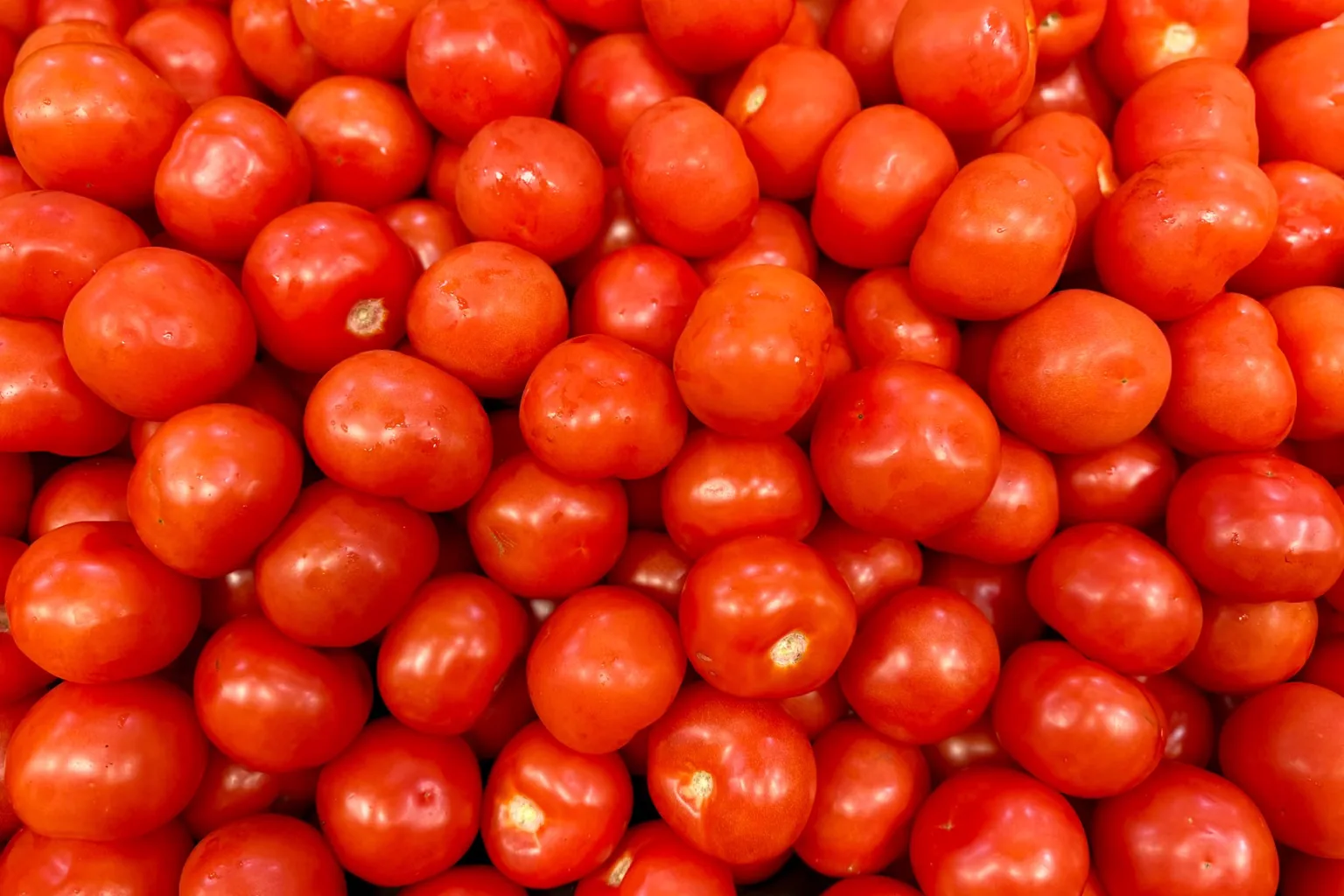
A medium red tomato is a fresh, medium-sized fruit commonly used as a vegetable in cooking. The name describes its colour and size, not a particular variety, so the amount of flesh, juice, firmness and acidity can differ from one tomato to another. It can be eaten raw or used in cold soups, sauces and stews. Choose the preparation to suit the tomato's texture: juicier varieties work well in fresh dishes, while fleshier types are useful when you want a less watery result.
When to use it
Use it raw when you want colour, freshness and juiciness in a salad, sandwich or tomato-topped toast. It can also be blended into a cold soup or sauce, or added to a stew. Since size alone does not determine firmness or water content, check the tomato and adapt the cut or preparation: a firm tomato is easier to slice neatly, while a very juicy one can add more liquid to a dish.
How to use it
Before preparation, wash your hands and use clean surfaces and utensils. Gently wash the tomato under cold running water; do not leave it to soak. To serve it raw, cut it into slices or pieces for salads, sandwiches or toast. For a cold soup or sauce, chop and blend it; you can also simmer it as part of a stew or sauce. Adjust the cut and cooking to its juiciness: watery tomatoes add more liquid, while fleshier ones make a thicker mixture.
Flavour and texture
Red tomatoes commonly have a balanced flavour with a fresh, slightly tart edge, although sweetness and acidity vary among varieties and individual fruits. The inside may be very juicy or more fleshy, and the skin has a different texture from the pulp. Medium size does not guarantee a particular texture; assess the firmness and juiciness when deciding whether to slice the tomato for a fresh dish or blend it into a sauce.
How to choose it
Choose fresh, firm tomatoes with intact skin and no significant bruising, rot or visible signs of disease. An even red colour can be a useful visual reference, but colour alone does not reliably indicate internal texture or flavour. If you plan to slice the tomato, check that it feels firm. For a thicker sauce, consider a fleshier variety such as a pear tomato.
Storage
The available evidence does not establish a storage temperature or time limit for these fresh tomatoes, so avoid treating a specific figure as a universal rule. Handle them gently to prevent bruising and check their condition before use. Wash them under cold running water before eating or preparing them rather than soaking them. If freezing is your aim, bear in mind that tomatoes lose firmness after thawing and are better suited to cooking than to serving raw.
Substitutions
If medium red tomatoes are unavailable, choose another tomato variety to suit the dish rather than relying on size alone. Pear tomatoes are described as less juicy and suitable for sauces, so they can work when you want a thicker mixture. Vine tomatoes can be used in slices, sandwiches or fresh dishes. These alternatives may change the amount of juice and the texture, so they are not always interchangeable in identical proportions.
Common mistakes
Do not assume that all medium tomatoes have the same flesh, firmness or acidity; these qualities depend on variety and on the individual fruit. Avoid soaking tomatoes: wash them gently under cold running water. A very juicy variety may add more liquid than expected to a thick sauce. If you freeze tomatoes, do not expect them to retain the firmness needed for a salad after thawing.
Safety and allergens
Before eating or preparing fresh tomatoes, wash your hands and use clean surfaces and utensils. Gently wash each tomato under cold running water; do not leave it to soak. Discard tomatoes with rot or significant damage, and use a tested recipe if making preserves: this profile does not provide canning instructions.
Culinary uses
- Ingrediente para ensaladas y platos fríos
- Base para sopas frías, salsas y guisos
Recommended techniques
- Cortar en rodajas o trozos para servir crudo
- Triturar para sopas frías o salsas
- Cocinar a fuego lento en guisos o salsas
Pairs well with
- Aceite de oliva
- Pan
- Ajo y hierbas frescas
- Cebolla, pimiento y pepino
Frequently asked questions
Can medium red tomatoes be eaten raw?
Yes. Slice or chop them for salads, sandwiches or toast. Gently wash them under cold running water before eating.
Can I use them to make sauce?
Yes. Chop and blend them or cook them into a sauce. Juiciness varies; a less juicy variety such as a pear tomato may be an option when you want a thicker result.
What happens if I freeze tomatoes?
The preservation guidance consulted says that tomatoes lose firmness when thawed. They are therefore better used in cooking or added to other preparations than served raw.
Estimated nutrition
- Fat
- 0.11 g
- Saturates
- 0.02 g
- Carbohydrate
- 4.01 g
- Sugars
- 2.49 g
- Fibre
- 0.7 g
- Protein
- 0.95 g
- Salt
- 0.03 g
Sources and review
Automatically researched, cross-checked and validated content. Sources consulted:
- Los 6 mejores tipos de tomate y cómo usarlos en cocina mercadosantamariadelacabeza.es
- 6 VARIEDADES DE TOMATES Y SUS USOS EN COCINA - Masymas Supermercados super-masymas.com
- Salsa de Manzana y Durazno (Melocotón) (Spanish) - National Center for Home Food Preservation nchfp.uga.edu
- Vamos a Conservar Alimentos: Tomates extension.psu.edu
- Comité Científico aesan.gob.es
- Fresh Produce Recipe Book | Wsu s3.wp.wsu.edu
- No Es Muy Tarde Para Sembrar Las Semillas De Tomate! | UConn Extension | College of Agriculture, Health and Natural Resources | University of Connecticut extension.uconn.edu
- (PDF) La Agricultura Boliviana del Siglo XXI campusvirtual.upb.edu
- Qué sabes realmente sobre los tomates - Secretos Del Sur. secretosdelsur.com
- Conoce los distintos tipos de tomates y cómo cocinarlos - Bonnysa bonnysa.es
- Los tomates: variedades, beneficios y precios asesoresaragon.org