- Category
- Grains, flour and pasta
- State
- Dry
- Usual unit
- cup
What it is
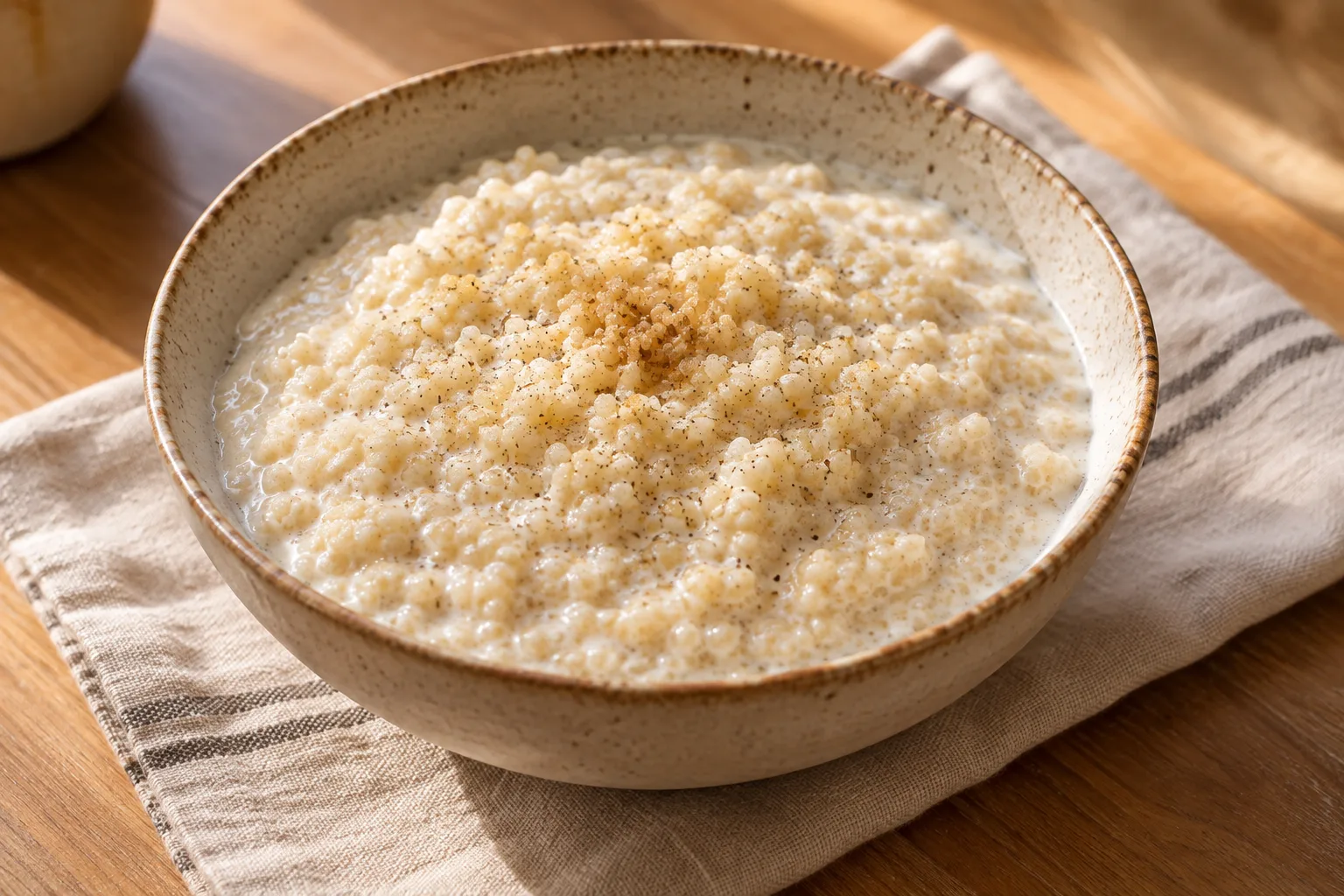
The name millet couscous commonly describes a dish made with millet as a stand-in for, or in the style of, couscous; it does not necessarily mean traditional wheat-semolina couscous. One recipe explicitly replaces couscous with millet, while another cooks millet and serves it with vegetables, chickpeas, lamb and broth. It is therefore useful to think of this as a way of preparing and presenting the grain rather than assume every product with this name is made in the same way. The available evidence does not describe a specific commercial product or a single milling or finishing method.
When to use it
Use it as a grain base for a dish served in the style of couscous, especially with vegetables, chickpeas and seasoned broth. It can also accompany meat, as in a recipe with lamb, or stand in for the grain in a recipe that allows alternatives. The result depends on the cooking method: the available recipes show both boiling and draining millet and cooking it in liquid with other ingredients.
How to use it
Rinse and cook the millet according to the product directions; the available recipes show two approaches, not a universal rule. For separate grains, one recipe boils millet in plenty of water and drains it when cooked. Another adds millet, water and tomatoes to a dish while vegetables and chickpeas cook in a steamer, then lets the remaining liquid absorb before serving. Spoon the millet into a serving dish and top it with vegetables, legumes, meat or broth. Cumin, cinnamon, mint and pine nuts appear together in one Moroccan-style preparation.
Flavour and texture
The sources consulted do not describe the cooked millet's flavor or texture precisely, so a particular result should not be promised. They do show that the grain can be boiled and drained for serving as a base, or cooked with liquid and left to absorb it. The final texture will depend on the product and method; follow the package directions and check the grain as it cooks.
How to choose it
The evidence package gives no specific criteria for judging millet quality, grain size or freshness. Look for a product clearly identified as millet and check the package for preparation directions; do not assume directions for wheat-semolina couscous apply to millet. If buying a blend or a product called millet couscous, read its ingredient list to identify the grain and check the manufacturer's cooking instructions.
Storage
The available sources do not specify storage conditions or times for dry or cooked millet. For a packaged product, follow the manufacturer's storage directions and close the package after use. The evidence consulted does not give storage times or temperatures for cooked millet; consult official food-safety guidance or the product instructions instead of relying on an undocumented time.
Substitutions
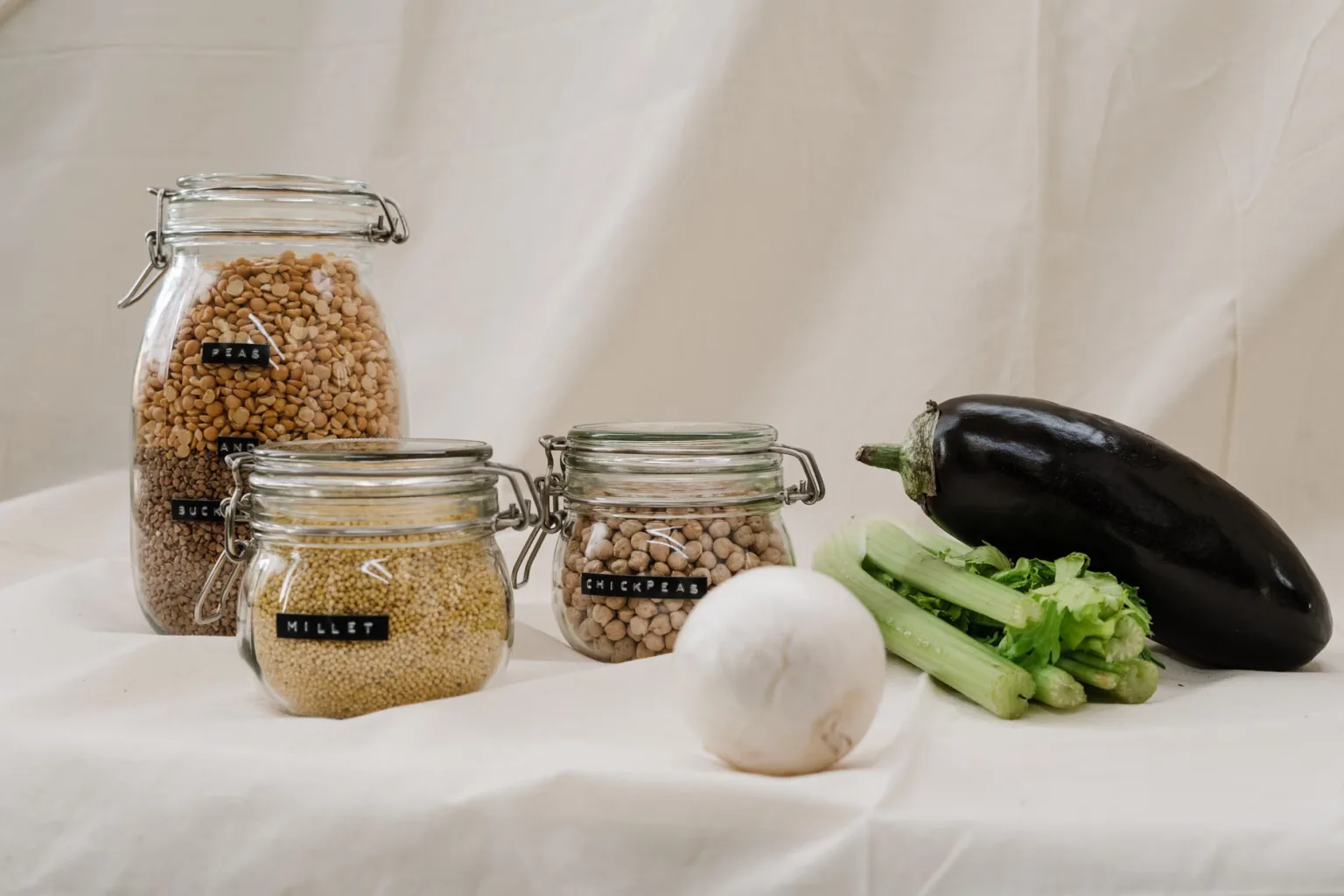
A Moroccan-style millet couscous recipe says oats, barley, buckwheat or quinoa can also be used. These grains are not identical, and the source does not provide substitution ratios or cooking times; adapt the method to the directions for the chosen grain. Traditional semolina couscous is not compositionally identical either: it is a wheat product.
Common mistakes
Do not automatically treat millet cooked in a couscous style as traditional semolina couscous: the sources describe the latter as wheat-based and millet as a recipe substitute. Also avoid assuming that all millet uses the same liquid ratio or method. The recipes consulted use different approaches, so follow the product directions rather than transferring cooking times from one recipe to another.
Safety and allergens
The audited sources contain no specific official warning for this ingredient. Check the package and follow its preparation directions; if you have an allergy or need to avoid a particular grain, review the product's ingredient list.
Culinary uses
- Base de cereal para servir al estilo del cuscús
- Guarnición o componente de un plato completo
Recommended techniques
- Hervir en abundante agua y escurrir
- Cocer a fuego lento en líquido y dejar que el grano lo absorba
Pairs well with
- Verduras como zanahoria, calabacín, cebolla y judías verdes
- Garbanzos y cordero
- Comino, canela, menta y piñones
Frequently asked questions
Is millet couscous traditional couscous?
Not necessarily. The evidence describes millet as a substitute for couscous in a recipe, while another source defines traditional couscous as a product derived from wheat semolina.
How can I cook millet to serve it this way?
The recipes consulted show boiling it in plenty of water and draining it, or cooking it with liquid alongside other ingredients. Follow the package method, since the evidence does not establish one universal procedure.
What goes with millet in a Moroccan-style dish?
One recipe pairs millet with vegetables, chickpeas and lamb, and uses cumin, cinnamon, pine nuts and mint. These are examples of a combination, not a required formula.
Estimated nutrition
- Fat
- 3.2 g
- Saturates
- 1 g
- Carbohydrate
- 19.2 g
- Sugars
- 0.8 g
- Fibre
- 0.8 g
- Protein
- 3.2 g
- Salt
- 0.42 g
Sources and review
Automatically researched, cross-checked and validated content. Sources consulted:
- ¿Por qué la muerte es origen de miedos y tabúes? doi.org
- Cultura del pan en España - Wikipedia, la enciclopedia libre es.wikipedia.org
- Washington State Food Access English-Spanish Glossary wpcdn.web.wsu.edu
- Food & Fun Afterschool hsph.harvard.edu
- Qué es el Cuscus: ingrediente arabe | Recetas Nestlé recetasnestle.com.ec
- Mejore su salud es un currículo para participantes adultos ... extension.usu.edu
- Do soaked grains have more nutrients? | Servicio de Extensión de OSU extension.oregonstate.edu
- Living Whole Recetas myllu.llu.edu
- Descripciones de muestras de granos integrales eatingsmartbeingactive.colostate.edu
- Cous cous de mijo con verduras: receta vegana fácil draodilefernandez.com
- - YouTube youtube.com
- Cuscús marroquí con mijo - Diabetes a la Carta diabetesalacarta.org