- Category
- Oils and fats
- State
- Liquid
- Usual unit
- ml
What it is
Neutral oil for frying is a practical name for mild-tasting liquid oils used for frying and cooking. It does not identify one plant or a fixed composition: it may refer, for example, to sunflower or peanut oil, and properties vary between products. Sunflower oil is described as a classic mild-flavoured choice for frying; peanut oil is also used for frying and is noted for not strongly masking the food’s flavour. So “neutral” describes a flavour preference, not a guarantee that every oil in this category is interchangeable. Check the product name and label to identify what you are buying.
When to use it
Choose a mild-tasting oil when you want the food, coating, or seasoning to remain in the foreground. It can suit fried potatoes, battered vegetables, fish, or meat, and dishes where a pronounced oil flavour would be unwelcome. It may also work in a mild emulsified sauce, such as mayonnaise, if the product is suitable for that use. The category name alone does not establish how well an oil tolerates heat: that depends on the specific oil and how it was made. For a particular frying task, check the type listed on the package rather than assuming all neutral oils behave alike.
How to use it
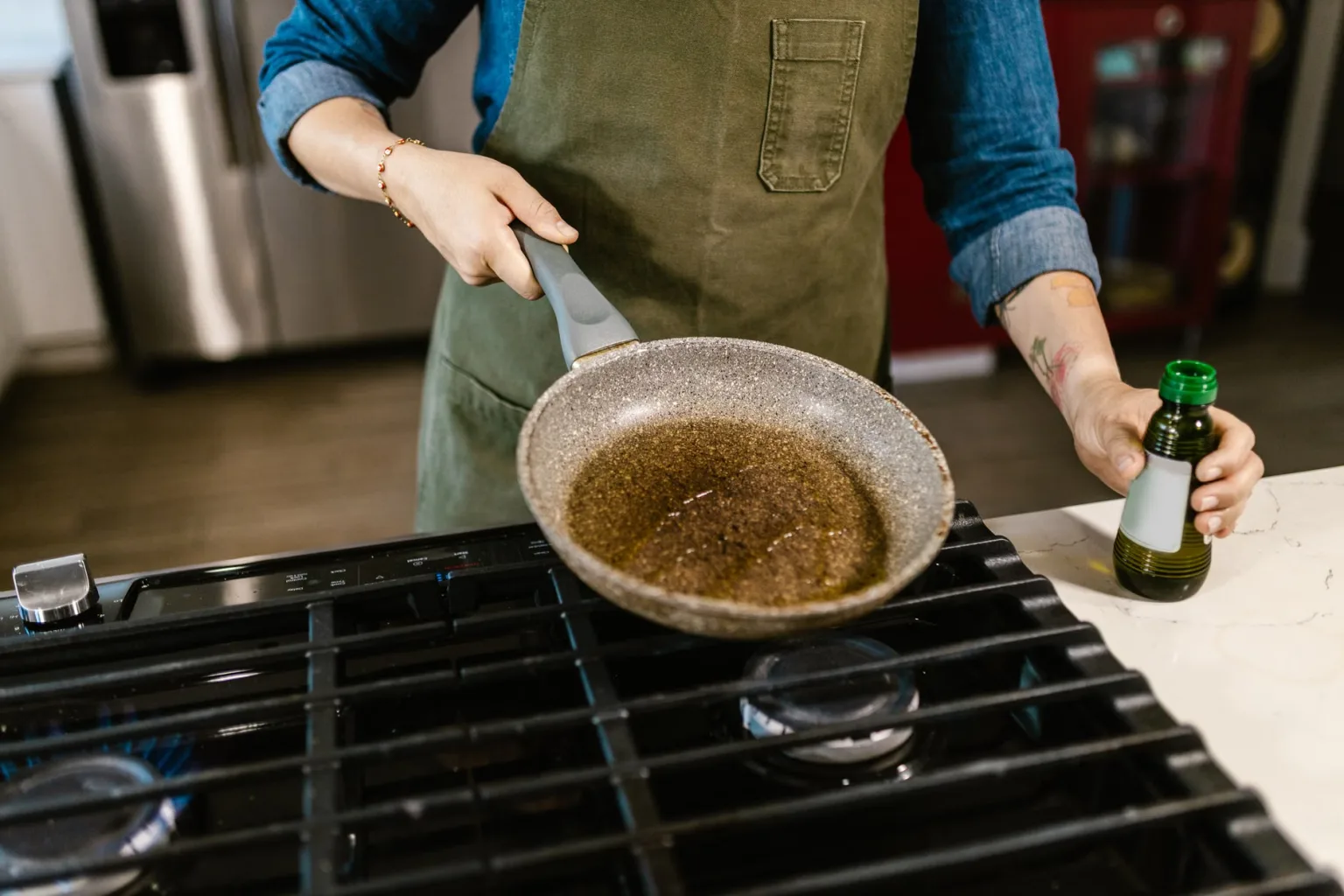
Read the label to identify the oil and confirm that it is a food product suitable for frying. Use only the amount the technique calls for and pay attention while heating; do not leave it unattended or let it smoke. Add food carefully to reduce splashes, and follow the product and equipment instructions. Oil helps transfer heat and brown food, but the final texture also depends on the food and preparation. For sautéing or a sauce, use the oil only if its flavour profile and label directions suit the dish. Since “neutral” does not specify a source, choose according to the recipe and the preferences of the people eating.
Flavour and texture
The aim is a mild flavour that does not compete with the food, although the precise aroma and taste vary with the oil and product. In frying, oil contributes to browning and a crisp surface when the preparation and cooking allow it; oil alone does not guarantee a particular texture. Check the label if you want to avoid a more noticeable seed-oil flavour.
How to choose it
Do not rely on the words “neutral oil” alone: check the label for the oil type and whether it suits your intended use. Sunflower and peanut oils are examples associated with mild-tasting frying, but they are not identical. If you want a particular feature, such as a high-oleic profile, look for that wording on the package.
Storage
Store the oil according to its label and keep the container closed between uses. As general kitchen guidance, avoid leaving it near heat or exposed to light; recommended conditions can vary by product and packaging. Do not infer a specific storage life simply because the oil is described as neutral.
Substitutions
Sunflower oil is a mild-tasting alternative used for frying; high-oleic sunflower oil is another option when that specific feature is desired. Peanut oil is also used for frying and tends not to dominate the food’s flavour. Olive oil can substitute if you are happy for it to bring a more noticeable taste. Always check the label and consider the preferences or restrictions of the people eating.
Common mistakes
A common mistake is treating “neutral” as the name of one particular oil: the source and performance can vary. It is also unwise to assume every mild oil is suitable for every frying task. Identify the product from its label, follow its directions, and do not leave it heating unattended.
Safety and allergens
Use only food-grade oil and follow its label and your cooking equipment’s instructions. Heat it attentively and do not let it smoke; if you cannot confirm that the product is suitable for frying, do not use it for that purpose.
Culinary uses
- Frying medium
- Neutral-tasting cooking fat
- Helps transfer heat and brown food
Recommended techniques
- Deep-frying
- Shallow-frying
- Brief sautéing
- Making mild-flavoured emulsified sauces
Pairs well with
- Potatoes
- Battered vegetables
- Fish
- Meat
Frequently asked questions
What does “neutral oil” mean?
It describes a mild flavour, not one specific plant or fixed composition. Check the label to see which oil the product contains.
Which oils can work for mild-tasting frying?
Sunflower and peanut oils are examples used for frying where a mild flavour is wanted. The right choice depends on the product and recipe.
Can I substitute olive oil?
You can if you are comfortable with its more noticeable flavour. Choose according to the taste you want and the use stated on the label.
Sources and review
Automatically researched, cross-checked and validated content. Sources consulted:
- Client Challenge doi.org
- Gastronomía de Costa Rica - Wikipedia, la enciclopedia libre es.wikipedia.org
- Análisis de las principales especies pesqueras ^1 mapa.gob.es
- Comité Científico aesan.gob.es
- elBulli: un nuevo lenguaje en la gastronomía repositorio.ucjc.edu
- - YouTube youtube.com
- ¿Qué aceite uso para cada plato? | El Comidista | Gastronomía | EL PAÍS elpais.com
- Tipos de aceite: cuál elegir para cocinar, freír, aliñar o dar sabor abc.es
- Diferencias entre diferentes aceites que se usan en cocina | masymas supermercados supermasymas.com
- Glosario Inglés – Yo puedo: segundos pasos milnepublishing.geneseo.edu
- Uso de extractos de romero y otras fuentes vegetales repositorio.ucam.edu
- Conoce los tipos de aceite para cocinar | Recetas Nestlé recetasnestle.com.ve
- ¿Qué aceite es mejor para cocinar? portalcomunicacion.uah.es
- Aceite ideal para cada técnica de cocción | todococina todococina.net