- Category
- Grains, flour and pasta
- State
- Powdered
- Usual unit
- g
What it is
Non-glutinous rice flour is made by milling rice that is not the sticky variety known as glutinous rice. “Glutinous” describes the rice's sticky texture; it does not mean that the rice contains gluten. Products can differ in how finely they are milled and may be made from white or brown rice, so their color, texture and cooking behavior are not always the same. Conventional rice flour contains starch that needs cooking to thicken effectively. It does not form the elastic network that wheat gluten provides, so it cannot always reproduce wheat flour's structure on its own. Do not confuse it with glutinous rice flour, which is made from a different type of rice and is used when a stickier texture is wanted.
When to use it
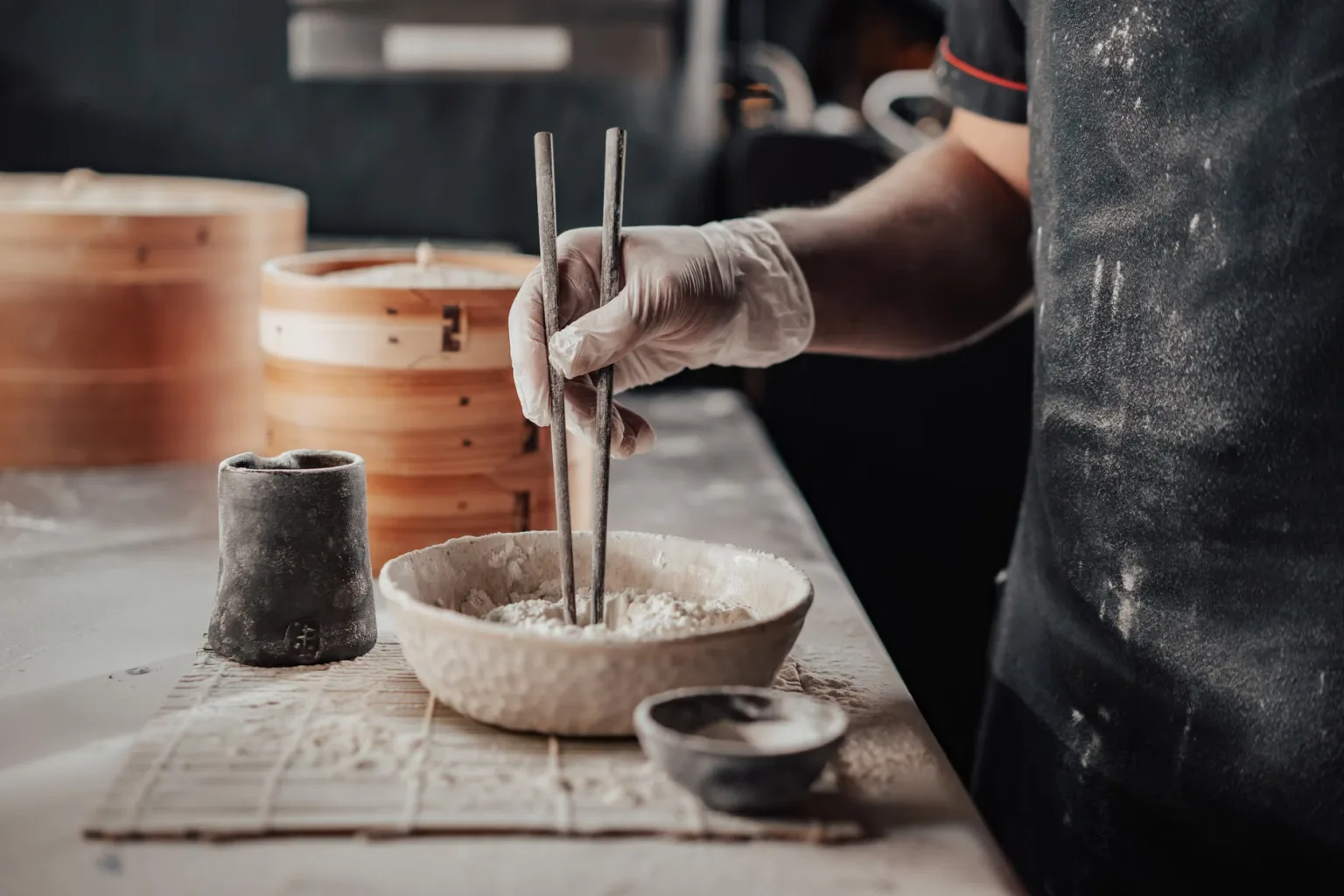
Use it to thicken a sauce, soup or cream, or when you want a fine, crisp coating. It can also go into cookies, cakes, crepes, pancakes and some gluten-free doughs, bearing in mind that it has limited ability to provide elasticity. For thickening, first disperse it in a little cold liquid, then add the mixture while stirring. Conventional flour needs cooking for its starch to develop body; it is not the same as pregelatinized flour designed to thicken quickly. If a recipe relies on an elastic dough or a very airy crumb, use rice flour as part of a blend or follow a formula developed specifically for it.
How to use it
To thicken a sauce or soup, mix the flour with a small amount of cold liquid until smooth. Gradually stir this mixture into the hot liquid, then cook the preparation sufficiently for the starch to hydrate and thicken. Adding the dry powder directly can encourage lumps, while heating it only briefly may leave a floury sensation. For coating, dust the food with a thin layer; it can also be mixed with cold sparkling water for a light tempura batter. In baking, use it in recipes written for rice flour, or combine it with other flours and binders when more structure is needed. Do not automatically replace all the wheat flour in a recipe with rice flour: doughs may become more brittle and less elastic. If you need to avoid gluten, check the package because cross-contact risk depends on the product and how it was made.
Flavour and texture
Its flavor is usually delicate and fairly neutral, so it generally lets other ingredients stand out. Milling can be fine or coarser, and whole-grain flour may taste more rustic than white flour. When cooked, its starch can give sauces and creams body; it is also used for a thin, crisp coating. In baked doughs it does not form wheat's elastic network, so the result may be more brittle or crumbly if the recipe lacks other ingredients to provide structure.
How to choose it
Read the product name and ingredients to distinguish non-glutinous rice flour from glutinous rice flour and pregelatinized versions. Check whether the package identifies white or brown rice and describes a fine or coarse grind, since these differences can affect a recipe's texture. If you need to avoid gluten, look for clear information about cross-contact controls or ask the manufacturer; the fact that an ingredient is rice does not by itself establish how a product was handled. Choose a sealed package with no visible moisture or damage.
Storage
Keep the flour in a clean, dry, tightly closed container and follow any storage directions on the package. Protect it from moisture and strong odors, which can affect a dry powder. Whole-grain flours retain more parts of the grain than white flours, so their storage may differ; check the label and inspect the product before use. No universal storage period can be given here for every grind and product format.
Substitutions
Cornstarch can replace it in some thickening or coating applications, but the two do not behave exactly alike in every recipe. Oat or corn flour may work in certain baked preparations, although flavor and texture will change. For dough, do not choose a substitute by volume alone: consider whether the flour provides structure, absorbs liquid or creates crispness. Where a recipe depends on stickiness, glutinous rice flour is not equivalent to non-glutinous rice flour.
Common mistakes
A frequent mistake is adding dry flour straight to hot liquid and ending up with lumps. Another is taking a sauce off the heat before conventional rice flour has cooked enough to thicken and lose its floury feel. It is also unwise to assume it can replace wheat flour in the same amount with the same texture: rice flour does not form an elastic network. Finally, do not confuse it with glutinous rice flour or a pregelatinized version, since their uses and response to liquid can differ.
Safety and allergens
Handle it like any dry flour and follow the package directions. If you need to avoid gluten, check the label and ask the manufacturer about cross-contact controls; do not assume all products are processed in the same way.
Culinary uses
- Espesante para salsas, sopas y cremas
- Harina para rebozados, tempuras y repostería
Recommended techniques
- Dispersar primero en líquido frío para reducir los grumos al espesar
- Mezclar con otras harinas o aglutinantes cuando la receta necesite más estructura
Pairs well with
- Líquidos fríos antes de incorporarla a salsas o sopas calientes
- Harinas de maíz o almendra en algunas masas de repostería
Frequently asked questions
Does non-glutinous rice flour contain gluten?
Rice does not naturally contain gluten. However, cross-contact can depend on the product and its manufacturing process, so check the label or ask the manufacturer.
Is it the same as glutinous rice flour?
No. Glutinous rice flour is made from rice that produces a stickier texture. Non-glutinous rice flour is not a direct substitute when a recipe needs that stickiness.
How can I prevent lumps when using it as a thickener?
First stir it into a little cold liquid until smooth. Add it gradually to the hot liquid while stirring, then cook the mixture so it can thicken.
Estimated nutrition
- Fat
- 0 g
- Saturates
- 0 g
- Carbohydrate
- 80 g
- Sugars
- 0 g
- Fibre
- 0 g
- Protein
- 6.67 g
- Salt
- 0 g
Sources and review
Automatically researched, cross-checked and validated content. Sources consulted:
- ¿Por qué la muerte es origen de miedos y tabúes? doi.org
- Evaluación de harina de amaranto como ingrediente antioxidante para la preparación de matrices alimentarias funcionales doi.org
- Desarrollo de un pan de masa madre rico en GABA y ... diposit.ub.edu
- Aplicaciones de la harina de arroz harinadearrozcliment.com
- La harina de arroz, ingrediente clave de la pinsa: todo lo que debes saber - Di Marco dimarco.it
- Harinas de Arroz | Ingrediente Ecológico Para Alimentos Sin Gluten beneo.com
- Harina de arroz: cómo hacerla en casa fácilmente, beneficios e ideas de uso bonviveur.com
- No toda la harina de arroz es igual margavilan.substack.com
- Manihot esculenta - Wikipedia, la enciclopedia libre es.wikipedia.org
- Antes de ir a YouTube youtube.com
- Harina de arroz glutinoso: mochiko, shiratamako, mijinko y domyojiko | ComerJapones comerjapones.com
- 6 sustitutos de harina de arroz para cocinar | Fine Dining Lovers finedininglovers.es
- Innovative solutions from rice | Ebro Ingredients ebroingredients.com
- Harina de arroz | Gastronomía & Cía gastronomiaycia.com