- Category
- Vegetables
- State
- Fresh
- Usual unit
- unit
What it is
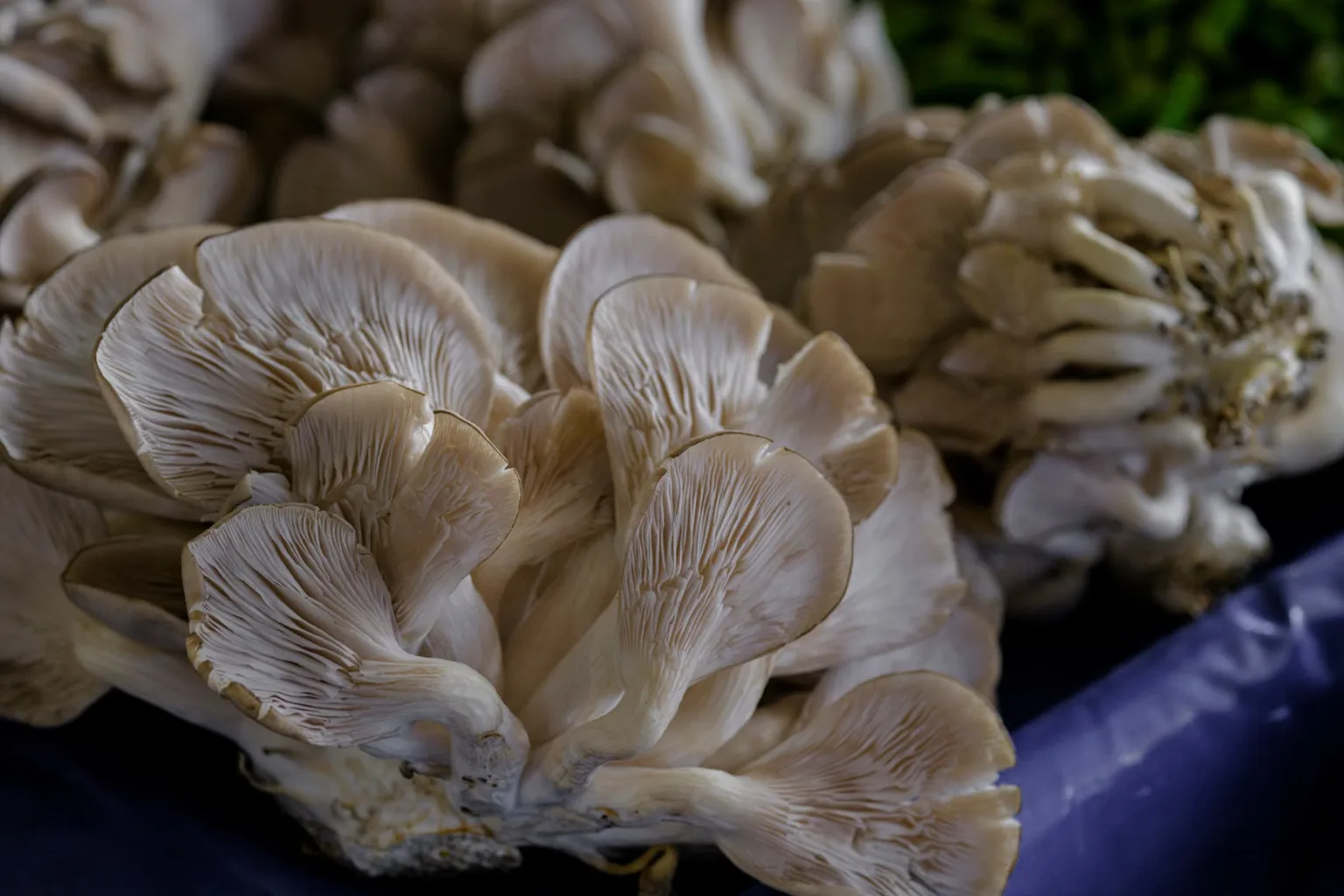
Oyster mushrooms are the edible fruiting bodies of fungi in the genus Pleurotus. Although cooks often group them with vegetables, fungi are not plants. The common name covers more than one variety, so appearance, color, and firmness can vary. They are commonly sold fresh and are often recognized by fan- or shell-shaped caps, sometimes growing in clusters. Their mild flavor and tender texture make them easy to add to everyday dishes without overwhelming other ingredients. This profile refers to fresh commercial mushrooms, not to identifying wild specimens.
When to use it
Use oyster mushrooms when you want to add texture and a gentle savory flavor without overpowering the other ingredients. They work in stir-fries, soups, and stews, and can also be added to rice or pasta dishes. Commercial oyster mushrooms are sold fresh, and one seller describes them as available year-round; that does not establish a universal natural season. If you want a firmer bite, remember that texture varies between species and individual mushrooms. Choose a preparation that suits the size and thickness of the pieces.
How to use it
Before cooking, remove visible dirt with a damp cloth or a soft brush. Separate clusters into similarly sized pieces so they cook more evenly; cut larger pieces if needed. Sauté or roast them as a side, or add them to soups, stews, rice, and pasta. Garlic, parsley, herbs, and spices can complement their mild flavor. Avoid overcrowding a pan if you want browning rather than mushrooms releasing water and steaming in it. Cook them before serving. Do not use a wild mushroom without expert identification, and do not rely on cooking to make a poisonous variety safe.
Flavour and texture
Sources describe oyster mushrooms as mild or delicate in flavor, with some descriptions noting a slight sweetness. Their texture is generally tender, though firmness and thickness vary by variety and size; mature specimens may be firmer. Once cooked, they can add substance to a dish and work well with aromatic ingredients without overpowering them. Not every mushroom sold as oyster mushroom has the same color or texture, so assess the particular product you have.
How to choose it
Buy oyster mushrooms sold for eating, and check the label for a name or variety where provided. Choose mushrooms that look fresh and have no obvious areas of decay; Oregon State Extension recommends selecting edible mushrooms free from spots or decay for freezing. Color varies among varieties, so do not use one particular color as the only test of identity or quality. For packaged mushrooms, check that the package is intact and the contents show no visible signs of deterioration. Do not gather or eat wild specimens based only on resemblance to a store-bought mushroom.
Storage
Keep fresh mushrooms refrigerated and use them while they remain in good condition; the available evidence does not establish one storage life for every package and condition. A seller recommends a paper bag or ventilated container and advises against washing before storage, but this is not a preservation guarantee. Oregon State Extension notes that many mushroom varieties can be frozen or dried; exact instructions depend on the method. Do not home-can oyster mushrooms using directions for button mushrooms: the extension guide limits safe canning to domestically grown button mushrooms.
Substitutions
King trumpet mushrooms belong to the genus Pleurotus and can be considered when you want another edible mushroom, though their shape and firmness may differ. Shiitake or another edible mushroom may also work in a mixed-mushroom recipe; adjust the cut and check doneness as you cook. These options are not identical in flavor or texture, and the available sources do not establish an exact replacement or equivalent quantity.
Common mistakes
Do not mistake the culinary grouping of mushrooms with vegetables for a botanical classification: fungi are a separate group from plants. Avoid crowding the pan if you want the mushrooms to brown, since they may release water and steam. Do not assume every oyster variety has the same firmness or color, and do not eat a wild mushroom without expert identification. Cooking or drying a poisonous mushroom does not necessarily destroy its toxins.
Safety and allergens
Buy mushrooms intended for consumption and cook them before serving. Do not forage or identify wild mushrooms by appearance alone: Oregon State Extension warns that some varieties are edible and others highly toxic, and that drying or cooking does not destroy toxins in poisonous varieties. For home preservation, do not apply a canning process intended for button mushrooms to oyster mushrooms; the official extension source limits safe canning to domestically grown button mushrooms.
Culinary uses
- Ingrediente principal o guarnición
- Aporte de textura y sabor a sopas, guisos, arroces y pastas
Recommended techniques
- Saltear
- Asar o cocinar a la parrilla
- Añadir a sopas y guisos
Pairs well with
- Ajo y perejil
- Hierbas y especias
- Arroz y pasta
Frequently asked questions
Are oyster mushrooms vegetables?
Biologically, no: they are fungi. They are often used like vegetables in cooking, but they are not plants.
How can I cook oyster mushrooms?
Sauté or roast them, or add them to soups, stews, rice, and pasta. Remove visible dirt with a damp cloth or soft brush before preparing them.
Can I home-can oyster mushrooms?
Do not simply use a canning process for button mushrooms. The extension guide consulted limits safe canning to domestically grown button mushrooms and says other varieties may be frozen or dried.
Estimated nutrition
- Fat
- 0 g
- Saturates
- 0 g
- Carbohydrate
- 1.43 g
- Sugars
- 0.71 g
- Fibre
- 1.4 g
- Protein
- 2.86 g
- Salt
- 1.22 g
Sources and review
Automatically researched, cross-checked and validated content. Sources consulted:
- ¿Por qué la muerte es origen de miedos y tabúes? doi.org
- Dictionary of Health Related Terms: English – Spanish hia.berkeley.edu
- Hongos ostra dorados cultivados y vendidos en Florida: Científica recomienda precaución - News blogs.ifas.ufl.edu
- Georgia Tech | External Redirect Landing Page psh-logforwarding-test.oit.gatech.edu
- Preserving mushrooms | Servicio de Extensión de OSU extension.oregonstate.edu
- Auge de hongos comestibles especializados: Perspectivas del reporte USDA 2025 extension.psu.edu
- Cultivo de setas: una agricultora joven descubre una nueva pasión - Cornell Small Farms smallfarms.cornell.edu
- Manejo de insectos escama en el invernadero | Integrated Pest Management | College of Agriculture, Health and Natural Resources | University of Connecticut ipm.cahnr.uconn.edu
- Introducción al Tema de las Setas Ostra – Setas Shop setasshop.com
- Seta de ostra: propiedades, cultivo y cómo cocinarla comozeta.es
- Setas ostra: propiedades y métodos de cocción | Recetas.com recetas.com
- Pleurotus ostreatus - Wikipedia, la enciclopedia libre es.wikipedia.org
- SETAS DE OSTRA. Cultivo Nacional. Mercajara, somos mayoristas mercajara.com
- Antes de ir a YouTube youtube.com
- Seta de ostra: nutrientes y beneficios - Mejor con Salud mejorconsalud.as.com